
S&P 500 Approaches Key Levels: Investors Should Watch 6,700
The S&P 500 is nearing the 7,000 mark amid rising volatility, but the overall trend remains bullish.
From a technical standpoint, resistance sits at the all-time high of 6,985, while critical support is at 6,720 — the December low. History shows that breaking December lows in the first quarter often signals the start of a bear market. For example:
- In early March 2025, the December 2024 lows were broken, triggering heavy selling.
- In January 2022, December 2021 lows fell, marking the start of a 10-month bear market.
- Even the 2020 pandemic crash followed the same pattern, with December 2019 lows breaking in February.
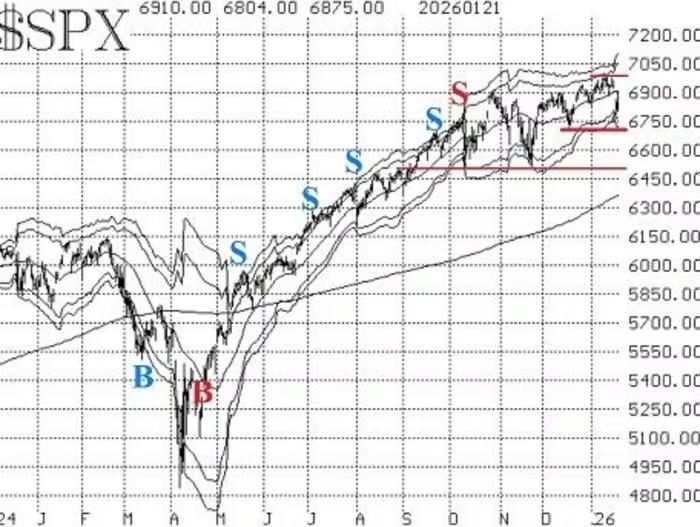
Currently, there is no volatility band signal, though the +4σ “modified Bollinger Band” remains a potential upside target near 7,100.
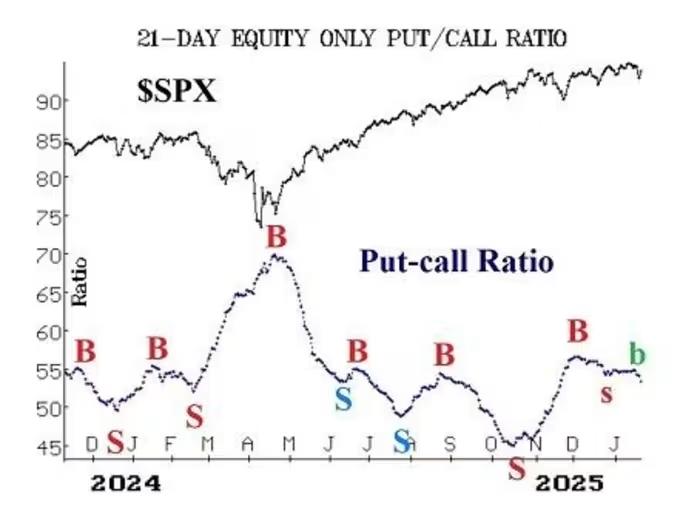
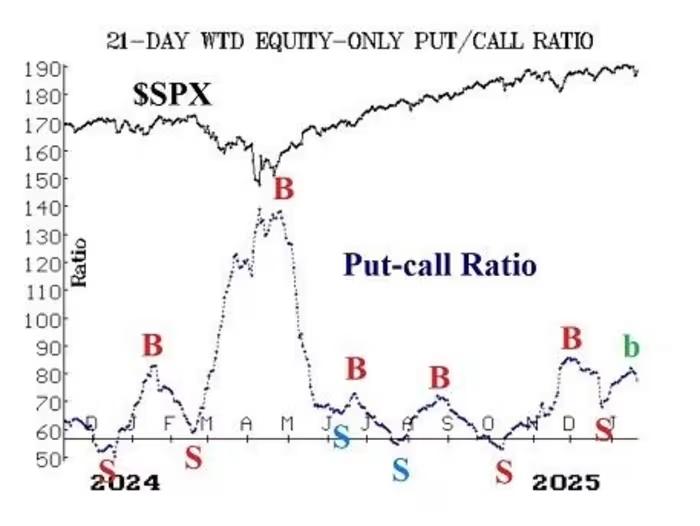
Sentiment is improving. Equity-only put-call ratios have flipped back to buy signals following heavy call buying off the Jan. 20 lows. Both the weighted and standard ratios now signal bullish sentiment, confirmed by our quantitative models.
Market breadth is also supportive. Weak sessions on Jan. 16 and Jan. 20 were offset by a strong rebound on Jan. 21, keeping mid-January breadth buy signals intact. Cumulative volume breadth hit new all-time highs as recently as Jan. 16, confirming the market’s ability to reach new highs.
NYSE new highs continue to outnumber new lows, even on down days. On Jan. 21, new highs totaled roughly 250, a clear bullish indicator.
Volatility has been the main source of technical uncertainty. The VIX climbed after the Jan. 20 tariff news, briefly flattening the term structure and raising caution. However, the VIX soon retreated, generating a “spike peak” buy signal for stocks. Longer-term VIX signals remain bullish, as the index never closed above its 200-day moving average for two consecutive days.
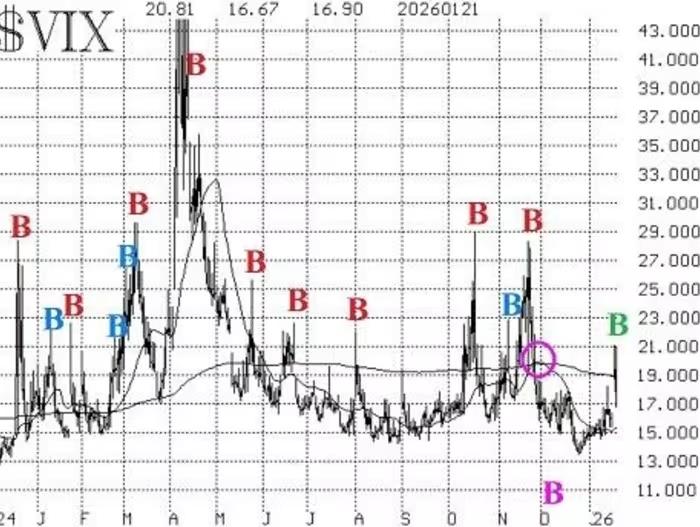
The structure of VIX futures also remains positive. The upward slope of the term structure suggests continued bullish momentum, and February futures — now the front month — remain below March futures. Any sustained inversion would be a warning, but the market currently remains healthy.
In summary, the recent tariff-driven sell-off primarily shook out nervous holders, showing that selling could accelerate if a major negative catalyst emerges. However, as long as the S&P 500 holds above last December’s low of 6,720, bulls remain in control. Traders should continue monitoring key levels and use new signals to guide positions, including rolling deeply in-the-money options.

John Paul is the founder of DayTradeToWin, a trading education and software company established in 2008, supporting traders worldwide. His expertise focuses on price action-based futures trading strategies and structured market analysis.
DayTradeToWin delivers trading education, indicators, and software tools designed to help traders apply disciplined, rule-based decision-making across global futures markets.
He is the creator of multiple trading methodologies, including the Sonic System, Atlas Line, and Trade Scalper, which help traders identify structured opportunities in markets such as the E-mini S&P 500 (ES), Nasdaq (NQ), crude oil (CL), and gold (GC).
Official website: https://daytradetowin.com