
Before hastily selling stocks that have shown poor performance over the year, consider this: they often experience a significant resurgence in January. This occurrence is a result of two distinct sources of artificial selling pressure unrelated to a company’s fundamentals or earnings potential.
The impact of these pressures diminishes by December 31st, setting the stage for a substantial rebound in these stocks in January.
One source of this selling pressure is known as “end-of-year window dressing.” Portfolio managers sell their underperforming stocks to avoid the embarrassment of listing them in their year-end reports.
The other source is “tax-loss selling,” where investors shed stocks with losses to offset some of the capital gains taxes they anticipate paying in the following year.
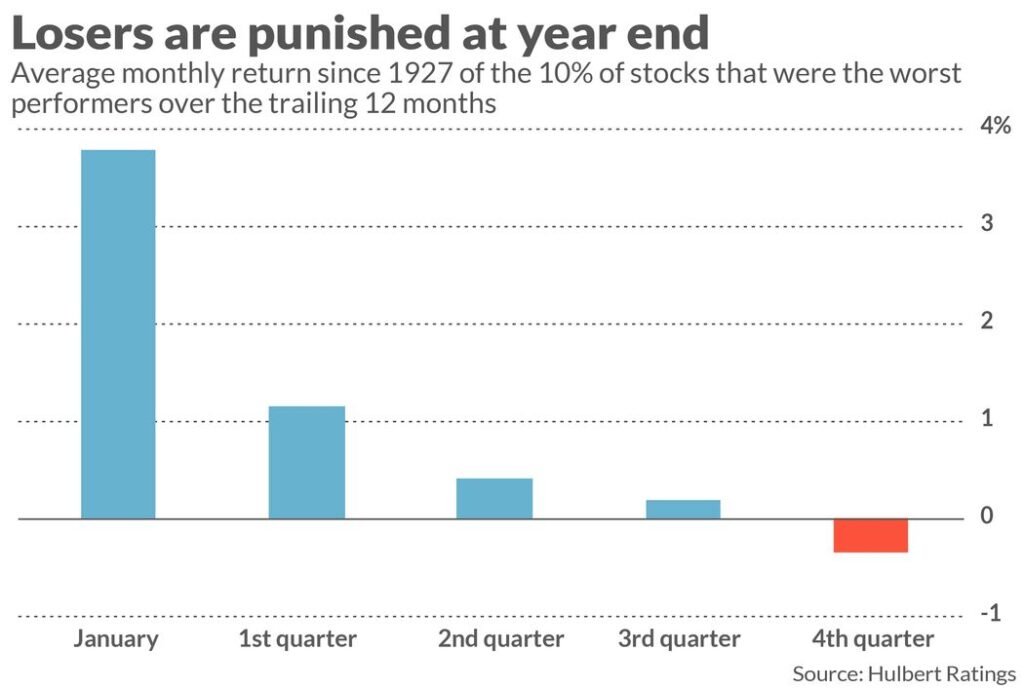
The chart below, based on data dating back to 1927 (courtesy of Dartmouth College’s Ken French), clearly illustrates this January bounce-back trend. It tracks the performance of a hypothetical portfolio that monthly invests in the 10% of stocks with the worst trailing-year returns.
Notably, the most robust average returns are witnessed in January, while the weakest returns occur at the end of the year.

John Paul is the founder of DayTradeToWin, a trading education and software company established in 2008, supporting traders worldwide. His expertise focuses on price action-based futures trading strategies and structured market analysis.
DayTradeToWin delivers trading education, indicators, and software tools designed to help traders apply disciplined, rule-based decision-making across global futures markets.
He is the creator of multiple trading methodologies, including the Sonic System, Atlas Line, and Trade Scalper, which help traders identify structured opportunities in markets such as the E-mini S&P 500 (ES), Nasdaq (NQ), crude oil (CL), and gold (GC).
Official website: https://daytradetowin.com