
Market weakness and shrinking liquidity make a December Fed rate cut more likely, says Morgan Stanley’s Mike Wilson
Equity markets have been under pressure as the Fed’s recent dovish messaging and tightening liquidity weigh on investor confidence and returns. Yet Morgan Stanley’s chief equity strategist Mike Wilson sees the pullback as an opportunity—not a warning.
Wilson argues that the recent dip actually strengthens his bullish 12-month outlook and supports his long-standing “rolling recovery” thesis. In last week’s strategy note, his team outlined a contrarian view heading into 2026, projecting the S&P 500 to reach 7,800, supported by 17% EPS growth, outpacing Wall Street’s current 14% forecast.
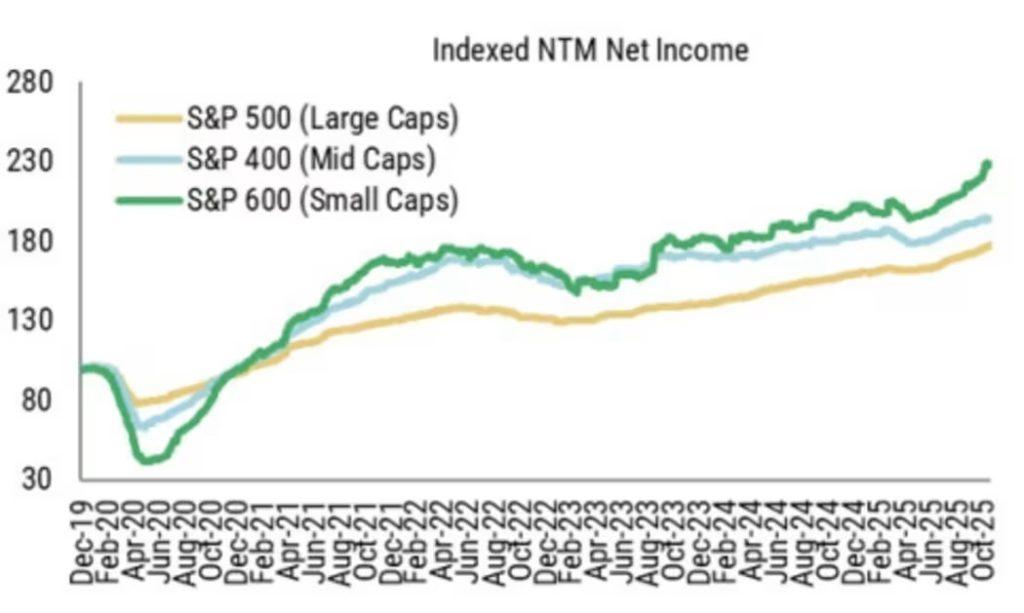
Why Wilson remains optimistic
Morgan Stanley’s constructive stance is anchored in several trends:
- EPS revisions breadth increased again last week, signaling improving earnings momentum.
- The U.S. economy is early in a new growth cycle, contrary to the late-cycle view held by many analysts.
- Forward 12-month net income estimates continue to climb, with small caps showing the strongest gains.
What’s behind the recent market softness
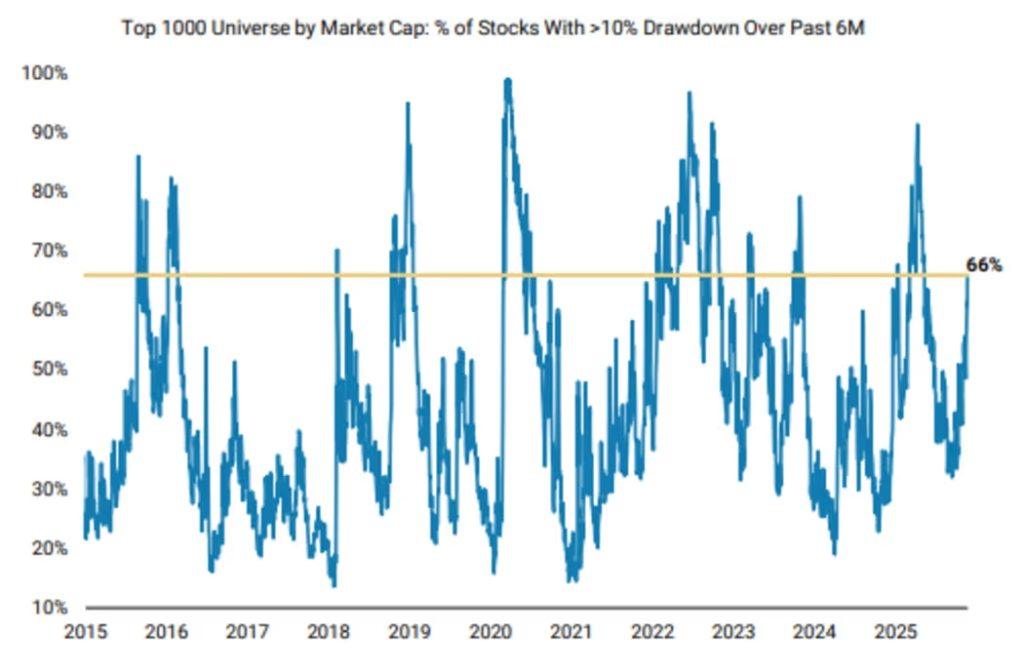
Wilson points to two key pressures:
- A slightly more hawkish Fed tone following its October rate cut.
- Liquidity constraints tied to the government shutdown, which led to rapid cash buildup in the Treasury General Account instead of circulating through the economy.
While the S&P 500 has only slipped around 5% from its highs, the underlying damage is far deeper: two-thirds of the largest 1,000 stocks are down more than 10%, Morgan Stanley notes.
Why the weakness may trigger a Fed cut
Wilson believes this combination of tighter liquidity, broader asset weakness, and softer labor trends could actually increase the odds of a December rate cut, as the Fed aims to get ahead of a potential slowdown. This scenario, he says, strengthens the medium-term upside for equities.
Where Morgan Stanley sees opportunity now
Notably, the firm is steering clear of megacap tech. The Mag7 could still “catch down” to the market’s broader pullback, and underlying economic trends favor other areas.
The sectors Morgan Stanley highlights include:
- Consumer discretionary
- Small caps
- Healthcare
- Financials
- Industrials
The shift toward consumer discretionary is especially notable after years of underweighting the sector. Small caps also stand out, showing the strongest upward inflection in earnings projections.

John Paul is the founder of DayTradeToWin, a trading education and software company established in 2008, supporting traders worldwide. His expertise focuses on price action-based futures trading strategies and structured market analysis.
DayTradeToWin delivers trading education, indicators, and software tools designed to help traders apply disciplined, rule-based decision-making across global futures markets.
He is the creator of multiple trading methodologies, including the Sonic System, Atlas Line, and Trade Scalper, which help traders identify structured opportunities in markets such as the E-mini S&P 500 (ES), Nasdaq (NQ), crude oil (CL), and gold (GC).
Official website: https://daytradetowin.com