

Market News

stock market
Market News

3 Stocks on the Rise: Couchbase, Casey’s General Stores, and Cue Health Worth Watching

In the second quarter, Couchbase – a top provider of NoSQL database solutions – revealed that its earnings were lower than what analysts had foreseen. Their expected revenue was not met, resulting in a substantial decline in their stock’s worth. As a result, Couchbase bore an 18% drop in shares on after-hours trading, indicating that investors were worried about the company’s overall performance. During the last quarter, Casey’s General Stores, a well-liked group of stores that offer convenience items, encountered financial difficulties. The company disclosed a decrease in both its earnings and revenue, indicating a difficult quarter for the retail behemoth. This brought about a drop of 4.6% in Casey’s General Stores’ shares in post-market trading as investors responded to unsatisfactory financial outcomes. However, a healthcare tech company called Cue Health has revealed that their Covid-19 molecular test has been granted De Novo marketing approval by the US Food and Drug Administration (FDA). This means that the test is up to the FDA’s stringent safety and effectiveness criteria. Nevertheless, Cue Health’s stock dropped by 3.7% in after-hours trading, despite this positive outcome. There could be several explanations for the decline in share prices, such as market conditions or investor outlook, but it’s important for investors to keep a close eye on how well the stock performs in the near future. John PaulJohn Paul is the founder of DayTradeToWin, a trading education and software company established in 2008, supporting traders worldwide. His expertise focuses on price action-based futures trading strategies and structured market analysis. DayTradeToWin delivers trading education, indicators, and software tools designed to help traders apply disciplined, rule-based decision-making across global futures markets. He is the creator of multiple trading methodologies, including the Sonic System, Atlas Line, and Trade Scalper, which help traders identify structured opportunities in markets such as the E-mini S&P 500 (ES), Nasdaq (NQ), crude oil (CL), and gold (GC). Official website: https://daytradetowin.com daytradetowin.com
Market News

Navigating the 2023 Market: Small-Cap Stocks Trail S&P 500 and Nasdaq’s Dominance

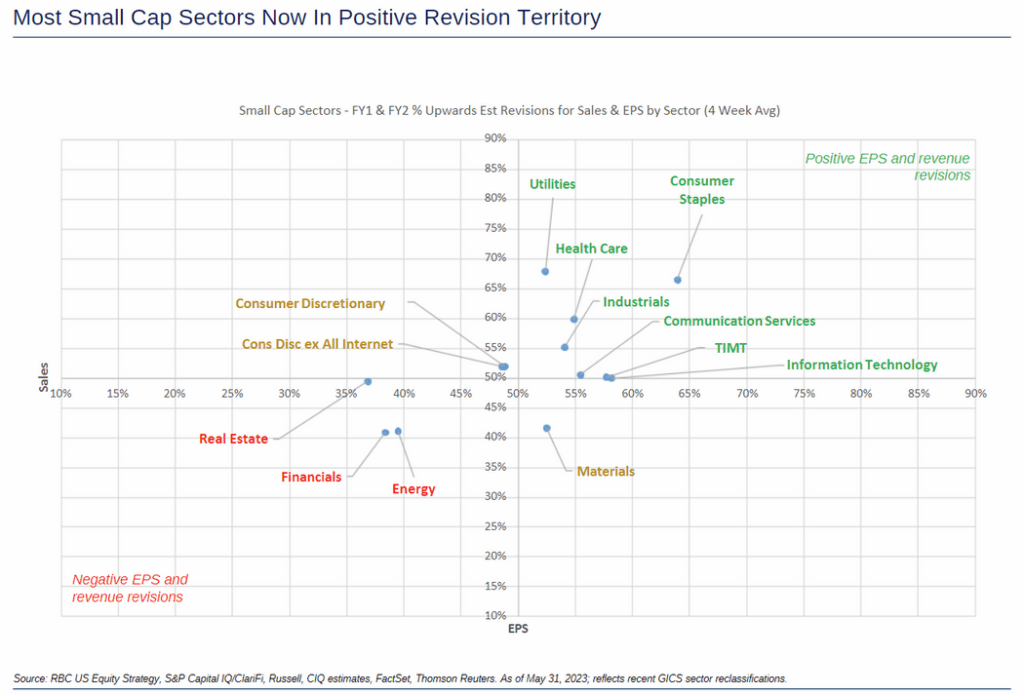
According to RBC Capital Markets, small-cap stocks in the United States are performing relatively well compared to the S&P 500 and Nasdaq Composite, despite still falling behind them this year. They are said to be putting up a strong fight and showing positive trends. Based on Monday afternoon trading levels, FactSet data shows that the Russell 2000, which monitors small-cap stocks in the United States, has experienced a slight increase of approximately 2.8% in 2023, in contrast to the S&P 500, which has risen by 11.7%, and the technology-focused Nasdaq Composite, which has surged by 26.8%. According to Calvasina, who leads U.S. equity strategy at RBC Capital Markets, Nasdaq valuations appear overpriced. However, the S&P 500 and Russell 2000 are currently lower than recent peaks, which differs from the Tech bubble. RBC Capital Markets has a preference for small-cap stocks over large-cap stocks. Calvasina stated that small-cap stocks are finally becoming involved in the earnings per share (EPS) revisions recovery. She noted that the rate of upward EPS estimate revisions has increased to 50% for the Russell 2000, with over half the sectors in the index displaying positive revisions in terms of both EPS and revenues. RBC identified several small-cap stock areas that exhibit positive revisions in both revenue and EPS. These areas include utilities, consumer goods, healthcare, industrial manufacturing, communications services, information technology, and TIMT, which stands for technology, internet, media, and telecommunications sector. As stated in the written communication, stocks with a smaller market capitalization generally reach their lowest point in value before the estimated earnings per share projections begin to increase once more, typically taking three to six months. Calvasina stated that the Russell 2000 has been struggling to reach a low in comparison to the S&P 500. Currently, the ratio between the two indexes is only slightly higher than their lowest point in March 2020. According to data from FactSet, the S&P 500, which measures the performance of U.S. large-cap stocks, is close to exiting a bear market as its current trading level sits around 4,287 as of Monday afternoon. Dow Jones Market Data suggests that the index will only officially exit its bear market status if its trading level reaches or surpasses 4,292.438. According to FactSet data, the stock market in the US showed a variety of results on Monday afternoon. At the time of the data, the S&P 500 increased by 0.1%, the Dow Jones Industrial Average decreased by 0.3%, and the Nasdaq gained 0.2%. In the context of stocks with small market capitalization, the Russell 2000 saw a 1.1% decrease during Monday afternoon trading. This came after a 3.6% increase on Friday, resulting in the largest daily percentage gain for the Russell 2000 since November 10th, as reported by Dow Jones Market Data. John PaulJohn Paul is the founder of DayTradeToWin, a trading education and software company established in 2008, supporting traders worldwide. His expertise focuses on price action-based futures trading strategies and structured market analysis. DayTradeToWin delivers trading education, indicators, and software tools designed to help traders apply disciplined, rule-based decision-making across global futures markets. He is the creator of multiple trading methodologies, including the Sonic System, Atlas Line, and Trade Scalper, which help traders identify structured opportunities in markets such as the E-mini S&P 500 (ES), Nasdaq (NQ), crude oil (CL), and gold (GC). Official website: https://daytradetowin.com daytradetowin.com
Market News

Earnings Implosion Anticipated by Morgan Stanley for Wall Street’s Neglected Stock Wave

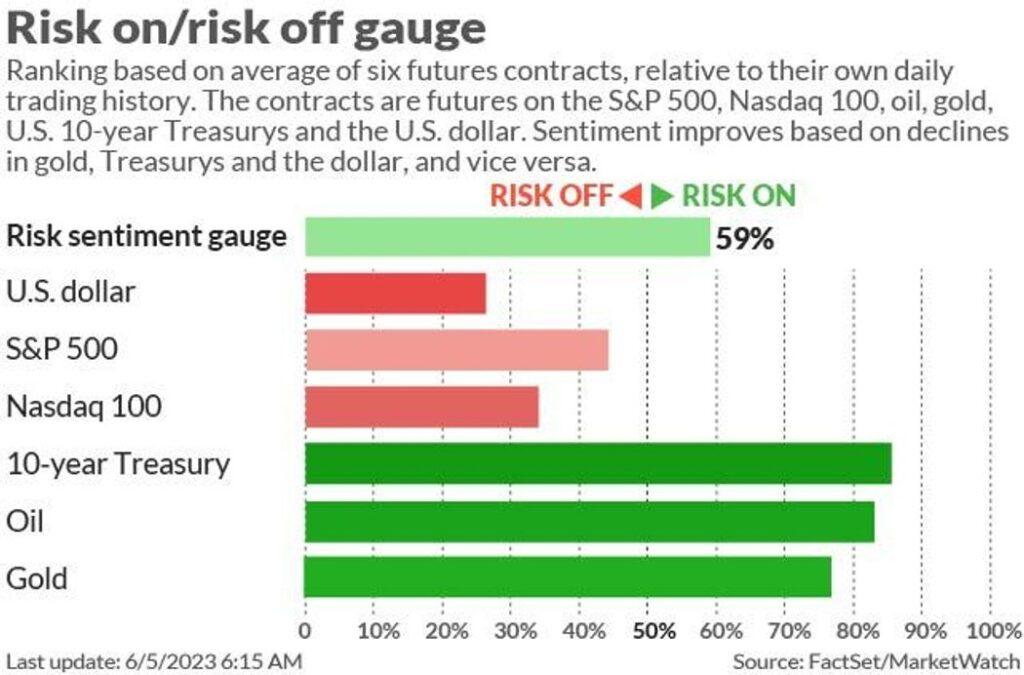
Finding optimistic investors on Monday is not an easy task, as the S&P 500 experienced a significant increase due to positive employment figures and the resolution of the debt ceiling issue, bringing the market to the edge of a bull market. Despite this, the technology sector is only slightly down, and oil prices are rising thanks to OPEC’s promise of further production reduction. Neil Wilson, the chief market analyst at Finalto, highlights that investors are not fully embracing the current rally as the SPX has surpassed 4,200 and moved beyond its 4,000 to 4,200 range. Moreover, the VIX has dropped to its lowest levels since February 2020. Friday’s events demonstrated that Big Tech’s strong performance can create a ripple effect throughout the market, possibly changing Wall Street skeptics’ sentiment. However, for now, those who did not sell their investments in May are being advised to do so in June. Despite this, concerns remain that investors may not be entirely out of danger. Morgan Stanley’s bearish strategist, “Worried” Mike Wilson, foresees a significant earnings decline (-16% year-over-year) that the market has yet to factor in. Although his S&P 500 prediction stays at 3,900, which is the low end of the Street’s expectations, Wilson believes investors are experiencing several “hotter but shorter” earnings cycles within a broader secular bull market, characterized by a boom, bust, boom pattern. Wilson attributes the bank’s predictions of a significant stock price decrease to the impressive performance of artificial intelligence players and established technology companies, the Federal Reserve’s shift in approach, and optimism that the worst of the earnings slump is over. However, Wilson notes a substantial reevaluation of lower-quality, cyclical, or small-company stocks. The strategist advises when the market will begin to consider the earnings decrease, focusing on the equity risk premium (ERP) section of the price-to-earnings (PE) ratio. The ERP represents the difference between the expected earnings return and the return on risk-free Treasurys. A higher number indicates that investors are receiving greater compensation for investing in stocks. Wilson states that the increase in 10-year Treasury yields accounted for over 100% of the PE reset last year. Historically, the market has experienced a “moment of recognition” when the forward NTM EPS forecast for the S&P 500 turns negative on a year-over-year basis. He believes the anticipated liquidity reduction due to the debt ceiling passage could speed up this process. If an investor is intrigued by Wilson’s insights, they should follow his advice to concentrate on defensive attributes, operational efficiency, and consistent earnings. Ending on a brighter note, Wilson offers a glimmer of hope. Morgan Stanley predicts a 23% increase in EPS growth in 2024 and a 10% increase in 2025, as the Fed policy becomes more accommodating in 2024 rather than in 2023. Furthermore, several factors will help drive the next recovery or bull market following the correction: Oil prices, under the symbols CL and BRN00, increased by 2% on Sunday after OPEC agreed to cut oil production by 1 million barrels per day. However, the increase has now decreased to just over 1%. To stay updated on market news and receive practical trading advice for stocks, options, and cryptocurrency, sign up here. Stay informed about all stock market events. John PaulJohn Paul is the founder of DayTradeToWin, a trading education and software company established in 2008, supporting traders worldwide. His expertise focuses on price action-based futures trading strategies and structured market analysis. DayTradeToWin delivers trading education, indicators, and software tools designed to help traders apply disciplined, rule-based decision-making across global futures markets. He is the creator of multiple trading methodologies, including the Sonic System, Atlas Line, and Trade Scalper, which help traders identify structured opportunities in markets such as the E-mini S&P 500 (ES), Nasdaq (NQ), crude oil (CL), and gold (GC). Official website: https://daytradetowin.com daytradetowin.com

Market News

S&P 500 Inches Closer to Bear-Market Exit: What Investors Need to Know

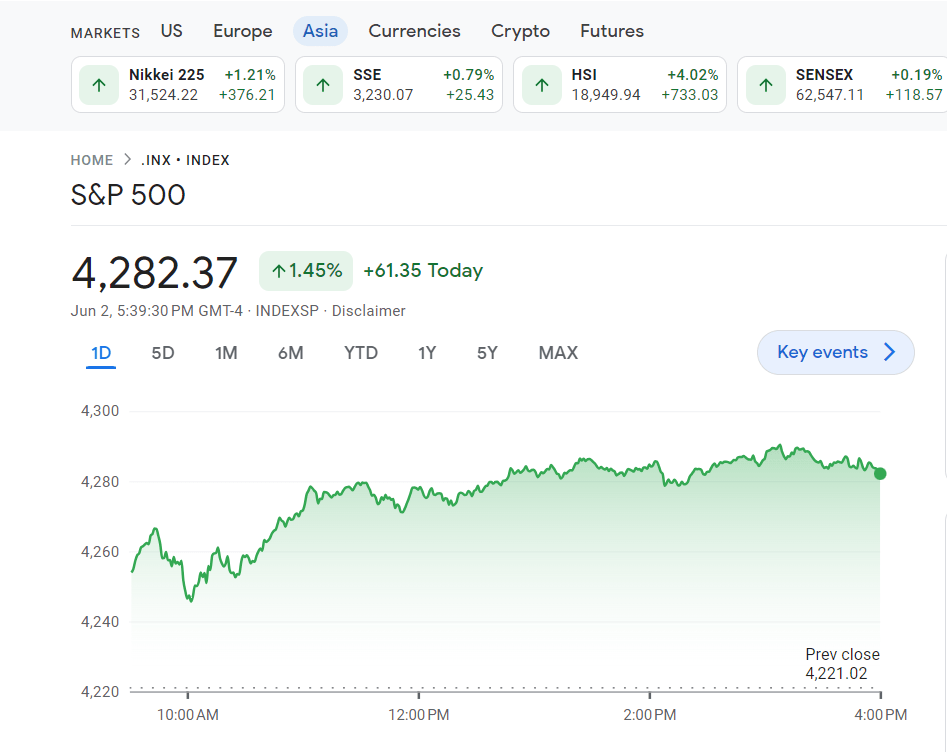
The S&P 500 is approaching its exit from bear-market territory, prompting questions about whether the rally in Big Tech stocks will finally extend to the broader market. The large-cap benchmark has been experiencing its longest stretch in bear territory since 1948. However, a wide stock-market rally on Friday brought the S&P 500 close to ending this run. Investors are eager to determine if this move is genuine or simply a false alarm. On Friday, the S&P 500 SPX increased by 1.5% to close at its highest level since August 18, 2022. A close above 4,292.48 would signify a 20% rally from the bear-market closing low of 3,577.03 set on October 12, 2022, marking the end of the bear market by a widely accepted definition. The rally was attributed to an unexpectedly strong May jobs report, a resolution of the debt-ceiling deal standoff, and expectations that the Federal Reserve will not raise interest rates at its upcoming policy meeting. Including Friday, the S&P 500 had been in bear-market territory for 244 trading days, the longest stretch since one that ended on May 15, 1948, which lasted 484 trading days. Historically, the average bear market has lasted 142 trading days. Investor optimism was fueled by the anticipated debt-ceiling deal becoming law and the increasing unemployment rate revealed in the Employment Situation Report, according to José Torres, Senior Economist at Interactive Brokers. This has led to bets on a Fed pause at its June 14 meeting, with 72% odds favoring that outcome. The S&P 500 has risen 11.5% year-to-date, with a significant portion of total returns driven by a few large-cap technology firms like NVIDIA Corp., Alphabet Inc., and Apple Inc. However, excluding these big names, the index is flat for the year. The market-cap weighted S&P 500 is outperforming its equal-weighted counterpart, which has declined by 1% year-to-date, by over 10 percentage points in 2023. This is the largest margin of outperformance year to date on record, according to Dow Jones Market Data. Quincy Krosby, chief global strategist at LPL Financial, stated that the widespread stock-market rally on Friday is precisely what the market needs, as many analysts consider a narrow market leadership to be a missing piece of the recovery puzzle. The strong surge in tech stocks that has been driving the S&P 500 and Nasdaq Composite is finally extending to the broader market on Friday, as demonstrated by the jump in the Russell 2000, the small-cap index. This indicates an overall positive underpinning for the market. Despite this, caution is advised, as not all bear exits lead to lasting bull markets. The S&P 500 has also experienced false bear-market exits, albeit less frequently than the tech-heavy Nasdaq Composite, as noted by Sam Stovall, chief investment strategist at CFRA, in a May note. The possibility of such false exits explains why there is far from a universal embrace of the 20% rule. Some analysts argue that a new bull market does not begin until the previous high is surpassed, while others use more complex criteria. John PaulJohn Paul is the founder of DayTradeToWin, a trading education and software company established in 2008, supporting traders worldwide. His expertise focuses on price action-based futures trading strategies and structured market analysis. DayTradeToWin delivers trading education, indicators, and software tools designed to help traders apply disciplined, rule-based decision-making across global futures markets. He is the creator of multiple trading methodologies, including the Sonic System, Atlas Line, and Trade Scalper, which help traders identify structured opportunities in markets such as the E-mini S&P 500 (ES), Nasdaq (NQ), crude oil (CL), and gold (GC). Official website: https://daytradetowin.com daytradetowin.com

Scroll to Top