
stock market

markets
Market News

Geopolitical Shock Could Slam Markets – RBC

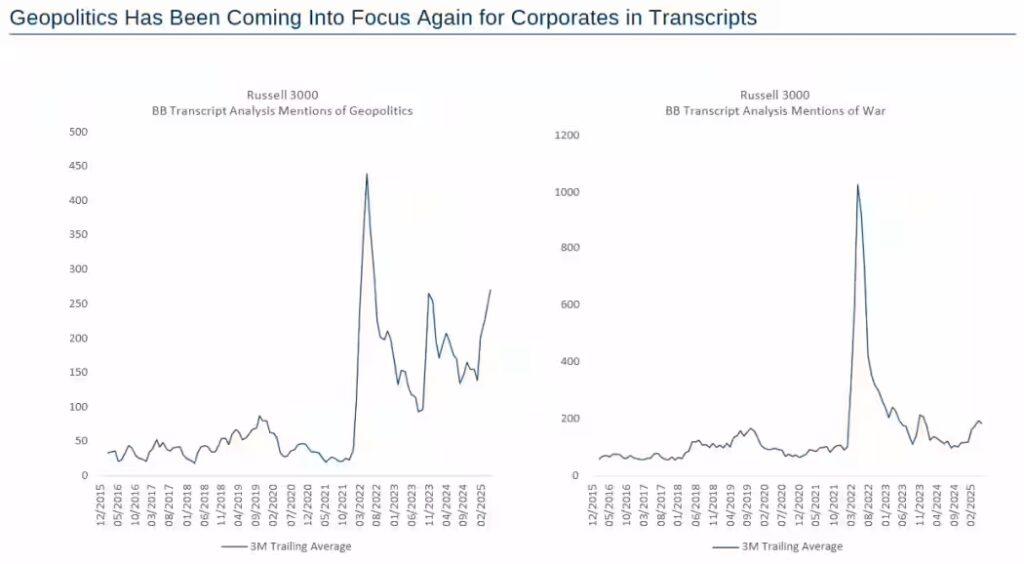
Despite the tragedy unfolding between Israel and Iran, U.S. markets have remained surprisingly resilient. S&P 500 futures reclaimed the 6,000 mark early Monday—just 2% shy of record highs. But RBC Capital Markets’ Lori Calvasina warns that this calm may not last. Oil Spike Threatens Fed’s Inflation Outlook as Middle East Tensions Rise She outlines three ways the conflict could hit stocks: 1. Valuation Pressures Geopolitical uncertainty tends to compress price-to-earnings (P/E) ratios. Calvasina notes that national security threats, much like economic policy fears, usually lead investors to assign lower valuations. With P/E multiples already elevated, stocks are particularly vulnerable now. 2. Investor Sentiment at Risk Recent gains in market confidence—especially among investors—have helped fuel the rally. But if the conflict rattles sentiment, optimism around IPOs and dealmaking could evaporate. Corporate earnings calls have shown that even events like wildfires or flu outbreaks affect behavior. Middle East tension will likely do the same. 3. Oil Prices and Fed Policy RBC sees room for Brent crude to surge if supply is disrupted. That could reignite inflation, muddy the Fed’s rate-cut path, and pressure equities. In a stress test, RBC assumes higher PCE inflation, limited rate cuts, and steady Treasury yields. The result: S&P 500 fair value could fall to 4,800–5,200 by year-end—well below Friday’s close at 5,977. In short, while the market appears stoic now, surging oil and rising uncertainty could throw the Fed—and investors—off balance. John PaulJohn Paul is the founder of DayTradeToWin, a trading education and software company established in 2008, supporting traders worldwide. His expertise focuses on price action-based futures trading strategies and structured market analysis. DayTradeToWin delivers trading education, indicators, and software tools designed to help traders apply disciplined, rule-based decision-making across global futures markets. He is the creator of multiple trading methodologies, including the Sonic System, Atlas Line, and Trade Scalper, which help traders identify structured opportunities in markets such as the E-mini S&P 500 (ES), Nasdaq (NQ), crude oil (CL), and gold (GC). Official website: https://daytradetowin.com daytradetowin.com

markets
Market News

Markets Stall with Power Stocks Losing Steam

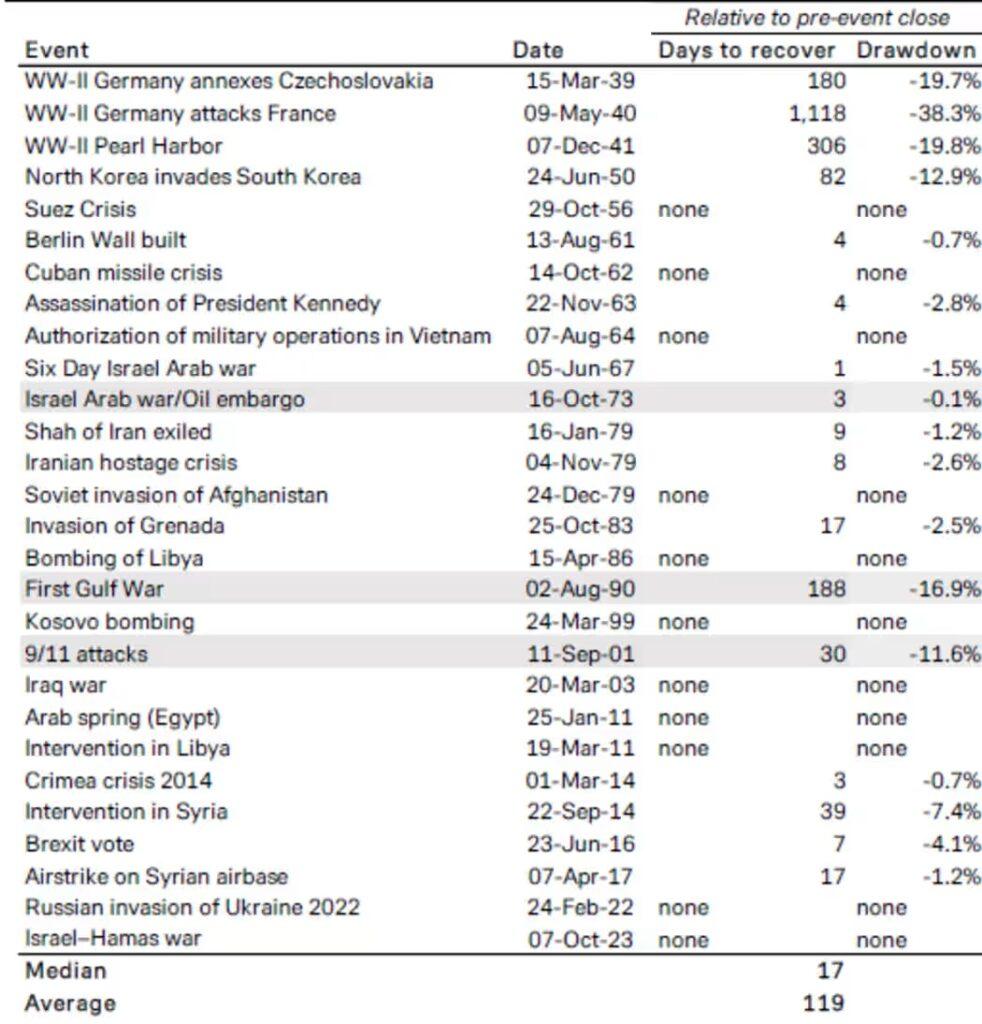
Why Markets Often Brush Off Geopolitical Shocks – Until They Don’t Markets were shaken after Israel struck Iran and Iran reportedly fired back. But the panic didn’t last long. U.S. stock futures bounced off session lows, oil prices retreated from sharp gains, and gold eased from its peak — all signs that investor anxiety may already be cooling. This kind of swift reaction is common. “Financial markets are incredibly quick to price in geopolitical fear — but just as quick to discount it,” says Michael Brown of Pepperstone. An April report from the International Monetary Fund (IMF) echoes that. While global markets typically react to geopolitical risk, most events leave only a modest, short-term dent. However, large-scale military conflicts tend to have a deeper, longer-lasting impact. The IMF found that average stock returns across countries drop about 1% during geopolitical flare-ups. In emerging markets, that drop averages 2.5%. And when the risk involves international military conflict, emerging market stocks can plunge by 5% in a single month. Fortunately, the report also shows that most markets begin to recover within a month — though the rebound depends on the nature and scope of the crisis. Supply chain disruptions, for example, can drive up commodity prices while dragging down equities, especially in sectors that rely heavily on energy. Some geopolitical events leave a bigger scar. The 1973 oil embargo slashed real returns for the S&P 500 by over 60% in the months that followed. Iraq’s 1990 invasion of Kuwait led to six months of negative returns as well. Still, Deutsche Bank analysts say recent history paints a more resilient picture. Their research shows that modern markets often experience quick selloffs — but also quick recoveries — in response to geopolitical events. “Once the initial fear passes, economic fundamentals take the lead again,” notes strategist Jim Reid. Their advice? “You should generally buy into geopolitical risk.” But they add a caution: With global tensions on the rise, the old playbook may not always apply. John PaulJohn Paul is the founder of DayTradeToWin, a trading education and software company established in 2008, supporting traders worldwide. His expertise focuses on price action-based futures trading strategies and structured market analysis. DayTradeToWin delivers trading education, indicators, and software tools designed to help traders apply disciplined, rule-based decision-making across global futures markets. He is the creator of multiple trading methodologies, including the Sonic System, Atlas Line, and Trade Scalper, which help traders identify structured opportunities in markets such as the E-mini S&P 500 (ES), Nasdaq (NQ), crude oil (CL), and gold (GC). Official website: https://daytradetowin.com daytradetowin.com
stocks
Market News

Why Stocks Drops Shouldn’t Shock You

Most Stocks Have Suffered Massive Losses — New Study Reveals the Harsh Reality of Long-Term Investing A new study highlights a hard truth for investors: since the mid-1980s, the typical stock has plunged more than 80% from its peak at some point in its life. Many investors imagine how different their portfolios would look if they had bought and held shares of iconic companies like Apple, Microsoft, or Nvidia from the beginning. But few realize how difficult that journey would have been. Holding through massive losses requires uncommon discipline. According to a recent report by Michael Mauboussin and Dan Callahan of Morgan Stanley Investment Management, deep drawdowns are far more common than most people think. The duo analyzed the performance of over 6,500 publicly traded U.S. companies between 1985 and 2024. “The findings are provocative and surprising,” they wrote. Here’s what they found: This aligns with research by Hendrik Bessembinder of Arizona State University, who studied more than 28,000 U.S. stocks from 1926 to 2024. His findings: just 2% of all companies generated 90% of the $79.4 trillion in net stock market wealth. Among them, six firms — Apple, Microsoft, Nvidia, Alphabet, Amazon, and ExxonMobil — contributed a combined $17.1 trillion in value. Yet even these giants experienced major setbacks. For example, Amazon’s stock dropped 95% between 1999 and 2001. On average, these six stocks had drawdowns of 80.3%, similar to the broader market sample. While dramatic recoveries are possible, they’re rare. Among companies that lost more than 95% of their value, only 16% ever climbed back to their previous highs. Still, for those that survived, the rebound could be powerful: The takeaway? Diversification matters. Even strong individual stocks can go through long, painful periods. Broad indexes like the S&P 500 have also seen significant selloffs — notably after the dot-com bubble and the 2008 financial crisis — but tend to be more resilient due to their diversified nature. The report opens with a quote from the late Charlie Munger, Warren Buffett’s longtime business partner, that puts things in perspective: “If you’re not willing to react with equanimity to a market price decline of 50% two or three times a century, you’re not fit to be a common shareholder,” Munger said in 2009. Munger, who passed away in 2023, believed enduring steep drawdowns was simply part of being a long-term investor. His advice still resonates: stay calm in the face of volatility — because often, the biggest gains come after the biggest drops. John PaulJohn Paul is the founder of DayTradeToWin, a trading education and software company established in 2008, supporting traders worldwide. His expertise focuses on price action-based futures trading strategies and structured market analysis. DayTradeToWin delivers trading education, indicators, and software tools designed to help traders apply disciplined, rule-based decision-making across global futures markets. He is the creator of multiple trading methodologies, including the Sonic System, Atlas Line, and Trade Scalper, which help traders identify structured opportunities in markets such as the E-mini S&P 500 (ES), Nasdaq (NQ), crude oil (CL), and gold (GC). Official website: https://daytradetowin.com daytradetowin.com
goldman
Market News

Goldman Warns of Tech Dip

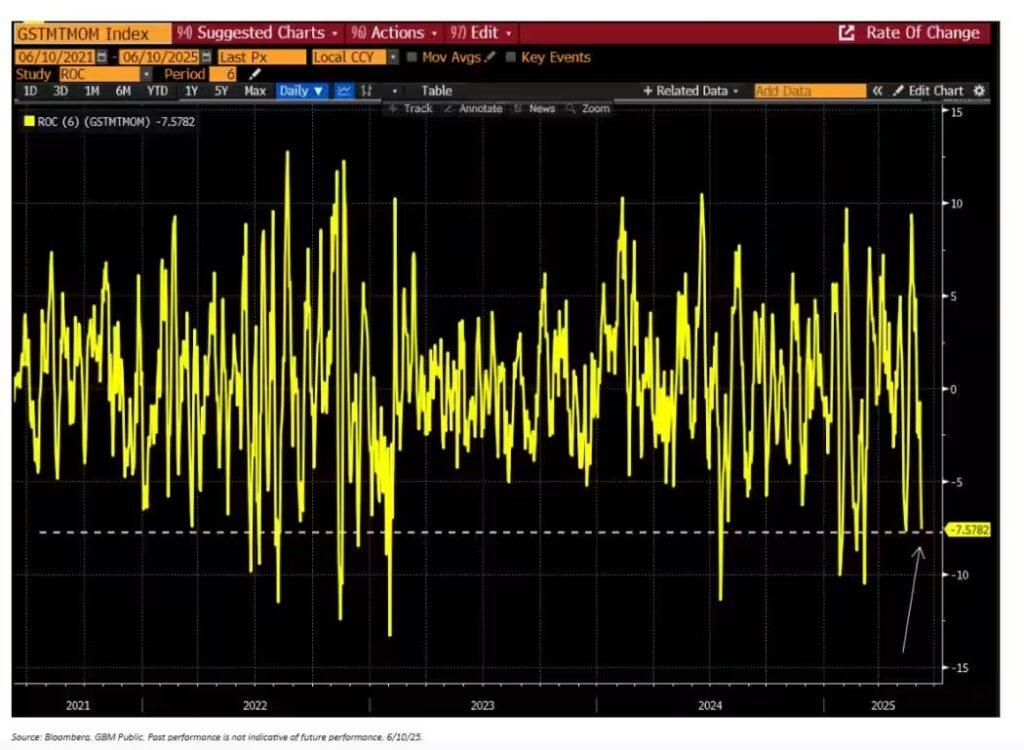
Goldman Sachs Flags Risks Beneath Tech’s Melt-Up Rally Markets are in a holding pattern ahead of upcoming consumer price data, but tech stocks continue to dominate. The Nasdaq-100 is up 13% for the quarter, far outpacing the S&P 500’s 7.6% gain. Once-dismissed names like Nvidia, Meta, and Tesla have surged into double-digit territory. But Goldman Sachs is urging caution. In a note to clients, Peter Callahan, the firm’s technology, media, and telecom specialist, describes the Nasdaq-100 as being in “melt-up mode,” with six gains in the past seven sessions. He attributes the rally to upbeat U.S.-China trade discussions, improved economic indicators — including stronger small business sentiment — and robust earnings, notably from Taiwan Semiconductor. Goldman’s U.S. Financial Conditions Index has dropped near its yearly lows, indicating easier borrowing conditions for companies. Yet despite the positive momentum, Callahan highlights signs of instability. For example, Goldman’s TMT momentum pair trade — which bets on top tech winners while shorting laggards — has fallen 7.5% in just six days, underperforming the Nasdaq-100 by 850 basis points. Meanwhile, the Cboe Volatility Index (VIX) continues to decline, possibly understating underlying market risk. Callahan also points to weakness in recent market leaders like Netflix, Duolingo, Sea, Verisk Analytics, Spotify, Broadcom, MercadoLibre, and Carvana — all of which have posted three straight days of losses. Even traditionally stable “quality” stocks like Costco and GE are starting to underperform. He notes several emerging shifts: small-caps outpacing large-caps, cyclicals gaining over defensives, and a rebound in unprofitable tech. These trends come as markets prepare for a potential information vacuum heading into quarter-end, following key catalysts like CPI data, earnings from major TMT names, and updates on U.S.-China trade relations. John PaulJohn Paul is the founder of DayTradeToWin, a trading education and software company established in 2008, supporting traders worldwide. His expertise focuses on price action-based futures trading strategies and structured market analysis. DayTradeToWin delivers trading education, indicators, and software tools designed to help traders apply disciplined, rule-based decision-making across global futures markets. He is the creator of multiple trading methodologies, including the Sonic System, Atlas Line, and Trade Scalper, which help traders identify structured opportunities in markets such as the E-mini S&P 500 (ES), Nasdaq (NQ), crude oil (CL), and gold (GC). Official website: https://daytradetowin.com daytradetowin.com
gold
Market News

Gold + S&P 500 Rally: What’s Going On?

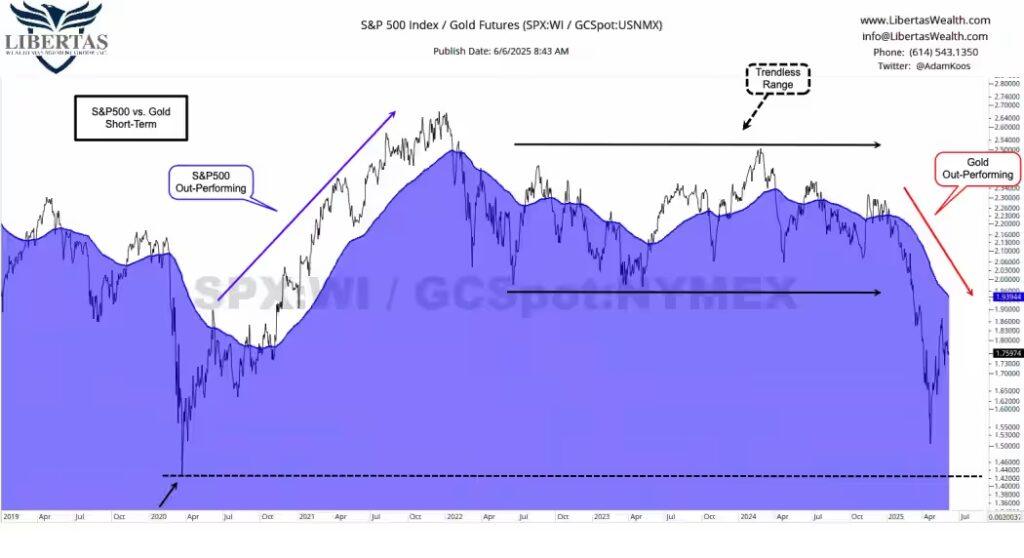
Gold and Stocks Are Rising Together — Here’s What That Means Both gold and the S&P 500 are approaching record highs — an unusual occurrence that’s raising eyebrows on Wall Street. Why? Because these two assets typically don’t move in the same direction. Stocks tend to climb when investors feel confident about economic growth and are willing to take on risk. Gold, by contrast, is a classic safe-haven asset — a place to hide when uncertainty looms. So when both rally at once, it reflects a market caught between two competing mindsets. “It’s like watching someone eat salad and dessert at the same time,” said Adam Koos, president of Libertas Wealth Management. “Investors want to be smart — but they’re also bracing for what could go wrong.” Koos notes that while it’s possible for stocks and gold to reach new highs simultaneously, it’s not typical. When it does happen, it often signals a rare mix of optimism and anxiety — and that’s exactly what we’re seeing now. On one hand, the stock market is riding a wave of enthusiasm fueled by artificial intelligence and hopes for a “soft landing” — an economic slowdown without a recession. On the other hand, gold is rising due to deeper concerns: mounting government debt, a weaker U.S. dollar, and ongoing central bank demand. Normally, gold and the S&P 500 are somewhat negatively correlated. When they move together, it often points to underlying fears — such as inflation, currency weakness, or a Federal Reserve that may soon cut interest rates. So far in 2025, gold has been the stronger performer. As of Monday, gold futures were up nearly 27% year-to-date, hovering just 2.1% below their April 21 record. The S&P 500 has gained just 2.1%, but that includes a sharp rebound from losses tied to April’s tariff announcement. Dina Ting, head of global index portfolio management at Franklin Templeton, suggests the unusual alignment may be driven by a mix of “dovish Fed expectations, fiscal stress, and broader structural concerns.” In fact, both assets hit record highs on the same day earlier this year — February 18 — with the S&P 500 closing at 6,129.58 and gold settling at $2,949. So what’s going on? “Equities move on growth expectations like earnings and rates,” said Keith Weiner, CEO of Monetary Metals. “Gold responds more to fear — things like inflation, debt, or geopolitical tension.” Right now, both growth optimism and fear are elevated. Investors are hedging their bets, buying both assets to cover all bases. While it’s not the norm, this kind of dual rally isn’t entirely surprising, said financial advisor Harley Kaplan. “There’s a lot of global risk,” he said. “Gold offers protection. Stocks show confidence in the future.” A Look at the Gold-to-S&P 500 Ratio One key metric to watch is the gold-to-S&P 500 ratio — essentially, how many ounces of gold it takes to buy the index. The ratio has climbed from around 1.5 in April to roughly 1.76, which Koos describes as “elevated but not extreme.” When the ratio rises, it means stocks are outperforming. When it falls, investors may be shifting to safety. Right now, it suggests a cautious balance — confidence in stocks, but not at the expense of gold. Could we see both assets break records again? It’s possible, Koos says — but it would require a unique set of circumstances: falling real interest rates, central bank gold buying, ongoing AI-driven growth, and just enough uncertainty to keep investors nervous. “It’s a fragile balance,” he said. “Like spinning two plates at once — it can be done, but it takes constant movement and the right conditions to keep everything in the air.” John PaulJohn Paul is the founder of DayTradeToWin, a trading education and software company established in 2008, supporting traders worldwide. His expertise focuses on price action-based futures trading strategies and structured market analysis. DayTradeToWin delivers trading education, indicators, and software tools designed to help traders apply disciplined, rule-based decision-making across global futures markets. He is the creator of multiple trading methodologies, including the Sonic System, Atlas Line, and Trade Scalper, which help traders identify structured opportunities in markets such as the E-mini S&P 500 (ES), Nasdaq (NQ), crude oil (CL), and gold (GC). Official website: https://daytradetowin.com daytradetowin.com

citi
Market News

Citi Shifts S&P Forecast as Index Hits 6,000

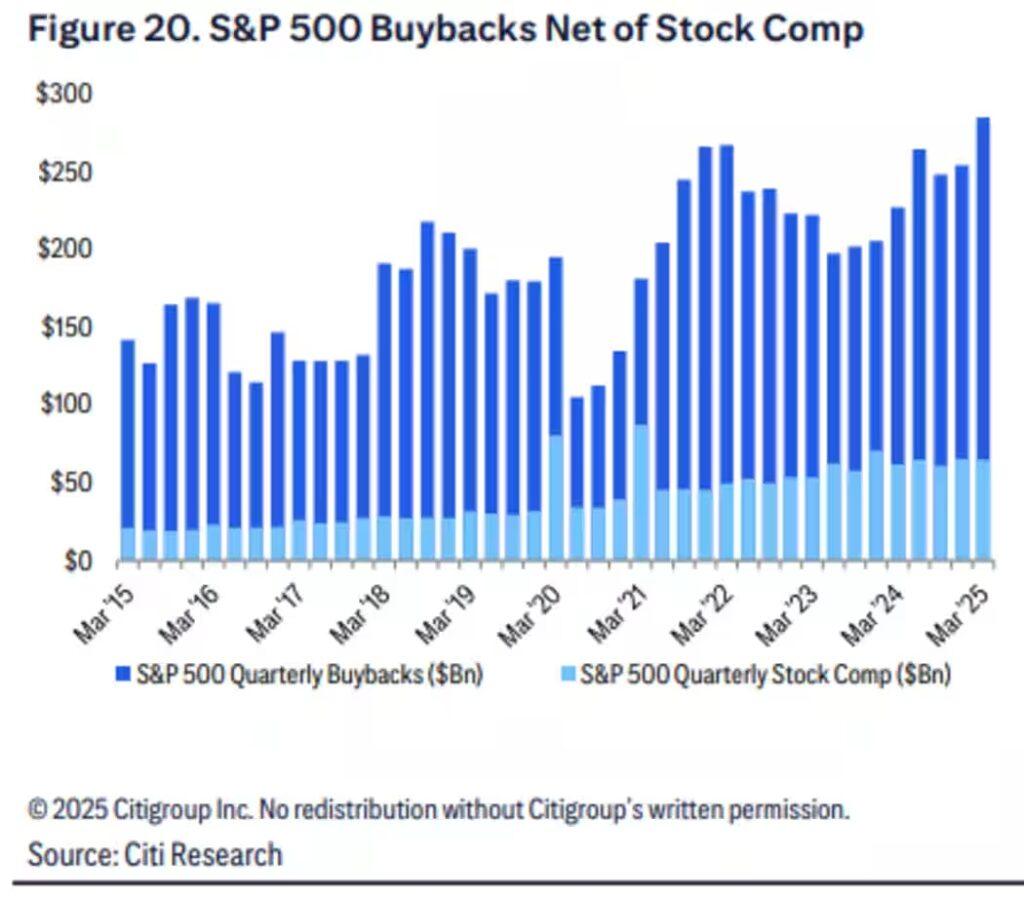
AI Resurgence and $1 Trillion in Buybacks Set to Propel Stock Market Higher The S&P 500 closed just above the 6,000 mark last week, inching closer to record highs. A further 2.4% gain would push the index into new territory, continuing a rally that has seen the benchmark rise over 20% since mid-April. That surge is forcing a shift in sentiment among Wall Street analysts. Forecasts that were cut earlier in the year are now being revised upward. Citigroup, for instance, has raised its year-end 2025 S&P 500 target to 6,300, up from 5,800. While still below its original projection of 6,500, the new target reflects reduced concern over trade tensions and increased optimism about the economic outlook. Citi notes that investors appear more willing to overlook short-term policy noise, especially as GDP expectations and labor market indicators have improved in recent weeks. The bank also raised its full-year S&P 500 earnings forecast to $261 per share from $255, citing improved sentiment and corporate resilience in a complex policy environment. Valuations remain elevated, but Citi believes they are justified. The firm expects the market’s price-to-earnings ratio to hold near 21, supported by structural changes—particularly technological advancements like AI—that are reducing earnings sensitivity to economic cycles. Two key drivers are expected to underpin the market’s strength: Citi acknowledges that ongoing political uncertainty—especially as the 2024 U.S. election approaches—adds noise to the market. However, they argue that investors, analysts, and companies are becoming more adept at managing through it. “Fundamentals are proving more stable than policy headlines,” the team writes. As the second half of 2025 approaches, Citi sees further gains, emphasizing a strategy of buying pullbacks rather than chasing rallies. Their mid-2026 S&P 500 target remains at 6,500. John PaulJohn Paul is the founder of DayTradeToWin, a trading education and software company established in 2008, supporting traders worldwide. His expertise focuses on price action-based futures trading strategies and structured market analysis. DayTradeToWin delivers trading education, indicators, and software tools designed to help traders apply disciplined, rule-based decision-making across global futures markets. He is the creator of multiple trading methodologies, including the Sonic System, Atlas Line, and Trade Scalper, which help traders identify structured opportunities in markets such as the E-mini S&P 500 (ES), Nasdaq (NQ), crude oil (CL), and gold (GC). Official website: https://daytradetowin.com daytradetowin.com

Scroll to Top