
stock market

Market
Market News

Jobs Data Disrupts Trump-Driven Market Optimism

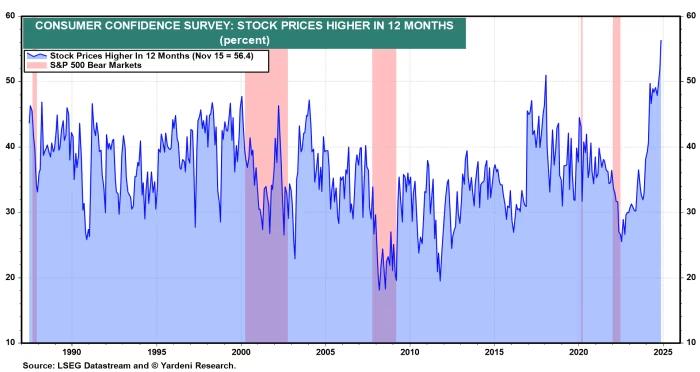
While political drama, including speculation about Donald Trump’s return to the White House, has dominated recent headlines, financial market are about to face a critical reality check. The November jobs report, set to be released on Friday, could have significant implications for the Federal Reserve’s interest rate strategy, with ripple effects across stocks, bonds, and broader market sentiment. November Payrolls Could Shape the Fed’s Next Moves “The market is hoping for good news—but not too good,” said Brent Schutte, Chief Investment Officer at Northwestern Mutual Wealth Management. “If the jobs data is too strong, it could raise doubts about whether the Fed will continue cutting rates.” Such a scenario would challenge a stock market that’s already trading at historically high valuations. Much of the optimism for a continued rally into 2025 hinges on expectations of Fed rate cuts, which would lower borrowing costs and enhance the appeal of high valuations. Conversely, higher rates tend to reduce the present value of future earnings, putting pressure on elevated prices. A Look Back at History Investors wary of the Fed’s impact on markets might recall the dot-com bubble of the late 1990s. Nicholas Colas, co-founder of DataTrek Research, noted that the bubble burst in 2000 after the Fed raised interest rates to 6.5%. “Even a modest series of hikes sent a clear message that the Fed intended to cool the economy, which was enough to dampen investor enthusiasm,” Colas explained. This time, the situation is different but no less delicate. While DataTrek remains optimistic about equities, parallels to past Fed interventions are a reminder of how sensitive markets can be to changes in monetary policy. The Fed Walks a Tightrope Currently, markets are pricing in a 66% chance that the Fed will cut rates by 25 basis points next month, according to the CME FedWatch Tool. This follows cuts in September and earlier this month. However, sticky inflation and resilient economic growth have fueled speculation about whether the Fed might pause its rate-cutting cycle. Minutes from the Fed’s November meeting revealed a divided outlook among policymakers. Many expressed uncertainty about the neutral rate—the point at which monetary policy is neither restrictive nor stimulative. Steve Blitz, Chief U.S. Economist at TS Lombard, underscored the significance of the jobs report, saying, “The November payroll data could be pivotal for this data-driven Fed.” Momentum Meets Risk Despite lingering uncertainty, markets have been riding a wave of momentum. Last week, the S&P 500 notched its 53rd record close of the year, up 26.5% year-to-date. The Dow Jones Industrial Average briefly surpassed the 45,000 mark, while the Nasdaq Composite gained more than 6% in November. Meanwhile, the 10-year Treasury yield dropped to its lowest level since October, offering some relief to equity investors. However, soaring confidence in future stock gains could signal caution ahead. Economist Ed Yardeni of Yardeni Research observed that consumer confidence in higher stock prices over the next year recently hit an all-time high. “From a contrarian perspective, this suggests a pullback may be on the horizon,” Yardeni warned. The Bigger Picture Market moves are often more aligned with economic fundamentals than political shifts. Lauren Goodwin, Chief Market Strategist at New York Life Investments, explained, “Markets respond to real economic changes, not just politics. Durable trends come from broader economic forces.” While optimism over potential tax cuts and deregulation is buoying sentiment, November’s labor-market data could provide a clearer picture of whether those trends are sustainable. As Paul Christopher of Wells Fargo Investment Institute noted, “The Trump trade aligns with existing economic and inflation trends.” This week’s jobs report won’t just influence the Fed’s decision-making—it could also shape investor confidence as markets enter the final stretch of the year. Whether the data reinforces the current rally or signals caution, its impact is likely to be significant. John PaulJohn Paul is the founder of DayTradeToWin, a trading education and software company established in 2008, supporting traders worldwide. His expertise focuses on price action-based futures trading strategies and structured market analysis. DayTradeToWin delivers trading education, indicators, and software tools designed to help traders apply disciplined, rule-based decision-making across global futures markets. He is the creator of multiple trading methodologies, including the Sonic System, Atlas Line, and Trade Scalper, which help traders identify structured opportunities in markets such as the E-mini S&P 500 (ES), Nasdaq (NQ), crude oil (CL), and gold (GC). Official website: https://daytradetowin.com daytradetowin.com

Wall Street
Market News

Wall Street’s 2025: U.S. Stocks or Nothing

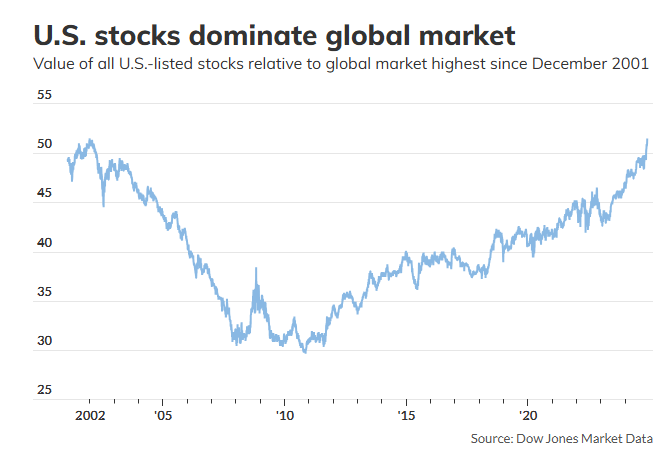
Not everyone is convinced the bullish outlook will fully materialize. Analysts like Brent Donnelly caution that Wall Street forecasts often extrapolate recent trends, overlooking potential surprises from a new administration likely to implement bold policies. “TINA” Returns: U.S. Stocks Still Lead the Pack For over 15 years, large-cap U.S. stocks have outperformed global peers, and top investment banks predict this trend will extend into 2025. With the S&P 500 poised for another year of stellar returns—potentially exceeding 25%—firms like Deutsche Bank, Goldman Sachs, UBS, and JPMorgan Chase are advising investors to stay focused on American equities. Shifting Leadership in U.S. Markets While Big Tech has driven market gains in recent years, analysts anticipate a shift in leadership. Sectors like financials and utilities could take the spotlight, according to JPMorgan’s Dubravko Lakos-Bujas. Some strategists also see opportunities in Japanese equities but remain cautious about the eurozone and emerging markets. U.S. Stocks Face Risks Despite the optimism, challenges remain. High valuations, rising Treasury yields, and uncertainties tied to policy shifts under the incoming administration could introduce volatility. However, the strong U.S. economy and advancements in artificial intelligence are expected to keep American equities attractive. JPMorgan strategists acknowledge potential turbulence but argue that the opportunities outweigh the risks. U.S. stocks now account for over 50% of global market capitalization, a level not seen since 2001, underscoring their dominance. The “TINA” Argument Makes a Comeback Société Générale’s Albert Edwards has reignited the “TINA” sentiment—“there is no alternative”—highlighting the continued appeal of U.S. stocks. Superior earnings growth and robust fundamentals are expected to sustain the market’s momentum. While Big Tech remains a key driver, other sectors are gradually catching up. A Market for Stock Pickers The evolving market landscape could create a stock picker’s paradise as sector performance diversifies. Wall Street strategists analysts foresee a shift from the familiar leaders of 2023 and 2024, offering fresh opportunities for investors willing to dig deeper. International markets, while undervalued, lack the appeal of U.S. equities. UBS strategists highlight the unique wealth effect of the U.S. stock market, driven by higher household equity ownership compared to other countries, which amplifies its economic impact. Contrarian Opportunities in 2025 For now, the combination of U.S. technological leadership, economic resilience, and unmatched market influence reinforces the “TINA” narrative: U.S. equities remain the leading choice for investors seeking stability and growth. John PaulJohn Paul is the founder of DayTradeToWin, a trading education and software company established in 2008, supporting traders worldwide. His expertise focuses on price action-based futures trading strategies and structured market analysis. DayTradeToWin delivers trading education, indicators, and software tools designed to help traders apply disciplined, rule-based decision-making across global futures markets. He is the creator of multiple trading methodologies, including the Sonic System, Atlas Line, and Trade Scalper, which help traders identify structured opportunities in markets such as the E-mini S&P 500 (ES), Nasdaq (NQ), crude oil (CL), and gold (GC). Official website: https://daytradetowin.com daytradetowin.com

markets
Market News

Why Tariffs Haven’t Shaken Markets Yet

Economists Say Inflation Impact May Be Brief, but Tariffs Could Alter Fed’s Rate Path The return of “Tariff Man” is shaking up global markets, with President-elect Donald Trump reigniting trade tensions by pledging significant tariffs. On Monday, Trump announced plans to impose a 25% tariff on imports from Mexico and Canada and an additional 10% on goods from China, a move reminiscent of his first-term trade policies. While the announcement triggered sharp declines in the Mexican peso and Canadian dollar, broader U.S. markets appeared unfazed. Ian Lyngen, a rates strategist at BMO Capital Markets, observed that investors were largely prepared for such measures, given Trump’s campaign rhetoric. “The market reaction reflects that tariffs have a one-time inflationary impact and were already priced in,” Lyngen said. Markets Responses U.S. Treasury yields saw some movement, with the 10-year yield briefly climbing to 4.311% following Trump’s announcement before stabilizing. Stock markets were more subdued, with the S&P 500 and Nasdaq Composite posting gains, while the Dow Jones Industrial Average dipped slightly after reaching a record high the previous day. Economists warn that tariffs could temporarily raise inflation by making imports costlier, shifting demand to domestic goods or untaxed foreign imports. According to Oxford Economics, past U.S.-China trade tensions showed that every 1% increase in tariffs reduced Chinese imports by 2.5%. However, the broader inflationary effects were limited as retailers absorbed costs, and demand shifted to other suppliers. Implications for Federal Reserve Policy The potential inflationary impact of tariffs may influence the Federal Reserve’s stance on interest rates. After recent rate cuts aimed at supporting economic growth, further inflationary pressures could force the Fed to pause its easing. Economists Carl Weinberg and Rubeela Farooqi of High Frequency Economics suggested that the Fed might adopt a wait-and-see approach, holding rates steady to assess the long-term effects of the tariffs. “If tariffs drive prices higher, the Fed is likely to delay further cuts, which could reduce GDP growth,” they noted. Despite the muted market response, tariffs risk undermining economic demand and slowing growth in the U.S., a concern if the Fed decides to keep rates elevated. Uncertain Tariff Outlook The proposed tariffs’ longevity remains unclear. Trump tied their implementation to halting illegal immigration and drug trafficking, leaving the door open for negotiations with affected nations. Analysts suggest this approach mirrors Trump’s 2019 tariff threats, which were later withdrawn after Mexico agreed to policy changes. Stephen Brown, deputy chief North America economist at Capital Economics, pointed out that uncertainty about the tariffs’ permanence likely tempered market reactions. “The implication is that countries could avoid the tariffs by presenting credible plans to address Trump’s concerns, just as Mexico did in 2019,” Brown said. While the markets remain calm for now, investors are closely watching for further developments as they weigh the immediate inflationary impact of tariffs against their potential to reshape the economic and policy landscape. John PaulJohn Paul is the founder of DayTradeToWin, a trading education and software company established in 2008, supporting traders worldwide. His expertise focuses on price action-based futures trading strategies and structured market analysis. DayTradeToWin delivers trading education, indicators, and software tools designed to help traders apply disciplined, rule-based decision-making across global futures markets. He is the creator of multiple trading methodologies, including the Sonic System, Atlas Line, and Trade Scalper, which help traders identify structured opportunities in markets such as the E-mini S&P 500 (ES), Nasdaq (NQ), crude oil (CL), and gold (GC). Official website: https://daytradetowin.com daytradetowin.com

S&P 500
Market News

S&P 500 During the Holidays: What to Expect

According to Bank of America (BofA) Global Research, U.S. stocks typically perform well during Thanksgiving week, with even stronger gains observed in presidential election years. “Seasonality suggests that Thanksgiving week can be a strong week,” said Stephen Suttmeier, BofA’s technical research strategist, in a recent note. Historical data shows that since 1928, the S&P 500 has risen 60% of the time during Thanksgiving week, with an average gain of 0.28% and a median gain of 0.46%. In presidential election years, the index has performed even better, climbing 75% of the time with an average return of 0.88% and a median gain of 1.08%. While the S&P 500 often experiences a pullback the week after Thanksgiving—particularly in election years, when it has declined 67% of the time with an average loss of 1.12%—Suttmeier notes that these dips historically precede strong year-end rallies. From Thanksgiving through New Year’s Eve, the S&P 500 has posted gains 75% of the time in election years, with an average return of 1.38% and a median gain of 1.60%. The market’s momentum in 2024 reflects these trends. Year-to-date, the S&P 500 has surged 25.5%, according to FactSet. While historical data from Bespoke Investment Group shows that strong year-to-date gains can temper Thanksgiving week’s returns—bringing them closer to the long-term average—investors may still find opportunities in the anticipated post-holiday rally. As of Monday, the S&P 500 rose 0.3%, closing at 5,987.37, just shy of its record high of 6,001.35. The Dow Jones Industrial Average climbed 1% to a fresh all-time high, while the Nasdaq Composite added 0.3%. Despite a relatively light economic and earnings calendar this week, key data releases are expected on Wednesday ahead of the Thanksgiving holiday, followed by a shortened trading session on Friday. Given the market’s historical patterns, the Thanksgiving-to-year-end period remains a promising window for investors to consider. John PaulJohn Paul is the founder of DayTradeToWin, a trading education and software company established in 2008, supporting traders worldwide. His expertise focuses on price action-based futures trading strategies and structured market analysis. DayTradeToWin delivers trading education, indicators, and software tools designed to help traders apply disciplined, rule-based decision-making across global futures markets. He is the creator of multiple trading methodologies, including the Sonic System, Atlas Line, and Trade Scalper, which help traders identify structured opportunities in markets such as the E-mini S&P 500 (ES), Nasdaq (NQ), crude oil (CL), and gold (GC). Official website: https://daytradetowin.com daytradetowin.com

inflation
Market News

Sticky Inflation? Insights from Commodities and Stocks

Tariffs and Inflation: BNY Wealth CIO Says It’s ‘Far Too Early’ to Predict Significant Impact Inflation Concerns Resurface as Investors Eye Policy ShiftsU.S. financial markets are grappling with renewed inflation fears following President-elect Donald Trump’s victory, as investors weigh the potential impact of proposed policies like tax cuts and import tariffs. These measures, some argue, could exacerbate the fiscal deficit and fuel inflation. The 10-year Treasury yield has risen 14 basis points since Nov. 6, reflecting these concerns. However, markets have shown resilience: the S&P 500 has gained over 3%, the Dow Jones Industrial Average nearly 5%, and the Nasdaq Composite around 3%, according to FactSet. Yet, uncertainty lingers as investors try to decipher mixed signals from various asset classes. Oil and Gold Respond, but Inflation’s Role Remains CloudedOil and gold prices have surged recently, although analysts attribute much of the movement to geopolitical tensions rather than inflation fears. U.S. crude oil futures jumped 6.5% last week to settle at $71.24 a barrel, while gold, often seen as an inflation hedge, posted a 5% weekly gain, closing at $2,712.20 an ounce. Brian Szytel, co-CIO at the Bahnsen Group, suggested that Trump’s pro-energy policies could increase supply and weaken the traditional link between oil prices and inflation. Value, Growth, and Small Caps: Market Shifts in FocusIn periods of inflation, value stocks often outperform growth stocks, as seen during 2022’s inflation surge. The Russell 1000 Value Index outpaced its growth counterpart last year, and it rose 2.4% last week compared to the Russell 1000 Growth Index’s 1.7% gain. However, analysts like Szytel argue that value stocks are currently attractive more for their valuation dynamics than inflation concerns. Meanwhile, small-cap stocks, which typically benefit from reflation and economic growth, have outperformed in recent weeks. The Russell 2000 Index climbed 4.5% last week, supported by optimism around Trump’s tax-cut proposals and a potential resurgence in domestic manufacturing. Tariff Impact: Too Soon to Draw ConclusionsSinead Colton Grant, CIO at BNY Wealth, cautioned that it’s “far too early” to conclude that tariffs will lead to “significantly higher inflation.” She noted that market signals across asset classes remain mixed and suggested that policy measures are unlikely to exacerbate inflation significantly, given voters’ sensitivity to rising prices. Grant also pointed out that upcoming data, including Wednesday’s personal consumption expenditures price index, could shape the market narrative. A higher-than-expected reading may dampen sentiment and challenge the stock market’s year-end rally. Key Earnings Reports AheadAs the Thanksgiving holiday approaches, the earnings calendar includes major retailers like Best Buy, Macy’s, and Nordstrom, as well as tech giants like Dell and CrowdStrike. These results could provide fresh insights into consumer sentiment and corporate performance amid lingering inflationary concerns. John PaulJohn Paul is the founder of DayTradeToWin, a trading education and software company established in 2008, supporting traders worldwide. His expertise focuses on price action-based futures trading strategies and structured market analysis. DayTradeToWin delivers trading education, indicators, and software tools designed to help traders apply disciplined, rule-based decision-making across global futures markets. He is the creator of multiple trading methodologies, including the Sonic System, Atlas Line, and Trade Scalper, which help traders identify structured opportunities in markets such as the E-mini S&P 500 (ES), Nasdaq (NQ), crude oil (CL), and gold (GC). Official website: https://daytradetowin.com daytradetowin.com

Market News

S&P 500 Surge: A Faster Bull Cycle Ahead?

Morgan Stanley’s Andrew Slimmon: ‘It’s hard to see the market correcting before year-end.’ The S&P 500 has staged a comeback from last week’s decline, which briefly erased its post-election rally, keeping the index on track for a strong finish to 2024. The November 5 election outcome may further fuel the bull market, with the S&P 500 positioned to gain over 20% for a second consecutive year, according to Andrew Slimmon, senior portfolio manager for U.S. equities at Morgan Stanley Investment Management. “This election might be pulling forward returns in the bull market as it enters its third year,” Slimmon said. Historically, bull markets last an average of 4.5 years, and he sees the current cycle continuing, with 2025 shaping up to be “a very good year for equities.” On Tuesday, the S&P 500 rose 0.4%, adding to back-to-back gains after last week’s 2.1% drop, which followed a 4.7% election-driven rally. Year-to-date, the index is up approximately 24%, including a 3.7% November gain so far, according to FactSet data. It now sits just 1.4% below its all-time high reached earlier this month. Slimmon pointed to legendary investor John Templeton’s market cycle framework: “Bull markets are born on pessimism, grow on skepticism, mature on optimism, and die on euphoria.” With economic growth exceeding expectations and optimism building after Donald Trump’s election victory, Slimmon believes the bull market is maturing, not nearing its end. Investors have shifted from recession fears earlier in 2024 to a narrative of steady economic expansion as inflation eases toward the Federal Reserve’s 2% target. The Fed kicked off its first rate-cutting cycle since 2020 in September, further supporting equities. Cyclical sectors like financials and industrials remain Slimmon’s focus, benefiting from robust economic conditions and pro-growth policies expected under Trump’s administration. However, some concerns linger about potential inflationary effects from proposed tariffs, including a 10% levy on all imports and a 60% tariff on Chinese goods. Slimmon anticipates these measures will likely be used as negotiation tools rather than implemented in ways that could derail the economy. “Seasonally, this is a time when markets typically avoid significant pullbacks,” Slimmon said, reinforcing his view that the S&P 500 is unlikely to see a correction before the end of the year. John PaulJohn Paul is the founder of DayTradeToWin, a trading education and software company established in 2008, supporting traders worldwide. His expertise focuses on price action-based futures trading strategies and structured market analysis. DayTradeToWin delivers trading education, indicators, and software tools designed to help traders apply disciplined, rule-based decision-making across global futures markets. He is the creator of multiple trading methodologies, including the Sonic System, Atlas Line, and Trade Scalper, which help traders identify structured opportunities in markets such as the E-mini S&P 500 (ES), Nasdaq (NQ), crude oil (CL), and gold (GC). Official website: https://daytradetowin.com daytradetowin.com

Scroll to Top