
stock market

Market News

Stock-Market Rally Nearing Inflection Point After Wall Street’s ‘Fear Gauge’ Surge

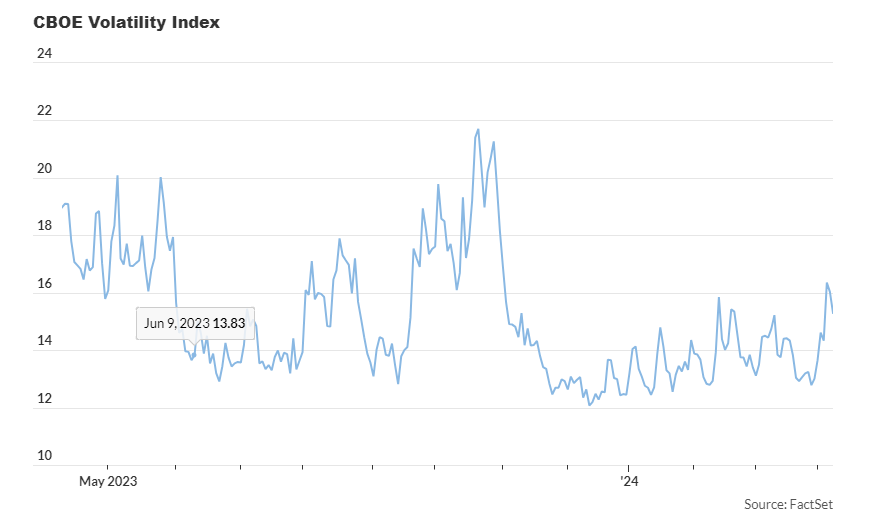
Analysts are cautioning that the recent rise in the Vix, along with heightened interest in bearish options, suggests potential weakness ahead for stocks. Following a tranquil period of five months, the stock market’s upward momentum encountered a disruption last week as the Vix, commonly referred to as the “fear gauge,” surged, raising concerns among some experts about a more significant downturn. The Cboe Volatility Index, or Vix, has raised alarms about the possibility of a stock market correction, defined as a decline of 10% or more from recent peaks. Its notable 23% increase last week, the most significant weekly surge since September, pushed the index above 16 for the first time since November 1, according to FactSet data. This surge follows an extended period of subdued Vix readings, attributed to various factors such as the growing popularity of short-term option contracts and derivative-income exchange-traded funds. Analysts warn that this uptick in volatility could gather pace as traders unwind derivative positions that thrive on market stability. The Vix measures implied volatility based on options market activity, with volatility typically accelerating during market downturns. The combination of a climbing Vix and increased demand for bearish put options indicates to Tyler Richey, co-editor of Sevens Report Research, that the market may be approaching a “tipping point,” suggesting potential softening in the weeks ahead. Richey suggests a scenario akin to the selloff experienced between late July and late October of the previous year. Last week’s surge in demand for bearish put options propelled the 10-day rolling average of the Cboe equity put-call ratio to its highest level since January 26, signaling heightened interest in options tied to individual stocks. Furthermore, the uptick in demand for out-of-the-money puts compared to calls has drawn attention. This surge, according to Charlie McElligott, a derivatives strategist at Nomura, has led to a notable increase in the options-market skew, indicating a shift in investor sentiment. Historically, rapid increases in skew from historically low levels have coincided with weak excess returns for stocks. These indicators suggest potential near-term challenges for markets, especially with upcoming economic data releases and Treasury auctions that could impact bond yields. Slow-moving catalysts such as a strengthening economy and evolving expectations regarding Federal Reserve policies also contribute to market uncertainty. While some analysts caution against overinterpreting last week’s volatility, they acknowledge the vulnerability of the recent market rally. Despite mixed performance on Monday, with the S&P 500 and Dow Jones slightly down while the Nasdaq edged up, low trading volume indicated investor distraction, possibly due to external events like the total solar eclipse. However, the Vix finished lower on Monday, showing a decline of 5.1%, reflecting ongoing market uncertainty despite the recent surge in volatility. The remarkable rally in stocks since late October, without significant pullbacks, underscores the unusual resilience of the market in recent months. John PaulJohn Paul is the founder of DayTradeToWin, a trading education and software company established in 2008, supporting traders worldwide. His expertise focuses on price action-based futures trading strategies and structured market analysis. DayTradeToWin delivers trading education, indicators, and software tools designed to help traders apply disciplined, rule-based decision-making across global futures markets. He is the creator of multiple trading methodologies, including the Sonic System, Atlas Line, and Trade Scalper, which help traders identify structured opportunities in markets such as the E-mini S&P 500 (ES), Nasdaq (NQ), crude oil (CL), and gold (GC). Official website: https://daytradetowin.com daytradetowin.com

Market News

Geopolitical Turmoil Threatens to Derail the Stock Market Rally

Concerns over a potential retaliatory strike from Iran on Israel were a factor in the drop in stock prices for the week. Throughout most of the previous year, investors showed little to no concern about geopolitical risks. When we reached Thursday afternoon in New York, analysts at Bespoke Investment Group observed a substantial change. They believe that the speculation of Israel getting ready for a military strike from Iran has led to a sudden and dramatic movement in the stock market. Israel destroyed an Iranian embassy in Syria earlier in the week, leading to an increase in crude oil prices. Market analysts are warning that the unpredictable situation in the Middle East may have a more severe effect on stocks than the delayed implementation of the Fed’s interest-rate reductions. This could be a rare scenario where geopolitical uncertainties have a substantial long-term impact on the markets. Steve Sosnick, the chief market strategist at Interactive Brokers, stated in an interview with MarketWatch that equity investors often lack the ability to properly assess geopolitical risks and their potential influence on markets. He also pointed out that this type of risk is typically ignored until it becomes a pressing issue, which could lead to exaggerated reactions in the market. Even though U.S. stock markets ended the week with increases on Friday, they saw a significant decrease on Thursday afternoon. The Dow Jones Industrial Average dropped by 530 points, the biggest daily decline in more than a year, according to Dow Jones Market Data. Treasury yields rose on Friday after being lower on Thursday, despite Neel Kashkari, President of the Federal Reserve Bank of Minneapolis, hinting at no interest rate changes in the near future. Bespoke noted that the stable bond yields were more likely attributed to worries about a potential conflict with Iran, rather than expectations of interest rate fluctuations, as the main cause of the stock price drop. Therefore, it is important to understand the reasons behind the current response of the stock market to the tensions between Iran and Israel, which have escalated six months after the conflict between Israel and Hamas started. Despite initially ignoring the Hamas attack on October 7, the S&P 500 ended up closing higher on October 9, according to data from FactSet. Savita Subramanian, who leads U.S. Equity & Quantitative Strategy at BofA Global Research, explains that investors usually do not react to geopolitical events as they tend to have minimal impact on company profits in the long term. In a recent report analyzing the effects of a Hamas attack on Israel on October 7, Subramanian pointed out that market downturns resulting from such events are typically short-lived unless they have a significant impact on the economy as a whole. This presents an opportunity for investors to capitalize on lower stock prices following a 5% to 10% market drop. Subramanian stated that major international events such as the September 11 attacks and the Brexit vote have had only a fleeting impact on markets in the last three decades. The effects of Russia’s confrontation with Ukraine decreased as crude oil prices fell from $130 a barrel. The Federal Reserve blamed supply chain disruptions caused by the COVID-19 pandemic for the inflation spike that affected markets in 2022, while the Biden administration initially blamed Russia. Nonetheless, a potential major clash in the Middle East involving Israel and Iran could lead to significant economic consequences that may force investors to make decisions. An unexpected rise in crude oil prices, especially from increased production in the Middle East, could create major issues. While the abundance of crude oil in the United States may help lessen the impact on American consumers, it could still hurt the profits of American multinational corporations. This could be a result of disruptions in global trade, lower demand for international travel, and a weakened European consumer market in the event of another energy crisis, potentially causing a recession in Europe. According to Subramanian, these factors have the potential to cause a long-term decrease in worldwide stocks, extending beyond a short period of time. Some industries, like defense and aerospace, are likely to benefit from the current market conditions. The SPDR S&P Aerospace & Defense ETF XAR has only grown by 1.7% in 2024. Energy companies may also experience advantages due to rising crude oil prices. Ed Yardeni, the president and chief market strategist of Yardeni Research, has consistently warned investors not to overlook the risks of conflicts in the Middle East. He sees the potential for a regional war as a significant threat to his generally positive market forecasts. On Friday, Yardeni issued a warning that if the tensions between Israel and Iran worsen and lead to a larger conflict, it could have a negative impact on the stock market in the 2020s, potentially resembling the poor performance seen in the 1970s. During a recent CNBC interview, Yardeni mentioned that while geopolitical crises have historically been viewed as chances to buy, the current situation in the Middle East is escalating and is unlikely to get better. American stocks closed the week on a high note on Friday, with the S&P 500 gaining 57 points, or 1.1%, to finish at 5,204. The Dow Jones Industrial Average also saw a 0.8% increase, while the Nasdaq Composite COMP, which focuses on technology stocks, rose by 1.2%. At the end of the week, all three stock market indexes experienced decreases, with the Dow having its most disappointing performance in a year. The drop in stock prices has been linked to rising oil prices and increased Treasury yields. Yardeni thinks that the possibility of a bigger conflict in the Middle East is more of a risk to financial markets compared to the Federal Reserve’s decision to keep interest rates unchanged until the end of 2024. He told CNBC that his main focus is on geopolitics. He stated that he would not be concerned if the Federal Reserve chooses not to lower interest rates, as it is in line with his

Market News

Inflation’s Standstill: How Investors Can Adapt to Prolonged Economic Trends

One trader suggests that runaway inflation isn’t looming, but instead, there’s a risk of asset prices spiraling out of control. With the latest strong official jobs report for March now available, traders are bracing for five more months of stagnant consumer-price index (CPI) reports, expected to hover between 3.2% and 3.4%. Despite the Federal Reserve’s efforts to curb inflation, it’s anticipated that CPI figures will persist above 3% until August, shaping household expectations. Gang Hu, a trader at WinShore Capital Partners, highlights that despite concerns about inflation not subsiding and the potential for further escalation, significant asset depreciation may not occur. Hu’s track record of accurate predictions adds credibility to his viewpoint, such as his past forecasts on inflation and market reactions. Hu paints a picture where the U.S. economy and financial markets are entering a new phase of the inflation era, where asset prices could continue rising even if the Fed struggles to rein in inflation or lower interest rates. He attributes this to various factors, including the uneven impact of economic conditions on different businesses, substantial fiscal support from recent legislation, and increased immigration bolstering job creation. The unexpectedly strong March jobs report has contributed to a positive market sentiment, despite lingering concerns about inflation. Even traders expecting continued CPI increases haven’t sounded the alarm about inflationary trends. Hu underscores that fiscal policies are segregating winners and losers in the economy, with major technology firms likely to weather interest rate fluctuations well, while smaller companies and consumers face greater challenges. Additionally, the influx of immigrants into the labor force is easing pressure on job creation and economic growth. Overall, Hu suggests that asset inflation may outpace consumer inflation in the U.S. economy. He speculates that as inflation remains around 3%, the Fed’s traditional economic models might prove less effective, leading to uncertainty about appropriate monetary policy measures. While the first quarter ended positively for stock indexes, April’s start has been more volatile, with mixed performances across major indices and fluctuations in bond, gold, and oil markets. John PaulJohn Paul is the founder of DayTradeToWin, a trading education and software company established in 2008, supporting traders worldwide. His expertise focuses on price action-based futures trading strategies and structured market analysis. DayTradeToWin delivers trading education, indicators, and software tools designed to help traders apply disciplined, rule-based decision-making across global futures markets. He is the creator of multiple trading methodologies, including the Sonic System, Atlas Line, and Trade Scalper, which help traders identify structured opportunities in markets such as the E-mini S&P 500 (ES), Nasdaq (NQ), crude oil (CL), and gold (GC). Official website: https://daytradetowin.com daytradetowin.com

Market News

Understanding the Tension Surrounding the High-Stakes Jobs Report for Stock-Market Investors

Equities might encounter obstacles if data dampens hopes for a June rate cut, according to a strategist’s warning. With Friday marking the release of the jobs report, there’s heightened anticipation in the stock market, which has seen a downturn this week as investors gauge the likelihood of Federal Reserve rate cuts later in the year. Analysts surveyed by the Wall Street Journal expect nonfarm payrolls for March to increase by 200,000, with the unemployment rate predicted to decrease from 3.9% to 3.8%. Hourly wage growth is forecasted to slow to a year-over-year rate of 4.1% from February’s 4.3%. Tom Essaye, founder of Sevens Report Research, observed an unusual market sentiment ahead of the April employment report. While typically a “too hot” or “too cold” jobs figure triggers a market sell-off, this Friday’s concern lies more with a stronger-than-anticipated reading. Investors are worried that if the employment report shows significant strength, the Fed might postpone rate cuts from June to later in the summer or even late 2024. This sentiment was echoed by Minneapolis Fed President Neel Kashkari, who hinted at the possibility of no rate cuts if inflation remains stable. Although the market initially anticipated multiple rate cuts by the Fed in 2024, expectations have since been tempered. Nevertheless, stocks rallied to record highs in the first quarter, with the S&P 500 posting a gain of around 10%. According to the CME FedWatch Tool, Fed-funds futures on Thursday implied a 40.7% chance that policymakers would maintain the key rate unchanged at the June meeting. Of particular concern to Essaye is the potential for a “too hot” figure, which could drive Treasury yields higher and lead to a drop of 1% or more in the S&P 500. Conversely, a “too cold” figure, such as a minimal increase in payrolls, could raise concerns about economic health but might also prompt a short-term positive market reaction as Treasury yields retreat. John PaulJohn Paul is the founder of DayTradeToWin, a trading education and software company established in 2008, supporting traders worldwide. His expertise focuses on price action-based futures trading strategies and structured market analysis. DayTradeToWin delivers trading education, indicators, and software tools designed to help traders apply disciplined, rule-based decision-making across global futures markets. He is the creator of multiple trading methodologies, including the Sonic System, Atlas Line, and Trade Scalper, which help traders identify structured opportunities in markets such as the E-mini S&P 500 (ES), Nasdaq (NQ), crude oil (CL), and gold (GC). Official website: https://daytradetowin.com daytradetowin.com
Market News

Breaking Down the Surge: How Oil, Gold, and Dollar Rally Could Impact the Fed’s Rate-Cut Outlook

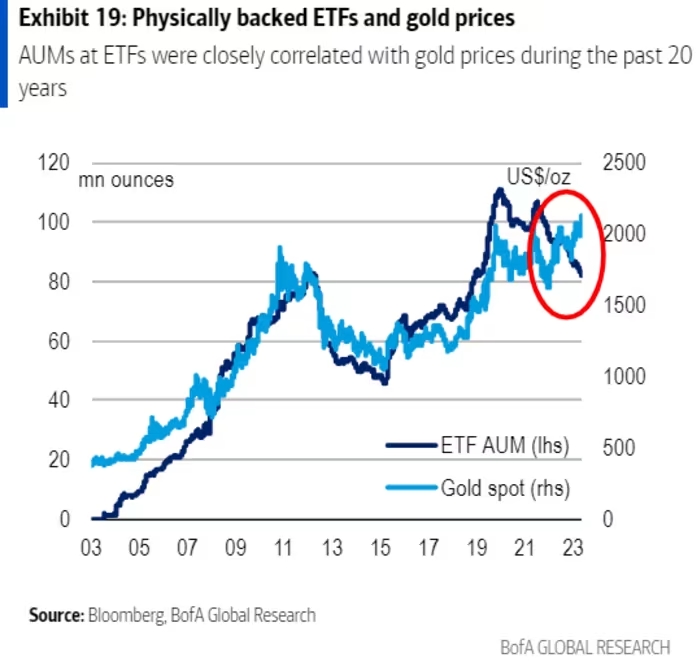
In 2024, market strategists caution that a vigorous global economic recovery is propelling a striking surge in commodity prices. This surge poses a challenge to the Federal Reserve’s efforts to contain inflation and could complicate its plans to cut interest rates by mid-year. Commodities ranging from oil and gasoline to gold and silver have kicked off the year with remarkable gains, reaching levels unseen for years. This rally has reignited concerns about inflation among investors and raised fears that the Federal Reserve might need to maintain higher borrowing costs for a longer duration than initially anticipated. The Bloomberg Commodity Index, tracking 24 major commodities futures contracts across energy, metals, and crops, reached its highest point since November, largely fueled by surging energy and gold prices. This spike is partly attributed to escalating geopolitical tensions in the Middle East and the ongoing conflict between Russia and Ukraine, as well as speculations that the first rate cut by the Fed might not occur until summer. Silver has also witnessed a notable uptrend, with the iShares Silver Trust recording its strongest performance since May 2023. This surge in precious metals has defied expectations, even in the face of a strengthening U.S. dollar. According to Nanette Abuhoff Jacobson, global investment strategist at Hartford Funds, the market anticipates better-than-expected global growth, along with increased inflation and commodity prices. This scenario complicates the Fed’s goal of implementing three rate cuts in 2024 as initially planned. U.S. Treasury yields have risen amidst this backdrop, with the 10-year Treasury bond yield reaching its highest level since November. Oil prices have been a significant driver, climbing towards $90 per barrel, buoyed by both geopolitical tensions and expectations of heightened demand due to strong economic growth. However, some analysts, like Stephen Lee from Logan Capital Management, suggest that the primary driver behind the oil price surge is not geopolitical conflicts but rather expectations of robust economic growth globally. The positive correlation between oil prices and energy stocks indicates a shift in oil supply and demand dynamics, according to Nicholas Colas of DataTrek Research. This suggests that energy stocks may be poised for further gains. Despite the strength of the U.S. dollar, precious metals continue to maintain their ground due to rising physical demand, driven by various factors including geopolitical tensions and uncertainties surrounding Fed rate cuts. The traditional inverse correlation between the U.S. dollar and commodities, particularly gold, has weakened recently, as both have experienced increased demand amid global economic uncertainties. Oil, being priced in dollars globally, typically exhibits an inverse relationship with the dollar. John PaulJohn Paul is the founder of DayTradeToWin, a trading education and software company established in 2008, supporting traders worldwide. His expertise focuses on price action-based futures trading strategies and structured market analysis. DayTradeToWin delivers trading education, indicators, and software tools designed to help traders apply disciplined, rule-based decision-making across global futures markets. He is the creator of multiple trading methodologies, including the Sonic System, Atlas Line, and Trade Scalper, which help traders identify structured opportunities in markets such as the E-mini S&P 500 (ES), Nasdaq (NQ), crude oil (CL), and gold (GC). Official website: https://daytradetowin.com daytradetowin.com

Market News

Understanding What Factors Could Turn the Stock-Market Stumble into a Major Pullback

Stock markets cruised to record highs in the first quarter, but now, surging Treasury yields and oil prices are changing the tune. The Dow Jones Industrial Average dropped over 500 points shortly after opening on Tuesday, marking a second consecutive day of declines. By afternoon, the index was down around 480 points, or 1.2%, while the S&P 500 was off by 0.9%. Sam Stovall, chief investment strategist at CFRA, suggests that the S&P 500’s significant rally since October may lead to a pullback, highlighting the importance of the 10-year Treasury yield. The recent rapid increase in Treasury yields, coupled with rising oil prices due to concerns about Middle East tensions, is seen as the trigger for the current market downturn. The yield on the 10-year note rose to approximately 4.37% on Tuesday, nearing its 2024 peak. Rising yields can negatively impact stocks by increasing borrowing costs for companies and reducing the present value of future profits. Additionally, the speed of the yield rise can prompt investors to adjust their portfolios, adding further pressure on the market. Looking ahead, the outlook for Treasury and stock market declines remains uncertain. Economic data releases and statements from the Federal Reserve will likely influence market sentiment, with particular attention on Friday’s March jobs report. The stumble at the start of April underscores the significance of forthcoming economic indicators in the face of rising yields’ potential impact on equities. John PaulJohn Paul is the founder of DayTradeToWin, a trading education and software company established in 2008, supporting traders worldwide. His expertise focuses on price action-based futures trading strategies and structured market analysis. DayTradeToWin delivers trading education, indicators, and software tools designed to help traders apply disciplined, rule-based decision-making across global futures markets. He is the creator of multiple trading methodologies, including the Sonic System, Atlas Line, and Trade Scalper, which help traders identify structured opportunities in markets such as the E-mini S&P 500 (ES), Nasdaq (NQ), crude oil (CL), and gold (GC). Official website: https://daytradetowin.com daytradetowin.com

Scroll to Top