

stock market

Market News

Bank of America Sets S&P 500 Target at 5,400: A Breakdown of the Forecast

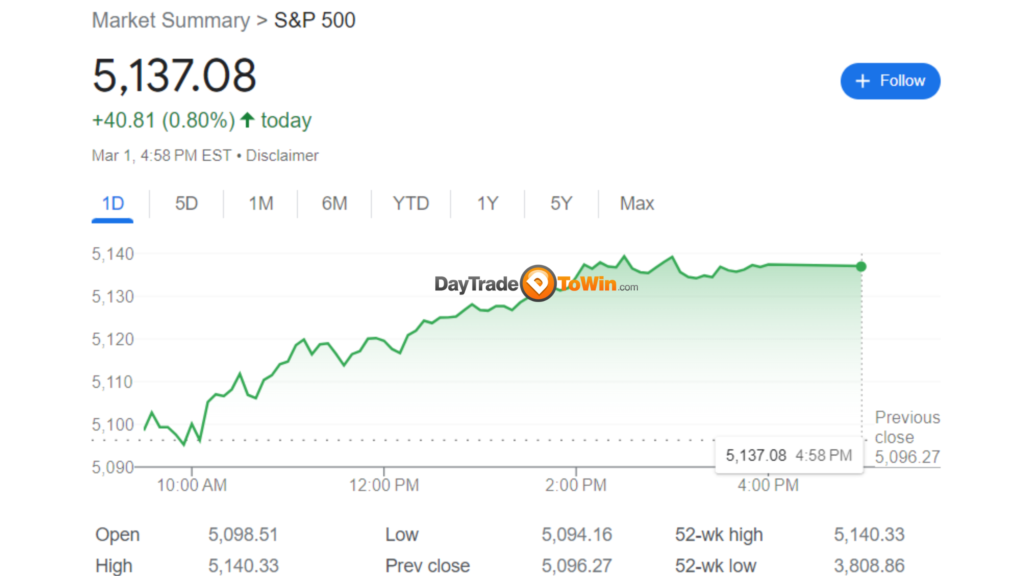
Today’s U.S. trading day is expected to start cautiously, with futures signaling a subdued opening for Wall Street despite the major stock indices maintaining their record highs. Over the past three months, both the Nasdaq Composite and the S&P 500 have seen significant gains, raising concerns among some about the possibility of market bubbles. Bank of America’s team, led by Savita Subramanian, remains optimistic, having revised their end-of-year S&P 500 target upward to 5,400. However, they also acknowledge the likelihood of a market pullback, citing historical patterns of regular 5% pullbacks and 10% corrections. Subramanian highlights bearish signals from technical analysis and an uptick in the volatility gauge (CBOE VIX), indicating growing uncertainty as elections approach. Nevertheless, historical trends suggest that post-election periods often lead to year-end rallies due to reduced uncertainty. Despite potential short-term setbacks, Subramanian forecasts a modest 5% upside for the S&P 500 this year. This projection is based on a thorough analysis of five different forecasting methods, each weighted differently depending on prevailing market conditions and investor sentiment. Currently, the most optimistic method, the sell-side indicator, suggests a target of 5,706, though its weight has been slightly reduced due to potentially overly optimistic analyst forecasts. Other factors such as price momentum, earnings surprises, and long-term valuation also contribute to the overall target. The increase in the fair value model, reflecting a shift towards higher-margin, lower-risk industries, is a key driver behind the revised S&P 500 target. Despite concerns about market exuberance in certain sectors, Subramanian anticipates a broader market expansion beyond these themes. While sentiment among sell-side analysts leans bullish, overall allocations to public equity remain low, and positioning in certain sectors indicates bearish sentiment. This suggests potential for further market growth beyond current trends, provided broader market participation increases. John PaulJohn Paul is the founder of DayTradeToWin, a trading education and software company established in 2008, supporting traders worldwide. His expertise focuses on price action-based futures trading strategies and structured market analysis. DayTradeToWin delivers trading education, indicators, and software tools designed to help traders apply disciplined, rule-based decision-making across global futures markets. He is the creator of multiple trading methodologies, including the Sonic System, Atlas Line, and Trade Scalper, which help traders identify structured opportunities in markets such as the E-mini S&P 500 (ES), Nasdaq (NQ), crude oil (CL), and gold (GC). Official website: https://daytradetowin.com daytradetowin.com

Market News

Analyzing March Momentum: U.S. Stock Market Post-Strong February

Bespoke observes that March typically delivers moderate results for U.S. stocks, lacking the standout gains seen in other months. Despite a successful February for U.S. stocks, there’s speculation over whether investors might opt to cash in on those gains at the beginning of March. Reflecting on historical data since 1953, Bespoke finds a varied response in stock performance following a February rally of over 4% in the S&P 500. The first day of March typically yields modest gains, with the index closing higher just over half the time. However, the trend tends to shift afterward, with the fourth and fifth trading days of March historically showing slight declines compared to other March months. While these patterns aren’t definitive, Bespoke suggests that some early weakness in March wouldn’t be surprising. As March begins, U.S. stocks opened in a subdued manner, with the Nasdaq Composite continuing to outperform, having settled at a record high in the previous session. Looking back at historical trends, March’s performance for the S&P 500 has been fairly average since 1928, with gains that don’t particularly stand out. However, when March follows strong performances in January and February, the results tend to be weak. In such instances since 1928, the S&P 500 has experienced significant monthly declines, according to Bespoke’s data. John PaulJohn Paul is the founder of DayTradeToWin, a trading education and software company established in 2008, supporting traders worldwide. His expertise focuses on price action-based futures trading strategies and structured market analysis. DayTradeToWin delivers trading education, indicators, and software tools designed to help traders apply disciplined, rule-based decision-making across global futures markets. He is the creator of multiple trading methodologies, including the Sonic System, Atlas Line, and Trade Scalper, which help traders identify structured opportunities in markets such as the E-mini S&P 500 (ES), Nasdaq (NQ), crude oil (CL), and gold (GC). Official website: https://daytradetowin.com daytradetowin.com

Market News

Dalio’s Assessment: Stock Market Resists Bubbling Tendencies

In evaluating the U.S. stock market with these parameters, Ray Dalio, founder of Bridgewater Associates, suggests that it doesn’t appear excessively bubbly, despite notable rallies and media attention on specific segments. Stocks have surged significantly since their October lows, marking four consecutive months of gains and propelling both the S&P 500 and Dow Jones Industrial Average to consecutive record highs. This surge, primarily driven by a narrow focus on technology, has prompted discussions about a potential bubble reminiscent of the late 1990s dot-com boom and subsequent bust. However, Dalio argues in a recent LinkedIn post that concerns about a bubble may be misplaced, citing his six-part checklist to assess the situation. He elaborates on his criteria for the “bubble gauge” as follows: Based on Dalio’s equity bubble gauge, the current market situation falls within the middle range, at the 52nd percentile, a level historically not associated with past bubbles. Regarding the “Magnificent Seven,” the group of mega-cap tech stocks fueled by enthusiasm over artificial intelligence, Dalio acknowledges their notable surge, with their combined market capitalization growing over 80% since January 2023, now representing more than a quarter of the S&P 500’s total market capitalization. Dalio suggests that while these stocks may appear somewhat inflated, they do not reflect a full-fledged bubble. Valuations, while slightly high relative to current and projected earnings, are not excessively so, and sentiment does not indicate extreme bullishness. Furthermore, there’s no evidence of excessive leverage or an overwhelming influx of new and inexperienced buyers. However, Dalio cautions that a significant correction in these stocks could occur if the anticipated impact of generative AI fails to materialize as priced in. John PaulJohn Paul is the founder of DayTradeToWin, a trading education and software company established in 2008, supporting traders worldwide. His expertise focuses on price action-based futures trading strategies and structured market analysis. DayTradeToWin delivers trading education, indicators, and software tools designed to help traders apply disciplined, rule-based decision-making across global futures markets. He is the creator of multiple trading methodologies, including the Sonic System, Atlas Line, and Trade Scalper, which help traders identify structured opportunities in markets such as the E-mini S&P 500 (ES), Nasdaq (NQ), crude oil (CL), and gold (GC). Official website: https://daytradetowin.com daytradetowin.com
Market News

Into the Unknown: Traders’ Exploration of an Essential, Yet Little-Known, Financial Realm

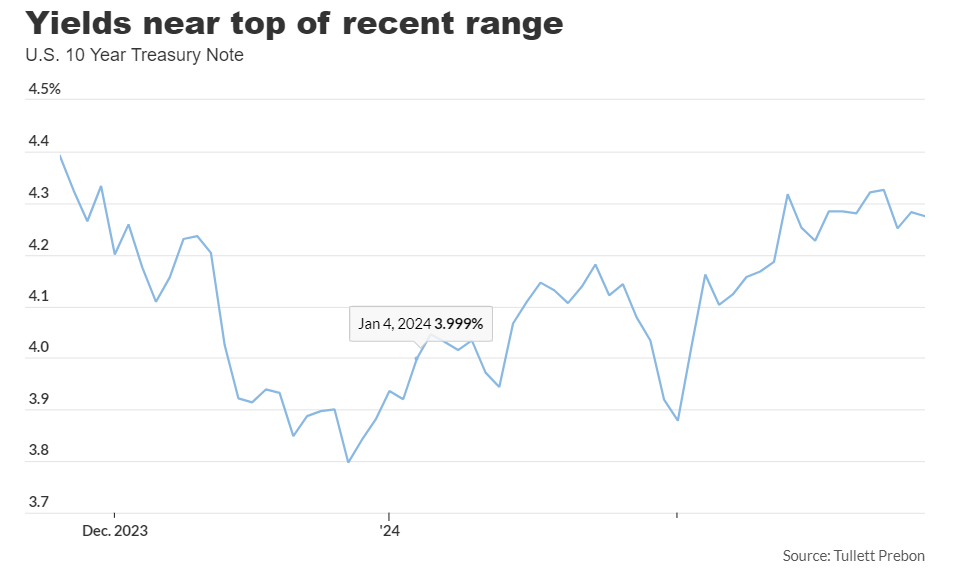
Investors are acutely aware of potential shifts brewing in the background over the past 1.5 to 2 years, signaling the possibility of messy adjustments ahead, notes a strategist. While Federal Reserve officials may take months before considering any action on interest rates, traders are directing their attention to the often-overlooked dynamics of funding markets, which are crucial for sustaining confidence in the U.S. banking system. These markets, particularly the mechanisms like the Federal Reserve’s reverse repurchase facility, play a pivotal role in managing the central bank’s main policy rate target and ensuring the smooth operation of financial markets. However, concerns are mounting that certain scenarios could trigger disruptions akin to those witnessed in September 2019, when volatility rattled the overnight funding market due to a sharp decline in bank reserves. Economist Derek Tang underscores the challenges faced by Fed officials during such episodes, highlighting the uncertainty surrounding the effectiveness of their measures in mitigating risks. Presently, the usage of the reverse-repo facility is on the decline, raising apprehensions that a complete cessation could lead to a shortage of reserves in the banking sector, echoing the events preceding the collapse of Silicon Valley Bank. Despite these concerns, funding markets have exhibited resilience this year, with no indications of strain comparable to those seen in late 2023. With ample bank reserves intact, the Fed retains the flexibility to continue its quantitative tightening efforts, though worries persist regarding potential disruptions once reverse repo usage hits zero. The concentration of these issues on the Fed’s balance sheet is capturing market attention, with many fearing a period of calm before a storm. Tang suggests that while the Fed may not be adjusting interest rates, the focus on these matters in 2024 aligns with expectations for a reevaluation of balance-sheet plans. While some policymakers have earmarked March for discussions on adjusting the pace of quantitative tightening, analyst John Velis questions the urgency, pointing to the current stability in funding markets and policy uncertainty delaying rate cut expectations. Nonetheless, developments in various market indicators, including Treasury prices and yields, underscore the evolving landscape that investors are monitoring closely. John PaulJohn Paul is the founder of DayTradeToWin, a trading education and software company established in 2008, supporting traders worldwide. His expertise focuses on price action-based futures trading strategies and structured market analysis. DayTradeToWin delivers trading education, indicators, and software tools designed to help traders apply disciplined, rule-based decision-making across global futures markets. He is the creator of multiple trading methodologies, including the Sonic System, Atlas Line, and Trade Scalper, which help traders identify structured opportunities in markets such as the E-mini S&P 500 (ES), Nasdaq (NQ), crude oil (CL), and gold (GC). Official website: https://daytradetowin.com daytradetowin.com
Market News

Surprising Findings: The U.S. Stock Market’s Unparalleled Diversity

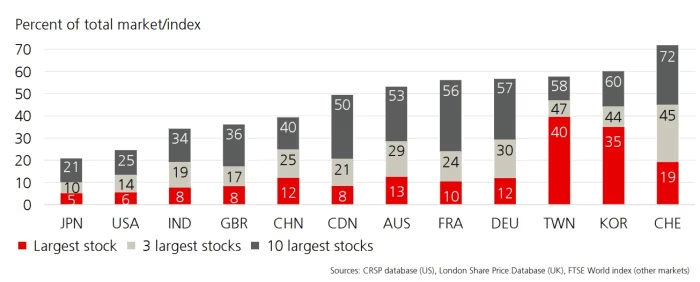
Despite the prevalent discourse surrounding the dominance of a handful of companies such as the Magnificent Seven in propelling stock-market performance, the truth reveals a different narrative: the U.S. market stands as one of the least concentrated globally. This insight stems from the latest research findings presented in the global investment returns yearbook authored by Paul Marsh and Mike Staunton of London Business School, along with Elroy Dimson of Cambridge University. The yearbook, now published at UBS following the demise of Credit Suisse, highlights the U.S. as the second-least concentrated market among the top 12 global markets. However, this observation doesn’t guarantee long-term stability. During discussions with journalists, the authors stressed the inherent uncertainty in predicting the market’s trajectory. Dimson aptly noted, “The future is very uncertain, always,” while Marsh emphasized the distinction between the present market landscape and the dot-com era, noting that today’s market leaders boast profitability, albeit with lingering concerns regarding valuation rather than the quality of fundamentals. Despite maintaining its dominance in global stock markets, comprising 61% of total market capitalization by the end of last year, the historical performance of the U.S. market may not be easily replicated in the future. Over the past 124 years, U.S. stocks have delivered an inflation-adjusted return of 6.5%, outperforming global stocks by 1.4%. However, the authors caution against expecting similar returns in the future, attributing much of the past success to generational luck rather than sustainable trends. Looking forward, they anticipate diminished returns for Generation Z compared to previous generations, forecasting annual real returns of 4.5% on stocks, 2% on bonds, and 3.5% on a 60/40 portfolio. While falling short of the returns experienced by baby boomers, this projection aligns with the stock-market performance observed by millennials. John PaulJohn Paul is the founder of DayTradeToWin, a trading education and software company established in 2008, supporting traders worldwide. His expertise focuses on price action-based futures trading strategies and structured market analysis. DayTradeToWin delivers trading education, indicators, and software tools designed to help traders apply disciplined, rule-based decision-making across global futures markets. He is the creator of multiple trading methodologies, including the Sonic System, Atlas Line, and Trade Scalper, which help traders identify structured opportunities in markets such as the E-mini S&P 500 (ES), Nasdaq (NQ), crude oil (CL), and gold (GC). Official website: https://daytradetowin.com daytradetowin.com

Market News

Alert: Treasury Yields Decline as Traders Keep Close Watch on Inflation Trends

On Tuesday, U.S. bond yields dropped as traders monitored economic data and Federal Reserve officials’ comments. Highlights: Factors driving the market: Benchmark Treasury yields retreated slightly from recent highs as investors awaited key data that could impact Federal Reserve policy decisions. Key events: Market outlook: Market indicators suggest a high probability of the Fed maintaining interest rates at its next meeting in March. Analysts caution against overly loose financial conditions, which could fuel inflationary pressures. Deutsche Bank’s analysis suggests a reduced likelihood of rate cuts before June, with expectations of cuts beginning at the June meeting, contingent upon inflation trends. John PaulJohn Paul is the founder of DayTradeToWin, a trading education and software company established in 2008, supporting traders worldwide. His expertise focuses on price action-based futures trading strategies and structured market analysis. DayTradeToWin delivers trading education, indicators, and software tools designed to help traders apply disciplined, rule-based decision-making across global futures markets. He is the creator of multiple trading methodologies, including the Sonic System, Atlas Line, and Trade Scalper, which help traders identify structured opportunities in markets such as the E-mini S&P 500 (ES), Nasdaq (NQ), crude oil (CL), and gold (GC). Official website: https://daytradetowin.com daytradetowin.com

Scroll to Top