
stock trading

markets
Market News

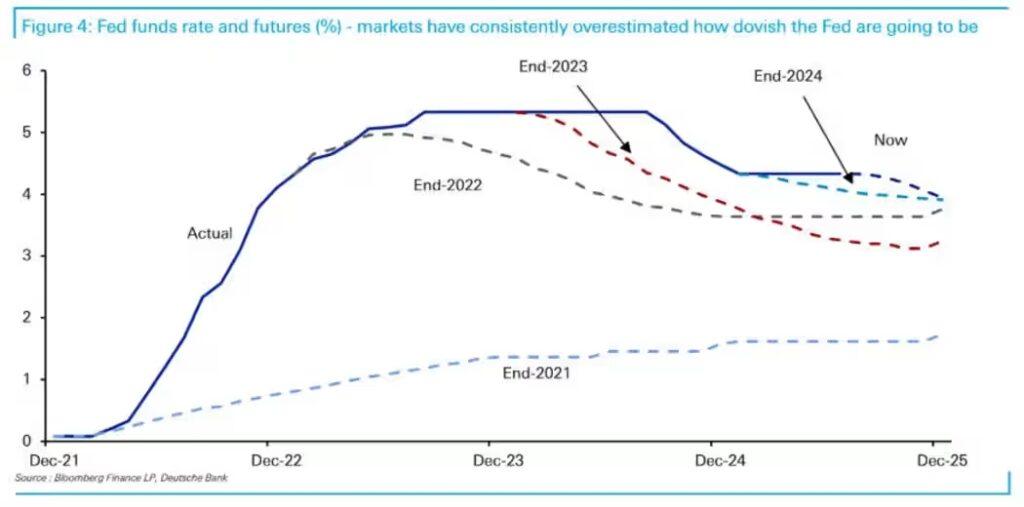
4 Years of Fed Misses: Will Markets Ever Learn?

Tariff Risks Are Rising—But Markets Aren’t Paying Attention Stocks look set for a subdued session, even as warning signs build beneath the surface. Tuesday’s bond market reaction to hotter-than-expected June inflation showed just how quickly sentiment can shift—especially as tariffs start to play a bigger role. Consumer prices jumped last month by the most since early 2025, and some economists are starting to connect the dots. Henry Allen, macro strategist at Deutsche Bank, says investors remain too relaxed about the inflation outlook. “There’s still a striking complacency across major asset classes,” Allen said in a Wednesday note. “This is now the fourth consecutive year that markets have misjudged how hawkish the Fed would actually be.” One key factor Allen flags: rising tariffs. Former President Donald Trump has proposed sweeping trade policies, including a 10% baseline tariff on most imports, with additional levies on steel, aluminum, autos, and possibly copper. Markets, however, haven’t priced in these possibilities. According to betting markets, there’s a 28% chance Trump’s proposed 30% tariff on EU goods becomes reality, and a 43% chance that Canada’s 35% tariff goes through. “If enacted, they’d be a major surprise,” Allen said. “Most investors aren’t prepared for them.” Beyond the U.S., retaliation is also a risk. The European Union reportedly has a list of U.S. products ready to target in response to new duties. Allen warns this could ignite a broader inflation wave by disrupting global supply chains and pushing prices higher. Evidence may already be emerging. Tuesday’s inflation data showed the largest-ever monthly jump in household appliance prices. Allen believes this could signal a broader trend: “The strength in core goods may soon spread across the consumer basket, making inflation more persistent.” Geopolitical risks could add fuel to the fire. Allen cites last month’s Iran-Israel tensions, which briefly drove oil prices higher, as the kind of unpredictable shock that can reignite inflation expectations. Meanwhile, central banks are still expected to cut rates later this year—bets that Allen says are increasingly out of touch. “Markets keep assuming dovish pivots that never arrive. At the start of 2025, traders were pricing in a Fed rate cut by June, which didn’t happen.” Debt burdens could also play a role. Governments may be tempted to tolerate surprise inflation as a short-term fix for high debt, even if markets eventually demand higher rates to compensate. “The bottom line,” Allen said, “is that markets continue to underestimate the inflation risks still ahead—particularly from tariffs. That could set the stage for yet another round of painful surprises.” John PaulJohn Paul is the founder of DayTradeToWin, a trading education and software company established in 2008, supporting traders worldwide. His expertise focuses on price action-based futures trading strategies and structured market analysis. DayTradeToWin delivers trading education, indicators, and software tools designed to help traders apply disciplined, rule-based decision-making across global futures markets. He is the creator of multiple trading methodologies, including the Sonic System, Atlas Line, and Trade Scalper, which help traders identify structured opportunities in markets such as the E-mini S&P 500 (ES), Nasdaq (NQ), crude oil (CL), and gold (GC). Official website: https://daytradetowin.com daytradetowin.com
nvidia
Market News

Nvidia Teases Return to China Market After Sales Halt

Nvidia Eyes Return to China Market After $8 Billion Setback Nvidia is preparing to re-enter the Chinese market with its H20 chip, a move that could recover billions in lost revenue after facing strict U.S. export restrictions. In a blog post released late Monday, Nvidia said it is seeking approval to resume sales of its H20 chip—a lower-spec version of its Hopper series tailored to comply with U.S. trade rules. The company disclosed it has received assurances from the U.S. government that licenses for the chip “will be granted,” opening the door for a return to the market. This development comes just three months after Nvidia warned that tighter U.S. regulations would significantly impact its business in China. In April, the company took a $4.5 billion charge in its fiscal first quarter, largely due to excess inventory and canceled orders related to the H20 chip. It estimated $2.5 billion in lost revenue for that quarter alone and forecast an additional $8 billion shortfall in the current quarter. The turnaround follows a series of high-level meetings between U.S. and Chinese officials earlier this month. While the U.S. Commerce Department has not commented, Nvidia is optimistic it can resume shipments soon. The potential return to China comes as Nvidia bets big on artificial intelligence. CEO Jensen Huang said in a May interview that the global AI market could grow to $50 billion within a few years—a market China plays a critical role in. If H20 sales resume, it could mark a major win for Nvidia’s efforts to navigate geopolitical headwinds without missing out on the AI boom. John PaulJohn Paul is the founder of DayTradeToWin, a trading education and software company established in 2008, supporting traders worldwide. His expertise focuses on price action-based futures trading strategies and structured market analysis. DayTradeToWin delivers trading education, indicators, and software tools designed to help traders apply disciplined, rule-based decision-making across global futures markets. He is the creator of multiple trading methodologies, including the Sonic System, Atlas Line, and Trade Scalper, which help traders identify structured opportunities in markets such as the E-mini S&P 500 (ES), Nasdaq (NQ), crude oil (CL), and gold (GC). Official website: https://daytradetowin.com daytradetowin.com

tariffs
Market News

Why Tariffs Don’t Scare Wall Street

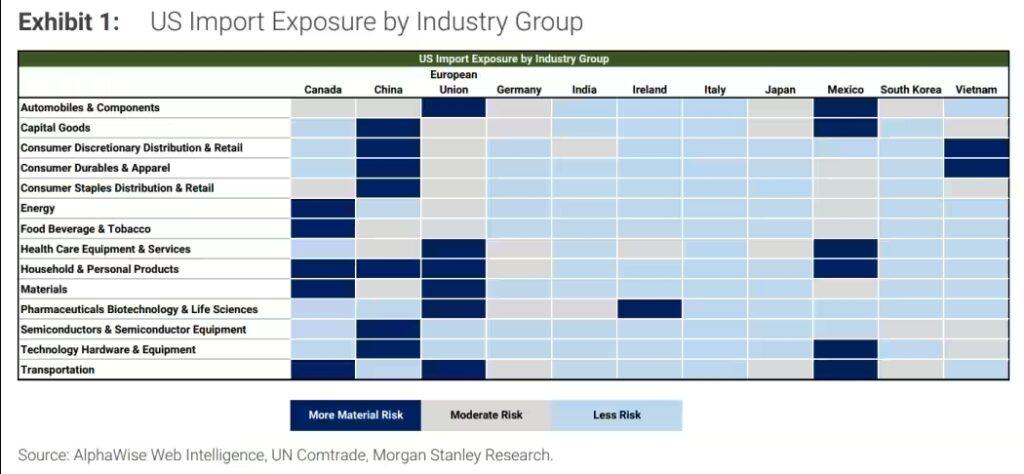
Big Tech Gets a Boost From New Tax Law as Markets Shrug Off Tariff Jitter Investors may be uneasy over the latest tariff headlines, but history suggests that fear might be misplaced — especially with the S&P 500 sitting just 0.3% off all-time highs. According to UBS, when the index is at record levels, it typically takes 105 days before a 5% pullback occurs. In that time, equities tend to outperform cash and short-term Treasurys. So while going defensive might feel safe, historically it hasn’t been the winning strategy. Mike Wilson, Morgan Stanley’s chief U.S. equity strategist, sees additional reasons for investor confidence. One is the belief that many of the proposed tariffs — particularly on Mexico and Canada — won’t be fully implemented. Goods that meet the rules under the U.S.-Mexico-Canada Agreement (USMCA), such as those manufactured entirely within member countries or significantly transformed, are likely to be exempt. Wilson’s team analyzed which industries are most exposed to tariffs. U.S. goods-focused sectors rely heavily on imports from China, followed by Mexico, Canada, and the EU. The real risk, they argue, would be a steep escalation in China tariffs — both due to broad sector exposure and the high market cap concentration of affected companies. Tariffs on Mexico would be the next-biggest threat, particularly if USMCA exemptions fall through. A specific area of concern is semiconductors. New levies on chips — vital to U.S. supply chains — could have broad ripple effects. “This could become a major issue depending on how Section 232 tariffs are applied,” the strategists warned. But there’s another story playing out beneath the surface — a rapid turnaround in earnings expectations. Analyst revisions have flipped from -25% in April to +3% now. Financials, in particular, have seen the strongest rebound in expected earnings per share. Then there’s the impact of the newly passed tax legislation, nicknamed the “One Big Beautiful Bill.” A key provision allows companies to expense R&D costs upfront, effectively lowering the corporate tax rate from 20% to around 13%. While this change won’t affect GAAP earnings — which already require immediate expensing — it will significantly improve cash flow. That cash flow benefit could explain why the so-called “Magnificent Seven” tech titans have led the market in recent months. Companies with more than $10 billion in deferred R&D tax assets — and thus poised to gain the most — include Alphabet, Amazon, Meta, Microsoft, Apple, Intel, and General Motors, according to separate investment bank research. John PaulJohn Paul is the founder of DayTradeToWin, a trading education and software company established in 2008, supporting traders worldwide. His expertise focuses on price action-based futures trading strategies and structured market analysis. DayTradeToWin delivers trading education, indicators, and software tools designed to help traders apply disciplined, rule-based decision-making across global futures markets. He is the creator of multiple trading methodologies, including the Sonic System, Atlas Line, and Trade Scalper, which help traders identify structured opportunities in markets such as the E-mini S&P 500 (ES), Nasdaq (NQ), crude oil (CL), and gold (GC). Official website: https://daytradetowin.com daytradetowin.com
market
Market News

3 Things the Market Gets Wrong About U.S. Stocks

HSBC: Market Earnings Forecasts Are Too Pessimistic Ahead of Q2 Season With second-quarter earnings season about to begin, HSBC says the market is underestimating corporate performance — setting the stage for positive surprises. Despite recent shifts in U.S. trade policy, HSBC strategists, led by chief multi-asset strategist Max Kettner, believe markets are no longer as reactive to tariff headlines. “The tariff debate has faded into the background following the U.S.-China trade pause,” they note. “Risk assets are showing less sensitivity to these developments.” They point out that the U.S. economy remains solid, especially with consumer spending rebounding. As a result, current consensus earnings forecasts may be too low. “Pessimistic estimates create room for upside surprises, which could lead to positive earnings revisions and support further gains in risk assets,” the strategists explain. While tariffs carry inflation risks, HSBC says there’s little evidence of that so far — in fact, inflation appears to be cooling. Tariffs may also serve to keep investor positioning in check. Looking ahead to Q2 results, HSBC challenges the market’s expectation for a quarter-on-quarter earnings decline. “We don’t agree,” the team states. “Earnings estimates have seen the largest cuts in three years, and the front-loading of economic activity should provide a temporary boost to Q2 EPS.” Concerns about market valuation are also overstated, according to HSBC. On an equal-weighted basis, the S&P 500 is only slightly above its historical average — far from overvalued, in their view. In fact, many widely held bearish views on the U.S. — from slowing growth to a weaker dollar and continued equity underperformance — could be misguided. HSBC sees these as “pain trades” likely to catch investors off guard. Reflecting its bullish stance, HSBC raised its U.S. equity allocation by 4 percentage points, now recommending a 31% weight in its multi-asset portfolio. The full portfolio allocation is: 50% equities, 25% government bonds, 10% corporate credit, 5% commodities, and 5% cash. John PaulJohn Paul is the founder of DayTradeToWin, a trading education and software company established in 2008, supporting traders worldwide. His expertise focuses on price action-based futures trading strategies and structured market analysis. DayTradeToWin delivers trading education, indicators, and software tools designed to help traders apply disciplined, rule-based decision-making across global futures markets. He is the creator of multiple trading methodologies, including the Sonic System, Atlas Line, and Trade Scalper, which help traders identify structured opportunities in markets such as the E-mini S&P 500 (ES), Nasdaq (NQ), crude oil (CL), and gold (GC). Official website: https://daytradetowin.com daytradetowin.com
jpmorgan
Market News

JPMorgan: Massive Inflows to Power H2 Stocks

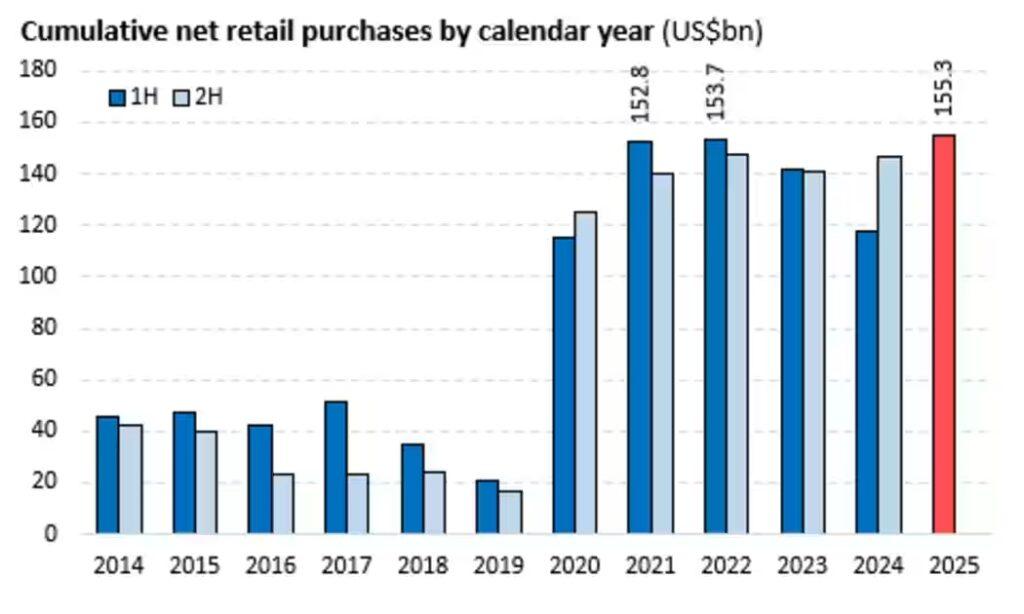
JPMorgan: Foreign Investors Will Return as Retail Buyers Fuel U.S. Stock Rally Retail investors have played a major role in powering this year’s market gains — and JPMorgan believes they’re about to take the lead again. In a new report, strategist Nikolaos Panigirtzoglou and his team forecast a massive $500 billion in net inflows into U.S. equities over the second half of 2025, with retail investors expected to contribute around $360 billion of that total. The result? Potential gains of 5% to 10% by year-end. After aggressively buying the dip in March and April, retail investors pulled back in May and June to lock in profits. But JPMorgan says this was a temporary pause — not a sign of fading interest. “We expect retail investors to resume equity buying and continue supporting the market from July onward,” the strategists wrote. Other investor groups may offer limited upside. Hedge funds have already boosted their equity exposure and likely won’t add much more. Quantitative funds, which reduced positions earlier in the year, could re-enter later. Pension funds and insurers, however, are expected to keep selling stocks as they rotate toward bonds — with estimated outflows of $360 billion this year. One surprising potential source of renewed demand? Foreign investors. According to JPMorgan, overseas buyers have largely stayed on the sidelines since February — a trend they describe as a short-term “boycott” of U.S. equities. But that’s unlikely to continue for long. “Foreign investors can’t ignore the most dynamic part of the global equity market — the S&P 500 and the Magnificent 7,” the strategists said. The key to their return may lie in currency stability. A weaker dollar has discouraged international investment, but the ICE Dollar Index (DXY) is now hovering near its April lows around 98. If the dollar stabilizes, JPMorgan believes foreign inflows could rebound by another $50 billion to $100 billion. Combined, these factors could drive nearly half a trillion dollars into U.S. equities in the months ahead — and fuel another leg of the rally. John PaulJohn Paul is the founder of DayTradeToWin, a trading education and software company established in 2008, supporting traders worldwide. His expertise focuses on price action-based futures trading strategies and structured market analysis. DayTradeToWin delivers trading education, indicators, and software tools designed to help traders apply disciplined, rule-based decision-making across global futures markets. He is the creator of multiple trading methodologies, including the Sonic System, Atlas Line, and Trade Scalper, which help traders identify structured opportunities in markets such as the E-mini S&P 500 (ES), Nasdaq (NQ), crude oil (CL), and gold (GC). Official website: https://daytradetowin.com daytradetowin.com

oil
Market News

Oil Rises as Supply Battle Begins

OPEC+ Output ‘Superhike’ Sparks Unexpected Oil Price Rally Oil prices surged to their highest levels in two weeks on Tuesday—despite OPEC+ announcing a sizable increase in supply next month. The oil alliance, made up of OPEC and its partners, revealed over the weekend that it plans to boost production by 548,000 barrels per day in August. That’s a sharp uptick from the 411,000-barrel monthly increases seen from May through July. But instead of easing prices, the move has stirred up tensions in the global energy market and reignited the battle for market share. “This surprise superhike isn’t just a number—it’s a message,” said Stephen Innes, managing partner at SPI Asset Management. “OPEC+ has dropped the scalpel and picked up the trident. They’re no longer carefully managing prices—they’re forcefully staking their claim.” The production boost is part of a broader strategy to unwind 2.2 million barrels per day in voluntary cuts from last year, with a full reversal now expected as early as September—much sooner than previously anticipated. Innes likened the move to a sudden, aggressive strike meant to reset the balance of power. More Than Just More Barrels Behind the scenes, OPEC+ appears to be reshaping its approach. Compliant members are being rewarded, while countries like Iraq and Russia—who exceeded their output limits—are facing cutbacks in future quotas. “This isn’t just a pump fest—it’s a punishment regime,” said Innes. The group also seems to be eyeing struggling U.S. shale producers. American drilling activity has cooled significantly, with rig counts now at their lowest since 2021. Analysts say producers typically slow operations when prices fall below $60 per barrel. “This could be the ideal moment for OPEC+ to ramp up output while U.S. drilling stays muted,” noted Fawad Razaqzada, market analyst at City Index and FOREX.com. According to the U.S. Energy Information Administration, falling oil prices are already curbing domestic production growth. Its latest forecast shows a downward revision in U.S. output through 2026. Geopolitics, Supply Wars, and a Volatile Market Adding to the complexity is a wave of geopolitical tension. Last month, a U.S. military strike on Iranian targets and the short-lived conflict between Israel and Iran sent Brent crude prices soaring more than 30%—only to reverse quickly after a ceasefire. Meanwhile, fears over global inflation and trade wars have eased, helping lift investor sentiment. U.S. stocks have rebounded strongly since April, boosting the outlook for oil demand. On Tuesday, Brent crude rose 0.8% to $70.15 a barrel, while U.S. benchmark WTI climbed 0.6% to $68.33—both logging their best closes since June 23. Still, WTI remains down nearly 5% for the year. In short, OPEC+ is signaling it’s done playing defense. With U.S. shale struggling and demand recovering, the group is betting that a bold supply push—backed by geopolitical leverage—will secure a bigger slice of the market. John PaulJohn Paul is the founder of DayTradeToWin, a trading education and software company established in 2008, supporting traders worldwide. His expertise focuses on price action-based futures trading strategies and structured market analysis. DayTradeToWin delivers trading education, indicators, and software tools designed to help traders apply disciplined, rule-based decision-making across global futures markets. He is the creator of multiple trading methodologies, including the Sonic System, Atlas Line, and Trade Scalper, which help traders identify structured opportunities in markets such as the E-mini S&P 500 (ES), Nasdaq (NQ), crude oil (CL), and gold (GC). Official website: https://daytradetowin.com daytradetowin.com

Scroll to Top