
stock trading

citi
Market News

Citi Shifts S&P Forecast as Index Hits 6,000

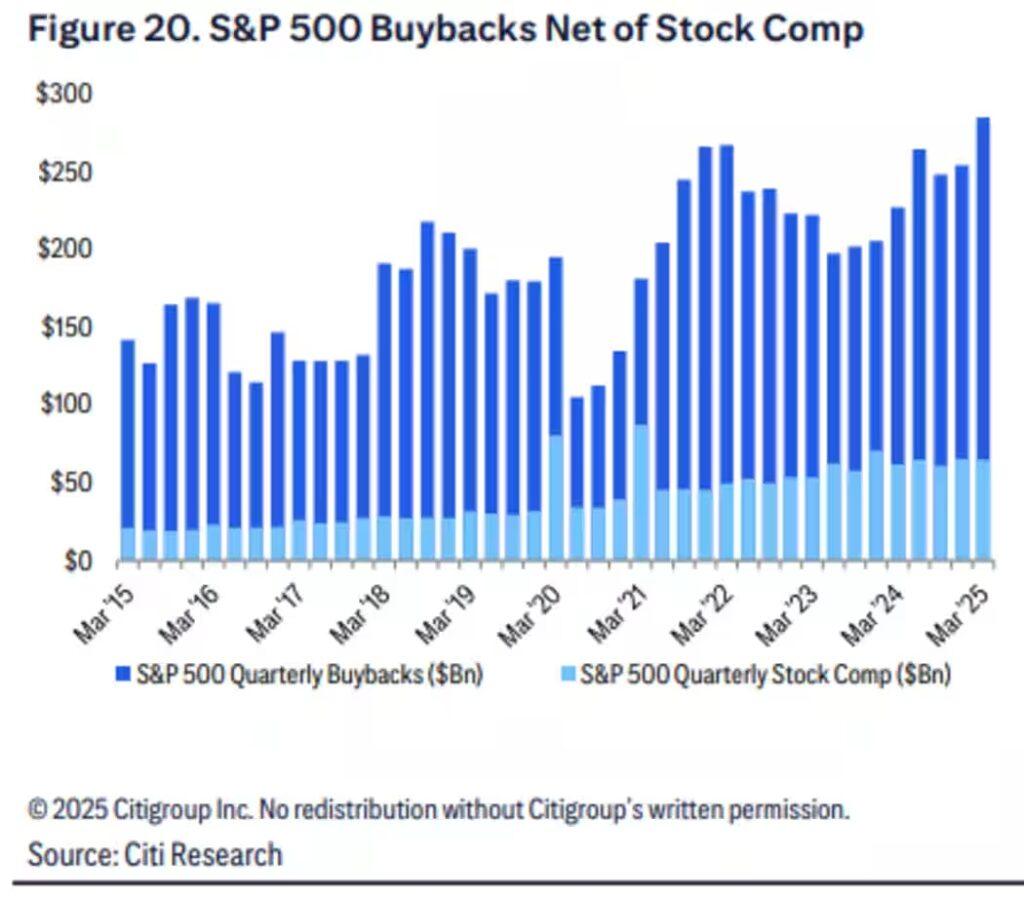
AI Resurgence and $1 Trillion in Buybacks Set to Propel Stock Market Higher The S&P 500 closed just above the 6,000 mark last week, inching closer to record highs. A further 2.4% gain would push the index into new territory, continuing a rally that has seen the benchmark rise over 20% since mid-April. That surge is forcing a shift in sentiment among Wall Street analysts. Forecasts that were cut earlier in the year are now being revised upward. Citigroup, for instance, has raised its year-end 2025 S&P 500 target to 6,300, up from 5,800. While still below its original projection of 6,500, the new target reflects reduced concern over trade tensions and increased optimism about the economic outlook. Citi notes that investors appear more willing to overlook short-term policy noise, especially as GDP expectations and labor market indicators have improved in recent weeks. The bank also raised its full-year S&P 500 earnings forecast to $261 per share from $255, citing improved sentiment and corporate resilience in a complex policy environment. Valuations remain elevated, but Citi believes they are justified. The firm expects the market’s price-to-earnings ratio to hold near 21, supported by structural changes—particularly technological advancements like AI—that are reducing earnings sensitivity to economic cycles. Two key drivers are expected to underpin the market’s strength: Citi acknowledges that ongoing political uncertainty—especially as the 2024 U.S. election approaches—adds noise to the market. However, they argue that investors, analysts, and companies are becoming more adept at managing through it. “Fundamentals are proving more stable than policy headlines,” the team writes. As the second half of 2025 approaches, Citi sees further gains, emphasizing a strategy of buying pullbacks rather than chasing rallies. Their mid-2026 S&P 500 target remains at 6,500. John PaulJohn Paul is the founder of DayTradeToWin, a trading education and software company established in 2008, supporting traders worldwide. His expertise focuses on price action-based futures trading strategies and structured market analysis. DayTradeToWin delivers trading education, indicators, and software tools designed to help traders apply disciplined, rule-based decision-making across global futures markets. He is the creator of multiple trading methodologies, including the Sonic System, Atlas Line, and Trade Scalper, which help traders identify structured opportunities in markets such as the E-mini S&P 500 (ES), Nasdaq (NQ), crude oil (CL), and gold (GC). Official website: https://daytradetowin.com daytradetowin.com

market
Market News

Pain Is Power in This Market

JPMorgan: Big Investors Underexposed to Mega Tech as Market Leadership Narrows Again Market leadership is tightening once more, and according to JPMorgan strategists, many large investors are underweight the very sector driving recent gains: mega-cap tech. Despite a high-profile clash between the U.S. President and the world’s wealthiest individual, markets barely flinched. Tesla may have lost nearly $200 billion in market value, but the S&P 500 dipped just 0.5% and remains only 3.3% below its February peak. Since hitting a low in April, the index has rebounded nearly 20%, as trade war concerns have faded and investor sentiment has strengthened. In a note published Thursday, JPMorgan’s team led by Dubravko Lakos-Bujas said the “path of least resistance is to new highs.” The rally, they argue, has been driven in part by a stronger-than-expected Q1 earnings season. U.S. companies not only posted solid 12% earnings growth before “Liberation Day,” but also delivered upbeat guidance, even as tariff pressure hovered around 20%. Investor enthusiasm has also been fueled by the ongoing AI boom, with no slowdown in capital investment from major tech players. But JPMorgan warns that the biggest threat to this bullish setup is a potential economic slowdown later this year. The bank highlights several risks: companies front-loading activity ahead of tariffs, delayed effects of recent policy changes (such as on immigration and regulation), and a disconnect between soft and hard economic data. JPMorgan’s business cycle indicator — which tends to lead corporate earnings by 2–3 quarters — has been flashing caution for the past three months. A slowdown could prove problematic given how richly valued equities have become in recent weeks. Still, a weaker economy might prompt the Federal Reserve to cut rates sooner, potentially allowing markets to look past the softness. This could create a “Goldilocks” scenario where lagging areas like small caps and cyclicals bounce back, at least temporarily. In the near term, JPMorgan sees a “dual pain trade” helping to fuel the current rally: With global markets still lacking an abundance of high-quality assets, JPMorgan questions whether stretched valuations and concentrated positioning in U.S. giants will matter much once macro uncertainty subsides. Bottom line: many investors may find themselves poorly positioned as U.S. mega-cap tech reasserts its dominance — and that could keep pushing stocks higher. John PaulJohn Paul is the founder of DayTradeToWin, a trading education and software company established in 2008, supporting traders worldwide. His expertise focuses on price action-based futures trading strategies and structured market analysis. DayTradeToWin delivers trading education, indicators, and software tools designed to help traders apply disciplined, rule-based decision-making across global futures markets. He is the creator of multiple trading methodologies, including the Sonic System, Atlas Line, and Trade Scalper, which help traders identify structured opportunities in markets such as the E-mini S&P 500 (ES), Nasdaq (NQ), crude oil (CL), and gold (GC). Official website: https://daytradetowin.com daytradetowin.com

small caps
Market News

Small Caps Keep Falling Short

U.S. Small Caps Stocks Likely to Remain Behind Large Caps, Even as Economic Concerns Ease Small cap stocks in the U.S. have spent much of the past decade trailing their large-cap peers—and that underperformance looks set to continue, even if concerns about the U.S. economy begin to fade. While there have been brief periods of outperformance—such as last summer’s unexpected “great rotation”—these rallies have not been sustained. According to John Higgins, chief markets economist at Capital Economics, large-cap stocks are still positioned to outperform over the near term. “Small-cap equities might enjoy some relief if economic fears diminish, which we expect despite possible disruptions from trade tensions,” Higgins said in a note. “Still, that alone is unlikely to spark a lasting shift in their relative performance.” Supporters of small caps often cite their attractive valuations, but Higgins cautioned that valuation metrics are not reliable short-term signals. Right now, investor interest is heavily tilted toward high-growth themes like artificial intelligence, where leadership is concentrated in megacap names such as Nvidia (NVDA). Higgins also challenged the idea that big tech gains are distorting performance comparisons. Even on an equal-weighted basis, small caps have consistently underperformed. This weakness, however, appears to be largely confined to the U.S. In contrast, European small-cap stocks have held up better relative to their large-cap peers in 2025. Despite bouncing back somewhat from the tariff-driven selloff in April, U.S. small-cap benchmarks like the Russell 2000 and S&P 600 remain down nearly 6% and 8% for the year, respectively. Meanwhile, the S&P 500 has posted a gain of more than 1.5%, according to FactSet. Decades of academic research, including work by Nobel laureates Eugene Fama and Kenneth French, have suggested that small-cap stocks can outperform over the long run due to their higher risk profile. But in the current market, large caps continue to dominate—and that trend may not change anytime soon. John PaulJohn Paul is the founder of DayTradeToWin, a trading education and software company established in 2008, supporting traders worldwide. His expertise focuses on price action-based futures trading strategies and structured market analysis. DayTradeToWin delivers trading education, indicators, and software tools designed to help traders apply disciplined, rule-based decision-making across global futures markets. He is the creator of multiple trading methodologies, including the Sonic System, Atlas Line, and Trade Scalper, which help traders identify structured opportunities in markets such as the E-mini S&P 500 (ES), Nasdaq (NQ), crude oil (CL), and gold (GC). Official website: https://daytradetowin.com daytradetowin.com
stocks
Market News

Why These Underdog Stocks Will Sizzle This Summer

Evercore Strategist: June Could Be Prime Time for Small-Cap Stocks Stocks continue to face pressure from lingering trade concerns, but Monday’s rebound showed that investors are still willing to look past the noise. That resilience could carry over into Tuesday—and according to Evercore ISI, it might be small-cap stocks’ time to shine. Despite strong gains from large caps, the S&P 500 is only 3.78% below its February peak after a record-breaking May. But while the broader index has managed to stay afloat, small-cap stocks have struggled. The Russell 2000 is down 7.17% so far in 2025 and remains over 15% below its all-time high from November 2021. In contrast, the S&P is up nearly 1% year to date. This underperformance sets the stage for Evercore ISI’s latest call. Led by strategist Julian Emanuel, the team sees June as a key seasonal window for small caps to outperform. Large-cap names have beaten small caps by 9% through May, a wide gap driven by factors such as trade tensions, higher interest rates, and weakening consumer sentiment—issues that tend to hit smaller, U.S.-focused companies harder. However, Evercore notes that June’s historical trends, coinciding with the annual Russell Index rebalancing, typically favor small caps. “When large-cap outperformance through May has been this strong, June has historically delivered a sharp reversal in favor of small-cap stocks,” the team wrote. Beyond seasonality, Evercore sees strong fundamentals supporting the case. Small caps are trading at attractive valuations relative to large caps, and with the Federal Reserve expected to cut rates as economic growth continues at a modest pace, the macro backdrop may finally start to tilt in their favor. To gain exposure, the team recommends the iShares Russell 2000 ETF (IWM). While small caps overall have underperformed, there are standout names in the index: Though the call on small caps remains a contrarian one—most major Wall Street firms have largely ignored the sector—Evercore isn’t alone. Tom Lee of Fundstrat Global Advisors also sees opportunity. He believes that once investors look past the current tariff pressures and anticipate a more accommodative Fed in 2026, small-cap stocks could see a major rebound. John PaulJohn Paul is the founder of DayTradeToWin, a trading education and software company established in 2008, supporting traders worldwide. His expertise focuses on price action-based futures trading strategies and structured market analysis. DayTradeToWin delivers trading education, indicators, and software tools designed to help traders apply disciplined, rule-based decision-making across global futures markets. He is the creator of multiple trading methodologies, including the Sonic System, Atlas Line, and Trade Scalper, which help traders identify structured opportunities in markets such as the E-mini S&P 500 (ES), Nasdaq (NQ), crude oil (CL), and gold (GC). Official website: https://daytradetowin.com daytradetowin.com

Goldman
Market News

Goldman Case for More S&P Gains

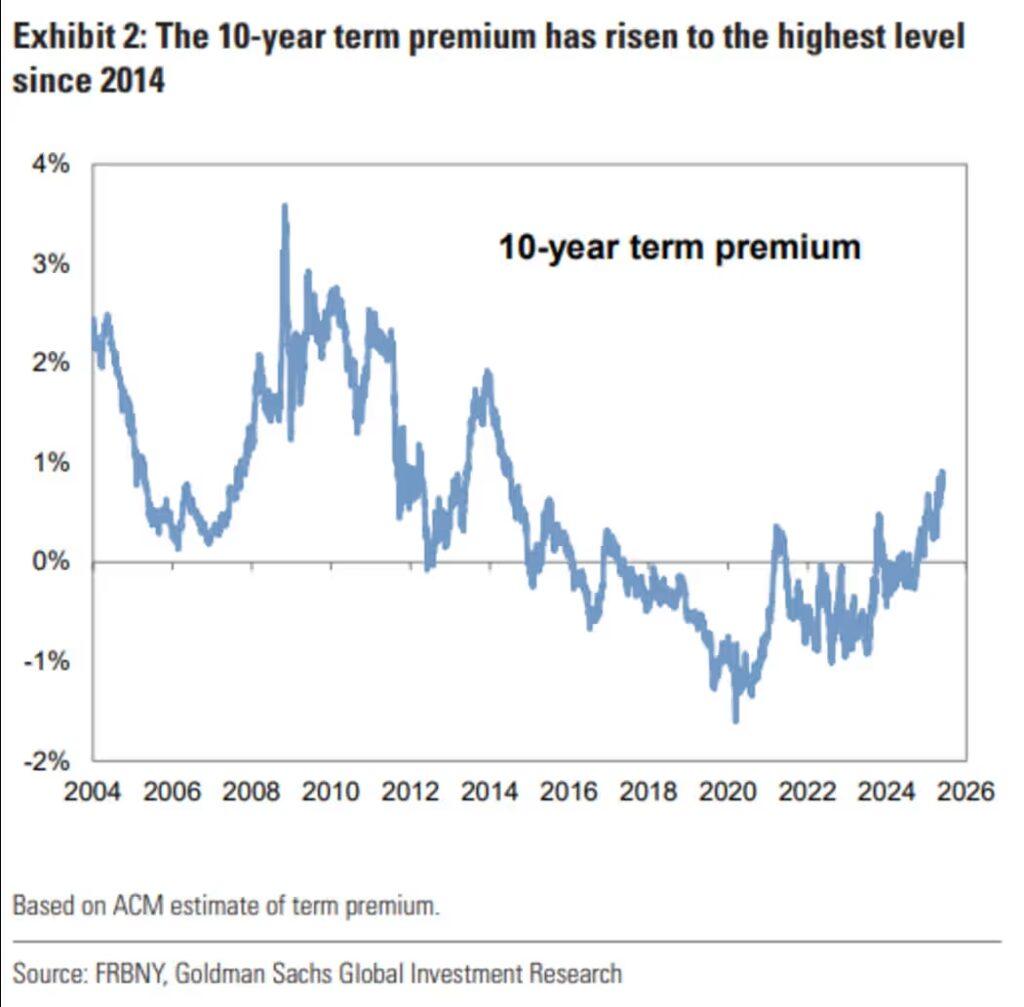
Goldman Sachs Holds 6,500 S&P 500 Target Despite Rising Yields Goldman Sachs is maintaining its 12-month S&P 500 target of 6,500, even as bond yields rise. The yield on the 10-year U.S. Treasury has jumped from 4% in late April to 4.43%, fueled by concerns over tariffs, inflation, and increased term premia—investors demanding higher returns for longer-term debt. In a note released Friday, strategists led by David Kostin analyzed the impact of higher yields on equities. They forecast the 10-year yield will end 2025 at 4.5%, rising slightly to 4.55% in 2026. Goldman emphasized that for equities, the drivers and speed of rate changes matter more than the actual yield level. Markets typically react better when yields rise due to stronger growth expectations. However, if inflation or fiscal risks are behind the increase—or if yields rise sharply in a short time—a market correction becomes more likely. Since U.S.-China tariff tensions escalated on April 2, investors have become more focused on the connection between yields and stock returns, though Goldman notes there’s no consistent historical relationship. Goldman expects the S&P 500’s forward P/E ratio—currently near fair value—to remain stable over the next year. Large-cap companies with long-term, fixed-rate debt are less exposed to rate volatility. Small caps, by contrast, are more vulnerable due to their reliance on shorter-term, floating-rate borrowing. Given this outlook, Goldman continues to recommend investors prioritize companies with strong balance sheets. John PaulJohn Paul is the founder of DayTradeToWin, a trading education and software company established in 2008, supporting traders worldwide. His expertise focuses on price action-based futures trading strategies and structured market analysis. DayTradeToWin delivers trading education, indicators, and software tools designed to help traders apply disciplined, rule-based decision-making across global futures markets. He is the creator of multiple trading methodologies, including the Sonic System, Atlas Line, and Trade Scalper, which help traders identify structured opportunities in markets such as the E-mini S&P 500 (ES), Nasdaq (NQ), crude oil (CL), and gold (GC). Official website: https://daytradetowin.com daytradetowin.com

market
Market News

Hold Tight: 5 Pillars for the Bull Market

Jim Paulsen Sees More Market Tailwinds Ahead Tariffs and trade tensions continue to shape market sentiment, but despite the noise, the S&P 500 remains just 3.8% below its February 19 closing high. Still, with trade policy grabbing most of the headlines, it’s worth asking: What other forces might drive the market from here? According to veteran Wall Street strategist Jim Paulsen, now retired and writing on his Paulsen Perspectives blog, several key indicators could begin offering much stronger support for equities in the coming months. Paulsen points to five main pillars: the Fed funds rate, the 10-year Treasury yield, inflation, M2 money supply growth, and consumer confidence. Based on historical analysis going back to the 1960s, he finds that the S&P 500 tends to perform significantly better when these factors are moving in a favorable direction. For example, when M2 money supply is expanding, the S&P 500 has returned an average of 12.7% annually, compared to just 2.2% during periods of slowing growth. Similarly, the index has gained an average of 10.5% more during times when the Fed is cutting rates rather than hiking them. Each of the five factors individually correlates with stronger market performance, but the real kicker comes when all five are aligned. In such cases, Paulsen says, the S&P 500 has posted an average annual gain of 16.3%. So where does that leave investors now? Paulsen believes the market setup is turning more favorable. He notes that this bull market, which began in October 2022, has unfolded largely without help from the usual supports. The Fed has maintained a tight policy stance, and money supply growth has been unusually weak—just 0.8% annually, with real M2 contracting at a rate of -2.2%. Long-term bond yields haven’t provided much relief either. The 10-year Treasury yield has hovered between 3.5% and 4.75%, lacking the kind of downward trend that typically bolsters stocks. The one clear tailwind has been inflation. Since the rally began, inflation has dropped from 7.75% to 2.3%. And while new tariffs could cause a modest uptick, Paulsen expects inflation to remain stable—or even drift lower—over the next year. Consumer confidence, meanwhile, has been weak but is showing early signs of recovery. Paulsen concedes that some investors view this bull run as overstretched, especially given high valuations. But he argues that as economic growth slows and inflation remains tame, the environment could shift in favor of equities. “If sentiment moves toward a low-inflation, sluggish-growth outlook,” he writes, “the market could benefit from multiple supports working in its favor. Investors should think twice before abandoning this bull market—it’s not out of fuel yet. John PaulJohn Paul is the founder of DayTradeToWin, a trading education and software company established in 2008, supporting traders worldwide. His expertise focuses on price action-based futures trading strategies and structured market analysis. DayTradeToWin delivers trading education, indicators, and software tools designed to help traders apply disciplined, rule-based decision-making across global futures markets. He is the creator of multiple trading methodologies, including the Sonic System, Atlas Line, and Trade Scalper, which help traders identify structured opportunities in markets such as the E-mini S&P 500 (ES), Nasdaq (NQ), crude oil (CL), and gold (GC). Official website: https://daytradetowin.com daytradetowin.com

Scroll to Top