
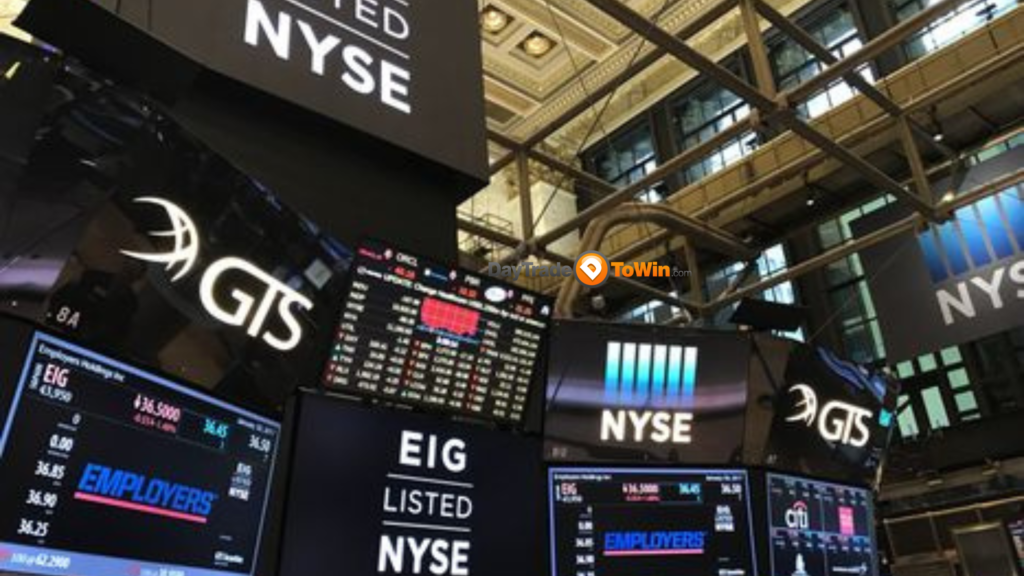
stock trading

Market News

Fed Watch: US Stock Futures Reflect Caution Ahead of Crucial Remarks from Federal Reserve

Nov 28 (Reuters) – U.S. stock index futures experienced a slight downturn on Tuesday as investors eagerly awaited comments from various Federal Reserve officials regarding the future trajectory of interest rates. Concurrently, Zscaler shares faced a decline due to quarterly billings falling short of expectations. The momentum from Wall Street’s November rally took a breather on Monday, with markets pausing post-Thanksgiving. Investors remained attentive to potential shifts in policy following data indicating a slowdown in inflation, fostering optimism that the Fed might halt interest rate hikes. Despite this, all three major indexes are on track for monthly gains, marking a turnaround after three consecutive months of losses. The S&P 500, in particular, is positioned close to its intra-day high for 2023. As of 7:01 a.m. ET, Dow e-minis were down 10 points (0.03%), S&P 500 e-minis down 4.75 points (0.1%), and Nasdaq 100 e-minis down 15 points (0.09%). Russ Mould, investment director at AJ Bell, remarked, “Markets are going through a ‘one step forward, one step back’ motion at present, despite investors increasingly taking the view that central banks are done with raising interest rates in the current cycle.” Scheduled speeches from multiple Fed policy voting members, including Board Governors Christopher Waller and Michelle Bowman, were closely monitored for insights on the timing of a potential rate adjustment. Market expectations included a likely pause in rate hikes at the December meeting, with nearly a 50% anticipation of at least a 25-basis point rate cut in May 2024, according to the CME Group’s FedWatch Tool. This week, crucial economic indicators, such as personal consumption expenditure data and the “Beige Book,” were expected to shed light on the U.S. economy’s performance under tighter monetary conditions. In addition, the Conference Board’s consumer confidence survey, set for release at 10:00 a.m. ET, was anticipated to reveal a softening in consumer confidence for November. Ahead of the opening bell, Zscaler shares declined by 5.8%, attributed to quarterly billings falling short of analysts’ expectations, despite a positive forecast and profit beat. Boeing saw a 1.8% increase after RBC Capital Markets upgraded the aerospace company to “outperform,” setting a Street-high price target. Affirm Holdings rose by 2.9% on the heels of a 12% surge in the previous session driven by Cyber Monday spending. Jefferies upgraded the payments platform to “hold.” U.S.-listed shares of PDD Holdings soared by 15.1% following the Chinese e-commerce firm’s surpassing of third-quarter revenue estimates, boosted by substantial discounting. John PaulJohn Paul is the founder of DayTradeToWin, a trading education and software company established in 2008, supporting traders worldwide. His expertise focuses on price action-based futures trading strategies and structured market analysis. DayTradeToWin delivers trading education, indicators, and software tools designed to help traders apply disciplined, rule-based decision-making across global futures markets. He is the creator of multiple trading methodologies, including the Sonic System, Atlas Line, and Trade Scalper, which help traders identify structured opportunities in markets such as the E-mini S&P 500 (ES), Nasdaq (NQ), crude oil (CL), and gold (GC). Official website: https://daytradetowin.com daytradetowin.com


Market News

Year-End Flourish: How the Stock Market’s Momentum Sets the Tone for 2024

Unless there’s an unforeseen upset post-Thanksgiving, it appears the U.S. stock market is gearing up for a strong November rally, with historical patterns suggesting this momentum will likely extend into the year’s end. Driving factors include a expanding economy, improved earnings, a resilient consumer base, easing inflation, and the belief that the Federal Reserve has concluded its interest rate hikes. While experts, including Michael Arone, acknowledge the market’s technically overbought status, which might lead to short-term consolidation, they remain optimistic about a robust final six weeks of 2023. The S&P 500’s substantial 18% year-to-date gain reinforces this outlook, with historical data indicating a 76.7% likelihood of further December gains when the benchmark has risen at least 15% through November. However, concerns arise due to the current rally’s reliance on a narrow leadership, primarily dominated by mega-cap tech stocks, prompting worries about market breadth and dependence on specific sectors. Despite this, year-end window dressing and optimism surround high-performing stocks. Certain investors find reassurance in the positive signs exhibited by the November rally for overlooked market segments, such as international companies and small-caps, which have displayed signs of revival after lagging throughout 2023. This suggests a degree of opportunism among investors, fostering confidence that the broader equity market is not on the brink of a downturn. While the week concluded on a positive note for stocks, experts caution against pursuing high-valued big-cap winners at their current levels. The article concludes by underscoring potential challenges in the coming months, including the delayed impact of prior tightening by the Federal Reserve and the diminishing effects of fiscal stimulus. Despite resilient economic data, the path to stock market gains may encounter obstacles as 2024 approaches, with shifting investor expectations and a heightened performance bar for companies. John PaulJohn Paul is the founder of DayTradeToWin, a trading education and software company established in 2008, supporting traders worldwide. His expertise focuses on price action-based futures trading strategies and structured market analysis. DayTradeToWin delivers trading education, indicators, and software tools designed to help traders apply disciplined, rule-based decision-making across global futures markets. He is the creator of multiple trading methodologies, including the Sonic System, Atlas Line, and Trade Scalper, which help traders identify structured opportunities in markets such as the E-mini S&P 500 (ES), Nasdaq (NQ), crude oil (CL), and gold (GC). Official website: https://daytradetowin.com daytradetowin.com

Market News

Don’t Miss the Train: A Guide to Capitalizing on the Stock Market Rally

The S&P 500 Index has convincingly broken through the 4400 mark and is maintaining its upward momentum. Despite some signs of an overbought market, there haven’t been any confirmed sell signals yet. Having overcome two minor resistance levels, the next target is the 2023 highs around 4610, and the possibility of reaching the all-time highs at 4800. There’s an evident gap on the SPX chart down to 4420 that could be filled, but even if that occurs, the overall bullish scenario would remain intact. The key is for SPX to stay above 4400 to sustain the bullish trend. The recent McMillan Volatility Band (MVB) buy signal reached its goal at the +4σ “modified Bollinger Band” (mBB) and was successfully closed. Now, with SPX above the +4σ Band, there’s a potential setup for a new MVB sell signal. This would begin with a “classic” mBB sell signal, triggered if SPX closes below the +3σ Band, currently at 4488. Equity-only put-call ratios continue to signal buying opportunities as both are on a declining trend. Despite some distortion from equity put arbitrage, especially on the CBOE, these ratios remain reliable indicators and are expected to stay on buy signals for stocks unless there’s a shift in their upward trajectory. Market breadth experienced a momentary weakness a week ago when breadth oscillators briefly signaled a sell, but they have since recovered. As of Nov. 24, they are back on buy signals and are moderately overbought. While breadth signals have been somewhat unreliable recently, they are considered in the broader context of trading decisions. New Highs and New Lows on the NYSE continue to number less than 100, keeping this indicator in neutral territory. VIX has shown a slight decrease, lingering near 13.0, maintaining the integrity of both the “spike peak” and the overall trend of VIX buy signals. The “spike peak” signal is set to expire on its own, with the trading system recommending an exit on Nov. 24. The trend of VIX buy signals would only be disrupted if VIX closes above its 200-day moving average. The overall construct of volatility derivatives paints a strongly bullish outlook for stocks, supported by upward-sloping term structures and significant premiums of VIX futures over VIX. In summary, the current strategy involves maintaining a “core” bullish position as long as SPX remains above 4400, with other trades executed based on confirmed signals within this framework. The market outlook remains positive, with a focus on potential signals that may influence trading decisions. John PaulJohn Paul is the founder of DayTradeToWin, a trading education and software company established in 2008, supporting traders worldwide. His expertise focuses on price action-based futures trading strategies and structured market analysis. DayTradeToWin delivers trading education, indicators, and software tools designed to help traders apply disciplined, rule-based decision-making across global futures markets. He is the creator of multiple trading methodologies, including the Sonic System, Atlas Line, and Trade Scalper, which help traders identify structured opportunities in markets such as the E-mini S&P 500 (ES), Nasdaq (NQ), crude oil (CL), and gold (GC). Official website: https://daytradetowin.com daytradetowin.com

Market News

Black Friday Investing: Unveiling U.S. Stock Market Hours and Insights

Traders who are actively engaged in the market might have to postpone their Black Friday shopping plans until after the markets close. While employees in many non-retail sectors enjoy a four-day weekend by taking off on Black Friday, financial markets will be open for a shortened trading day following Thanksgiving. Major U.S. stock exchanges, including the New York Stock Exchange and Nasdaq, are slated to conclude equity trading at 1 p.m. Eastern on Friday, while bond traders will wrap up even earlier at 2 p.m., as per the Securities Industry and Financial Markets Association (Sifma). Thanksgiving week typically experiences light trading volume, potentially leading to more volatile market conditions. Historical data from as far back as 1950 indicates that, despite the shortened trading hours, the S&P 500 has, on average, moved by plus or minus 1.5% during Thanksgiving week—similar to the average of 1.6% for all five-day trading periods, according to E-Trade from Morgan Stanley. U.S. stocks have demonstrated a robust rally in November, with the S&P 500 index exiting correction territory on Monday, finishing just under 1% away from its 2023 closing high set on July 31. Month-to-date performance shows the S&P 500 up 8.7% through Wednesday’s close, the Dow Jones Industrial Average rallying 6.7%, and the Nasdaq Composite experiencing an approximately 11% jump. John PaulJohn Paul is the founder of DayTradeToWin, a trading education and software company established in 2008, supporting traders worldwide. His expertise focuses on price action-based futures trading strategies and structured market analysis. DayTradeToWin delivers trading education, indicators, and software tools designed to help traders apply disciplined, rule-based decision-making across global futures markets. He is the creator of multiple trading methodologies, including the Sonic System, Atlas Line, and Trade Scalper, which help traders identify structured opportunities in markets such as the E-mini S&P 500 (ES), Nasdaq (NQ), crude oil (CL), and gold (GC). Official website: https://daytradetowin.com daytradetowin.com

Market News

Thanksgiving Pause: U.S. Stock Trading Takes a Break, Global Markets Rise

Global stock markets experienced a positive trend on Thursday, fueled by investor confidence in the belief that the Federal Reserve has completed its series of interest rate hikes to counter inflation. This sentiment, supportive of equities, prevailed as U.S. markets remained closed for the Thanksgiving holiday, slated to resume on Friday for a shortened session, and with limited significant market catalysts. While London’s FTSE 100 saw a rare decline of 0.1%, the Paris CAC 40 advanced by 0.2%, and Frankfurt’s DAX registered a 0.1% uptick. The pan-European Stoxx 600 remained relatively unchanged. In Asian markets, Hong Kong’s Hang Seng Index rose by 1%, and the Shanghai Composite closed 0.6% higher, with Tokyo markets closed for a Japanese holiday. Susannah Streeter, an analyst at broker Hargreaves Lansdown, highlighted the positive atmosphere stemming from the U.S. as Wall Street approached the Thanksgiving weekend. She noted the diminishing concerns about additional Fed rate hikes and the economy’s resilience, expressing hope for a smooth landing despite the elevated interest rates. With Thanksgiving festivities taking precedence, trading activity was expected to be subdued on the day. John PaulJohn Paul is the founder of DayTradeToWin, a trading education and software company established in 2008, supporting traders worldwide. His expertise focuses on price action-based futures trading strategies and structured market analysis. DayTradeToWin delivers trading education, indicators, and software tools designed to help traders apply disciplined, rule-based decision-making across global futures markets. He is the creator of multiple trading methodologies, including the Sonic System, Atlas Line, and Trade Scalper, which help traders identify structured opportunities in markets such as the E-mini S&P 500 (ES), Nasdaq (NQ), crude oil (CL), and gold (GC). Official website: https://daytradetowin.com daytradetowin.com

Market News

When Skunks Gather: Bank of America’s Forecast for S&P 500’s Trajectory

Analysts, such as Savita Subramanian from Bank of America, are working hard on their forecasts just like Santa’s helpers. Subramanian, an expert in equities and quantitative strategy, predicts that the S&P 500 will reach a record-breaking level of 5,000 by the year 2024. This prediction sets the stage for favorable conditions in choosing stocks selectively. Subramanian and her team give several justifications for what seems to be the most positive forecast for the upcoming year so far. On Wednesday, Lori Calvasina from RBC Capital likewise presented a year-end target price of 5,000 for the S&P 500. Bank of America has stated that investors have reached a stage where there is no more uncertainty about the economy and significant geopolitical events. Furthermore, the bank highlights that the positive aspect is that they are currently addressing negative news. The Bank of America team clarifies that their optimistic view does not rely on the Federal Reserve reducing interest rates, but instead on the Federal Reserve’s accomplishments. They are convinced that companies have adapted to the higher interest rates and inflation, which they normally do. Subramanian and Co. seem to have a more positive outlook than their colleague, strategist Michael Hartnett. Hartnett has warned against investors rushing into stocks based on the belief that the Federal Reserve will ease monetary policy and the economic transition will be seamless. What makes Subramanian deserving of your attention? Her forecast for the S&P 500 in 2023, at 4,600, appears to be reliable, unlike the more cautious predictions made by her colleagues on Wall Street. Although the round number of 5,000 is attractive, even if there is a 10% rise from its current level next year, it may not be as significant as the index’s impressive gain of over 18% in 2024, thus far. Are there additional factors that could lead to a substantial rise in stock prices going forward? The presence of many individuals with negative intentions is one such factor, as mentioned. Despite the overall positive market sentiment, the data indicates that many investors lack trust in stocks, except for those who are bullish on artificial intelligence. She claims that pension equity weights in the English language are currently at their lowest level in 25 years. The sell-side market targets set by banks and brokerages are mostly failing to achieve their goals. The consensus on long-term earnings growth for the S&P 500 is also at a low point, excluding the impact of COVID. Additionally, active funds are closely tracking their benchmarks. She further mentions that bull markets typically end with high confidence and excitement, which is not the case currently. BlackRock recently voiced worry regarding clients retaining $4 trillion in cash, partially attributed to apprehension surrounding interest rates. The strategist provides more explanations. She cites a survey done by analysts from Bank of America, who have optimistic projections for 2024. These projections encompass enhanced profit margins, lowered expenses, gradual price decreases without a substantial drop, and more. The strategist also considers historical data, noting that profits usually rise even when economic growth decelerates. This was evident in the 1950s when earnings per share declined for six consecutive quarters before the recession, but then increased during that economic downturn. One of the reasons is that 2024 is an election year, and historically, elections have had a positive effect on the stock market. Moreover, there might be a bipartisan agreement to maintain defense spending and boost domestic manufacturing, which generally leads to economic advantages. Nevertheless, the potential implementation of fiscal austerity measures could have an adverse impact on healthcare stocks. Another point to consider is that the United States has been actively working towards reducing its reliance on global markets since 2018, a situation that has benefited companies. Moreover, the rise in oil prices has had a positive effect on the earnings per share (EPS), and the United States is in a favorable position as it generates a significant portion of its own energy. Subramanian emphasizes the significance of expressing appreciation to individuals born between 1946 and 1964 as they are inclined to share their wealth. She notes that baby boomers, who possess a combined net worth of around $80 trillion, are currently benefiting from favorable economic conditions and have begun the process of passing down their fortunes to the millennial generation. She claims that this particular group of people holds approximately half of the total value of homes in the United States, and they have managed to obtain extremely favorable mortgage rates. Consequently, their current mortgage rates are even lower than the rates prior to the COVID outbreak. Hence, the main concern is how to make the most of this positive attitude. To address this, she recommends that customers stick with cyclical stocks as they help boost the value of telecommunications companies. Nevertheless, Bank of America maintains a positive outlook on U.S. technology and the technology, media, and telecommunications sector in the future. John PaulJohn Paul is the founder of DayTradeToWin, a trading education and software company established in 2008, supporting traders worldwide. His expertise focuses on price action-based futures trading strategies and structured market analysis. DayTradeToWin delivers trading education, indicators, and software tools designed to help traders apply disciplined, rule-based decision-making across global futures markets. He is the creator of multiple trading methodologies, including the Sonic System, Atlas Line, and Trade Scalper, which help traders identify structured opportunities in markets such as the E-mini S&P 500 (ES), Nasdaq (NQ), crude oil (CL), and gold (GC). Official website: https://daytradetowin.com daytradetowin.com

Scroll to Top