
Markets Rebound Despite Recession Fears as Trump Pushes Trade and Tax Reforms
Treasury Secretary Scott Bessent said Tuesday that President Donald Trump is making meaningful progress on trade deals and a new tax bill — developments that have offered some relief to investors as April’s volatility winds down.
Optimism around potential pro-growth policies has helped the S&P 500 log its longest streak of gains since November, despite lingering concerns. However, Trump’s tariffs announced on April 2, and partially paused on April 8, rattled global markets and deepened anxiety among U.S. businesses and households. The moves triggered stock market turbulence and raised fears of a potential recession.
Luke Tilley, chief economist at Wilmington Trust, said his team shifted to a “recession as baseline” outlook on April 9. He noted that even if the new tariffs are rolled back, overall import duties remain elevated compared to historical norms. Wilmington now puts the odds of a recession at 60% within the next year, expecting it to be short and shallow.
So why the rally in stocks? Investors appear to be looking past short-term volatility, betting that the worst may already be priced in. Tilley pointed out that in past recessions, the S&P 500 has fallen around 20% on average — roughly in line with recent losses — and typically recovers within 11 months.
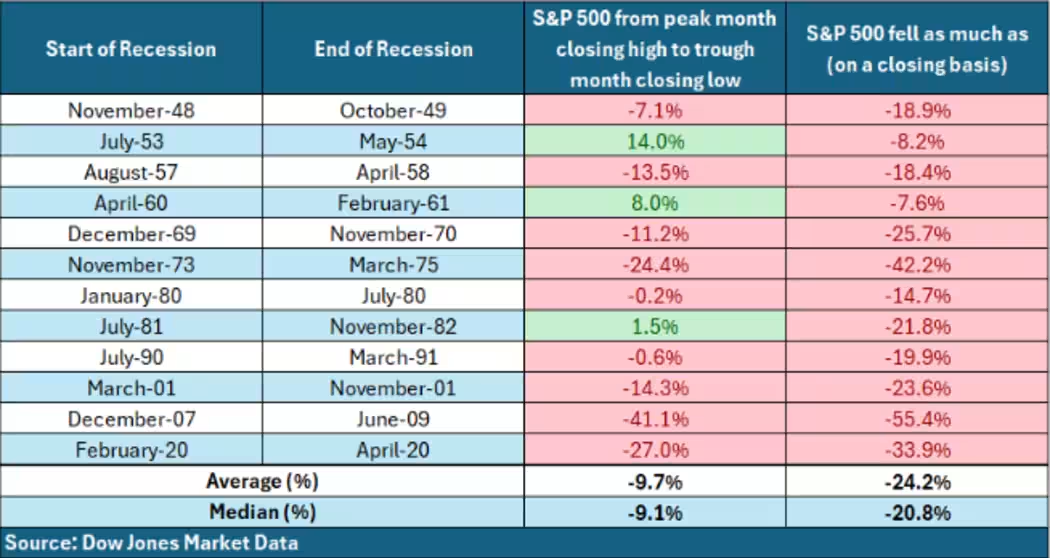
As of April 8, the index was down 18.9% from its February 19 high, and 21.3% on an intraday basis when including April 7. Still, the market’s ability to bounce back quickly has given some investors confidence.
Yet challenges remain. The S&P 500 is down 7.3% over Trump’s first 100 days in office — the worst showing since Nixon’s second term. Meanwhile, Bessent has warned that markets need to “detox” from pandemic-era stimulus after years of outsized gains.
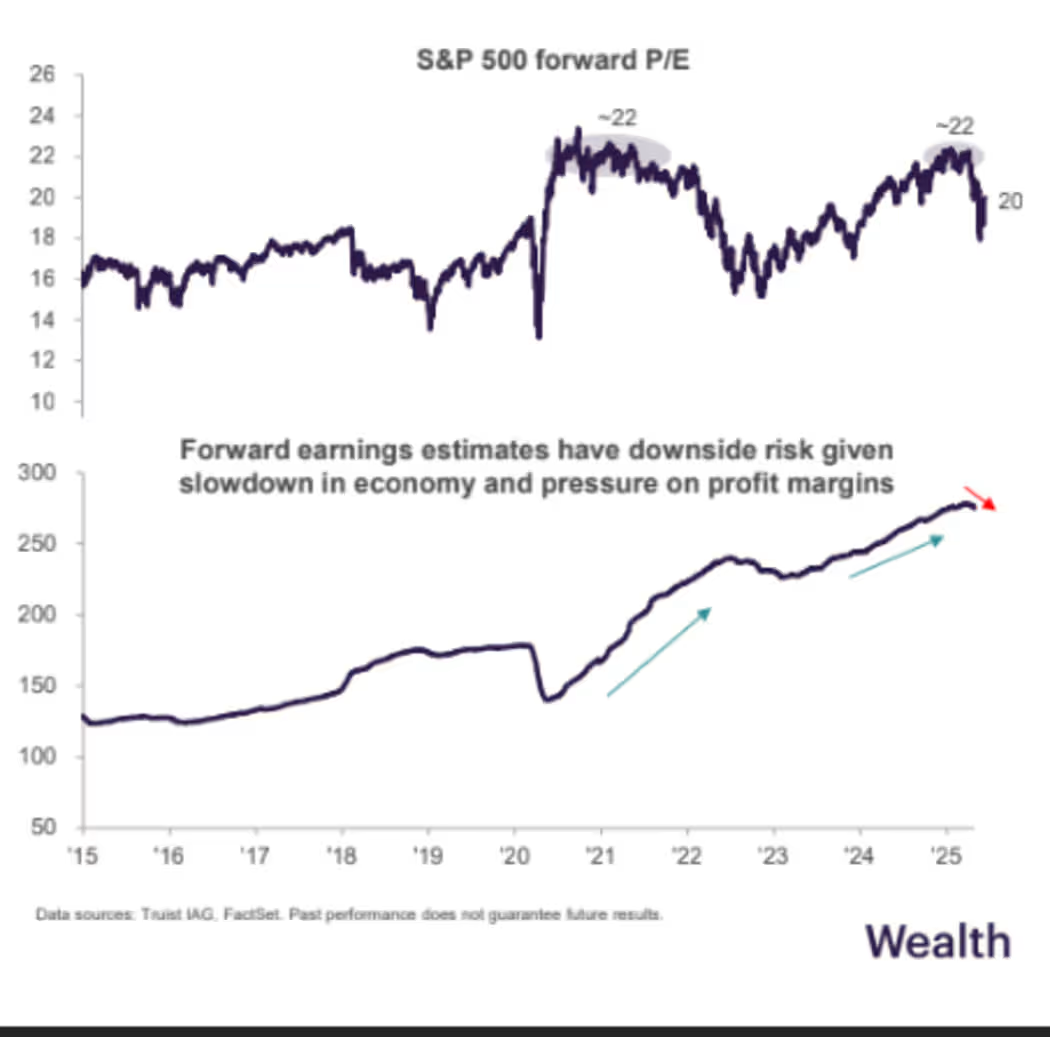
Adding to the uncertainty is the drop in the S&P 500’s price-to-earnings ratio — from 22x at the end of last year to below 20x — driven by doubts over Trump’s policies and competition from China’s AI advancements.
“It’s hard to justify a return to 22x valuations amid slowing earnings, weaker economic data, and rising uncertainty,” said Keith Lerner of Truist Advisory Services.
Still, markets found footing Tuesday. The Dow rose 300 points (0.8%), while the S&P 500 and Nasdaq both gained 0.6%, according to FactSet.

John Paul is the founder of DayTradeToWin, a trading education and software company established in 2008, supporting traders worldwide. His expertise focuses on price action-based futures trading strategies and structured market analysis.
DayTradeToWin delivers trading education, indicators, and software tools designed to help traders apply disciplined, rule-based decision-making across global futures markets.
He is the creator of multiple trading methodologies, including the Sonic System, Atlas Line, and Trade Scalper, which help traders identify structured opportunities in markets such as the E-mini S&P 500 (ES), Nasdaq (NQ), crude oil (CL), and gold (GC).
Official website: https://daytradetowin.com