
Big Tech Gets a Boost From New Tax Law as Markets Shrug Off Tariff Jitter
Investors may be uneasy over the latest tariff headlines, but history suggests that fear might be misplaced — especially with the S&P 500 sitting just 0.3% off all-time highs.
According to UBS, when the index is at record levels, it typically takes 105 days before a 5% pullback occurs. In that time, equities tend to outperform cash and short-term Treasurys. So while going defensive might feel safe, historically it hasn’t been the winning strategy.
Mike Wilson, Morgan Stanley’s chief U.S. equity strategist, sees additional reasons for investor confidence. One is the belief that many of the proposed tariffs — particularly on Mexico and Canada — won’t be fully implemented. Goods that meet the rules under the U.S.-Mexico-Canada Agreement (USMCA), such as those manufactured entirely within member countries or significantly transformed, are likely to be exempt.
Wilson’s team analyzed which industries are most exposed to tariffs. U.S. goods-focused sectors rely heavily on imports from China, followed by Mexico, Canada, and the EU. The real risk, they argue, would be a steep escalation in China tariffs — both due to broad sector exposure and the high market cap concentration of affected companies. Tariffs on Mexico would be the next-biggest threat, particularly if USMCA exemptions fall through.
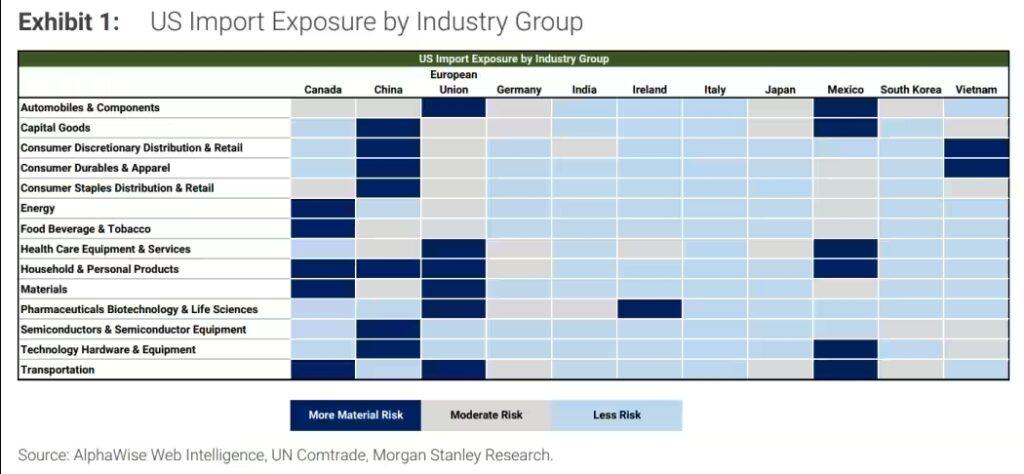
A specific area of concern is semiconductors. New levies on chips — vital to U.S. supply chains — could have broad ripple effects. “This could become a major issue depending on how Section 232 tariffs are applied,” the strategists warned.
But there’s another story playing out beneath the surface — a rapid turnaround in earnings expectations. Analyst revisions have flipped from -25% in April to +3% now. Financials, in particular, have seen the strongest rebound in expected earnings per share.
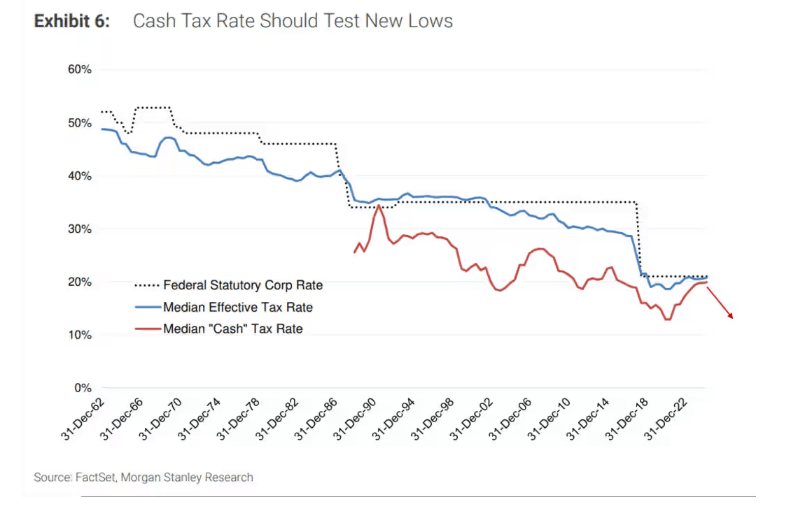
Then there’s the impact of the newly passed tax legislation, nicknamed the “One Big Beautiful Bill.” A key provision allows companies to expense R&D costs upfront, effectively lowering the corporate tax rate from 20% to around 13%. While this change won’t affect GAAP earnings — which already require immediate expensing — it will significantly improve cash flow.
That cash flow benefit could explain why the so-called “Magnificent Seven” tech titans have led the market in recent months. Companies with more than $10 billion in deferred R&D tax assets — and thus poised to gain the most — include Alphabet, Amazon, Meta, Microsoft, Apple, Intel, and General Motors, according to separate investment bank research.

John Paul is the founder of DayTradeToWin, a trading education and software company established in 2008, supporting traders worldwide. His expertise focuses on price action-based futures trading strategies and structured market analysis.
DayTradeToWin delivers trading education, indicators, and software tools designed to help traders apply disciplined, rule-based decision-making across global futures markets.
He is the creator of multiple trading methodologies, including the Sonic System, Atlas Line, and Trade Scalper, which help traders identify structured opportunities in markets such as the E-mini S&P 500 (ES), Nasdaq (NQ), crude oil (CL), and gold (GC).
Official website: https://daytradetowin.com