
Kevin Muir Signals Caution as Vol-Control Funds Approach Buying Limit
The stock market’s sharp rally this year has lifted investor sentiment—but it’s also raising red flags for some market veterans. Among them is Kevin Muir, former institutional trader and author of The Macro Tourist blog, who believes the powerful forces driving this surge may be losing steam.
In a recent interview with MarketWatch, Muir warned that volatility control funds—also known as “vol-control” strategies—are nearing the end of their buying spree. These large institutional players, which include pensions and endowments, adjust their equity exposure based on market volatility. When markets are calm, they buy. When turbulence rises, they cut back.
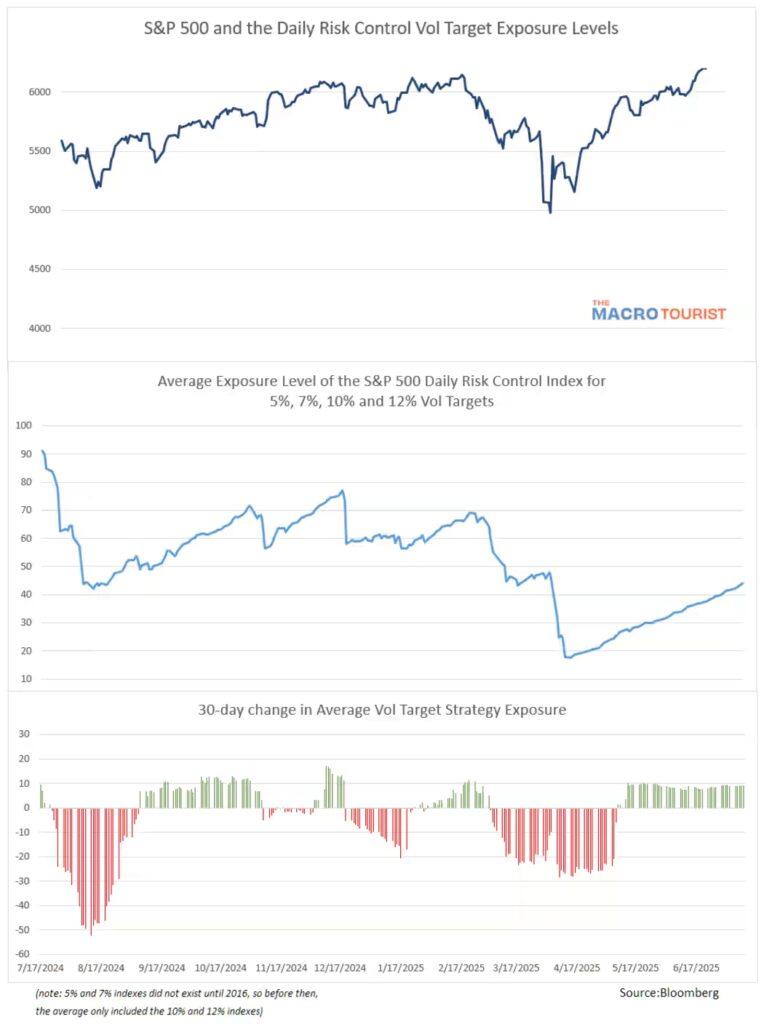
“This is the kind of behind-the-scenes force that gets little media attention, but moves serious money,” Muir said. He estimates these strategies manage between $300 billion and $500 billion, enough to influence major market swings.
According to Muir, much of the stock market’s recent upside—especially over the past two months—can be attributed to these funds methodically re-entering equities after being forced to de-risk during volatility spikes earlier in the year.
“I’ve been watching and waiting for the bulk of this buying to play out,” Muir said. “And while some is still ongoing, we’re getting close to the end of it.”
He believes this explains why markets have seemed to drift higher on quiet days with no clear headlines. “It’s these vol-control funds steadily buying, even when it doesn’t seem like there’s a reason.”
What concerns Muir even more is the relentless optimism from retail traders. “Retail has stayed in and kept buying. And while they’ve done well recently, it feels a lot like 1999—or even the euphoria we saw in 2021,” he said.
To Muir, this rally now looks dangerously stretched. He sees U.S. stocks as overvalued, overowned, and heavily concentrated, all in a market environment he describes as unusually unstable due to unpredictable policy shifts and economic crosscurrents.
“With seasonals still strong and vol-control flows in play, I didn’t want to fight the rally,” Muir admitted. “But now, it feels like the time has come to step back.”
His advice for investors? Begin to reduce risk in U.S. equities and diversify globally. He also cautioned that geopolitical risks—such as tariffs—could become new headwinds for markets already priced for perfection.
“The setup reminds me of moments in history when sentiment peaked and concentration was extreme,” Muir said. “I’m not calling a crash, but I am saying: this is the point to start being careful.”

John Paul is the founder of DayTradeToWin, a trading education and software company established in 2008, supporting traders worldwide. His expertise focuses on price action-based futures trading strategies and structured market analysis.
DayTradeToWin delivers trading education, indicators, and software tools designed to help traders apply disciplined, rule-based decision-making across global futures markets.
He is the creator of multiple trading methodologies, including the Sonic System, Atlas Line, and Trade Scalper, which help traders identify structured opportunities in markets such as the E-mini S&P 500 (ES), Nasdaq (NQ), crude oil (CL), and gold (GC).
Official website: https://daytradetowin.com