
The U.S. Is Poised to Remain the World’s Growth Engine in 2026
Wall Street has been busy making bold predictions for 2026, and the latest outlook from JPMorgan just raised the stakes. Earlier this week, Deutsche Bank turned heads with an 8,000 target for the S&P 500. Now, JPMorgan’s strategists are upping the momentum with an outlook that blends confidence with ambition.
Led by Dubravko Lakos-Bujas, the team is projecting a base-case S&P 500 target of 7,500 by the end of 2026, supported by 13%–15% earnings growth over the next two years. Their scenario assumes two early-year Fed rate cuts followed by a steady pause.
But there’s a bigger possibility on the table. If inflation continues easing and the Fed delivers more rate cuts, JPMorgan believes the S&P 500 could break above 8,000 in 2026—potentially eclipsing even the most optimistic forecasts so far.
At the heart of their outlook is a clear message: the U.S. is expected to remain “the world’s growth engine” next year, powered by a resilient economy and a massive AI-driven supercycle.
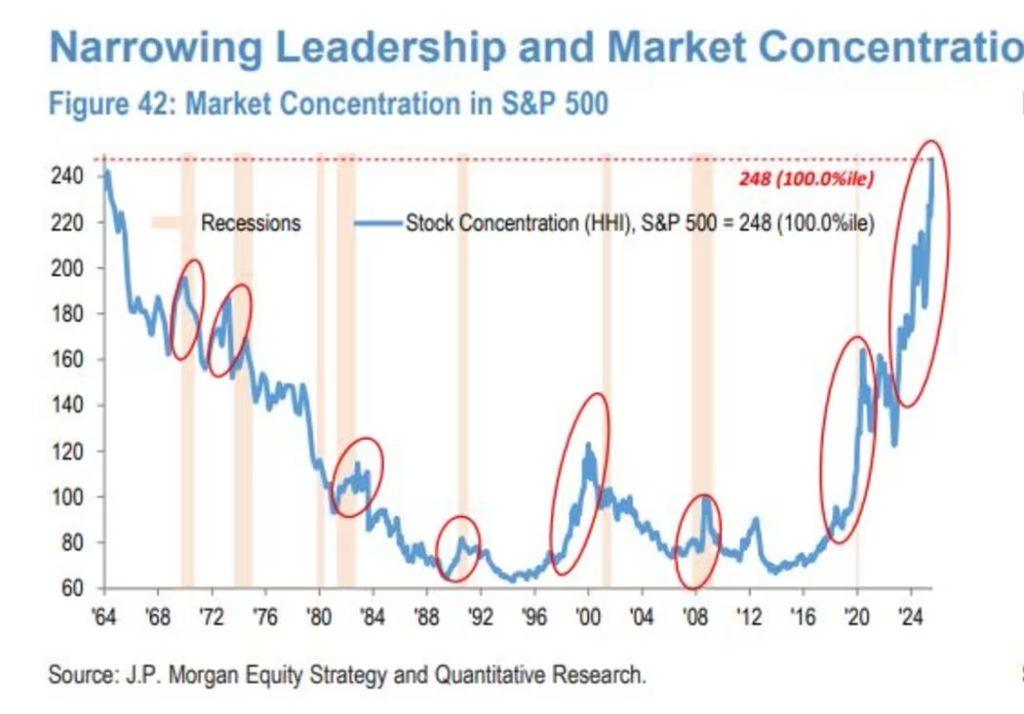
This AI boom is fueling record capital expenditures, fast earnings expansion, and an unprecedented concentration of market gains among top AI beneficiaries and quality growth companies—those with strong margins, consistent cash flow, disciplined capital returns, and low leverage.
While rising AI stock valuations have sparked some concern, JPMorgan argues that the roughly 30x forward earnings multiple for the leading AI names is justified. These companies offer stronger earnings visibility, more pricing power, and better shareholder returns compared with the broader S&P 470, which trades at about 19x.
Capex is also expected to surge. The firm projects a 34% increase in AI-related spending next year, driven by growing “fear of becoming obsolete” as companies across sectors—from tech and utilities to banks, healthcare, and logistics—invest aggressively in AI to stay competitive.
JPMorgan remains overweight tech, media, telecom, utilities, and defense, with expectations that banks and pharma could outperform as well. They also anticipate rising shareholder payouts and more supportive fiscal policy, including potential boosts from the proposed One Big Beautiful Bill Act.
However, the strategists acknowledge the risks of this powerful expansion. The AI boom is unfolding within a K-shaped, highly polarized economic environment, creating a winner-takes-all market structure. As a result, sentiment could remain volatile, mirroring the sharp swings seen throughout 2025.
Outside of AI, JPMorgan highlights opportunities in strategic resource stocks such as rare earths and uranium, backed by U.S.-China competition, supply-chain diversification, and AI-driven energy demand. Deregulation could also lift financials, the housing supply chain, and energy companies, while tariff-sensitive sectors may offer tactical opportunities.
Overall, JPMorgan’s view paints 2026 as another year defined by strong U.S. leadership, robust earnings, and transformative AI tailwinds—reinforcing America’s role as the world’s primary engine of growth.

John Paul is the founder of DayTradeToWin, a trading education and software company established in 2008, supporting traders worldwide. His expertise focuses on price action-based futures trading strategies and structured market analysis.
DayTradeToWin delivers trading education, indicators, and software tools designed to help traders apply disciplined, rule-based decision-making across global futures markets.
He is the creator of multiple trading methodologies, including the Sonic System, Atlas Line, and Trade Scalper, which help traders identify structured opportunities in markets such as the E-mini S&P 500 (ES), Nasdaq (NQ), crude oil (CL), and gold (GC).
Official website: https://daytradetowin.com