
DayTradeToWin Review

How to Build High-Probability Trades Using Indicator Confluence
DayTradeToWin Review

Building High-Probability Trades Through Indicator Confluence

Many traders assume that adding more indicators automatically improves results. In reality, the opposite often happens. Without structure, additional indicators create conflicting signals, hesitation, and uncertainty. The issue isn’t the number of tools on the chart — it’s how those tools are organized and how they relate to price action. In this article, I’ll explain how I layer multiple indicators in a structured way to create confirmation-based trades that are clear, disciplined, and repeatable. Why More Indicators Often Make Trading Harder Most traders apply indicators without assigning them specific roles. When every tool is treated as equally important, charts become cluttered and signals begin to contradict one another. This commonly results in: Indicators should enhance clarity — not compete for attention. Price Action Is the Starting Point Before any indicator is evaluated, price behavior must make sense. Indicators do not lead the market. They respond to it. If price structure is unclear: Every trade must begin with: Indicators only become useful after these elements are defined. Understanding Indicator Roles: Leading vs Confirming Not all indicators are designed to do the same job. Assigning clear roles prevents signal conflict and confusion. Leading Indicators Leading tools help anticipate potential price behavior by: They answer:“Where might price react?” Confirming Indicators Confirming tools validate what price is already expressing: They answer:“Is price behavior supported?” When traders mix these functions, signals overlap and clarity disappears. How I Layer Indicators Without Creating Noise The objective is confluence, not complexity. Instead of stacking indicators endlessly, I focus on: Every indicator on the chart must: If a tool doesn’t improve decision-making, it’s removed. Why Confluence Improves Trade Execution When multiple tools independently confirm the same idea, execution becomes easier. Traders typically experience: Confidence doesn’t come from certainty — it comes from agreement between tools and price. A Framework Built for Price-Action Traders This approach is best suited for traders who: Indicators are not shortcuts — they are filters that refine decisions. Final Perspective Most traders don’t need additional indicators.They need better organization, clearer roles, and stronger alignment. When indicators are combined with intent: If you choose to use indicators, use them deliberately — not decoratively. John PaulJohn Paul is the founder of DayTradeToWin, a trading education and software company established in 2008, supporting traders worldwide. His expertise focuses on price action-based futures trading strategies and structured market analysis. DayTradeToWin delivers trading education, indicators, and software tools designed to help traders apply disciplined, rule-based decision-making across global futures markets. He is the creator of multiple trading methodologies, including the Sonic System, Atlas Line, and Trade Scalper, which help traders identify structured opportunities in markets such as the E-mini S&P 500 (ES), Nasdaq (NQ), crude oil (CL), and gold (GC). Official website: https://daytradetowin.com daytradetowin.com

autopilot
DayTradeToWin Review

AutoPilot System: Stops, Targets & Risk Control

What if your trading system could enter, manage, and exit trades for you — automatically? No emotional decisions.No overtrading.No staring at charts all day. In a live market session, our Autopilot Trading System did exactly that — hitting a $500 daily profit target trading just one E-mini S&P contract, then shutting itself off for the day. Here’s exactly how it works — and why this approach is changing how our traders operate. What Is the Autopilot Trading System? The Autopilot Trading System is a fully automated futures trading solution designed for: Once activated, the system automatically: It trades 100% rules-based and emotion-free. A Live Example: $500 and Done In this live session: The system: No overtrading. No second-guessing. No stress. Why This System Works So Well Fully Automated Execution The Autopilot: If the market moves up, it looks for buys.If the market moves down, it looks for sells. Built-In Risk Control You control: This prevents the most common trader mistake: Making money early — then giving it all back later. Once your goal is reached, the system closes all trades and shuts down automatically. Customizable for Any Trader Whether you are: The system can be tuned to match your style. We even provide optimized presets for: Start With Micros (Strongly Recommended) New traders should start with Micro contracts: Then scale up as confidence and consistency grow. Why Automation Beats Emotional Trading Humans: The Autopilot: That’s how real consistency is built. How To Get the Autopilot Trading System The Autopilot Trading System is included with: ✅ Accelerated Mentorship (Monthly or Lifetime)✅ Full access to all proprietary software✅ Sonic System✅ ABC Software✅ Professional training and support Start Free Today Create a FREE member account and get access to: We focus on price action, not lagging indicators. Final Thoughts In one short live session: That’s how modern trading should work: Structured. Disciplined. Automated. 👉 Get Started Now John PaulJohn Paul is the founder of DayTradeToWin, a trading education and software company established in 2008, supporting traders worldwide. His expertise focuses on price action-based futures trading strategies and structured market analysis. DayTradeToWin delivers trading education, indicators, and software tools designed to help traders apply disciplined, rule-based decision-making across global futures markets. He is the creator of multiple trading methodologies, including the Sonic System, Atlas Line, and Trade Scalper, which help traders identify structured opportunities in markets such as the E-mini S&P 500 (ES), Nasdaq (NQ), crude oil (CL), and gold (GC). Official website: https://daytradetowin.com daytradetowin.com
sonic
DayTradeToWin Review

Sonic Trading Strategy: How to Profit in Slow Markets

Even in a slow, half-day holiday session, disciplined price action trading continues to deliver results. On Monday’s shortened trading day, the Sonic System generated six trade signals, producing five completed winning trades before the market closed early for the federal holiday. With liquidity reduced and volatility muted, the session provided a textbook example of how professional traders adapt strategy and timeframe to changing market conditions — and why structure-based systems outperform indicator-driven approaches. Trading a Holiday Session: Why Timeframe Matters Holiday sessions are known for: To adjust, traders using the Sonic System shifted to a 5-minute chart rather than the 1-minute chart typically used in higher-volatility conditions. The longer timeframe allows price more room to develop and creates more realistic profit targets when the market is moving slowly. Despite the quiet conditions, the system delivered: Market Structure: Why a Gap Fill Is Likely Comparing Friday’s close to Monday’s open reveals a clear price gap. From a technical perspective: The current structure suggests the market may attempt to fill the gap as early as Tuesday or Wednesday. As a result, the trading plan remains focused on long opportunities, guided by the Sonic System, Atlas Line, and Roadmap tools. Why the Sonic System Performs in All Market Conditions Whether markets are: The Sonic System is built around: This allows traders to stay synchronized with the market rather than reacting to lagging indicators. Part of the DayTradeToWin Professional Trading Suite The Sonic System integrates with the full DayTradeToWin ecosystem, including: Together, these tools help traders: Learning the Professional Approach Traders looking to move beyond indicator-based strategies can now access the Accelerated Mentorship Program, which includes: New traders can also start with a free member account at daytradetowin.com, which includes trial access to select tools, including the ABC software. Outlook Monday’s session reinforced a simple principle: Even in low-volume markets, structure and discipline create opportunity. With the market showing a bullish structure and a gap likely to be filled, attention now turns to the next sessions, where the Sonic System will continue to guide trade decisions through price action and market structure. John PaulJohn Paul is the founder of DayTradeToWin, a trading education and software company established in 2008, supporting traders worldwide. His expertise focuses on price action-based futures trading strategies and structured market analysis. DayTradeToWin delivers trading education, indicators, and software tools designed to help traders apply disciplined, rule-based decision-making across global futures markets. He is the creator of multiple trading methodologies, including the Sonic System, Atlas Line, and Trade Scalper, which help traders identify structured opportunities in markets such as the E-mini S&P 500 (ES), Nasdaq (NQ), crude oil (CL), and gold (GC). Official website: https://daytradetowin.com daytradetowin.com
market
DayTradeToWin Review

January Stock Market Outlook: S&P 500 Near Key Highs

U.S. equity markets are showing renewed strength as January trading continues, with major indexes signaling that the early weeks of the year could set a constructive tone for the months ahead. The E-mini S&P 500, Nasdaq, and Dow Jones Industrial Average are all trading higher than their opening levels for the year, reinforcing the view among many traders that the broader market remains in an established uptrend. Historically, January has played a critical role in shaping investor expectations. Market participants often look to see whether the first month of the year closes higher or lower than it opens, as a strong January has frequently been associated with positive performance for the rest of the year. So far, price action suggests that a higher January close remains the more likely outcome, barring a major external shock. Markets Move Toward Key Resistance Levels Recent price behavior indicates that markets are attempting to revisit previous highs. In the E-mini S&P 500, traders are closely watching the area near the 7,000 level, a zone that represents a key psychological and technical reference point. Similar patterns are visible across other asset classes. The Nasdaq continues to hold above its January opening range and appears positioned to challenge recent highs. Gold and crude oil have also displayed comparable behavior, with prices gravitating back toward their most recent peaks. This tendency to retest prior highs is a well-known feature of market structure, particularly during trending environments. Pullback Seen as Normal Consolidation Despite the broader uptrend, markets have recently experienced a modest pullback. Rather than a sharp sell-off, the decline has taken the form of a multi-day consolidation, which many traders view as a normal retracement within a continuing trend. Such pullbacks typically unfold over several sessions rather than a single large move, allowing the market to digest recent gains before attempting another push higher. Similar price action earlier in the cycle was followed by a renewed rally toward previous highs. Breakout Could Trigger Short-Term Volatility If markets succeed in trading above recent highs, analysts note that a brief acceleration in price could follow. Breakouts often trigger a wave of stop orders and momentum-driven buying, which can result in a short-term surge in prices. This type of move is frequently accompanied by increased volatility, as rapid buying is sometimes followed by short-term profit-taking before the broader trend resumes. January’s Broader Implications From a longer-term perspective, a strong January has historically increased the probability of a positive year overall, even though periods of volatility and correction remain inevitable. While markets rarely move in a straight line, the current structure suggests that pullbacks may continue to be viewed as part of a broader upward trend rather than the start of a sustained reversal. For now, the dominant theme across major U.S. indexes remains one of resilience, with price action continuing to favor the upside as the year gets underway. John PaulJohn Paul is the founder of DayTradeToWin, a trading education and software company established in 2008, supporting traders worldwide. His expertise focuses on price action-based futures trading strategies and structured market analysis. DayTradeToWin delivers trading education, indicators, and software tools designed to help traders apply disciplined, rule-based decision-making across global futures markets. He is the creator of multiple trading methodologies, including the Sonic System, Atlas Line, and Trade Scalper, which help traders identify structured opportunities in markets such as the E-mini S&P 500 (ES), Nasdaq (NQ), crude oil (CL), and gold (GC). Official website: https://daytradetowin.com daytradetowin.com
sonic
DayTradeToWin Review

Sonic Strategy: Which Timeframe Really Works?

Successful trading is not about being in the market all day. It’s about waiting for the right setups and executing them with discipline. In today’s market update, we’ll break down how the Sonic Trading System is identifying high-quality trading opportunities across multiple timeframes — from short-term scalping to swing trading — using nothing but price action, structure, and intelligent risk management. 🔹 A Strong Session: Consecutive Winning Long Trades Looking at the E-mini and Micro E-mini markets through the Sonic system, the latest sequence shows exactly what traders want to see: While this kind of streak is great, disciplined traders know that more trades doesn’t mean more profits. On a 1-minute chart especially, after five or six trades, it’s wise to become more selective. If you capture just two or three high-quality trades from a session like this, you’re already ahead. 🔹 Why the 3-Minute Chart Often Delivers Better Setups Many Sonic traders prefer the 3-minute chart because it provides: In the most recent sequence, a short trade appeared — but the following long trade was the superior setup. Why? Because the profit target was significantly larger than the stop loss. This is a core principle of professional trading: When your potential reward is greater than your risk, you give yourself a mathematical edge before the trade even starts. And if you can also get a better entry price? That edge becomes even stronger. 🔹 How to Think Like a Professional Trader The Sonic Trading System is built on structure and momentum, not lagging indicators. Here’s what we look for: If you ever find yourself wondering whether to take a trade or not, remember this: The market will always give another opportunity. Wait for the better one. 🔹 Swing Trading with the Sonic System: The Daily Chart View The Sonic system isn’t just for day traders. It works extremely well for swing trading on higher timeframes like the daily chart. The most recent daily trade from January 6 showed: Ideally, you want trades where the reward is greater than the risk — because that’s how you build a high-probability trading approach over time. 🔹 The Real Advantage: Price Action Over Indicators Most traders struggle because they rely on: The Sonic Trading System focuses on what actually moves the market: ✅ Pure price action ✅ Market structure ✅ Objective entries and exits ✅ Built-in risk management ✅ Works on any market, any timeframe 🚀 Get Lifetime Access to the Sonic Trading System If you’re serious about becoming a consistently profitable trader, the Accelerated Mentorship Program gives you everything you need: 🔥 Start Trading the Right Way Create your FREE member account and get instant access to trials and training: 👉 Visit daytradetowin.com👉 Join Accelerated Mentorship👉 Start trading using price action instead of indicators 🏁 Final Thought Trading success doesn’t come from trading more.It comes from trading better setups with better risk-to-reward — consistently. That’s exactly what the Sonic Trading System is designed to help you do. John PaulJohn Paul is the founder of DayTradeToWin, a trading education and software company established in 2008, supporting traders worldwide. His expertise focuses on price action-based futures trading strategies and structured market analysis. DayTradeToWin delivers trading education, indicators, and software tools designed to help traders apply disciplined, rule-based decision-making across global futures markets. He is the creator of multiple trading methodologies, including the Sonic System, Atlas Line, and Trade Scalper, which help traders identify structured opportunities in markets such as the E-mini S&P 500 (ES), Nasdaq (NQ), crude oil (CL), and gold (GC). Official website: https://daytradetowin.com daytradetowin.com

superdom
DayTradeToWin Review

Why the SuperDOM Matters in Day Trading

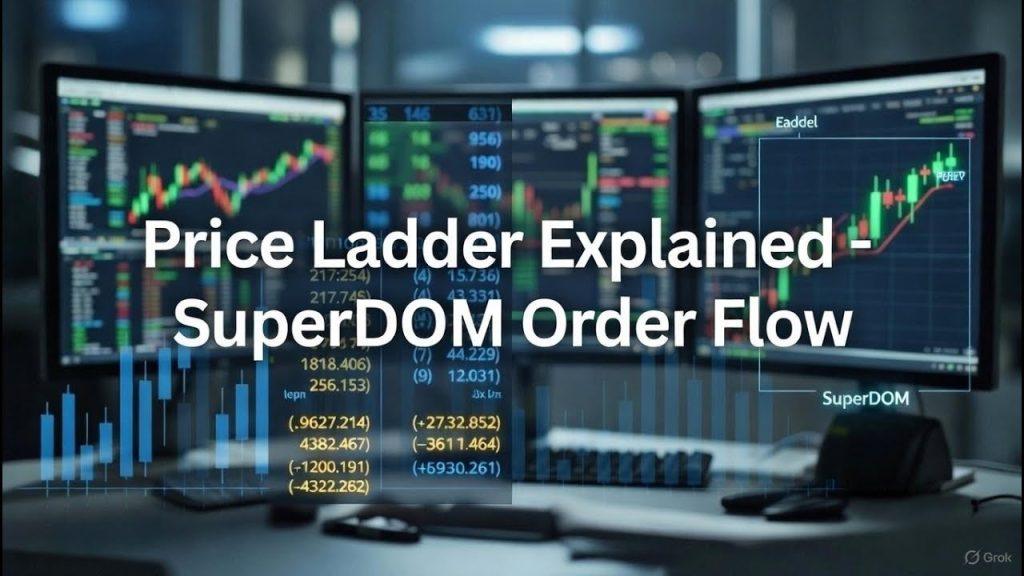
The One Trading Tool Most Traders Don’t Truly Understand If you trade futures, scalp the markets, or use NinjaTrader, there is one tool you must master: the SuperDOM, also known as the Price Ladder. Most traders look at it every day. Very few actually understand what it’s telling them. The SuperDOM is where real trades happen. It’s where orders are filled, stops are triggered, profits are taken, and momentum is created in real time. If charts show you what is happening, the SuperDOM shows you how it’s happening. In this guide, you’ll learn: What Is the SuperDOM (Price Ladder)? The SuperDOM is NinjaTrader’s version of a price ladder — a vertical trading interface that displays: Whether you trade: The SuperDOM works exactly the same way. Understanding the Three Main Columns 1. The Middle Column: The Price Column This is the core of the SuperDOM. What Do the Numbers in Parentheses Mean? When you see a number like: (3), (7), (12) That means: That many contracts were just traded at that exact price. These numbers represent real volume — actual trades that were completed. 2. The Right Column: Sell Orders This column shows: When price moves through that level, those orders get filled and price continues to the next level. 3. The Left Column: Buy Orders This column shows: Remember This Rule: Side columns = orders waiting to be filledMiddle column = orders that were actually filled How Limit Orders Really Work (Critical for Beginners) Buy Limit Orders: Sell Limit Orders: If you try to: Because the system will always give you the best available price immediately. Market Orders and Slippage: The Hidden Cost of Speed When you click: You are saying: “Fill me at the best available price right now.” But in fast-moving markets, that price can change before your order is completed. This difference is called slippage. Important Facts About Slippage: Why You Should Avoid the Reverse Button The Reverse button: That means: It’s basically a panic button, and professional traders almost never use it. Always Check Your Instrument (This Mistake Is Expensive) Before trading, always confirm that: Are using the same instrument. Otherwise, you might be: This mistake can be very costly. Use ATM Strategies to Automate Risk Management One of NinjaTrader’s most powerful features is the ATM Strategy. It allows you to: Example Simple ATM Setup: Now every trade you take: You can still adjust the orders manually after entry. Saving ATM Templates for Faster Execution You can create presets such as: This allows you to: Using Chart Trader Together With the SuperDOM The Chart Trader: Best practice: Use both at the same time Why Mastering the Price Ladder Changes Your Trading When you truly understand the SuperDOM, you: This is a core skill for: Final Thoughts: Stop Clicking — Start Trading Like a Pro The SuperDOM is not just a trading tool. It’s your execution command center. Master it, and you will: Want to Learn Price Action the Right Way? If you want to learn: Start with a free membership at DayTradeToWin and learn the same methodology used in the Sonic Trading System. John PaulJohn Paul is the founder of DayTradeToWin, a trading education and software company established in 2008, supporting traders worldwide. His expertise focuses on price action-based futures trading strategies and structured market analysis. DayTradeToWin delivers trading education, indicators, and software tools designed to help traders apply disciplined, rule-based decision-making across global futures markets. He is the creator of multiple trading methodologies, including the Sonic System, Atlas Line, and Trade Scalper, which help traders identify structured opportunities in markets such as the E-mini S&P 500 (ES), Nasdaq (NQ), crude oil (CL), and gold (GC). Official website: https://daytradetowin.com daytradetowin.com

Scroll to Top