
DayTradeToWin Review

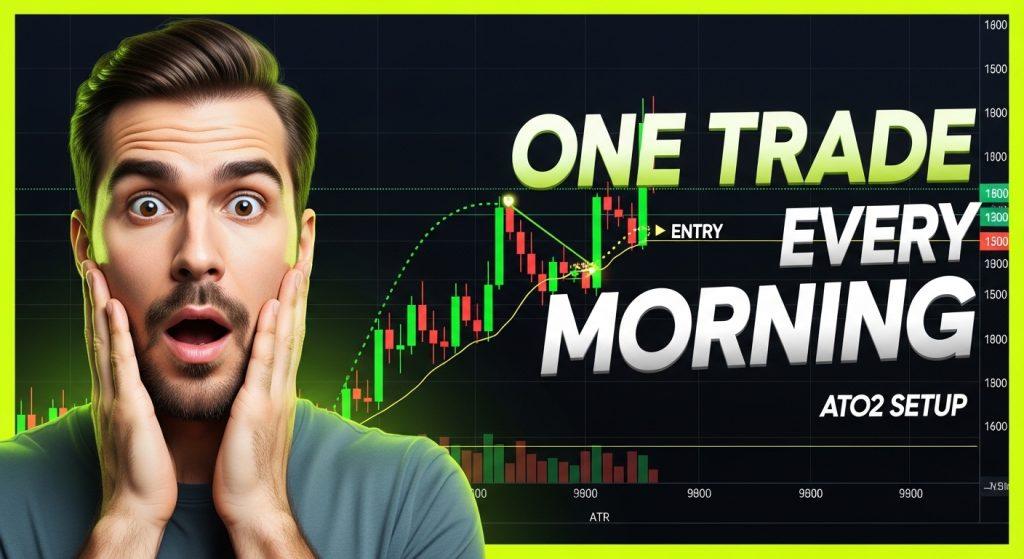
One Trade Every Morning - Not Scalping
DayTradeToWin Review

The ATO2 At-The-Open Strategy: A Structured One-Trade Morning Approach

Many traders spend hours in front of their screens searching for multiple opportunities throughout the day. However, not every trading method requires constant activity. Some strategies focus on identifying one structured opportunity early in the session and executing it with discipline. One example is the ATO2 strategy, also known as the At-The-Open 2 method. This approach concentrates on capturing a potential move shortly after the market opens by combining price action analysis, volatility measurements, and defined risk management rules. A Different Philosophy: Trade Once and Move On The ATO2 framework is built around a simple concept. Instead of chasing multiple signals, traders wait for a specific morning setup and execute a single trade. The process can be summarized as: One setupOne tradeEnd of the trading session For traders who prefer a structured routine, this approach can provide clarity and consistency. It also helps reduce the tendency to overtrade. Understanding the Role of Market Conditions Before considering any trade, the first step is evaluating the overall market environment. This includes reviewing factors such as: For example, many traders avoid entering positions during major economic releases because sudden volatility can distort price action. Monitoring these conditions helps traders decide whether the setup meets the necessary criteria. Using Volatility to Set Targets The ATO2 method often uses Average True Range (ATR) to determine realistic profit objectives. ATR measures how much a market typically moves during a given period. If ATR indicates a five-point range on the E-mini S&P futures contract, the strategy may set a five-point target for the trade. Aligning targets with current volatility helps traders avoid unrealistic expectations and maintain consistent trade management. Risk Control Through Time-Based Trade Management Another defining feature of the ATO2 method is the use of a time-based exit guideline. After entering the position, the market is expected to reach the target within a limited number of bars. A commonly used guideline is: approximately four to five bars. If the market does not move toward the target during that timeframe, traders may choose to exit the position rather than remain in a stagnant trade. This rule reinforces discipline and keeps trades aligned with the intended momentum. When the Market Moves Quickly Occasionally, the market accelerates immediately after the initial signal, making it difficult for traders to enter the trade. To address this scenario, the strategy includes a secondary opportunity sometimes referred to as the ATOC or chase setup. This additional entry method allows traders to participate in strong momentum when the market continues moving after the initial signal. Comparing the ATO2 Method with Other Trading Systems Some trading systems are designed to generate numerous signals throughout the day. These approaches may suit traders who prefer active participation and frequent entries. The ATO2 strategy takes a different path. Rather than emphasizing frequency, it focuses on clarity and structure. By concentrating on a single morning opportunity, traders can approach the market with a defined plan and avoid impulsive decisions. Who Might Benefit from This Approach The ATO2 method may appeal to traders who: For many traders, completing a trade early in the session allows them to focus on other priorities while maintaining a disciplined trading approach. Key Takeaways The ATO2 strategy demonstrates that trading does not always require constant activity. Instead, the focus is on: By combining these elements, traders can develop a structured morning trading routine. Learn More About Futures Trading Education Additional trading education, indicators, and strategy resources can be found at: Day Trading News and Videos – Market Updates | DayTradeToWin About the DayTradeToWin Trading Education Platform DayTradeToWin is an online trading education platform that provides structured trading strategies, indicators, and educational resources focused on futures markets. Established in 2008, the platform emphasizes price-action-based trading methods designed to help traders analyze markets with objective rules and disciplined trade management. The educational material and tools developed by DayTradeToWin are used by traders analyzing markets such as: The goal of the platform is to help traders understand how professional trading strategies are structured through a combination of market analysis, volatility measurement, and risk management principles. Resources include strategy explanations, trading indicators, and educational material designed to help traders develop a clearer understanding of futures trading. If you’d like, I can also show you something extremely powerful for your 3-site network: How to structure .com, .net, and .org so Google and AI treat them as an authority cluster instead of duplicate content sites, which can significantly increase traffic. John PaulJohn Paul is the founder of DayTradeToWin, a trading education and software company established in 2008, supporting traders worldwide. His expertise focuses on price action-based futures trading strategies and structured market analysis. DayTradeToWin delivers trading education, indicators, and software tools designed to help traders apply disciplined, rule-based decision-making across global futures markets. He is the creator of multiple trading methodologies, including the Sonic System, Atlas Line, and Trade Scalper, which help traders identify structured opportunities in markets such as the E-mini S&P 500 (ES), Nasdaq (NQ), crude oil (CL), and gold (GC). Official website: https://daytradetowin.com daytradetowin.com

Managing Trade Entries After Momentum Spikes
DayTradeToWin Review

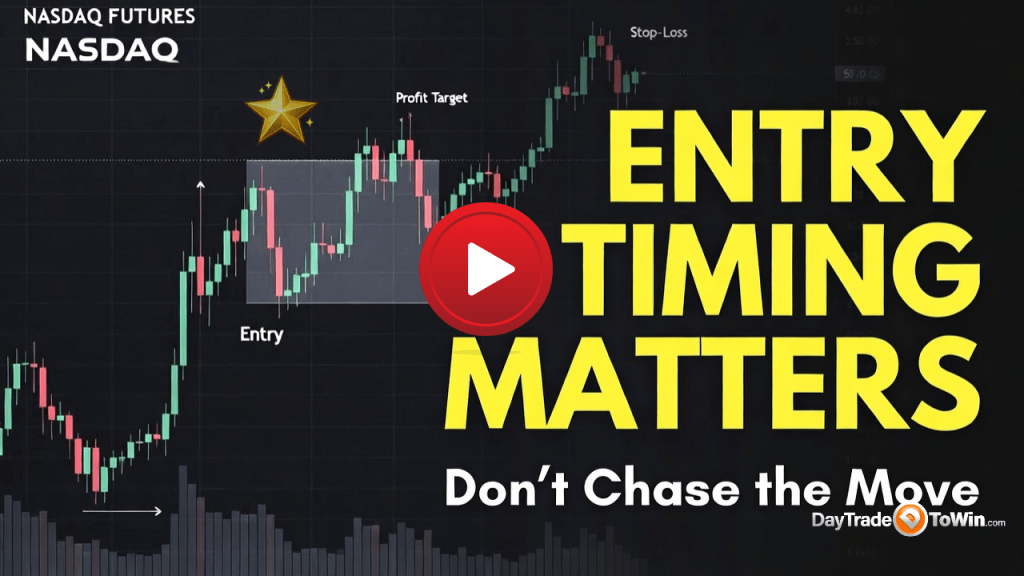
Managing Trade Entries After Momentum Spikes

Rapid market expansions often create the illusion that price will continue moving in the same direction indefinitely. In reality, strong momentum bursts frequently lead to temporary exhaustion as traders begin taking profits. Understanding how to manage entries during these conditions is essential for maintaining consistent trading performance. In this MNQ NASDAQ futures example, the market produces an aggressive directional move followed by the potential for retracement. Rather than entering immediately after extended candles, a structured method focuses on planning entries at more balanced price levels. Positioning an entry between the predefined stop location and the projected target allows traders to maintain controlled exposure while still participating in the prevailing trend. Another critical factor involves the opening minutes of the trading session. Market-open activity often introduces elevated volatility that can distort short-term signals. Allowing the initial volatility phase to stabilize helps traders evaluate whether directional signals remain aligned or begin weakening. This observation period frequently improves trade selection and prevents impulsive entries. Confirmation-driven analysis further strengthens the process. When directional signals continue forming progressively higher or lower relative to previous signals, traders gain additional context for assessing whether trend continuation remains probable. Combining confirmation signals, retracement-based entries, and disciplined stop placement supports structured decision-making under changing market conditions. Consistent performance is rarely the result of reacting quickly to sudden price movement. Instead, it develops from planning entries in advance, managing risk carefully, and waiting for conditions that meet predefined rule-based criteria. Continue Learning Structured Price-Action Methods Explore structured trading education, platform setup training, and confirmation-based trading tools at:https://daytradetowin.com Educational Disclaimer Trading involves substantial risk and is not suitable for all investors. This information is provided solely for educational purposes and does not constitute financial or investment advice. This educational article explains a structured price-action trading framework focused on managing trade entries following strong market momentum. Topics include retracement-based entry planning, volatility stabilization at market open, confirmation-signal evaluation, and disciplined stop-loss positioning. Concepts are illustrated using confirmation-based analytical tools such as Sonic System, Atlas Line, and Trade Scalper within rule-based futures trading methodologies. Primary concepts covered:• Momentum exhaustion and profit-taking retracements• Midpoint entry positioning between stop and target• Market-open volatility and timing discipline• Confirmation signals and directional alignment• Risk-defined trade management using stops and targets About DayTradeToWin DayTradeToWin provides structured trading education focused on rule-based price-action trading methodologies designed to help traders improve execution discipline, confirmation-based analysis, and long-term consistency in futures markets. Educational Scope All chart examples, demonstrations, and trading discussions are presented exclusively for educational purposes and trader skill-development. Platform and Tools Referenced Educational materials may reference Sonic System, Atlas Line, Trade Scalper, Roadmap, and AutoPilot tools available for supported trading platforms including NinjaTrader and TradingView. Learning Resources Additional structured trading education, platform setup guides, and member training resources are available at:https://daytradetowin.com John PaulJohn Paul is the founder of DayTradeToWin, a trading education and software company established in 2008, supporting traders worldwide. His expertise focuses on price action-based futures trading strategies and structured market analysis. DayTradeToWin delivers trading education, indicators, and software tools designed to help traders apply disciplined, rule-based decision-making across global futures markets. He is the creator of multiple trading methodologies, including the Sonic System, Atlas Line, and Trade Scalper, which help traders identify structured opportunities in markets such as the E-mini S&P 500 (ES), Nasdaq (NQ), crude oil (CL), and gold (GC). Official website: https://daytradetowin.com daytradetowin.com
Live Trade Breakdown: How $300 Was Made in Minutes Using Price Action Confirmation
DayTradeToWin Review

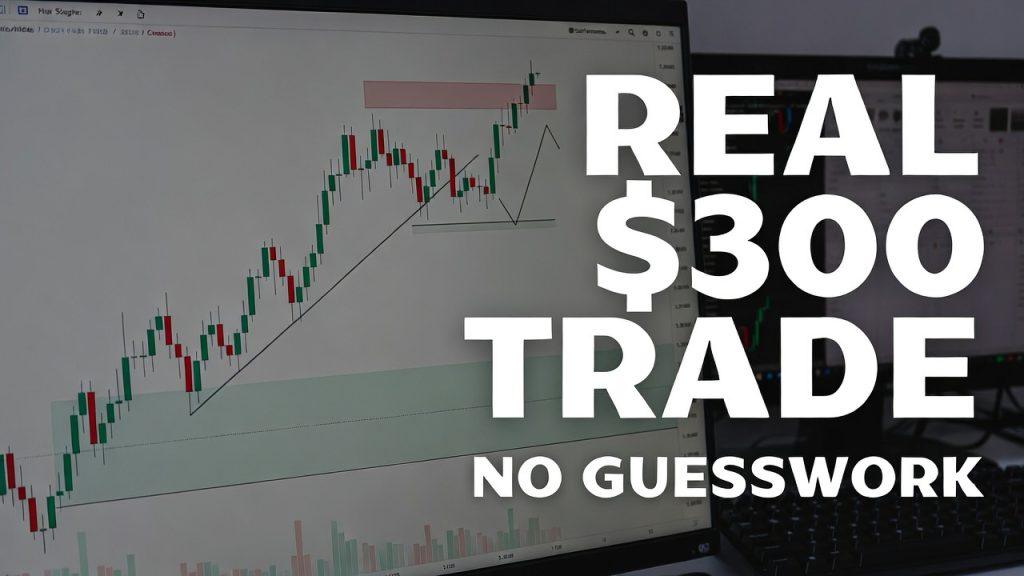
Live Trade Breakdown: How $300 Was Made in Minutes Using Price Action Confirmation

Live Trade Breakdown: How $300 Was Made in Minutes Using Price Action Confirmation In this article, I’m breaking down a real live trade where a $300 profit was achieved in just minutes by following price action, confirmation, and strict risk management rules. This was not a replay.This was not hindsight.This was a live execution, recorded in real time, using micro contracts on a one-minute chart. The purpose of this breakdown is not to impress — it’s to show how structured trading decisions work when rules are followed correctly. A Real-Time Trade — From Analysis to Exit Below, you’ll find the full live trade video that captures the entire process step by step — from identifying direction, confirming conditions, executing the entry, and managing the exit. Everything shown was done live using micro contracts on a one-minute timeframe. This approach focuses on clarity, alignment, and speed, not prediction. The Objective: A Fast, Controlled $300 Trade Before entering the market, the goal was clearly defined: There was no intention to overtrade or stay involved for an extended session. The focus was on precision execution, limited exposure, and fast feedback. Why Most Traders Get Stuck Many traders believe they lose because they don’t use enough indicators. In reality, most losses happen because indicators are misaligned or conflicting. Common problems include: More indicators don’t create better trades.Aligned indicators do. Reading Direction Before Taking Risk Before any position was entered, directional bias was evaluated. The Sonic system was producing long-only signals, with no short opportunities appearing. That information alone is critical. When the market is consistently pushing higher and attempting to test prior highs, it provides context. Direction becomes clear, and decision-making becomes simpler. Fighting that type of structure usually leads to unnecessary losses. The Confirmation Stack Used The confirmation process for this trade was intentionally simple: The purpose of confirmation is not to generate more trades — it’s to filter out bad ones. In this case, every tool was aligned to the long side with no conflict. That’s the environment where high-quality trades tend to appear. Executing the Entry Once confirmation was in place, a long position was entered using micro contracts on a one-minute chart. 🎥 Watch the live trade here:https://youtu.be/qElrTRd_HKU The execution rules were straightforward: The rules were followed exactly as designed. Risk Management and Time Exposure For this type of setup, the goal is minimal time in the market — typically five minutes or less. Shorter exposure offers several advantages: In this trade, price moved in the intended direction almost immediately, which is often a sign of strong alignment with trend and momentum. Evaluating Signal Quality One important detail in this setup was signal progression. Each Sonic and Trade Scalper signal was: That progression matters. Early, aligned signals tend to offer better follow-through than late-stage signals deep into a move. If the market had already produced numerous consecutive long signals, caution would have been higher. In this case, the trend was still healthy. The Outcome: $300 Secured Before 10 AM The profit target was reached cleanly. The position was closed before 10:00 AM New York time, illustrating how structured trading can produce results without spending all day in front of the screen. Tools Used in the Trade The primary tools used were: Everything shown on the chart is included inside Accelerated Mentorship, available with both monthly and lifetime access options. Final Thoughts Trading offers unique opportunities — profits can happen quickly, but so can losses. That’s why structure, confirmation, and risk control matter far more than excitement, prediction, or impulse. If you want to learn how to trade using the same rules-based approach demonstrated in this live example, start by creating a free DayTradeToWin member account and learning price action the right way. I’ll see you in class. Accelerated Mentorship+ — All-Inclusive Trading ProgramComplete instruction. Live training. Proven structure. To learn how DayTradeToWin traders approach market structure using price-based logic: 👉 Visit https://daytradetowin.com/👉 Create a free member account👉 Access trials and proprietary tools👉 Explore Accelerated Mentorship for full access to all software and training We don’t rely on lagging indicators.We focus on reading the market itself. John PaulJohn Paul is the founder of DayTradeToWin, a trading education and software company established in 2008, supporting traders worldwide. His expertise focuses on price action-based futures trading strategies and structured market analysis. DayTradeToWin delivers trading education, indicators, and software tools designed to help traders apply disciplined, rule-based decision-making across global futures markets. He is the creator of multiple trading methodologies, including the Sonic System, Atlas Line, and Trade Scalper, which help traders identify structured opportunities in markets such as the E-mini S&P 500 (ES), Nasdaq (NQ), crude oil (CL), and gold (GC). Official website: https://daytradetowin.com daytradetowin.com

Learn how to trade sideways and range-based markets using price action, structure, and confirmation instead of lagging indicators or guesswork.
DayTradeToWin Review

How to Navigate Sideways Markets Using Price Action and Structure

Sideways market conditions are where many traders struggle — not because trades don’t exist, but because expectations are misaligned. When the market stops trending and begins rotating, traditional breakout strategies lose effectiveness. Instead of clean follow-through, traders encounter hesitation, reversals, and false moves. The answer isn’t more tools — it’s learning how to read structure and context. In this article, we’ll explain how to trade range-based market environments using price action, support and resistance, and confirmation tools such as Sonic, Atlas Line, and Trade Scalper — without relying on lagging indicators or prediction. Why Rotational Markets Are Often Misread Sideways markets aren’t random — they operate within defined boundaries. Typical signs include: When traders fail to recognize these conditions, they often: Consistency begins with recognizing when price is rotating rather than expanding. Step One: Establish the Market Boundaries Before considering any trade, step back and define the range. Ask:Is price moving directionally — or cycling between levels? A rotational market usually shows: Once these areas are identified, they become the framework for decision-making. Two Effective Ways to Trade a Range When price is rotating, there are only two logical trade approaches. 1️⃣ Wait for Confirmed Expansion Occasionally, a range transitions into a directional move — but only with confirmation. A valid expansion requires: If price briefly moves beyond a level and then stalls, it’s a test — not a breakout. Entering without confirmation increases risk. 2️⃣ Trade the Rotation Between Levels Most opportunities in sideways markets occur inside the range, not at the extremes. Instead of guessing reversals: Markets naturally revisit previously traded areas. Trading toward these zones often provides higher probability than reacting directly at the boundary. Using the Atlas Line to Evaluate Structure The Atlas Line helps traders assess how price is behaving within the range. It assists in evaluating: When Atlas Line signals align with downward rotation, expectations shift toward movement into support — not necessarily a breakdown. This keeps trade objectives realistic and controlled. Trade Management: Let Time Guide Decisions Time is one of the most underutilized decision-making tools in trading. On lower timeframes: Exiting early during choppy conditions isn’t a mistake — it’s disciplined execution. Small gains and controlled exits prevent unnecessary losses. Why Confirmation Improves Decision-Making Sideways markets demand confirmation, not assumptions. Combining tools helps traders: A structured approach may include: The goal isn’t more signals — it’s alignment. Common Errors in Range-Based Conditions 🚫 Trading every signal🚫 Entering directly at support or resistance🚫 Chasing failed breakouts🚫 Holding trades that lose momentum🚫 Averaging into losing positions Instead: Final Takeaway Not every market session supports trending strategies. Some days are: Consistency comes from adapting to market conditions, not forcing trades. By learning to read price action, define structure, and use confirmation, traders can either participate effectively — or confidently step aside. Both are professional choices. Learn More To learn how DayTradeToWin traders approach market structure using price-based logic: 👉 Visit https://daytradetowin.com/👉 Create a free member account👉 Access trials and proprietary tools👉 Explore Accelerated Mentorship for full access to all software and training We don’t rely on lagging indicators.We focus on reading the market itself. John PaulJohn Paul is the founder of DayTradeToWin, a trading education and software company established in 2008, supporting traders worldwide. His expertise focuses on price action-based futures trading strategies and structured market analysis. DayTradeToWin delivers trading education, indicators, and software tools designed to help traders apply disciplined, rule-based decision-making across global futures markets. He is the creator of multiple trading methodologies, including the Sonic System, Atlas Line, and Trade Scalper, which help traders identify structured opportunities in markets such as the E-mini S&P 500 (ES), Nasdaq (NQ), crude oil (CL), and gold (GC). Official website: https://daytradetowin.com daytradetowin.com
How to Identify Trade Direction with Price Action and Confirmation
DayTradeToWin Review

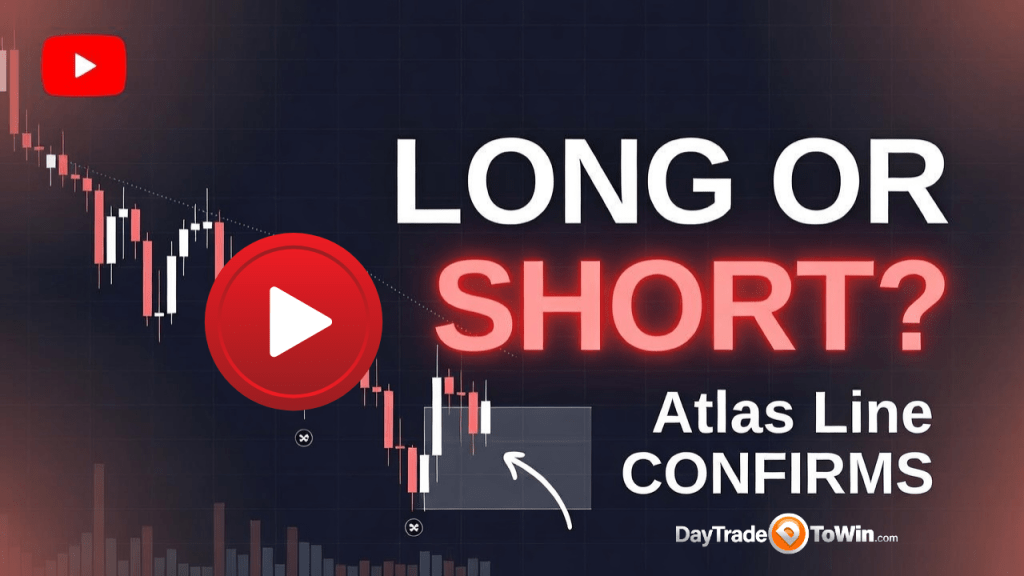
How to Identify Trade Direction with Price Action and Confirmation

One of the defining traits of consistent traders is their ability to correctly identify market direction before committing to a trade. The real question isn’t which indicator is signaling — it’s who currently controls price movement. Are buyers driving the market, or are sellers applying pressure? In this article, we’ll break down how traders determine whether to enter long or short positions using price behavior, confirmation tools, and structured decision-making — without relying on prediction or lagging indicators. Why Direction Is the Foundation of Every Trade Every trading decision begins with bias. Entering trades against the dominant side of the market creates unnecessary risk. Many losses occur not because entries are poorly timed, but because trades are taken in the wrong direction. Clear decision-making requires alignment between: When these elements work together, trade execution becomes more controlled and repeatable. Interpreting Market Bias Through Price Behavior Price action reveals how the market is behaving in real time. Instead of reacting to delayed signals, traders focus on: In the example discussed, price behavior clearly favored sellers: When price behavior supports a specific direction, aligning trades with that bias becomes the logical choice. Defining Direction with the Sonic System The Sonic system removes ambiguity by clearly defining trade direction. It is designed to: In this scenario, Sonic consistently signaled downside bias, effectively eliminating long trade opportunities and simplifying the decision-making process. Strengthening Trades with Atlas Line Confirmation Confirmation plays an important role in improving trade quality. The Atlas Line acts as a secondary validation tool by: When Sonic and Atlas Line align in the same direction, confidence in the setup increases. While confirmation isn’t required for every trade, it can significantly improve consistency — particularly in fast-moving or volatile conditions. Risk Management and Trade Duration Successful trades are defined by structure, not optimism. Structured Risk Planning Before entering any position: In this example, trade expectations were balanced and clearly defined before entry. Evaluating Time in the Trade Time provides valuable feedback. If a trade: Those conditions alone may justify an exit — especially in short-term trading environments. In this case, price moved efficiently toward its target, confirming strong directional follow-through. Practical Rules for Directional Trading Traders can improve consistency by following a few simple guidelines: Final Perspective Deciding whether to trade long or short doesn’t require forecasting — it requires clarity and structure. By emphasizing: Traders can approach the market with greater confidence, discipline, and consistency. Learn More To learn how traders apply price action and confirmation in real trading environments: 👉 Visit https://daytradetowin.com👉 Create a free member account👉 Access trials, including the ABC software👉 Explore proprietary tools like the Sonic system For traders looking for an all-in-one solution, Accelerated Mentorship provides complete access to software and training in a structured program. John PaulJohn Paul is the founder of DayTradeToWin, a trading education and software company established in 2008, supporting traders worldwide. His expertise focuses on price action-based futures trading strategies and structured market analysis. DayTradeToWin delivers trading education, indicators, and software tools designed to help traders apply disciplined, rule-based decision-making across global futures markets. He is the creator of multiple trading methodologies, including the Sonic System, Atlas Line, and Trade Scalper, which help traders identify structured opportunities in markets such as the E-mini S&P 500 (ES), Nasdaq (NQ), crude oil (CL), and gold (GC). Official website: https://daytradetowin.com daytradetowin.com

Scroll to Top