

Market News

S&P 500
Market News

Resist the FOMO: Navigating S&P 500 Records Without ‘Envy

When stocks are booming and bonds are lagging, as they are now, it can be tough to convince investors that diversification is still essential. With the S&P 500 up nearly 12% year-to-date in mid-May and the Dow Jones Industrial Average hitting 40,000, many investors experience “S&P 500 Envy” if their returns fall short of these benchmarks. This sentiment wasn’t an issue in recent years when both stocks and bonds were down, but a similar situation occurred in 2018, fostering the “S&P 500 Envy” concept. BlackRock even created a presentation to help financial advisers address this with clients, demonstrating that while a diversified portfolio might underperform the S&P 500 in the short term, it often yields better long-term results. A key graphic from this presentation showed that during years like 2000-2002, 2008, 2020, and 2022, when the S&P was down, a diversified portfolio also declined but by a smaller margin, leading to investor dissatisfaction. Conversely, from 2009 to 2019 and in 2023, when the S&P surged, a diversified portfolio grew more modestly, causing envy. Over the long run, however, the diversified portfolio outperformed the S&P, proving that “diversification can work, even when it feels like it’s losing.” Nicholas Olesen, a certified financial planner with Kathmere Capital Management, reinforces this point. He advises that diversification hedges against economic fluctuations and addresses recency bias, the tendency to believe recent trends will continue indefinitely. Olesen emphasizes the importance of a balanced approach tailored to individual investor needs and sticking to this plan despite market volatility. Ross Haycock, a certified financial planner with Summit Wealth Group, also champions diversification, invoking the timeless wisdom: “Don’t put all your eggs in one basket.” He notes that diversification discussions are easier with long-term clients who have experienced market cycles, while newer clients may need more reassurance during turbulent times. One common mistake investors make when shunning diversification is focusing solely on bond prices rather than yields. Despite bonds underperforming in recent years, they still generate consistent, guaranteed yields, especially when held to maturity. Olesen warns against “statement shock,” where investors see a small daily return and compare it unfavorably to the S&P’s gains without considering the overall yield and long-term value. Advisers stress the importance of following a well-considered plan and avoiding hasty decisions based on short-term market movements. By doing so, investors can avoid FOMO and ensure their portfolios are well-positioned for long-term success. John PaulJohn Paul is the founder of DayTradeToWin, a trading education and software company established in 2008, supporting traders worldwide. His expertise focuses on price action-based futures trading strategies and structured market analysis. DayTradeToWin delivers trading education, indicators, and software tools designed to help traders apply disciplined, rule-based decision-making across global futures markets. He is the creator of multiple trading methodologies, including the Sonic System, Atlas Line, and Trade Scalper, which help traders identify structured opportunities in markets such as the E-mini S&P 500 (ES), Nasdaq (NQ), crude oil (CL), and gold (GC). Official website: https://daytradetowin.com daytradetowin.com
Dow Jones
Market News

Record-Breaking Moment: Dow Jones Surpasses 40,000, Fails to Maintain

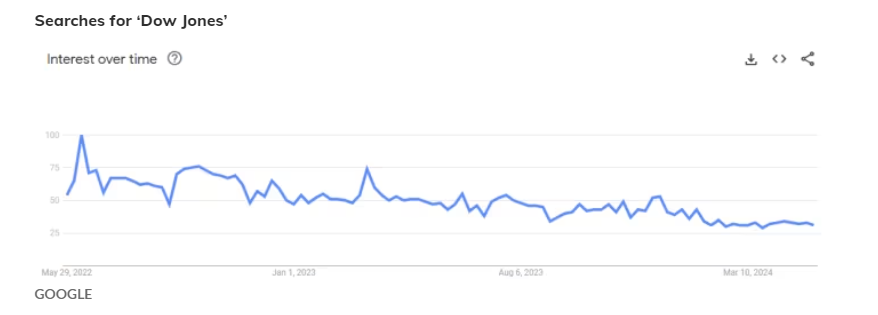
Hold on to your hats. The Dow Jones Industrial Average briefly traded above 40,000 for the first time ever on Thursday but ended the day shy of a milestone that investors said could further boost bullish spirits on Wall Street. “Breaking the 40,000 barrier is a big psychological boost for the bulls, as round numbers hold special significance in people’s hearts and minds,” Chris Zaccarelli, chief investment officer for Independent Advisor Alliance, said in emailed comments. The Dow closed the day near 39,869, a loss of around 39 points, or 0.1%, after hitting a session high of 40,051.05 around 11 a.m. Eastern time. Big, round-number milestones can attract attention to a market rally. Indeed, it’s hard to overstate the hype that accompanied the Dow’s first-ever push above the 10,000 level on March 29, 1999. The move spawned a cottage industry in commemorative merchandise, particularly hats emblazoned with “Dow 10,000” that can still be found on eBay. The prospective Dow 40,000 milestone, however, isn’t prompting Americans to party like it’s 1999. Public interest in the record stock-market rally appears tepid at best, analysts have noted. The Dow, dating back to 1896, remains the measuring stick of the U.S. stock market among the general public, although investment professionals view the S&P 500, launched in 1957, as the true large-cap benchmark. Searches for “Dow Jones” on Google have trended consistently lower since peaking in June 2022, which marked an initial low in that year’s brutal selloff, observed Nicholas Colas, co-founder of DataTrek Research, in a note last week. The peak in searches came as the Federal Reserve was preparing to launch a series of outsized interest-rate increases. As stocks sank amid rising recession fears, the American public took notice, Colas said. Since then, interest has trailed off even as stocks have returned to record territory. “To the degree to which Americans think the stock market is a sign of general economic health, they are not seeing what could be considered an upbeat message,” he wrote. “The idea that stock prices are a transmission mechanism between markets and consumers only seems to work in one direction.” For investors, meanwhile, there may be little to glean from such advances in themselves. “I think, if anything, it’s more nostalgic and symbolic than it is a meaningful tell for a professional investor,” Eric Freedman, chief investment officer at U.S. Bank Wealth Management, said in a phone interview in March, when the Dow came within a whisker of the 40,000 threshold but failed to surpass it. The Dow’s attempted push above 40,000 comes amid a broader rally that saw the blue-chip gauge, the S&P 500, and the Nasdaq Composite all close at record highs on Wednesday. The S&P 500 cleared a big milestone of its own earlier this year, topping the 5,000 level for the first time. Historic advances for the S&P 500 tend to garner less attention than those for the Dow, even though the S&P 500 is far more relevant, representing a much bigger portion of the investable U.S. stock market. The Dow ended above the 30,000 milestone for the first time on Nov. 24, 2020, after stocks roared back from the pandemic bear market seen earlier in the year. Including Thursday, it’s been 873 trading days since the Dow first ended above 30,000, according to Dow Jones Market Data. It took the blue-chip gauge 966 days to clear the 30,000 milestone after first closing above 20,000 on Jan. 25, 2017. Of course, each successive milestone is less impressive in percentage terms. The move from 30,000 to 40,000 represents a 33.3% gain. It took a 4,486 trading-day journey for the blue-chip gauge to double from 10,000 to 20,000. While 10,000-point milestones aren’t frequent occasions, it’s easy to see why the first push above 10,000 seemed special. It took over a century—28,313 trading days to be exact—for the gauge to enter five-digit territory. Meanwhile, public indifference to the 40,000 milestone may carry at least one bullish, contrarian implication for the market, said DataTrek’s Colas: “No one can accuse the recent U.S. equity market rally of being fueled by rampant interest in stocks. This is not the 1990s. Not even close.” John PaulJohn Paul is the founder of DayTradeToWin, a trading education and software company established in 2008, supporting traders worldwide. His expertise focuses on price action-based futures trading strategies and structured market analysis. DayTradeToWin delivers trading education, indicators, and software tools designed to help traders apply disciplined, rule-based decision-making across global futures markets. He is the creator of multiple trading methodologies, including the Sonic System, Atlas Line, and Trade Scalper, which help traders identify structured opportunities in markets such as the E-mini S&P 500 (ES), Nasdaq (NQ), crude oil (CL), and gold (GC). Official website: https://daytradetowin.com daytradetowin.com

inflation data
Market News

Inflation Data Released Ahead of Schedule, Markets Shrug

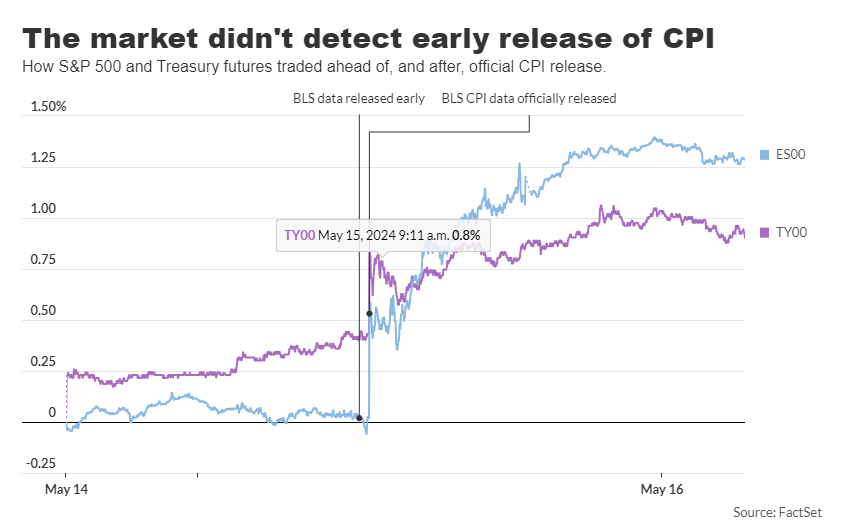
Data on U.S. consumer prices, the most anticipated report of the month, was released early, yet it appears the market didn’t notice. The Bureau of Labor Statistics (BLS) reported that a subset of the files was accidentally posted on its website about 30 minutes before the scheduled release time, around 8 a.m. Eastern. The BLS did not clarify which data were released or if this subset would have been sufficient for informed investors to take action. An investigation is now underway. “BLS has alerted the Office of Management and Budget and the Department of Labor’s Office of the Inspector General about the incident. BLS takes its data security seriously and is conducting a full investigation into its procedures and controls to ensure the incident is not repeated,” the agency stated. An examination of key futures contracts and currency movements showed minimal activity around 8 a.m. Eastern on Wednesday, with significant movements occurring at the official release time of 8:30 a.m. This suggests that very few, if any, investors noticed the early release. The report indicated that the Consumer Price Index (CPI) increased more slowly than expected, news that subsequently drove stocks and bonds higher. John PaulJohn Paul is the founder of DayTradeToWin, a trading education and software company established in 2008, supporting traders worldwide. His expertise focuses on price action-based futures trading strategies and structured market analysis. DayTradeToWin delivers trading education, indicators, and software tools designed to help traders apply disciplined, rule-based decision-making across global futures markets. He is the creator of multiple trading methodologies, including the Sonic System, Atlas Line, and Trade Scalper, which help traders identify structured opportunities in markets such as the E-mini S&P 500 (ES), Nasdaq (NQ), crude oil (CL), and gold (GC). Official website: https://daytradetowin.com daytradetowin.com
stock
Market News

April CPI Data Could Unleash Stock Market Turbulence—Here’s the Critical Level

The stock market has rebounded in May, nearing record territory after April’s pullback. The upcoming April inflation data, due Wednesday, is seen as a potential catalyst for either new highs or another decline. Tom Essaye, founder of Sevens Report Research, analyzed the potential “good, bad, and ugly” outcomes for the April consumer-price index (CPI) reading. Rates traders started 2024 expecting the Federal Reserve to cut rates six or more times by year-end. However, hotter-than-expected CPI reports have reduced these expectations to about two cuts this year. Despite April’s dip, stocks recovered after Fed Chair Jerome Powell suggested on May 1 that a rate hike wasn’t imminent. The S&P 500 is up over 9% year-to-date, close to its record high. The Dow Jones is less than 600 points from the 40,000 mark, and the Nasdaq has risen over 9% in 2024. The April CPI reading is crucial. Economists forecast a 0.4% monthly rise, slowing the year-over-year rate to 3.4% from 3.5% in March. Core CPI, excluding food and energy, is expected to rise by 0.3% monthly and slow to 3.6% annually from 3.8%. Essaye identifies three scenarios: Ugly: A core reading of 3.9% or higher would likely trigger a “solid selloff,” reinforcing the idea that inflation is persistent and rates will stay high. This could erase recent gains, with the S&P 500 potentially dropping 1% or more, all sectors declining, and the 10-year Treasury yield rising by 10-15 basis points. The U.S. Dollar Index might exceed 106. Not So Great: A core reading of 3.7%-3.8% would probably cause stocks to fall and Treasury yields to rise. This would indicate persistent price pressures, leading to a “mild selloff,” with tech and cyclical stocks outperforming defensive plays. Good: A core reading at or below 3.6% would likely bring relief, suggesting a decline in core inflation. This could push stocks to new highs, led by sectors outside the “supercap” tech names. Treasury yields might fall sharply, and the dollar index could weaken as investors anticipate more rate cuts in 2024. John PaulJohn Paul is the founder of DayTradeToWin, a trading education and software company established in 2008, supporting traders worldwide. His expertise focuses on price action-based futures trading strategies and structured market analysis. DayTradeToWin delivers trading education, indicators, and software tools designed to help traders apply disciplined, rule-based decision-making across global futures markets. He is the creator of multiple trading methodologies, including the Sonic System, Atlas Line, and Trade Scalper, which help traders identify structured opportunities in markets such as the E-mini S&P 500 (ES), Nasdaq (NQ), crude oil (CL), and gold (GC). Official website: https://daytradetowin.com daytradetowin.com
gamestop
Market News

GameStop Stock on Fire: Surges for a Second Straight Day

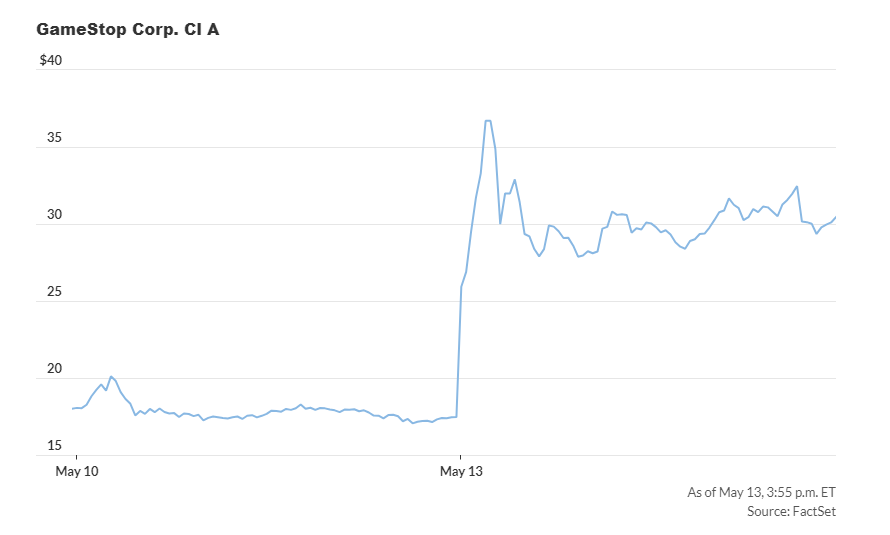
GameStop shares soared 74% on Monday after a social media post by Roaring Kitty. GameStop shares continued their rally in premarket trading on Tuesday, extending gains after the investor famously associated with the company’s 2021 surge posted on social media for the first time in three years. GameStop shares (GME) surged 40% in early premarket trading on Tuesday, building on Monday’s 74% rise, following Roaring Kitty’s return to the social media platform X for the first time since 2021. Tuesday’s premarket gains suggest that GameStop shares might exceed Monday’s peak of $38.20. GameStop’s 74% rise on Monday was its fourth-best single-day performance since 2021, according to FactSet data. On January 27, 2021, GameStop shares jumped 135%. However, GameStop has also experienced significant drops, including a 60% plunge on February 2, 2021. Meanwhile, fellow meme stock AMC Entertainment (AMC) outperformed GameStop on Monday, surging 78%. AMC shares continued to rise in premarket trading on Tuesday, gaining 39%. John PaulJohn Paul is the founder of DayTradeToWin, a trading education and software company established in 2008, supporting traders worldwide. His expertise focuses on price action-based futures trading strategies and structured market analysis. DayTradeToWin delivers trading education, indicators, and software tools designed to help traders apply disciplined, rule-based decision-making across global futures markets. He is the creator of multiple trading methodologies, including the Sonic System, Atlas Line, and Trade Scalper, which help traders identify structured opportunities in markets such as the E-mini S&P 500 (ES), Nasdaq (NQ), crude oil (CL), and gold (GC). Official website: https://daytradetowin.com daytradetowin.com

options
Market News

With Stocks Nearing Peaks, Options Market Sees Return of Complacency

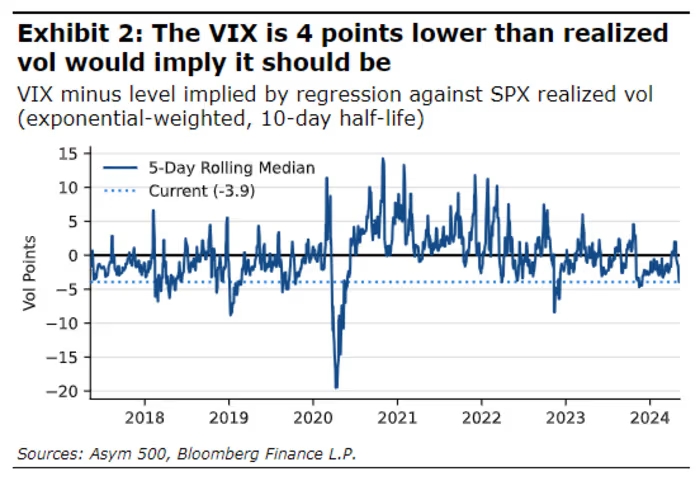
As stocks resume their upward climb towards record highs following a brief April downturn, a sense of complacency is returning to options markets. This shift is evident in the decreasing prices of hedges designed to protect investors’ portfolios against potential market pullbacks or crashes. Rocky Fishman, founder of Asym 500, a firm specializing in options market data and analytics, notes a substantial decrease in the cost of these contracts since the beginning of May. The rebound in stock prices has led to a significant narrowing of the spread between the Cboe Volatility Index (VIX) and actual stock volatility, reaching one of its lowest levels in years. The VIX, often referred to as the “fear gauge,” has fallen to its lowest level since January, signaling reduced expectations for market volatility. This decline in volatility has made crash insurance, in the form of VIX calls, extremely affordable. For example, VIX call options with a strike price of 25 expiring in around 40 days are currently trading at just 30 cents per contract, a considerable decrease from their cost a year ago. Furthermore, protection against even a modest market downturn has become cheaper, as indicated by the reversal of the S&P 500 index skew. This shift suggests that traders are once again preferring bullish calls over bearish puts. The accessibility of VIX calls and index puts presents an opportunity for investors seeking to take positions, such as anticipating higher-than-expected consumer price index reports. However, any signs that the slowdown in inflation could be more enduring might prompt a reevaluation of the timing of Federal Reserve interest rate cuts. Despite a brief setback in April, both the S&P 500 and the Dow Jones Industrial Average have largely recovered, with the S&P 500 securing its third consecutive weekly gain and the Dow Jones rising for an eighth straight session. However, the Nasdaq Composite experienced a slight decline amidst these movements. John PaulJohn Paul is the founder of DayTradeToWin, a trading education and software company established in 2008, supporting traders worldwide. His expertise focuses on price action-based futures trading strategies and structured market analysis. DayTradeToWin delivers trading education, indicators, and software tools designed to help traders apply disciplined, rule-based decision-making across global futures markets. He is the creator of multiple trading methodologies, including the Sonic System, Atlas Line, and Trade Scalper, which help traders identify structured opportunities in markets such as the E-mini S&P 500 (ES), Nasdaq (NQ), crude oil (CL), and gold (GC). Official website: https://daytradetowin.com daytradetowin.com

Scroll to Top