

Market News

Apple
Market News

Quantifying Berkshire’s Apple Advantage: Dividend Hike Breakdown

Apple’s announcement of a 4% increase in its cash dividend brings positive implications for Warren Buffett’s Berkshire Hathaway Inc. Buffett, famously drawn to dividend-yielding stocks, is likely pleased with Apple’s decision to up its cash dividend to 25 cents per share. Berkshire Hathaway holds over 905 million shares of Apple, accounting for around 6% of the tech giant’s total outstanding shares. As a significant shareholder, Berkshire stands to gain substantially from Apple’s augmented dividend payout. Assuming Berkshire maintains its current shareholding, its quarterly dividend from Apple would rise to $226.4 million, compared to the previous $217.3 million. Over the next year, Berkshire could anticipate receiving $905.6 million in Apple dividends, up from $869.4 million prior to the dividend hike, marking a notable increase of over $36 million for the year. The stability of Berkshire’s Apple position sparks speculation on Wall Street, particularly amidst Apple’s recent stock underperformance, with a 5% decline compared to the S&P 500’s 8% rise this year. Buffett’s investment portfolio includes other dividend-paying companies such as Coca-Cola Co., Kraft Heinz Co., and Chevron Corp. In addition to the dividend increase, Apple reported a 10% year-over-year decline in iPhone sales, expanded its stock-buyback program by $110 billion, and addressed some investor concerns regarding its business in China. John PaulJohn Paul is the founder of DayTradeToWin, a trading education and software company established in 2008, supporting traders worldwide. His expertise focuses on price action-based futures trading strategies and structured market analysis. DayTradeToWin delivers trading education, indicators, and software tools designed to help traders apply disciplined, rule-based decision-making across global futures markets. He is the creator of multiple trading methodologies, including the Sonic System, Atlas Line, and Trade Scalper, which help traders identify structured opportunities in markets such as the E-mini S&P 500 (ES), Nasdaq (NQ), crude oil (CL), and gold (GC). Official website: https://daytradetowin.com daytradetowin.com
Goldman Sachs
Market News

Goldman Sachs’ Playbook for Range-Bound Markets: Key Strategies Revealed

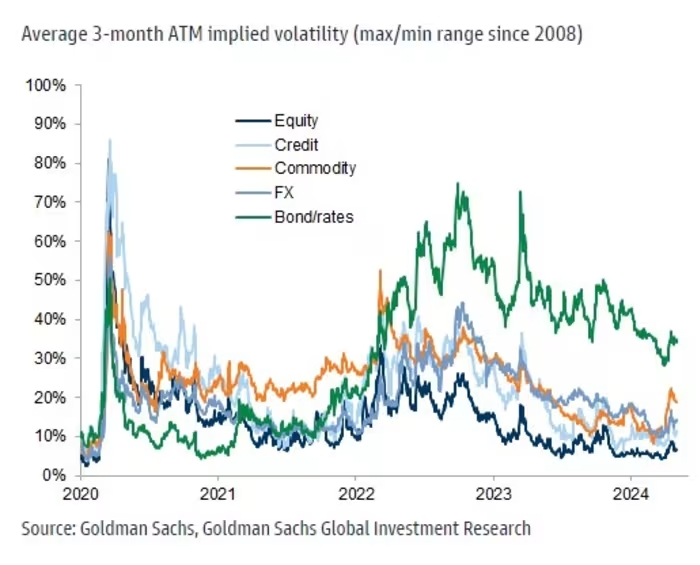
Early on Friday, futures for stock indices show optimism, although this could change if the nonfarm payrolls report signals strong wage inflation. The source of this optimism is a 6% rise in Apple shares after the company reported better-than-expected earnings, provided a positive outlook, and proposed additional share buybacks. Although Apple’s influence on the broader market has diminished somewhat, its significant weighting in the S&P 500 remains positive for overall market sentiment. Goldman Sachs’ Global Opportunity Asset Locator team, led by Christian Mueller-Glissmann, remains generally positive about equities. They acknowledge challenges such as persistent inflation in the U.S. and consequent pressure on bond yields but maintain a positive outlook for the year. They believe that equities can still perform well in the late cycle without a recession. As a result, Goldman Sachs retains an overweight position on stocks for both short- and long-term horizons, while being underweight on credit. They point to factors like strong profit margins, robust balance sheets, and increased shareholder returns as reasons for the attractiveness of stocks. However, they caution that equity volatility may persist until inflation decreases and bond market fluctuations stabilize. With monetary policy support waning, they stress the importance of growth to support risk appetite but note that rising bond yields raise the bar for such growth. To navigate these challenges, Goldman recommends overweighting cash in the short term to reduce portfolio risk amid tighter equity/bond correlations. They anticipate that in the event of a significant stock market correction, assets from money market funds could flow into equities. Additionally, Goldman suggests overweighting commodities to diversify against geopolitical risks and potential overheating in late-cycle environments. They see opportunities in oil futures due to recent price declines and anticipate higher gold prices driven by central bank purchases and Chinese demand. Goldman expresses particular confidence in copper and aluminum, citing factors such as a global manufacturing uptick, green transition initiatives, structural supply deficits, and low inventory levels as supportive of their positive outlook on these commodities. John PaulJohn Paul is the founder of DayTradeToWin, a trading education and software company established in 2008, supporting traders worldwide. His expertise focuses on price action-based futures trading strategies and structured market analysis. DayTradeToWin delivers trading education, indicators, and software tools designed to help traders apply disciplined, rule-based decision-making across global futures markets. He is the creator of multiple trading methodologies, including the Sonic System, Atlas Line, and Trade Scalper, which help traders identify structured opportunities in markets such as the E-mini S&P 500 (ES), Nasdaq (NQ), crude oil (CL), and gold (GC). Official website: https://daytradetowin.com daytradetowin.com
S&P 500
Market News

S&P 500 Correction or Asian Currency Meltdown Threatens Stability

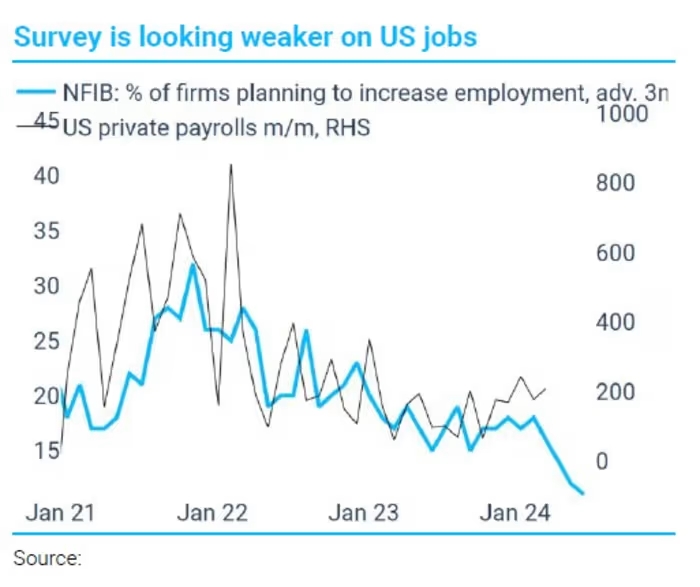
The early onset of Sell-in-May this year coincided with a sharp downturn in Tuesday’s trading, driven by yield fluctuations, bringing April’s market activity to a close. Stocks faltered ahead of an important Federal Reserve decision, compounded by disappointment from major players in the AI sector. In a recent communication to clients, Freya Beamish, TS Lombard’s head of macro research, raised concerns about an impending correction in the S&P 500 or the possibility of an Asian foreign exchange crisis. Beamish highlighted the growing disparities among major economies. While China, the European Central Bank, and the Bank of England are working to counteract the Fed’s anti-inflation measures to prevent currency devaluation, the Bank of Japan is focusing on stimulating its economy by controlling interest rates, although the yen continues to struggle. According to Beamish, pressure for currency depreciation will persist until the U.S. achieves equilibrium, with inflation ideally around 3% and sustained robust growth to support the global recovery narrative. A significant worry is the weakening U.S. job market, evidenced by various indicators such as deteriorating hiring plans for small businesses and a notable decline in the PMI’s employment index. While concrete data, notably the upcoming jobs report on Friday, may not yet reflect these warning signs, Beamish noted that independent surveys with a track record of predicting employment downturns are signaling trouble. Beamish suggests that leading indicators currently point to a period of sluggishness ahead, which could unsettle markets but also prompt the Fed to intervene, leading to a swift economic rebound. However, she emphasizes that Asian currencies depend on favorable U.S. data over the next few months to avoid further pressure on policymakers. Beamish underscores the delicate balance for Japan’s monetary policy, where misjudging U.S. inflation and job figures could result in slow rate adjustments. Additionally, she highlights the challenge for China’s PBOC in maintaining currency stability against a rising dollar, requiring positive U.S. economic indicators to mitigate strain. In conclusion, Beamish advises caution amidst increasing economic disparities, stressing the crucial role of U.S. data in shaping global financial dynamics in the coming months. John PaulJohn Paul is the founder of DayTradeToWin, a trading education and software company established in 2008, supporting traders worldwide. His expertise focuses on price action-based futures trading strategies and structured market analysis. DayTradeToWin delivers trading education, indicators, and software tools designed to help traders apply disciplined, rule-based decision-making across global futures markets. He is the creator of multiple trading methodologies, including the Sonic System, Atlas Line, and Trade Scalper, which help traders identify structured opportunities in markets such as the E-mini S&P 500 (ES), Nasdaq (NQ), crude oil (CL), and gold (GC). Official website: https://daytradetowin.com daytradetowin.com
Market News

10 S&P 500 Sectors Face Unprecedented Challenges in 2024

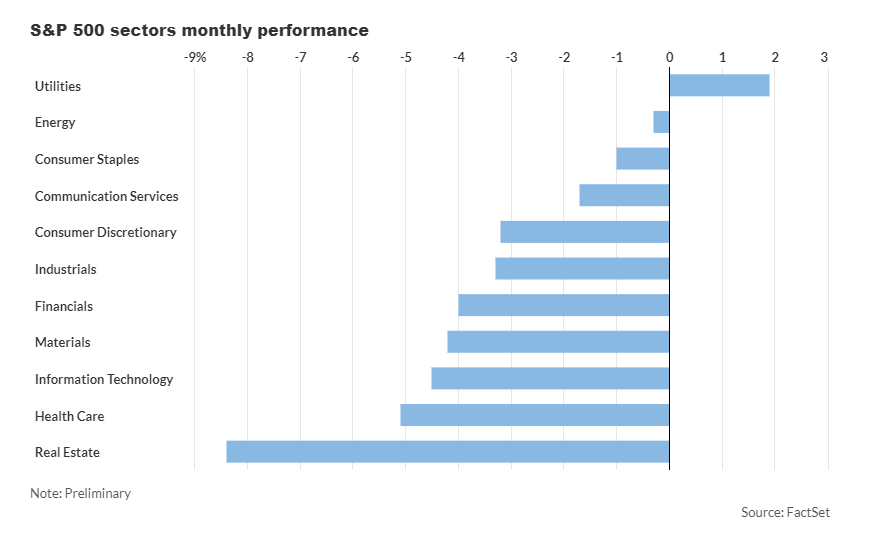
In April, U.S. stocks faced their toughest month of 2024, as ten out of the S&P 500 index’s 11 sectors saw significant declines. Both the S&P 500 index and the Nasdaq Composite experienced their first monthly drops since October, with decreases of 4.2% and 4.4% respectively. Investors grappled with concerns over persistent inflation, which tempered expectations of Federal Reserve interest-rate cuts, alongside a mix of first-quarter earnings reports and escalating tensions in the Middle East, contributing to market volatility. The Dow Jones Industrial Average also took a hit, marking its most substantial monthly decline by percentage since September 2022, according to Dow Jones Market Data. The real estate and healthcare sectors were among the hardest hit, with drops of 8.6% and 5.2% respectively. Real estate stocks suffered their worst month since September 2022, while the biotech, pharmaceuticals, and health insurance industries faced their most significant monthly declines since August 2022. The technology sector, including mega-cap tech names, witnessed steep declines, dragging down the broader market from previous record highs. Specifically, the information technology and communication services sectors saw drops of 5.5% and 2.2% respectively, marking their most substantial monthly declines since fall 2023. Meanwhile, the consumer discretionary sector fell by 4.4%, its worst month since October. At the beginning of 2024, investors had anticipated significant interest rate cuts by the central bank to alleviate price pressures. However, a series of unexpectedly high inflation data releases in April prompted a reassessment of rate cut timing, with some investors speculating that the first reduction might not occur until September or later in the year. This sentiment also triggered increases in Treasury bond yields alongside the U.S. dollar. The 2-year Treasury yield surged to 5.043%, its highest level since November, while the 10-year Treasury yield jumped 49.1 basis points to 4.683% in April, the most significant monthly increase since September 2022. The ICE U.S. Dollar Index, which measures the dollar’s strength against a basket of currencies, rose for a fourth consecutive month, climbing by 1.7% in April, its best performance since January and its longest winning streak since September 2022. Despite the overall market downturn, the utilities sector emerged as a bright spot, posting a 1.6% gain for the month. This marked the first time since October that the utilities sector was the sole monthly gainer, according to Dow Jones Market Data. As May begins, investors ponder the wisdom of the age-old Wall Street adage, “sell in May and go away,” which suggests a weaker period for stocks until late October. However, historical data, as popularized in the Stock Trader’s Almanac, indicates that November through April typically records the highest average price change for the S&P 500, while May through October tends to see weaker returns. Sam Stovall, chief investment strategist at CFRA Research, advises investors to consider rotating between stock sectors rather than completely exiting equity positions during this period. Historical data since 1990 suggests that sectors like consumer discretionary, industrials, materials, and technology outperform during the November-April period, while defensive sectors like consumer staples and healthcare fare better during May-October. Stovall highlights a hypothetical portfolio that rotates between these sectors, yielding higher returns and lower volatility compared to the benchmark S&P 500 index. John PaulJohn Paul is the founder of DayTradeToWin, a trading education and software company established in 2008, supporting traders worldwide. His expertise focuses on price action-based futures trading strategies and structured market analysis. DayTradeToWin delivers trading education, indicators, and software tools designed to help traders apply disciplined, rule-based decision-making across global futures markets. He is the creator of multiple trading methodologies, including the Sonic System, Atlas Line, and Trade Scalper, which help traders identify structured opportunities in markets such as the E-mini S&P 500 (ES), Nasdaq (NQ), crude oil (CL), and gold (GC). Official website: https://daytradetowin.com daytradetowin.com
Market News

Why the Strong U.S. Dollar Hasn’t Dragged Down the Global Economy

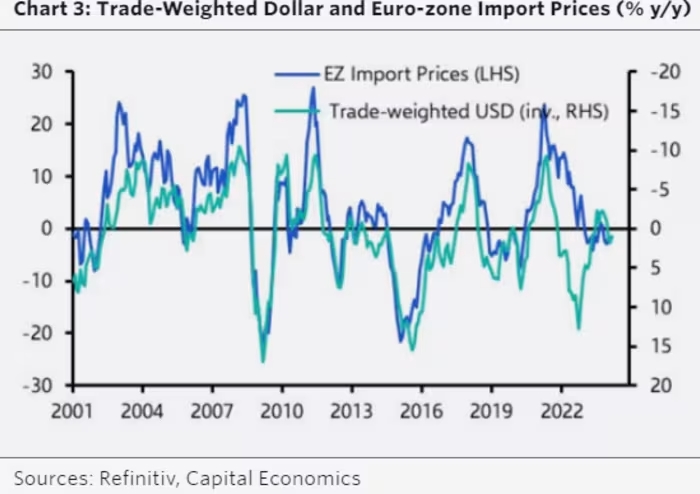
Neil Shearing of Capital Economics contends that despite the vigorous surge of the U.S. dollar, the prospect of a succession of global currency crises appears remote. While the soaring dollar may unsettle global financial markets and raise concerns about currency stability for economies worldwide, Capital Economics suggests that the fallout may not be as dire as feared. The recent robust performance of the U.S. dollar, as evidenced by the ICE U.S. Dollar Index DXY, has been consistent, marking a four-month streak of gains. This strength mirrors the resilience of the U.S. economy, fueled by sustained domestic demand and persistent inflation, empowering the Federal Reserve to prolong higher interest rates and defer expectations of an initial rate reduction. Despite the advantages a strong dollar offers U.S. consumers, such as curbing inflation and facilitating cheaper international travel, it could present challenges abroad. Neil Shearing, Chief Economist at Capital Economics, warns that the inflationary pressure on imports due to a strong dollar might hinder global trade and economic activity, particularly for countries outside the United States. Furthermore, the appreciation of the dollar elevates the cost of dollar-denominated debts abroad, introducing uncertainty and potentially destabilizing financial markets. However, Shearing reassures that the recent ascent of the dollar has been gradual, minimizing the likelihood of triggering widespread currency crises in other nations. Moreover, the impact of a strong dollar on global inflation varies depending on several factors, including an economy’s import intensity and the magnitude of currency fluctuations. Contrary to conventional wisdom, Shearing observes an inverse correlation between the dollar’s strength and global import price inflation. This is largely due to the dollar’s influence on commodity prices, which tends to mitigate inflationary pressures. Additionally, while a robust dollar may dampen global trade, other factors often overshadow this effect in practical terms. Shearing’s analysis highlights the interplay between the dollar’s movements and changes in global GDP, suggesting that economic growth drives fluctuations in the greenback rather than the reverse. Consequently, while U.S. stocks were showing positive momentum during the time of his assessment, led by technology giants like Tesla and Apple, Shearing emphasizes the nuanced relationship between the dollar’s strength and broader economic dynamics. John PaulJohn Paul is the founder of DayTradeToWin, a trading education and software company established in 2008, supporting traders worldwide. His expertise focuses on price action-based futures trading strategies and structured market analysis. DayTradeToWin delivers trading education, indicators, and software tools designed to help traders apply disciplined, rule-based decision-making across global futures markets. He is the creator of multiple trading methodologies, including the Sonic System, Atlas Line, and Trade Scalper, which help traders identify structured opportunities in markets such as the E-mini S&P 500 (ES), Nasdaq (NQ), crude oil (CL), and gold (GC). Official website: https://daytradetowin.com daytradetowin.com

Market News

Tech Stocks in Focus: Key Takeaways from 20 Years of Analysis

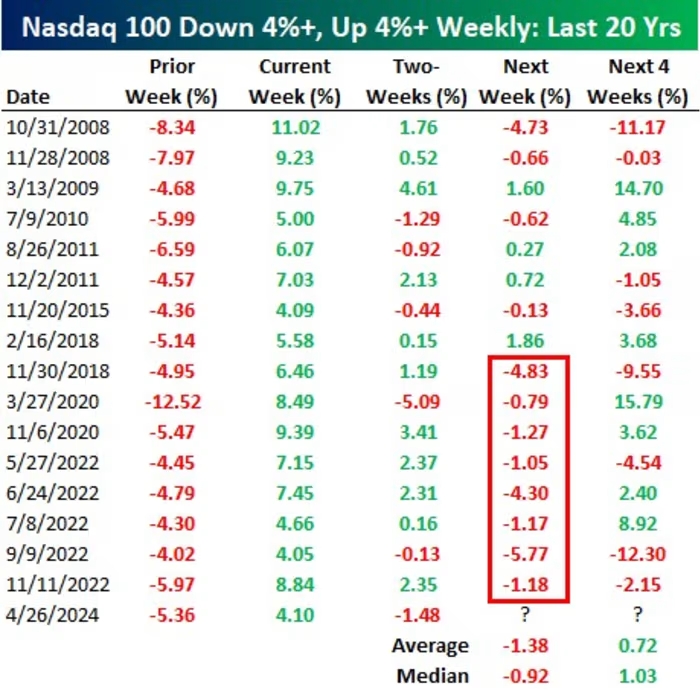
Early trading in equity futures suggests that Wall Street will likely continue last week’s strong rally. Despite recent volatility driven by concerns over rising bond yields conflicting with expectations of strong corporate earnings, particularly within the tech sector, market sentiment appears resilient. The Nasdaq 100, home to major technology companies, rebounded by about 4% last week after experiencing a slight dip of over 5% the week starting April 15th. This marked the most significant weekly gain for the broader market since early November. This resilience, often referred to as “bouncebackability,” is seen as a positive sign for the market. It indicates that investors are capable of absorbing setbacks and are eager to seize opportunities to buy when prices dip. However, short-term traders should exercise caution. Analysis by Bespoke Investment Group suggests that historical data on similar market recoveries may not bode well for this week’s trading. Looking at data since the mid-1980s, there have been 40 instances where the Nasdaq 100 saw a decline of four percent or more in one week, followed by a rise of four percent or more the next. Despite initial optimism, historical trends show that subsequent weeks have often seen the Nasdaq 100 averaging a decline of 1.38%, with recent occurrences ending in declines. This raises questions about the sustainability of market rebounds and whether they truly reflect strength or hint at underlying weakness. Significant fluctuations, such as those seen with Nvidia, may sow unease among investors. Examining the S&P 500 index, technical strategist Jonathan Krinsky of BTIG notes the challenging territory ahead, marked by the convergence of key moving averages and recent downtrends. While some analysts like Krinsky may lean towards a bearish outlook, others like Tom Lee, head of research at Fundstrat, provide a more optimistic perspective. Lee believes that the recent rally underscores the resilience of the “buy the dip” mentality, signaling further potential gains as the market moves into May. His colleague Mark Newton predicts a move towards S&P 500 5,212, potentially setting sights on 5,400 for bullish investors. John PaulJohn Paul is the founder of DayTradeToWin, a trading education and software company established in 2008, supporting traders worldwide. His expertise focuses on price action-based futures trading strategies and structured market analysis. DayTradeToWin delivers trading education, indicators, and software tools designed to help traders apply disciplined, rule-based decision-making across global futures markets. He is the creator of multiple trading methodologies, including the Sonic System, Atlas Line, and Trade Scalper, which help traders identify structured opportunities in markets such as the E-mini S&P 500 (ES), Nasdaq (NQ), crude oil (CL), and gold (GC). Official website: https://daytradetowin.com daytradetowin.com

Scroll to Top