

Market News

Market News

Goldman Sachs Stresses Importance of Rapid Revenue Growth for Mag 7 in 2024

Futures trading early indicators suggest a cautious start for Wall Street in the upcoming week, with the S&P 500 expected to consolidate after achieving another record in the previous session, driven primarily by major tech players. The future trajectory rests heavily on the performance of the “Magnificent 7” – Alphabet, Amazon.com, Apple, Meta Platforms, Microsoft, Nvidia, and Tesla – in achieving robust revenue growth in 2024, as highlighted by David Kostin, chief U.S. equity strategist at Goldman Sachs. While factors such as hedge fund positioning, antitrust lawsuits, and macroeconomic shifts may impact these stocks, Kostin underscores that the pivotal factor will be the sales growth of these seven companies. Analysts anticipate a collective sales growth of 12% CAGR through 2026 for the Magnificent 7, surpassing the 3% CAGR for the rest of the S&P 500. The expected margin expansion, notably a 256 basis points increase over the next three years, sets the stage for higher profits, outpacing the rest of the market. However, it’s important to note that the Magnificent 7 exhibit differences in their trajectories. Variances exist, such as Nvidia’s projected 31% annual sales growth compared to Apple’s 6%, and recent downward adjustments in Tesla’s sales forecasts. Concerns about the seemingly elevated valuations of big tech are addressed by Kostin, who argues that the current 63% P/E premium is significantly lower than the peak premium of 103% in 2021. Additionally, these stocks demonstrate lower valuations compared to the Tech Bubble in 2000. Goldman emphasizes that the surge in big tech is not solely driven by valuation multiples but is substantiated by improved earnings. Over the past few years, the Magnificent 7 delivered a 28% annualized return, with 27 percentage points attributed to earnings growth, highlighting the fundamental strength of the group. Big tech’s appeal also lies in its newfound resistance to interest rate fluctuations. Despite historically benefiting from falling yields, the sector outperformed even in a high bond yield environment due to robust balance sheets and elevated margins. However, Goldman’s optimistic outlook concludes with a cautionary note, drawing parallels to past periods of tech exuberance. Investors are warned against placing blind faith in consensus estimates, as historical instances show significant deviations between forecasted and actual performance, leading to underperformance compared to the broader market. John PaulJohn Paul is the founder of DayTradeToWin, a trading education and software company established in 2008, supporting traders worldwide. His expertise focuses on price action-based futures trading strategies and structured market analysis. DayTradeToWin delivers trading education, indicators, and software tools designed to help traders apply disciplined, rule-based decision-making across global futures markets. He is the creator of multiple trading methodologies, including the Sonic System, Atlas Line, and Trade Scalper, which help traders identify structured opportunities in markets such as the E-mini S&P 500 (ES), Nasdaq (NQ), crude oil (CL), and gold (GC). Official website: https://daytradetowin.com daytradetowin.com

Market News

Back to the Future: Applying 1987’s Stock Market Lessons to Today’s Fed Rate Speculations

The Fed is wary of a déjà vu from 1985-86 as investors anticipate aggressive interest rate cuts without the looming threat of a recession. Nicholas Colas from DataTrek Research suggests that revisiting history may prompt investors to adjust their expectations. Market optimism is reflected in fed-funds futures traders pricing in five to six quarter-point rate cuts this year, in contrast to the Fed’s projection of only three cuts in 2024. This optimistic outlook is tied to expectations that the Fed will maintain real interest rates if inflation continues to decline. While stock markets reach new highs, DataTrek’s analysis of past easing cycles points to a rare event in 1985-86 when the Fed cut rates by 1.25 percentage points during a non-recessionary period. Colas highlights that this led to a substantial stock market rally, ultimately culminating in the infamous Black Monday in 1987. Colas underscores the Fed’s awareness of this cautionary tale and suggests that, given the current lower policy rates, the central bank has added reason to proceed cautiously in 2024. Without an imminent recession, substantial rate cuts this year lack historical precedent. Acknowledging the possibility that fed-funds futures may signal a potential recession, Colas remains skeptical, attributing the market’s stance to a bet on the Fed becoming less restrictive as inflation declines. Despite the mathematical validity of this view, Colas contends that it diverges from historical data and the Fed’s institutional memory. John PaulJohn Paul is the founder of DayTradeToWin, a trading education and software company established in 2008, supporting traders worldwide. His expertise focuses on price action-based futures trading strategies and structured market analysis. DayTradeToWin delivers trading education, indicators, and software tools designed to help traders apply disciplined, rule-based decision-making across global futures markets. He is the creator of multiple trading methodologies, including the Sonic System, Atlas Line, and Trade Scalper, which help traders identify structured opportunities in markets such as the E-mini S&P 500 (ES), Nasdaq (NQ), crude oil (CL), and gold (GC). Official website: https://daytradetowin.com daytradetowin.com

Market News

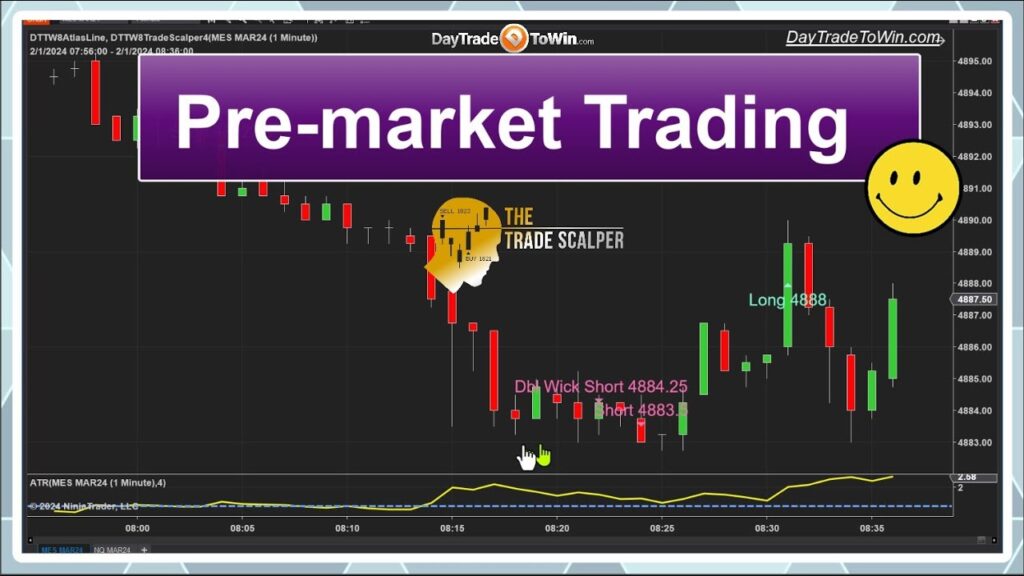
Trade Scalper Unleashed: Seize Early Opportunities for Pre-Market Profits!

Greetings fellow traders! In today’s blog post, we immerse ourselves in the dynamic realm of trading, specifically exploring the opportunities that unfolded on February 1st using the robust Trade Scalper strategy. Whether you’re a seasoned trader or just embarking on your trading journey, we invite you to join us on this enlightening expedition through pre-market trading, identifying shorting opportunities, and honing the skill of deciphering market movements. As the clock struck 9:05 on February 1st, our focus shifted to the pre-market activity. The Trade Scalper, renowned for its dependable signals, hinted at potential trading opportunities. A quick retrospective glance at pre-market shorting around 8:00-8:20 set the stage for what promised to be an engaging and fruitful trading day. Shifting our attention to the E-mini, a reminder surfaced that the Trade Scalper‘s versatility allows its application across various markets. The significance of comprehending the market’s health, gauged by the Average True Range (ATR), became evident. With the ATR comfortably residing between six to eight ticks, the conditions were ripe for calculated and strategic moves. Before delving into the intricacies, a crucial reminder echoed throughout the post – trading inherently involves risk. A thoughtful cautionary note urged traders not to invest funds beyond their capacity, laying the groundwork for responsible trading practices. As the trading day unfolded, our discussion transitioned to market dynamics and testing. Recognizing the market’s inclination to test its historical positions, the post underscored the importance of entering trades leading up or down to areas of support and resistance. This insightful approach aligned seamlessly with the principles of price action trading, emphasizing the Trade Scalper‘s distinctive strategy focused solely on candlesticks and price movements. The post chronicled a real-time scenario featuring a missed entry, accentuating the significance of discipline. Traders were wisely advised not to succumb to the allure of chasing entries, highlighting the paramount importance of adhering to a well-thought-out trading plan. In the world of trading, timing is paramount, and the post shared invaluable insights regarding market open strategies. Discouraging trading right at the market open (9:30), it shed light on the potential volatility that could lead to unpredictable outcomes. A simple trade was tactically entered and exited before the market open, showcasing a strategic and disciplined approach. The blog post extended a warm invitation to traders interested in deepening their understanding of the Trade Scalper strategy. Illuminating the Trade Scalper mentorship program, it offered a sneak peek into daily live rooms, accelerated mentorship, and proprietary training sessions, providing a holistic and enriching learning experience. Conclusion: As the blog post drew to a close, traders were encouraged to subscribe, actively engage, and become integral parts of the thriving trading community. The overarching narrative aimed to empower traders with valuable insights, serving as a constant reminder to trade responsibly and strategically in the dynamic world of financial markets. In the trader’s own words, “See you in the next video!” Happy trading! John PaulJohn Paul is the founder of DayTradeToWin, a trading education and software company established in 2008, supporting traders worldwide. His expertise focuses on price action-based futures trading strategies and structured market analysis. DayTradeToWin delivers trading education, indicators, and software tools designed to help traders apply disciplined, rule-based decision-making across global futures markets. He is the creator of multiple trading methodologies, including the Sonic System, Atlas Line, and Trade Scalper, which help traders identify structured opportunities in markets such as the E-mini S&P 500 (ES), Nasdaq (NQ), crude oil (CL), and gold (GC). Official website: https://daytradetowin.com daytradetowin.com

Market News

From History to Profit: Learning from the Best Trades of the Last 50 Years

In early Friday futures trading, there is a positive outlook for stock indices, and whether this optimism holds during Wall Street’s opening depends on labor market data. Equity bulls prefer a U.S. nonfarm payrolls report indicating steady job growth and modest wage inflation, as it is less likely to deter the Federal Reserve from implementing a springtime cut in borrowing costs. Investors currently enjoy positive momentum from well-received earnings reports by Meta Platforms (META) and Amazon.com (AMZN). However, a less favorable response to Apple’s (AAPL) numbers may temper this enthusiasm. Once again, big tech plays a crucial role in boosting the market, but investors should refrain from assuming perpetual dominance, as the influence of U.S. tech does not guarantee continuous benefits from “American exceptionalism.” Dan Suzuki, deputy chief investment officer at Richard Bernstein Advisors, cautions against such assumptions, noting that positioning and valuation suggest an expectation of perpetual U.S. equity dominance. However, historical patterns indicate otherwise, with high valuations and unrealistic growth expectations leading to disappointments and substantial devaluations. Suzuki emphasizes that periods of significant outperformance are often followed by notable underperformance. The chart below illustrates how sectors, even those with robust secular themes, can reverse much of their previously earned extraordinary gains. To underscore the cyclical nature of market trends, Suzuki identifies the best trades of the last 50 years. These trades generated excess returns averaging 7-19% per year over periods ranging from 8-22 years. Suzuki warns that the current view of the U.S. as the only worthwhile investment is dangerous. Despite the U.S. share of the global stock market rising to 64%, and market concentration reaching unprecedented levels, investors need to be cautious. The U.S. is currently the most expensive compared to the rest of the world, with the premium having increased from -11% in 2009 to +60% today. Rather than mitigating this extreme portfolio concentration, investors seem to be doubling down, with the average retail investor’s stock portfolio having 40% tied up in just three tech stocks. Suzuki predicts the end of the current dominant trade, emphasizing that market leadership tends to shift in response to structural shifts in macroeconomic fundamentals. With major inflections across inflation, interest rates, globalization, corporate profitability, demographics, and government balance sheets, investors are facing a once-in-a-generation opportunity to rebalance portfolios. In conclusion, Suzuki suggests that, with all eyes on U.S. large-cap growth stocks and disinflation beneficiaries, there are bigger opportunities in international markets, small caps, value stocks, and inflation beneficiaries. John PaulJohn Paul is the founder of DayTradeToWin, a trading education and software company established in 2008, supporting traders worldwide. His expertise focuses on price action-based futures trading strategies and structured market analysis. DayTradeToWin delivers trading education, indicators, and software tools designed to help traders apply disciplined, rule-based decision-making across global futures markets. He is the creator of multiple trading methodologies, including the Sonic System, Atlas Line, and Trade Scalper, which help traders identify structured opportunities in markets such as the E-mini S&P 500 (ES), Nasdaq (NQ), crude oil (CL), and gold (GC). Official website: https://daytradetowin.com daytradetowin.com

Market News

S&P 500 Futures Show Strength After Brief Decline, Eyes on Apple, Amazon, and Meta Results

On Thursday morning, U.S. stock index futures saw an uptick in anticipation of earnings releases from three major companies: Apple, Amazon.com, and Meta Platforms. Current stock-index futures trading status is as follows: In the previous session, the Dow Jones Industrial Average declined by 317 points (0.82%) to 38150, the S&P 500 dropped by 79 points (1.61%) to 4846, and the Nasdaq Composite saw a decrease of 346 points (2.23%) to 15164. Factors influencing the market: The S&P 500 experienced a 1.7% dip over the last two sessions, driven by disappointment in big tech earnings and concerns about the monetary policy trajectory. These factors are expected to continue shaping market sentiment throughout the week. Following the inability of Microsoft, Alphabet, and Advanced Micro Devices to match the optimistic outlook that drove the market to a record high earlier in the week, Apple, Meta, and Amazon.com are set to announce their results after Thursday’s closing. Investors are exercising caution, with many on the lookout for any missteps to take advantage of the stretched tech rally, according to Ipek Ozkardeskaya, a senior analyst at Swissquote Bank. Apple, Amazon, and Meta’s results need to impress investors, or there is a risk of an intensifying tech selloff, Ozkardeskaya warned. Apple’s options pricing indicates that traders anticipate a move of around plus or minus 3% for the stock by the end of the week, according to MarketWatch calculations. Other companies reporting results on Thursday include Altria, Peloton Interactive, Merck, and Honeywell International before the opening bell, followed by Atlassian, U.S. Steel, and Skechers after the close. Traders are also closely monitoring the regional banking sector, particularly after New York Community Bancorp’s shares plummeted due to difficulties in commercial real estate. Aozora, a Japanese bank, issued a profit warning, cutting the value of its U.S. office portfolio and facing losses on U.S. and European bonds. Investors are still evaluating the timing of potential Federal Reserve rate cuts. While Fed Chair Jay Powell mentioned that a rate cut in March was not the most likely scenario, fixed income futures markets now indicate an increased certainty of rates falling at the subsequent Fed meeting in May. Steve Clayton, head of equity funds at Hargreaves Lansdown, likened the situation to a delayed train rather than a cancellation. Investors are less likely to forgive delays if data suggests the economy has room to keep inflation rising, he added. Market attention will also be on the nonfarm payrolls report on Friday, hoping for signs that wage growth is not accelerating. Before that, U.S. economic updates set for release on Thursday include the weekly initial jobless claims report, fourth-quarter 2023 productivity, the final reading of the S&P manufacturing PMI survey for January, and the January ISM manufacturing report, along with December construction spending. These releases are scheduled at various times throughout the day. John PaulJohn Paul is the founder of DayTradeToWin, a trading education and software company established in 2008, supporting traders worldwide. His expertise focuses on price action-based futures trading strategies and structured market analysis. DayTradeToWin delivers trading education, indicators, and software tools designed to help traders apply disciplined, rule-based decision-making across global futures markets. He is the creator of multiple trading methodologies, including the Sonic System, Atlas Line, and Trade Scalper, which help traders identify structured opportunities in markets such as the E-mini S&P 500 (ES), Nasdaq (NQ), crude oil (CL), and gold (GC). Official website: https://daytradetowin.com daytradetowin.com

Market News

Navigating the Shadows: Big Tech’s Dominance Echoes Dot-Com Bubble, Strategists Caution

A group of quantitative strategists from J.P. Morgan is drawing parallels between the ongoing stock-market surge, which has propelled the S&P 500 to six consecutive record closing highs in 2024, and the dotcom bubble. Led by Khuram Chaudhry, the analysts highlight the increasing concentration in the U.S. stock market as a significant risk for investors in the current year. While acknowledging distinctions between the two periods, the team argues that the similarities are more notable than initially thought. In a note disclosed by MarketWatch on Tuesday, Chaudhry and the team contend that historical context often downplays comparisons to the dotcom era, emphasizing the presence of numerous similarities. The analysis coincides with the evident imbalance in stock-market returns, favoring the largest U.S.-traded companies, often referred to as “the Magnificent Seven,” which significantly influenced the S&P 500’s 24.2% gain in the previous year, according to FactSet. This trend has persisted into 2024, pushing market concentration close to its highest level since 2000. J.P. Morgan’s data reveals that the top five stocks constitute 21.7% of the MSCI USA Index as of the end of 2023, with the top 10, including the Magnificent Seven, accounting for 29.3%. This concentration is approaching levels seen in March 2000, just before the dotcom bubble burst. Although the current top 10 are slightly below their historical peak share of 33.2%, recorded in June 2000, the concentration remains the highest since the dotcom era. The analysis focuses on several factors, including the diversity of sectors represented among the top 10 most valuable companies. In 2024, only four sectors are represented, compared to six during the peak of the dotcom bubble. Information-technology companies, however, continue to dominate the group’s total market capitalization in both periods. Despite differences in valuations, with today’s top 10 valued at 26.8 times forward earnings compared to the dotcom era’s peak of 41.2 times, the J.P. Morgan team emphasizes a crucial caveat. By considering the reciprocal of forward price-to-earnings, known as the forward earnings yield, they observe that as of October, the top 10 stocks commanded the highest premium to earnings relative to the rest of the index on record, though this premium has since diminished. Furthermore, the team notes that the contribution of the 10 largest stocks to overall earnings per share (EPS) growth is smaller than during the dotcom days, challenging the notion of complete disconnection from fundamentals. Lastly, the strategists anticipate a potential period of underperformance for Big Tech, suggesting that equity market drawdowns, possibly led by weakness in the top 10, may materialize. This cautionary stance is based on historical patterns of strong outperformance being followed by mean reversion. As of Tuesday, most of the Magnificent Seven stocks were trading lower, contributing to a 0.7% drop in the Nasdaq Composite to 15,525, while the S&P 500 remained slightly off its most recent record closing high at 4,924. John PaulJohn Paul is the founder of DayTradeToWin, a trading education and software company established in 2008, supporting traders worldwide. His expertise focuses on price action-based futures trading strategies and structured market analysis. DayTradeToWin delivers trading education, indicators, and software tools designed to help traders apply disciplined, rule-based decision-making across global futures markets. He is the creator of multiple trading methodologies, including the Sonic System, Atlas Line, and Trade Scalper, which help traders identify structured opportunities in markets such as the E-mini S&P 500 (ES), Nasdaq (NQ), crude oil (CL), and gold (GC). Official website: https://daytradetowin.com daytradetowin.com

Scroll to Top