Market News

Why the Strong U.S. Dollar Hasn’t Dragged Down the Global Economy

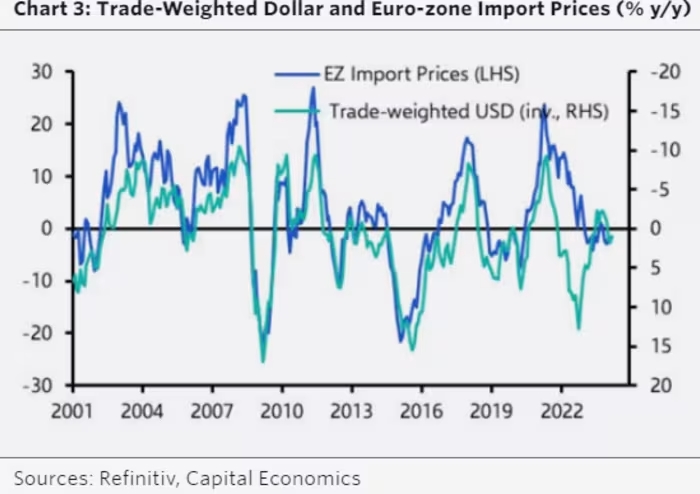
Neil Shearing of Capital Economics contends that despite the vigorous surge of the U.S. dollar, the prospect of a succession of global currency crises appears remote. While the soaring dollar may unsettle global financial markets and raise concerns about currency stability for economies worldwide, Capital Economics suggests that the fallout may not be as dire as feared. The recent robust performance of the U.S. dollar, as evidenced by the ICE U.S. Dollar Index DXY, has been consistent, marking a four-month streak of gains. This strength mirrors the resilience of the U.S. economy, fueled by sustained domestic demand and persistent inflation, empowering the Federal Reserve to prolong higher interest rates and defer expectations of an initial rate reduction. Despite the advantages a strong dollar offers U.S. consumers, such as curbing inflation and facilitating cheaper international travel, it could present challenges abroad. Neil Shearing, Chief Economist at Capital Economics, warns that the inflationary pressure on imports due to a strong dollar might hinder global trade and economic activity, particularly for countries outside the United States. Furthermore, the appreciation of the dollar elevates the cost of dollar-denominated debts abroad, introducing uncertainty and potentially destabilizing financial markets. However, Shearing reassures that the recent ascent of the dollar has been gradual, minimizing the likelihood of triggering widespread currency crises in other nations. Moreover, the impact of a strong dollar on global inflation varies depending on several factors, including an economy’s import intensity and the magnitude of currency fluctuations. Contrary to conventional wisdom, Shearing observes an inverse correlation between the dollar’s strength and global import price inflation. This is largely due to the dollar’s influence on commodity prices, which tends to mitigate inflationary pressures. Additionally, while a robust dollar may dampen global trade, other factors often overshadow this effect in practical terms. Shearing’s analysis highlights the interplay between the dollar’s movements and changes in global GDP, suggesting that economic growth drives fluctuations in the greenback rather than the reverse. Consequently, while U.S. stocks were showing positive momentum during the time of his assessment, led by technology giants like Tesla and Apple, Shearing emphasizes the nuanced relationship between the dollar’s strength and broader economic dynamics.

DayTradeToWin Review

NASDAQ Trading Mastery with TradingView

Today, on April 29th, a Monday, I’m thrilled to explore the dynamic world of NASDAQ trading with the formidable Trade Scalper software. Join me on this exciting journey as I strive to achieve a $200 profit using just one contract within the next 20 minutes. But before we embark, it’s crucial to acknowledge the inherent risks involved in trading. Please ensure you only trade with funds you can afford to lose. The NASDAQ is renowned for its rapid movements, presenting both challenges and opportunities for traders. Leveraging the Trade Scalper software from Day Trade to Win, my goal is to harness these swift market shifts and hit a profit target ranging from $150 to $200. To enhance my trading approach, I’ve chosen to utilize a 5-second chart for quicker order execution, deviating from the conventional one-minute chart. Effective risk management is paramount in trading. I stress the importance of implementing robust strategies such as time-based stops and pivotal stops to mitigate potential losses. Additionally, leveraging tools like Average True Range (ATR) can offer valuable insights into market volatility, aiding traders in making informed decisions. Precision is the cornerstone of successful trading with Trade Scalper. Exact entry signals empower traders to enter positions confidently, aiming for consistent profits. While losses are an inevitable part of trading, the objective is to conclude each trading day on a positive note, whether it’s achieving gains of $50, $100, or beyond. At Day Trade to Win, our mission is to equip traders with the knowledge and tools necessary for success. Our live trading room and complimentary member accounts provide invaluable resources for traders of all levels. Through simulated trading accounts and educational materials, we strive to democratize trading and make it accessible to everyone. In conclusion, as my NASDAQ trade unfolds, adaptability and vigilance are essential. Whether you’re trading NASDAQ, E-mini S&P, or currencies, the principles of disciplined trading remain universal. Remember, trading is a journey, and continuous learning is paramount to mastering the markets. Thank you for joining me on this trading adventure, and I eagerly anticipate our next rendezvous in the world of trading!

Market News

Tech Stocks in Focus: Key Takeaways from 20 Years of Analysis

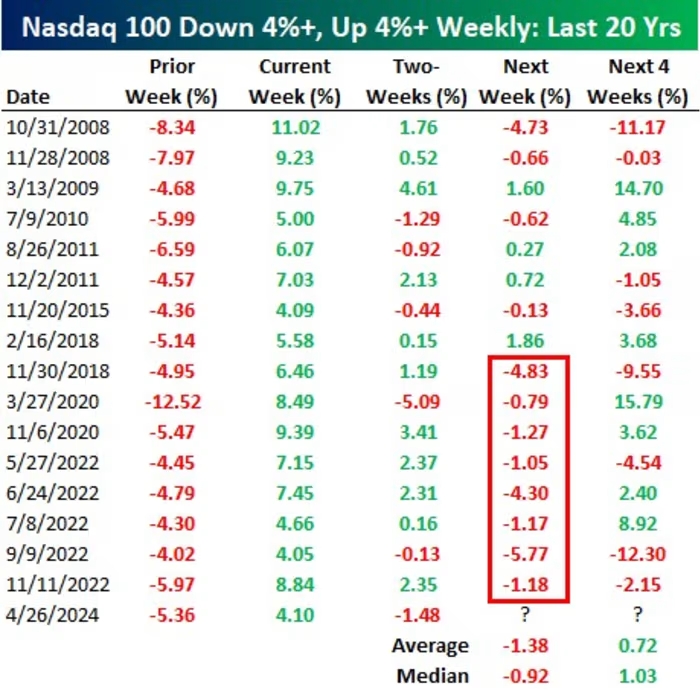
Early trading in equity futures suggests that Wall Street will likely continue last week’s strong rally. Despite recent volatility driven by concerns over rising bond yields conflicting with expectations of strong corporate earnings, particularly within the tech sector, market sentiment appears resilient. The Nasdaq 100, home to major technology companies, rebounded by about 4% last week after experiencing a slight dip of over 5% the week starting April 15th. This marked the most significant weekly gain for the broader market since early November. This resilience, often referred to as “bouncebackability,” is seen as a positive sign for the market. It indicates that investors are capable of absorbing setbacks and are eager to seize opportunities to buy when prices dip. However, short-term traders should exercise caution. Analysis by Bespoke Investment Group suggests that historical data on similar market recoveries may not bode well for this week’s trading. Looking at data since the mid-1980s, there have been 40 instances where the Nasdaq 100 saw a decline of four percent or more in one week, followed by a rise of four percent or more the next. Despite initial optimism, historical trends show that subsequent weeks have often seen the Nasdaq 100 averaging a decline of 1.38%, with recent occurrences ending in declines. This raises questions about the sustainability of market rebounds and whether they truly reflect strength or hint at underlying weakness. Significant fluctuations, such as those seen with Nvidia, may sow unease among investors. Examining the S&P 500 index, technical strategist Jonathan Krinsky of BTIG notes the challenging territory ahead, marked by the convergence of key moving averages and recent downtrends. While some analysts like Krinsky may lean towards a bearish outlook, others like Tom Lee, head of research at Fundstrat, provide a more optimistic perspective. Lee believes that the recent rally underscores the resilience of the “buy the dip” mentality, signaling further potential gains as the market moves into May. His colleague Mark Newton predicts a move towards S&P 500 5,212, potentially setting sights on 5,400 for bullish investors.

Market News

S&P 500’s Best Week Since November Fueled by Big Tech Surge Amid Inflation Skepticism

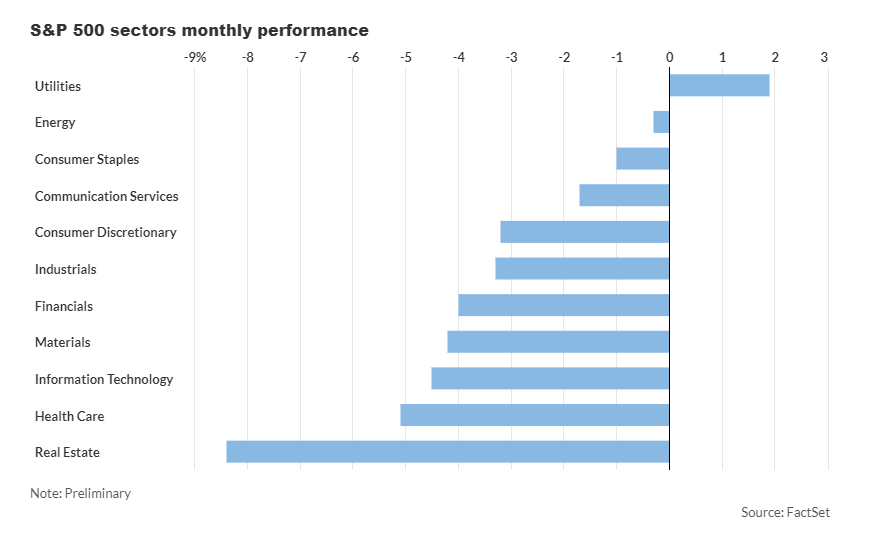
Alphabet, the parent company of Google, experienced a significant surge in its stock value on Friday, propelling its market capitalization above $2 trillion for the very first time. This surge contributed to a notable recovery in U.S. stocks for the month of April, with the S&P 500 achieving its most substantial weekly gain since November, largely fueled by the resurgence of major technology stocks. Despite fresh signs of ongoing inflation and the release of earnings reports from Microsoft and Alphabet, investor sentiment remained positive. Anthony Saglimbene, chief market strategist at Ameriprise Financial, pointed out that the market’s reaction was mainly driven by the robust earnings from these tech giants. He mentioned that investors were relieved to see that the narrative surrounding artificial intelligence and the outlook for Big Tech earnings remained unchanged after Alphabet and Microsoft reported their results. Alphabet’s shares surged by 10.2% on Friday, pushing its market capitalization beyond $2 trillion, while other tech giants such as Microsoft, Nvidia, and Amazon also experienced significant rallies. Although concerns about inflation persisted, investors largely overlooked the latest data from the personal consumption expenditures price index, which showed a rise in March consistent with expectations. The core inflation rate, which excludes energy and food prices, increased by 0.3% last month, maintaining the same year-over-year rate seen in February. On Friday, the S&P 500 rose sharply by 1%, with the Nasdaq Composite jumping 2% and the Dow Jones Industrial Average climbing 0.4%. For the week, the S&P 500 recorded a 2.7% increase, marking its most substantial weekly gain since early November and offsetting its April losses. Investors have been adjusting their expectations regarding potential actions by the Federal Reserve to address inflation. While the Fed’s next move remains uncertain, traders in the federal funds futures market anticipate rate cuts potentially starting in September, according to the CME FedWatch Tool. In addition to inflation concerns, investors are closely monitoring U.S. economic growth. The recent gross domestic product report indicated a slowdown in economic growth during the first quarter, accompanied by an uptick in inflation, raising concerns about a potential “stagflationary” environment. While some analysts anticipate rate cuts from the Fed to address these challenges, concerns persist that the Fed may not act decisively due to the persistent nature of inflation. The resilience of consumer spending, coupled with a robust labor market, adds to inflationary pressures, posing challenges for potential interest rate cuts.

Trade scalper
DayTradeToWin Review

Euro USD Excellence: Winning Strategies Uncovered on TradingView – Trade Scalper Insider Tips!

Greetings, traders! Today, on this Friday, April 26th, we delve deep into the world of day trading, focusing on the currency market with a spotlight on the Euro USD, and explore the Trade Scalper software‘s potential. However, before we proceed, it’s crucial to acknowledge the inherent risks associated with trading. Always remember, never trade with funds you cannot afford to lose. The currency market, particularly Forex, offers a plethora of opportunities for international traders. Among the myriad of tools available, the Trade Scalper stands out for its adept use of price action across various markets. Let’s unravel its effectiveness. As the market opens around 9:30 AM New York time, we witness a flurry of short positions. The Trade Scalper adeptly signals these movements, presenting traders with numerous opportunities. Notably, the consecutive short signals signify a compelling trend. Timing is key, with some traders acting swiftly while others await confirmation, such as the subsequent long signal at 1.67. Crafting exit strategies requires finesse, extending beyond setting rigid targets or stops. Factors like time-based exits, indicated by a set number of candles or minutes, and incorporating the Average True Range (ATR) are pivotal. Additionally, staying informed about high-priority news events enables traders to navigate market fluctuations effectively. The Trade Scalper isn’t just a tool; it’s a comprehensive strategy. Traders needn’t seize every signal but rather focus on quality over quantity. In a live market environment, we witness the software’s prowess firsthand, with numerous successful trades unfolding seamlessly. Its compatibility across platforms like TradingView and NinjaTrader further enhances accessibility. Let’s broaden our horizons and explore other markets, including the British Pound, Swiss Franc, Australian Dollar, and even the E-mini S&P 500 Futures. Across these diverse landscapes, the Trade Scalper consistently delivers, showcasing its versatility and reliability. For those intrigued by the Trade Scalper‘s potential, DayTradeToWin.com offers a wealth of resources. From free member accounts to downloadable software, aspiring traders can embark on their journey armed with valuable tools and insights. In conclusion, mastering day trading requires a blend of strategy, discipline, and cutting-edge tools like the Trade Scalper. As we navigate the intricacies of the market, let’s remember: success lies not in the frequency of trades but in the precision of execution. Until next time, happy trading!

Market News

Bank of America’s Report: Main Street’s Savings Dilemma, Wall Street’s Avoidance of Shorting in ‘Anything But Bonds’ Era

Over the past twelve months, the U.S. government has injected a staggering $6.2 trillion into various sectors, catching the attention of investors. Bank of America’s strategists, led by Michael Hartnett, suggest that this surge in fiscal spending signals a path devoid of fiscal restraint, potentially leading to inflation and a prolonged downturn in bond markets. Consequently, investors are turning away from bonds in search of alternative investment avenues. This influx of government funds, buoyed by pandemic relief measures, energy incentives, financial sector bailouts, and even student debt forgiveness, has reshaped the attitudes of both Main Street and Wall Street. Ordinary citizens are questioning the need for saving in the face of such abundant government support, while investors are cautious about betting against the seemingly unstoppable flow of government intervention and monetary stimulus. This shift in sentiment is mirrored in the surging values of the U.S. dollar and assets like gold and cryptocurrencies, which have reached unprecedented heights. Bank of America attributes this trend to a decline in trust in traditional institutions. However, they caution that the Federal Reserve’s recent indication of potential interest rate cuts may exacerbate asset inflation, making policy adjustments challenging. This skepticism towards bonds has led to a preference for what Bank of America terms “long monopolies, short leverage,” with a few dominant mega-corporations commanding a significant portion of market capitalization. This trend is observable not only in the S&P 500 but also globally. Bank of America predicts that this pattern will persist until real yields meet a certain threshold or until economic conditions prompt a shift. They envision two scenarios emerging from this environment: a positive one driven by robust economic expansion, benefiting cyclical stocks, and a negative one characterized by escalating inflation, increased volatility, and a flight to tangible assets like cash, gold, and commodities.

Scroll to Top