Market News

Breaking Down the Surge: How Oil, Gold, and Dollar Rally Could Impact the Fed’s Rate-Cut Outlook

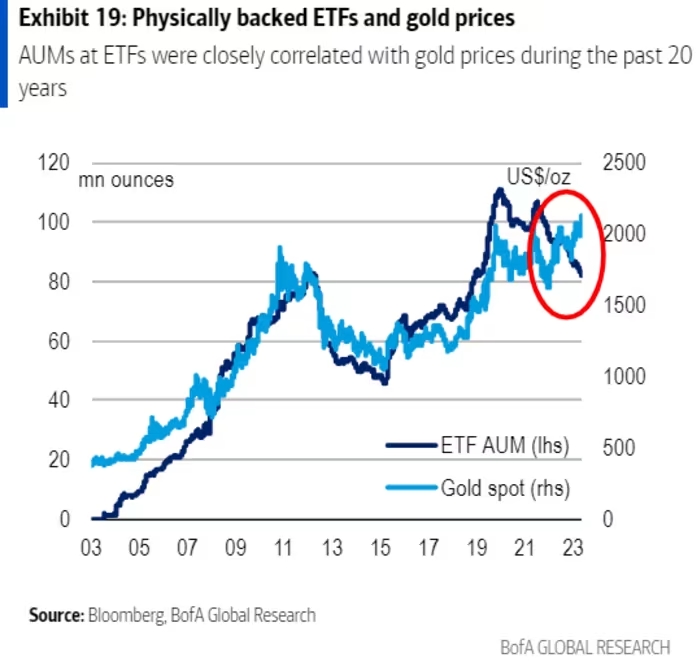
In 2024, market strategists caution that a vigorous global economic recovery is propelling a striking surge in commodity prices. This surge poses a challenge to the Federal Reserve’s efforts to contain inflation and could complicate its plans to cut interest rates by mid-year. Commodities ranging from oil and gasoline to gold and silver have kicked off the year with remarkable gains, reaching levels unseen for years. This rally has reignited concerns about inflation among investors and raised fears that the Federal Reserve might need to maintain higher borrowing costs for a longer duration than initially anticipated. The Bloomberg Commodity Index, tracking 24 major commodities futures contracts across energy, metals, and crops, reached its highest point since November, largely fueled by surging energy and gold prices. This spike is partly attributed to escalating geopolitical tensions in the Middle East and the ongoing conflict between Russia and Ukraine, as well as speculations that the first rate cut by the Fed might not occur until summer. Silver has also witnessed a notable uptrend, with the iShares Silver Trust recording its strongest performance since May 2023. This surge in precious metals has defied expectations, even in the face of a strengthening U.S. dollar. According to Nanette Abuhoff Jacobson, global investment strategist at Hartford Funds, the market anticipates better-than-expected global growth, along with increased inflation and commodity prices. This scenario complicates the Fed’s goal of implementing three rate cuts in 2024 as initially planned. U.S. Treasury yields have risen amidst this backdrop, with the 10-year Treasury bond yield reaching its highest level since November. Oil prices have been a significant driver, climbing towards $90 per barrel, buoyed by both geopolitical tensions and expectations of heightened demand due to strong economic growth. However, some analysts, like Stephen Lee from Logan Capital Management, suggest that the primary driver behind the oil price surge is not geopolitical conflicts but rather expectations of robust economic growth globally. The positive correlation between oil prices and energy stocks indicates a shift in oil supply and demand dynamics, according to Nicholas Colas of DataTrek Research. This suggests that energy stocks may be poised for further gains. Despite the strength of the U.S. dollar, precious metals continue to maintain their ground due to rising physical demand, driven by various factors including geopolitical tensions and uncertainties surrounding Fed rate cuts. The traditional inverse correlation between the U.S. dollar and commodities, particularly gold, has weakened recently, as both have experienced increased demand amid global economic uncertainties. Oil, being priced in dollars globally, typically exhibits an inverse relationship with the dollar.

Market News

Understanding What Factors Could Turn the Stock-Market Stumble into a Major Pullback

Stock markets cruised to record highs in the first quarter, but now, surging Treasury yields and oil prices are changing the tune. The Dow Jones Industrial Average dropped over 500 points shortly after opening on Tuesday, marking a second consecutive day of declines. By afternoon, the index was down around 480 points, or 1.2%, while the S&P 500 was off by 0.9%. Sam Stovall, chief investment strategist at CFRA, suggests that the S&P 500’s significant rally since October may lead to a pullback, highlighting the importance of the 10-year Treasury yield. The recent rapid increase in Treasury yields, coupled with rising oil prices due to concerns about Middle East tensions, is seen as the trigger for the current market downturn. The yield on the 10-year note rose to approximately 4.37% on Tuesday, nearing its 2024 peak. Rising yields can negatively impact stocks by increasing borrowing costs for companies and reducing the present value of future profits. Additionally, the speed of the yield rise can prompt investors to adjust their portfolios, adding further pressure on the market. Looking ahead, the outlook for Treasury and stock market declines remains uncertain. Economic data releases and statements from the Federal Reserve will likely influence market sentiment, with particular attention on Friday’s March jobs report. The stumble at the start of April underscores the significance of forthcoming economic indicators in the face of rising yields’ potential impact on equities.

Market News

Big Investors Absent as Bullish Sentiment Builds for This Asset Class

As a new quarter begins, there’s a slight dip in stock momentum compared to premarket activity. After reaching its 22nd record high, the S&P 500 closed the first quarter, suggesting a potential pause ahead. Investors are analyzing comments from Fed Chair Jerome Powell, who recently stated that he didn’t see any surprises in the central bank’s preferred inflation measure and didn’t feel the need to lower rates urgently. More insights from Powell are expected later this week, along with key data such as job figures. Are major investors missing out on a possibly profitable asset class right now? That’s what’s being suggested by a Sunday blog post from the Mosaic Asset Company, which highlights a “bullish case for commodities.” Interestingly, gold prices hit new highs on Monday. The context is that “rate cuts are expected while the economy avoids recession.” While this scenario is favorable for stocks, various commodities have also received positive attention, according to Mosaic. Their data shows how different commodities have performed in non-recessionary periods when the 2-year yield is declining, with notable gains for copper, industrial metals, oil, and gold: Moreover, Mosaic suggests that the commodity trade is further supported by the lack of interest from professional investors. “Commodities have significantly lagged behind, with overall price declines reflected in the S&P GSCI commodity index since mid-2022, giving fund managers little reason to chase performance.” Referring to Bank of America’s recent survey of fund managers, Mosaic points out that institutional portfolios are currently the least exposed to commodities relative to bonds since the financial crisis of 2008. They indicate that such herd behavior can quickly reverse if commodities begin to rebound. “Institutional investors, while evaluating their portfolio allocation, might become a driving force behind commodity demand if momentum picks up. This is particularly true considering that commodities are currently at historically discounted levels compared to equities,” states Mosaic. They highlight that the commodities-to-stock price ratio is nearing historic lows, a situation that has previously triggered a “significant mean-reversion in favor of commodities.” Their subsequent graph illustrates this ratio dating back to 1970 — a rising trend indicating commodities outperforming stocks, and a declining trend signaling the opposite: “Although the current ratio has lingered at low levels for much of the past decade, the environment is turning favorable for commodities to excel from these depressed levels,” they remark. Considering all these factors, there appears to be an enticing risk/reward prospect.

DayTradeToWin Review

Scalping Secrets Revealed on TradingView

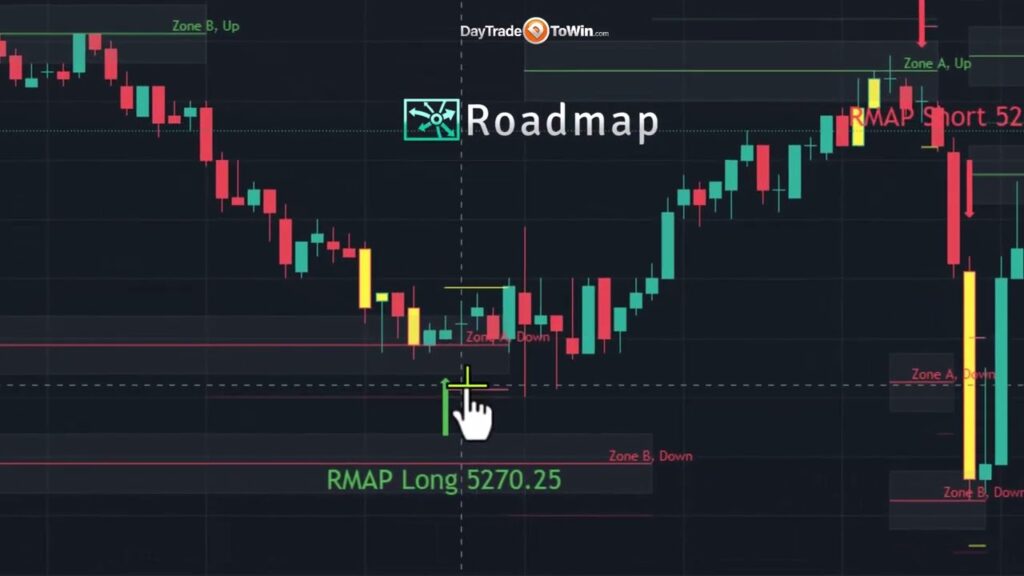
In the dynamic realm of trading, timing is everything. Traders are perpetually seeking dependable strategies and tools to seize upon market shifts swiftly and efficiently. Today, we delve into the art of scalping with the Trade Scalper strategy, focusing our lens specifically on the E-mini S&P (ES) via the TradingView charting platform and Bitcoin on NinjaTrader. Before we dive in, it’s paramount to acknowledge the inherent risks of trading. Never allocate more capital than you can afford to lose, and always approach the market with a blend of caution and diligence. The Trade Scalper strategy distinguishes itself by relying solely on pure price action, forsaking conventional indicators like moving averages in favor of real-time market dynamics. Let’s dissect our observations from both platforms. TradingView Analysis: E-mini S&P (ES) As the market unfolds, immediate signals prompt a short position. Yet, given the volatility intrinsic to market openings, prudence dictates a pause to await calmer waters. Volatility breeds unpredictability, potentially imperiling trades. Despite the initial turbulence, subsequent signals consistently align in the short direction, furnishing ample opportunities for profitable maneuvers. The strategy’s efficacy lies in its capacity to yield multiple valid signals consecutively, heightening the prospects of success. However, it’s imperative to stay vigilant for conflicting signals or external influences that may sway market direction. Supplementary filters or cross-referencing with alternative indicators can furnish additional validation or serve as a cautionary beacon against potential pitfalls. NinjaTrader Analysis: Bitcoin Shifting gears to the cryptocurrency realm, particularly Bitcoin, we encounter a parallel landscape of opportunity. The strategy seamlessly adapts to Bitcoin’s unique characteristics, with larger point values necessitating meticulous risk management. Once again, the market’s initial moments demand heightened vigilance. Yet, subsequent signals unveil a consistent pattern akin to our E-mini S&P analysis. Short-term fluctuations notwithstanding, the Trade Scalper strategy asserts its prowess across diverse asset classes. Harnessing Advanced Features Both platforms offer an array of customizable features, from color schemes to filters like the Average True Range (ATR), which aids traders in navigating fluctuating market conditions. The ATR filter proves particularly invaluable during sluggish market phases, shielding traders from choppy waters. Conclusion The Trade Scalper strategy, whether deployed on TradingView or NinjaTrader, epitomizes a robust approach to scalping, leveraging price action for timely and precise market entries and exits. However, trading success extends beyond strategy; it necessitates discipline, risk management, and continuous learning. For those eager to deepen their trading acumen, our members-only trading room and accelerated mentorship class offer a wealth of resources and insights to elevate your journey. Remember, knowledge empowers, and informed decisions are the bedrock of prosperous trading. Until our next rendezvous, trade prudently, trade securely, and may the markets perpetually align in your favor.

Market News

Evolution of the S&P 500: Beyond the Magnificent 7 to Record Highs

Throughout the first quarter, more stocks participated in the market rally, offsetting some of the weakness observed in Big Tech. Analysts anticipate this trend to persist. Individual stocks contributed to the strength of the S&P 500 index, dispelling concerns about narrow market gains. Recent data shows that the number of S&P 500 stocks hitting 52-week highs reached its highest level in three years, indicating a broadening market. Additionally, an increasing number of index members are showing long-term uptrends, with over 83% trading above their 200-day moving average, marking the highest level since August 2021. While the dominance of Big Tech has waned since 2023, major tech stocks still made significant contributions to the index’s rise this year, albeit less than before. The “Magnificent Seven,” comprising major tech companies, contributed 37% of the S&P 500’s first-quarter gains, down from two-thirds in 2023. However, excluding Apple, Tesla, and Alphabet, the remaining four members—Nvidia, Microsoft, Meta Platforms, and Amazon—contributed a substantial 47%. Despite challenges faced by Apple and Tesla, other sectors such as industrials, financials, and energy have picked up the slack. These sectors, alongside information technology and communications services, outperformed the S&P 500 in the first quarter, reflecting a diversified market rally. As the Federal Reserve considers interest rate cuts, portfolio managers anticipate mid- and small-cap stocks to regain momentum, particularly with cyclical sectors like financials and industrials reaching record highs. Looking ahead, analysts are closely monitoring the release of the March nonfarm payrolls report for further insights into the market’s direction. In March, both the Dow Jones Industrial Average and the S&P 500 achieved record highs, reflecting the overall bullish sentiment prevailing in financial markets.

wall street
Market News

S&P 500 and Vix Rally: Is Investor Confidence Fading in 2024?

The recent surge in the Vix likely reflects its tendency to revert to its mean, rather than indicating an impending market downturn, as suggested by a portfolio manager. In a departure from the norm, both the S&P 500 and the Cboe Volatility Index, commonly known as the Vix, have experienced gains this quarter in the stock market. But does this signal an end to the unusually calm market conditions of late? Probably not, according to insights from Barbara Reinhard, the chief investment officer of Voya Investment Management’s multi-asset strategies and solutions platform. Reinhard suggests that the recent uptick in the Vix from its four-year low in December is likely due to the natural tendency of implied volatility to return to its average. Contrary to the notion that nervous investors are preparing for a market crash, Reinhard argues that feedback from fellow financial professionals doesn’t support this idea. She notes that the Vix, often called Wall Street’s “fear gauge,” remains historically low. While the Vix has increased by 4.3% since the beginning of the quarter, reaching 12.98, it’s worth noting that its long-term average is around 20, according to FactSet data. Reinhard emphasizes the cyclical nature of the Vix, stating in an interview with MarketWatch, “If the Vix is low like it is now, it is more likely to rise over the medium term. But then again, it can remain low for years, as it did between 2012 and 2015.” Meanwhile, the S&P 500 seems poised to achieve a 10% gain this quarter, reaching record highs on Thursday for the 22nd time this year. Despite this, the concurrent rise of the Vix amid relatively stable market conditions adds to the peculiarity of the current situation. Although instances of both indexes rising simultaneously have occurred in recent years, previous occurrences often saw a brief retreat in the S&P 500 along the way. The most recent instance was in the third quarter of 2021, when the S&P 500 saw a marginal rise of 0.2%, juxtaposed with a significant 46% surge in the Vix. This surge largely occurred in September as the S&P 500 recorded its most substantial monthly decline since March 2020, driven by concerns surrounding the spread of the COVID-19 delta variant. Before that, the Vix rose alongside the index during the second and third quarters of 2019, prompted by the Trump administration’s trade tensions with China, which triggered brief selloffs in the S&P 500. The current streak of more than 100 trading days without a 2% pullback in the S&P 500, the longest in about six years according to Bespoke Investment Group, further underscores the current market’s resilience. However, it’s essential to note that while the Vix and S&P 500 typically exhibit a strong negative correlation, this relationship isn’t immutable. The Vix serves as an indicator of implied volatility, reflecting traders’ expectations regarding market volatility in the upcoming month rather than the present volatility levels. Its value is derived from activity in S&P 500 options.

Scroll to Top