DayTradeToWin Review

The Reality of Day Trading: Managing Expectations Effectively

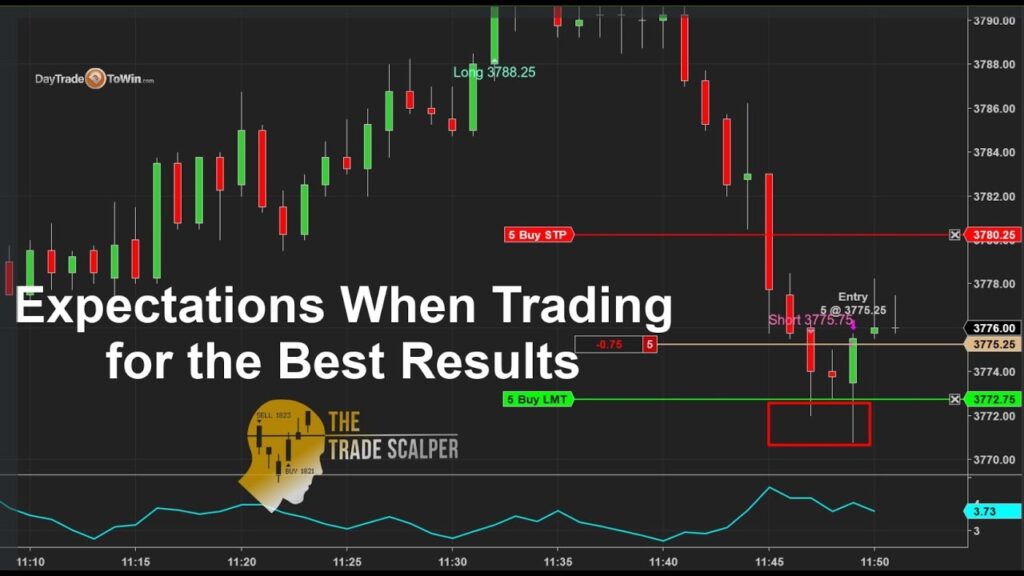
Ready to navigate the dynamic world of day trading with confidence? Today, I’m excited to share insights that could transform how you approach the markets. Join us as we explore the Trade Scalper software and the art of trading through price action. In a recent video, we dove into strategies designed for Trade Scalper users. Our community has reached an incredible milestone—surpassing 1000 members with free access accounts. Congratulations to those who’ve joined! For those yet to join, explore our free software, learning materials, and trading resources. Acknowledging the risks of trading is crucial. Trade responsibly with funds you can afford to lose. Before diving in, understand the risks by engaging with your broker. The Trade Scalper software by DayTradetoWin is at the core of our discussion. This intuitive tool, based solely on price action, provides clear trade signals. While additional methods like the blueprint, roadmap, and atlas line can complement your journey, I emphasize the simplicity and efficiency of the Trade Scalper software. We’re considering a potential short trade at 37.7575. It’s not just about identifying an entry; it’s about managing risks and timing. Setting a tight stop within three to four points, aligned with market volatility, is crucial. Timely execution is key, as immediate movement in profitable trades is common. Understanding market behaviors is essential for successful trading. For instance, the market’s interest in revisiting the 37.7275 price level suggests a potential target for this trade. Markets often test and retest certain price areas, hinting at possible support levels or patterns. Live training sessions and a wealth of free resources are available for all members at daytradetowin.com. For those looking to advance, our upcoming mentorship class is tailored for new and beginner traders aiming to master price action and excel in the trading world. Eager to explore the opportunities in day trading? Visit daytradetowin.com for abundant resources, sign up for the next mentorship class, and subscribe to the DayTradetoWin YouTube channel for valuable insights on thriving in the trading sphere. Successful trading involves knowledge, discipline, and continuous learning. Join us on this journey toward mastering day trading and leveraging the power of Trade Scalper and price action strategies.

Market News

Assessing Trends: Bond Yields and Their Impact on Stock-Market Behavior

The relationship between Treasury yields and the stock market is widely recognized. The recent surge in yields was largely blamed for a market downturn, leading the S&P 500 to slide over 10% from its late July peak, falling into correction territory by the end of last month. However, there was a marked shift last week. Yields on 10-year and 30-year Treasury notes saw their most significant decline since March, sparking a surge in stocks. The S&P 500, Dow Jones Industrial Average, and Nasdaq Composite recorded their most substantial weekly gains in 2023. The week concluded with the S&P 500 closing at 4,358.34. Investors are currently debating whether yields have hit their peak, which typically move in the opposite direction to Treasury prices. The burning question remains: will a clear peak in yields signal the revival of the 2023 stock market rally? As is often the case in financial markets, outcomes depend largely on the context. Analysts at U.K.-based Matrix Trade emphasized this uncertainty, noting that yields could reach a peak for various reasons, but not all outcomes would favor stocks. One positive scenario for stocks envisions a robust economy while inflation decreases, allowing the Federal Reserve to reduce interest rates without igniting inflation reminiscent of the 1970s. However, this scenario seems improbable without a significant rise in unemployment. Conversely, a potential recession could see yields and stocks declining simultaneously, similar to the periods of 2000-2002 and 2007-2009. Economists have faced challenges in accurately predicting the economy’s trajectory, citing the inconsistency in forecasts. The Matrix Trade analysts highlighted the difficulty in timing signals like the inversion of the yield curve, typically a reliable indicator of an impending recession, but with uncertain timing. To refine this signal, they suggested combining it with unemployment claims, anticipating that surpassing 250,000 first-time claims might signal a point of no return. While the future of the stock market remains uncertain, identifying the peak in yields might be clearer. The analysts consider the 4.33%-4.43% range as a significant inflection point for the 10-year Treasury note. Remaining within this range could mean the potential for the 10-year yield to exceed 5%. However, if this range is breached, it could indicate the end of the rally. The analysts also suggest the possibility of a broader correction, with the 10-year yield potentially declining to 2.5% to 3%, suggesting economic pressure and a potential recession. In summary, the current optimistic rally may face challenges, potentially hitting around 4,103 again early next year if stocks fail to continue their current momentum.

Market News

S&P 500 Futures Surge: Stocks Ride the Wave of an Extended Rally

U.S. stock futures edged up at the start of Monday’s trading, driven by expectations that the Federal Reserve might have concluded its series of interest rate increases, providing a positive backdrop for market sentiment. Market Performance: Previous Market Movements: On the prior Friday, the Dow Jones Industrial Average (DJIA) surged by 222 points, equivalent to a 0.66% rise, reaching 34061. The S&P 500 (SPX) showed a 0.94% gain, rising by 41 points to hit 4358, while the Nasdaq Composite (COMP) increased by 184 points, a 1.38% rise, reaching 13478. Futures data suggests that stocks will likely extend their recent rally on Monday, although any additional gains are expected to be modest. Last week, the S&P 500 saw a robust increase of 5.85%, marking its most significant weekly gain in almost a year. This surge was primarily driven by comments made by Federal Reserve Chairman Jay Powell and indications of a cooling labor market, leading to a significant drop in bond yields. This, in turn, fostered expectations that the U.S. central bank might be wrapping up its cycle of interest rate hikes. Despite the 10-year U.S. Treasury yield dropping below 4.5% on Friday after touching a 16-year high above 5%, it has since rebounded to 4.59%. This slight increase in yields is somewhat tempering the fresh optimism in the equity market at the beginning of Monday. Stephen Innes, managing partner at SPI Asset Management, emphasized that the equity market’s movements are heavily influenced by Treasury bonds. The sustainability of the recent rebound in bonds will be crucial. The upcoming bond auctions this week and the release of the Consumer Price Index (CPI) later in the month could significantly impact the likelihood of another rate hike. The start of the week brings minimal economic data, with the sole notable release being the Federal Reserve’s senior loan officer survey for October, scheduled for 2 p.m. Eastern time. Additionally, Federal Reserve Governor Lisa Cook is set to speak at Duke University at 11 a.m. Earnings reports from NXP Semiconductors, Vertex Pharmaceuticals, and Tripadvisor are expected after Monday’s closing bell, while Uber and Walt Disney are anticipated later in the week. According to John Butters, senior earnings analyst at Factset, 81% of S&P 500 companies have reported results, with 82% delivering a positive earnings per share surprise and 62% posting a positive revenue surprise.

Market News

Earnings Whispers in a Booming Market: Proceed Cautiously

The volatility index hints at a period of calm, but recent corporate earnings have sparked unpredictability in individual stocks. Brace yourself for potential market turbulence making a comeback sooner than expected. The past week witnessed significant market upswings, with the S&P 500 index soaring by 5.9%, marking its most substantial increase since November 2022. The Dow Jones Industrial Average and Nasdaq Composite also surged by 5.1% and 6.6%, respectively. This surge followed the Federal Reserve’s decision to hold off on interest rate hikes and a notable slowdown in the labor market, as evident in the recent payrolls report. While the Cboe Volatility Index (VIX), a measure of expected S&P 500 volatility, declined to 14.9 from its peak of nearly 22 in October, this shift suggests a change in investor sentiment—from a brief panic to renewed confidence in the market. However, contrasting this are individual stocks’ reactions to earnings, showcasing significant volatility. Some companies, like Roku, Shopify, and Palantir Technologies, soared by more than 20% post-earnings, while others such as Paycom Software, ON Semiconductor, and Estée Lauder plummeted by 19% or more. Despite reduced market volatility, the response to earnings remains highly erratic. Companies surpassing earnings and sales expectations have seen only marginal stock increases, around 0.3%, on average. Conversely, those missing forecasts experienced a significant 4.8% decline—widening the disparity compared to historical averages. The concern arises from the fact that while earnings have mostly exceeded estimates, the market has already factored in this growth for the future. Spencer Hakimian, founder of Tolou Capital Management, highlights the risk if projected growth doesn’t materialize in the coming years. Instances like ON Semiconductor’s discouraging profit guidance, attributed to weakening automotive chip demand, resulted in a 22% stock drop. The trend of companies providing cautious forward guidance is a cause for concern, potentially adding to market volatility. The behavior of the bond market is currently influencing stock markets. Although the 10-year Treasury yield witnessed a significant decline, there remain worries about persistently high interest rates potentially impacting future earnings in 2024 and 2025, hinting at a possibly volatile market ahead. David Miller, co-founder of Catalyst Capital Advisors, foresees a higher VIX level in the near future, suggesting a bumpier market ride and calling for preparedness to navigate potential increased turbulence.

Market News

Analyzing S&P 500 Trends Post Apple’s Soft Guidance

U.S. stock index futures showed stability on Friday ahead of the release of October payrolls data, following subdued guidance from tech behemoth Apple. Market Overview: Market Trends: The S&P 500 closed above its 200-day moving average, reaching 4,245. Market Factors: Recent market movements were influenced by multiple factors, including the U.S. Treasury’s plans for reduced long-term debt issuance, hints from the Federal Reserve regarding a potential halt in interest-rate increases, and softer economic reports. Positive signals from the bond market have driven continuous robust gains in stocks, especially in the tech sector like the ARK Innovation ETF and regional banks within the SPDR S&P Regional Banking ETF. The future direction of the market will likely be shaped by the upcoming October nonfarm payrolls report, predicted by analysts to reflect 170,000 jobs added, an unemployment rate of 3.8%, and 0.3% hourly wage growth. However, Apple’s lower-than-expected revenue and sales projections for the current fiscal first quarter might present a challenge, potentially impacting the market’s trajectory.

Market News

S&P 500 Futures Ride High on Investor Confidence in Peaking Rate-Hike Cycle

Thursday saw a rise in U.S. stock futures, buoyed by growing optimism that the U.S. rate-hike cycle may have peaked. Highlights: On Wednesday, significant market movements were recorded: Market influencers: Wednesday introduced key market factors. Although Federal Reserve Chair Jerome Powell didn’t explicitly confirm a rate-hike peak, analysts interpreted his cautious stance as somewhat dovish. In addition, the Treasury refunding fell slightly short at $112 billion compared to expectations, with reduced issuance of 10- and 30-year notes from August. Simultaneously, crucial indicators such as the Institute for Supply Management’s manufacturing index fell below estimates, and the ADP private-sector employment gauge revealed unexpected downward trends. “Despite Powell’s somewhat hawkish tone, market sentiment remained unconvinced, especially given [Wednesday’s] economic data suggesting a potential U.S. economic slowdown,” noted Michael Hewson, chief market analyst at CMC Markets UK. In anticipation of Friday’s significant nonfarm payrolls report, upcoming releases on the economic calendar include weekly jobless claims and third-quarter productivity. Furthermore, Apple (AAPL, +1.87%) is set to announce its earnings after the market’s closing bell.

Scroll to Top