Market News

S&P 500 Futures Show No Signs of Recovery, Extend Three-Month Low

Monday morning witnessed a shift in U.S. stock futures‘ fortunes as they relinquished their early gains. Here’s a concise breakdown of the events: To recap Friday’s performance, the Dow Jones Industrial Average (DJIA) recorded a loss of 107 points, equating to a 0.31% decline, landing at 33,964. The S&P 500 (SPX) also experienced a decline of 10 points, equivalent to a 0.23% drop, reaching 4,320, while the Nasdaq Composite (COMP) registered a 12-point fall, or 0.09%, closing at 13,212. Last week painted a bleak picture for the S&P 500, as it recorded a 2.9% decrease, marking its worst week since the period ending March 10 and hitting its lowest level since June 9. Monday’s market lacked significant catalysts; however, the tentative resolution of a writers’ strike provided a boost to media companies like Paramount Global (PARA, -4.96%) and Netflix (NFLX, -1.13%) during premarket trading. Additionally, President Joe Biden announced plans to show support for the United Auto Workers strike against the Big Three automakers during his visit to Michigan. Nonetheless, the primary narrative in recent times has been the rapid ascent of long-term interest rates. Technical strategists at Bank of America noted that while they lack conclusive evidence that the upward movement in the 10-year yield is complete, it is beginning to appear stretched. The yield on the 10-year Treasury (BX:TMUBMUSD10Y) increased by 5 basis points to 4.49%. China’s housing crisis returned to the spotlight, with Evergrande (3333, -21.82%) shares plummeting as the company abandoned a $35 billion debt restructuring plan. Additionally, shares of China Aoyuan Group experienced a sharp decline on Monday, marking their first day of trading in over a year. In Hong Kong trade, the Hang Seng (HK:HSI) skidded 1.8%.

Market News

Dollar’s Recent ‘Golden Cross’ Spells Trouble for Stock Traders

The U.S. Dollar Extends Its Winning Streak for the 10th Week in a Row, the Longest Since 2014 In a significant development, the U.S. dollar has achieved its first “golden cross” since July 2021, raising the possibility of further upward momentum and potential challenges for the stock market. As we approach the end of the week, the 50-day moving average of the ICE U.S. Dollar Index (DXY), a key measure of the dollar’s strength against a basket of major currencies, with a strong emphasis on the euro, stands at 103.15. Notably, this surpasses the 200-day moving average, which registers at 103.11. The index itself concluded the week at 105.56, reaching its highest level since March 10, 2023, a day that witnessed the collapse of Silicon Valley Bank, triggering a brief surge in safe-haven assets like the dollar. Over the course of the week, it edged up by 0.2%, marking its 10th consecutive weekly gain, a streak not seen since the 12-week run ending in October 2014. The “golden cross” formation materialized when the 50-day moving average closed above the 200-day moving average, a widely recognized signal among technical analysts that often implies an emerging trend in a particular direction. Conversely, a “death cross” occurs when the 50-day moving average crosses below the 200-day moving average. In the case of the U.S. dollar, a “death cross” occurred on January 10. Subsequently, the dollar trended downward for the following six months, ultimately hitting its lowest point in 2023 on July 14. Since then, it has been on a sustained uptrend, a trajectory that some currency experts believe has the potential to continue, especially after the Federal Reserve revised its interest rate forecasts to remain above 5% through 2024. Based on analysis by Dow Jones Market Data, following a golden cross, the dollar typically continues to rise during the subsequent three months, posting an average gain of 1.9% and trading higher approximately 79.2% of the time. Performance becomes more mixed over a one-year horizon, with the dollar trading higher 58.3% of the time and averaging a gain of 1.5%. Drawing from a previous golden cross on July 29, 2021, the dollar index surged by approximately 25%, advancing from around 91 to nearly 115 in late September 2022, when it reached its highest level in two decades, according to FactSet data. However, some analysts have issued caution about the dollar’s ascent, particularly in conjunction with rising Treasury yields, which could pose additional challenges for the stock market. On Thursday, the S&P 500 experienced a drop of more than 1.6%, marking its most substantial single-day decline since March 22, as reported by Dow Jones Market Data. Jeffrey deGraaf, a technical strategist at Renaissance Macro Research, remarked in a note to clients, “A new cycle high in yields and a golden cross in the dollar are strong headwinds for the market.”

Market News

S&P 500 Futures Show Strength Following Fed’s New Rate Stance

U.S. stock index futures showed mainly positive movements on Friday, which was a change from their previous trend following the Federal Reserve’s recent announcement about a higher interest-rate forecast for the next year, made on Wednesday. What’s happening In English, the paragraph can be paraphrased as follows: Last Thursday, the Dow Jones Industrial Average decreased by 370 points, representing a decline of 1.08% and reaching a value of 34070. Likewise, the S&P 500 went down by 72 points, equivalent to a 1.64% decline, and settled at 4330. The Nasdaq Composite also experienced a drop of 245 points, resulting in a 1.82% decrease, and ended with a final value of 13224. The S&P 500 has experienced a decline of 2.8% in the past three days. What’s driving markets Stocks seemed to find stability on Friday after two consecutive days of decline sparked by the Federal Reserve’s announcement. The Fed chose to keep its policy interest rates unchanged, however, it raised its projected rates for 2024 by 0.5%. On Thursday, new data revealed a surprising decline in the number of individuals seeking unemployment benefits, which suggests a strong employment market. As a result, the 2-year Treasury yield attained its highest point since 2006, while the 10-year yield reached its highest level since 2007. Saxo Bank analysts mentioned that the impact of the recent statement by the U.S. Federal Reserve, indicating a prolonged period of high interest rates, is still ongoing. As a result, Wall Street witnessed its biggest drop in half a year, with the yield on the 10-year government bonds hitting 4.5% for the first time since 2007. Moreover, the chances of future interest rate cuts have decreased to only 75 basis points. Reports suggest that both the S&P 500 and the Nasdaq 100 closed at levels of technical support, potentially resulting in a minor rebound despite the prevailing bearish trend. After a busy week of central bank decisions, the Bank of Japan decided to keep its loose monetary policy stance the same. This caused the dollar to become stronger compared to the yen, with the USDJPY exchange rate increasing by 0.41%. The initial purchasing managers index reports for the manufacturing and service sectors will be included in the economic calendar of the United States on Friday. S&P Global will be providing these reports. Furthermore, Fed Gov. Lisa Cook will give a speech at a conference centered around artificial intelligence. Companies in focus

Market News

Dollar Surge Rattles U.S. Stock Futures

The interest rate on the 10-year Treasury note has reached the highest level it has been in 16 years. On Thursday, the futures for U.S. stock indexes saw a substantial decrease. The opening of the Dow Jones Industrial Average was expected to be down by 200 points. This decline was influenced by rising Treasury yields and a stronger U.S. dollar, causing additional pressure on the stock market. How are stock-index futures trading Yesterday, the Dow Jones Industrial Average (DJIA) fell by 77 points or 0.22% to a level of 34,441. Similarly, the S&P 500 (SPX) experienced a decrease of 42 points or 0.94% to reach 4,402. Additionally, the Nasdaq Composite (COMP) witnessed a decline of 209 points or 1.53%, with a closing value of 13,469. What’s driving markets Based on the Federal Reserve’s recent statement, it seems probable that U.S. stocks will persist in their decline, as the intention is to keep interest rates higher for a longer duration. Additionally, it is anticipated that there will only be one more rate hike within the year. The Federal Reserve’s projections, known as the “dot plot,” and the hawkish comments made by Powell during the press conference, had an impact in driving up Treasury yields to their highest level in 16 years and causing the US dollar to reach its highest value in more than six months. These factors were viewed as detrimental to the stock market. The rise of the US dollar was additionally supported by the Bank of England’s choice to maintain the current interest rates on Thursday. Moreover, American investors analyzed fresh economic data on Thursday. The number of people in the United States who applied for jobless benefits fell to 201,000 in the previous week, reaching the lowest level in the past eight months. After the press conference on Wednesday, Stephen Innes, who is a managing partner at SPI Asset Management, remarked that Powell’s suggested policies appeared to have a significantly negative impact on the American stock market. In a note, it was noted by Innes that the narrative has changed, with interest rates hitting record highs and affecting the stock markets. This connection between interest rates and the stock markets leads to a more intricate trading atmosphere, as any rise in rates brings a certain amount of disturbance to the American equity market. The interest rate on the 10-year Treasury note, with the ticker symbol BX:TMUBMUSD10Y, rose to 4.474%. This increase of 10 basis points marked its highest level since late 2007. It is important to note that bond prices and yields have an inverse correlation. Additionally, the ICE U.S. Dollar Index DXY, which gauges the strength of the dollar against a selection of other currencies, climbed by 0.5$, reaching a value of 105.63. Companies in focus

DayTradeToWin Review

Mastering Day Trading the Lazy Brilliant Way: A Simplified Approach

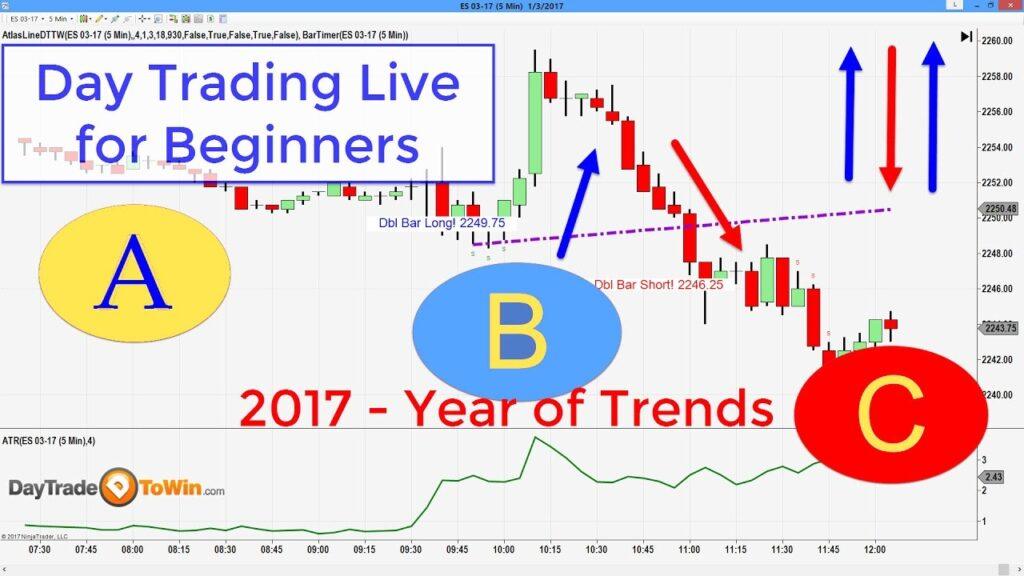
Trading in the financial markets can be both thrilling and daunting. Whether you’re a seasoned trader or just starting out, you’ve likely encountered a plethora of strategies and tools that promise to enhance your trading prowess. But what if I told you there’s a “lazy brilliant” way to approach day trading, one that simplifies the process while increasing your odds of success? In this blog post, we will explore the concept of a “lazy brilliant” trading strategy, especially in the context of day trading. We’ll delve into how simplicity, effective tools, and a well-defined plan can revolutionize your trading experience. The Beauty of Simplicity in Trading Day trading often conjures images of frenetic traders monitoring multiple screens, feverishly analyzing charts and indicators. While this might be the reality for some, it needn’t be the standard approach. In fact, simplicity can be your greatest ally in the world of trading. The “lazy brilliant” approach advocates for simplifying your trading strategy, concentrating on the most critical factors while minimizing complexity. The goal is to streamline your decision-making process, reduce stress, and ultimately enhance your trading outcomes. The Key Player: Price Action At the heart of the “lazy brilliant” way to day trade lies the concept of price action. Price action trading involves scrutinizing historical price movements and patterns to make well-informed trading decisions. Rather than relying on a myriad of technical indicators, you study raw price data and pinpoint significant levels of support and resistance. Price action trading offers several compelling advantages: The Value of Trading Webinars To truly master the “lazy brilliant” approach to day trading, participating in trading webinars can prove incredibly valuable. Webinars provide a structured platform for learning from seasoned traders, gaining insights into their strategies, and posing questions in real-time. An effective trading webinar should cover the following key aspects: Putting the Strategy into Action Once you’ve absorbed the fundamentals through webinars and practice, it’s time to implement the “lazy brilliant” strategy effectively: Bottom Line The “lazy brilliant” way to day trade champions simplicity, effective tools, and disciplined execution. By honing in on price action, attending informative webinars, and adhering to a well-defined strategy, you can boost your chances of success in day trading while minimizing stress and complexity. Always bear in mind that trading carries inherent risks, and there are no guarantees of profit. However, with the right approach and continuous learning, you can enhance your skills and navigate the markets with greater confidence. Embrace the “lazy brilliant” mindset, and you may find that trading becomes a more manageable and rewarding endeavor.

DayTradeToWin Review

The Power of Automation in Price Action Trading

In the dynamic realm of trading, where keeping pace with market shifts and swiftly seizing opportunities can be a formidable challenge, Price Action Trading Automation emerges as a game-changer. ?? Today, I’ll walk you through the eight-range chart in real-time. To keep things engaging, we may fast-forward through the video since spending an hour staring at charts can be a tad monotonous. ?✨ Empowering Your Trading with Autopilot Updates Recent enhancements in our autopilot system now offer the versatility of range charts. While I’ve personally been utilizing the eight-range chart, you can also opt for tick charts or minute charts in NASDAQ and crude oil. Starting Small, Growing Steadily Here’s a crucial tip: You have the option to trade with a micro or a single contract. My recommendation for all traders is to kickstart their journey with a single contract, taking it slow and steady. To provide clarity, I’m currently showcasing five contracts in this demonstration. Unleashing the Potential of Price Action Trading Price action trading is rooted in the analysis of historical price movements and chart patterns. It empowers traders to make informed decisions and foresee potential price shifts. The Time for Automation Although price action trading is potent, it demands significant time and attention. Scanning charts, spotting patterns, and executing trades manually can easily consume all your hours. That’s where automation sweeps in, altering the landscape of trading. Benefits of Price Action Trading Automation Selecting the Right Tools Choosing the right automation tools is pivotal. Seek platforms or software offering: The Future of Trading Price Action Trading Automation represents the future of trading. It marries human analysis with the speed and precision of automation. Traders embracing this technology gain a competitive edge in today’s high-speed markets. If you’re eager to explore Price Action Trading Automation, conduct thorough research, assess your risk tolerance, and rigorously test your strategies. The right automation tools hold the potential to elevate your trading endeavors to new heights.

Scroll to Top