stock market
Market News

U.S. Stock Market Breadth Surges: Key Charts

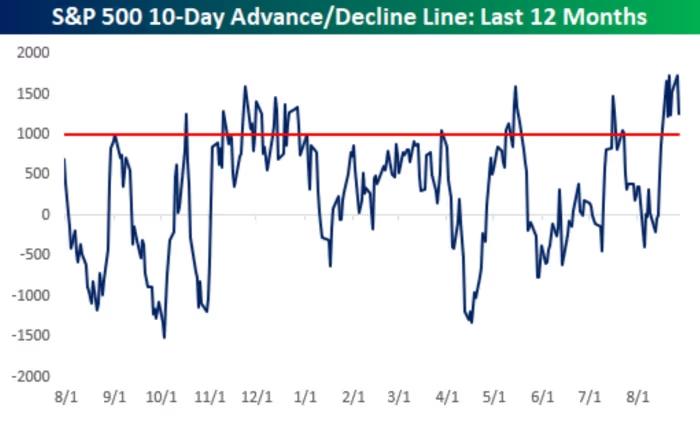
Bespoke: S&P 500’s August Rebound Driven by Broad Market Strength Across Multiple Metrics More U.S. stocks are participating in the ongoing stock market rally, with the S&P 500 extending its August rebound, according to Bespoke Investment Group. “Since the sharp decline that bottomed out on August 5, the market’s recovery has been marked by robust underlying breadth,” Bespoke noted in a Tuesday report. The wealth-management and research firm pointed out significant improvements across various metrics, including the number of stocks reaching 52-week highs, the percentage of stocks trading above their 50-day moving averages, and the net number of advancing stocks. On Tuesday, the S&P 500’s 10-day advance/decline line stayed above 1,000 for the seventh consecutive day, the longest streak since October 2020. Bespoke highlighted that this is “one of just 22 such streaks since 1990.” “Historically, when the S&P 500’s 10-day A/D line remained above 1,000 for seven days, future returns have typically been positive, especially when these streaks occur at least a year apart,” Bespoke added. The S&P 500 rose 0.2% on Tuesday to close at 5,625.80, just 0.7% below its record close on July 16. The index is up 1.9% in August and has gained 17.9% year-to-date. On Monday, the S&P 500’s 10-day advance/decline line reached 1,733, its highest level since late October 2022, which coincided with the start of the bull stock market, according to Bespoke. U.S. stocks broadly advanced on Tuesday, with the Nasdaq Composite rising 0.2% and the Dow Jones Industrial Average inching up 0.1% to hit a new all-time high.

market
Market News

Is a Market Crash Looming? Signs of Overvaluation

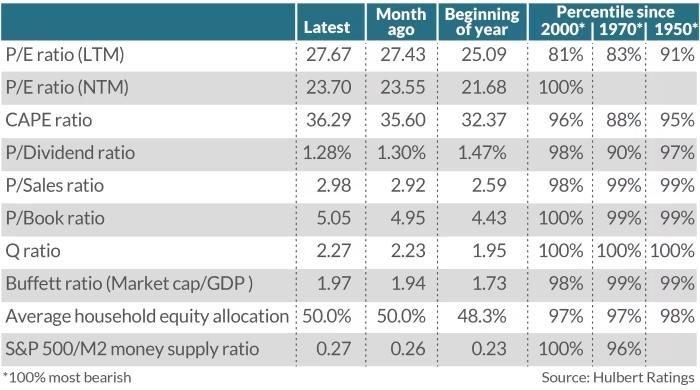
The U.S. stock market is approaching the high valuation levels last seen at the peak on January 3, 2022. When it recovers from a correction and approaches a new all-time high, it’s essential to compare current valuations with those at previous peaks. Investors often expect these downturns to eliminate prior excesses, setting the stage for a more sustainable bull market. Unfortunately, this isn’t happening with the S&P 500 (SPX) right now. The chart below shows where various valuation indicators currently stand relative to their monthly distribution since 2000. A 100% reading signals an extremely bearish scenario, while 0% reflects the most bullish. As the chart highlights, many of these indicators are hovering near the bearish end of the spectrum, close to—or even exceeding—the levels observed at the January 2022 peak. This doesn’t necessarily mean the stock market won’t keep rising. However, if it does, it will enter even riskier territory than before the 2022 bear market. Overvaluation doesn’t automatically trigger a market downturn, as valuations have limited predictive power over short-term horizons. But the indicators in this chart have a strong track record of forecasting returns over the next decade. As noted last month, they suggest that returns through 2034 may fall below inflation. How today’s valuations compare to the past The percentiles in the chart are based on monthly data since 2000, focusing on this period as some argue that older data is less relevant. Even if we accept this viewpoint, the market is still significantly overvalued. Extending the analysis to include data since 1970 or 1950 reveals an even more overvalued market. Any way you look at it, the stock market is dangerously overvalued.

unemployment
Market News

Unemployment, Not Inflation, Is the Fed’s New Focus—Powell

Federal Reserve Chairman Jerome Powell has pledged to take all necessary measures to sustain a strong labor market, vowing to prevent a rise in unemployment that could push the U.S. economy into recession. “We do not seek or welcome further cooling in labor-market conditions,” Powell declared in a speech on Friday, justifying the potential for a reduction in interest rates. He stressed that the Fed is well-equipped to address any risks, including the threat of further deterioration in the job market. After maintaining interest rates at a 24-year high to curb inflation, the Fed is now considering rate cuts in September. With inflation gradually approaching its 2% target, the central bank’s focus has shifted to rising unemployment. Powell emphasized that the Fed’s dual mandate requires balancing low inflation with a robust labor market. “The upside risks to inflation have diminished,” Powell stated during the Fed’s annual Jackson Hole conference. “And the downside risks to employment have increased.” A primary concern is the recent surge in unemployment, which reached a nearly three-year high of 4.3% in July, up from 3.4% just 18 months ago. This figure now surpasses the Fed’s projections for the coming years. Chicago Fed President Austan Goolsbee expressed similar worries, noting in a CNBC interview that there are “warning signs” emerging in parts of the labor market. Other indicators, including job growth and openings, have also shown significant weakness. Recently revised government data revealed that the U.S. economy added 818,000 fewer jobs than initially reported between spring 2023 and spring 2024. “With inflation no longer the primary concern, the focus has shifted to the labor market,” said Ryan Sweet, chief U.S. economist at Oxford Economics. “The Fed won’t tolerate further increases in unemployment.” Powell has consistently highlighted the importance of a strong labor market during his time as chairman, underscoring the societal benefits of low unemployment, particularly for minorities and low-income communities. “In the years just prior to the pandemic, we saw the significant benefits to society that can come from a long period of strong labor market conditions,” Powell remarked, referencing low unemployment, high workforce participation, and healthy wage gains. Despite recent concerns, Powell reassured that the labor market remains relatively healthy, attributing the rise in unemployment primarily to an influx of workers into the labor force and a slowdown in hiring, rather than increased layoffs. He also noted that the current labor market hasn’t significantly contributed to inflation, a departure from past periods of high inflation. This unusual situation gives the Fed more flexibility to lower interest rates, which could boost economic growth and spur more hiring. “We will do everything we can to support a strong labor market,” Powell reaffirmed.

nvidia
Market News

Nvidia Earnings Loom: Big Tech Faces a Reality Check

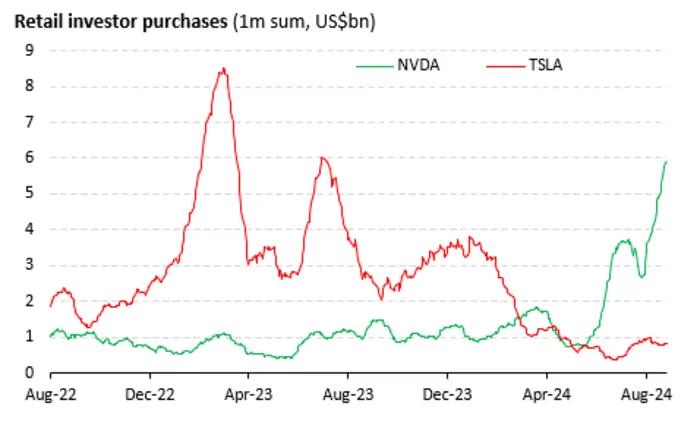
You might expect the final week of August to be one of the slowest on Wall Street, with traders enjoying the last days of summer before Labor Day. However, a major event is about to capture the market’s attention: Nvidia’s upcoming earnings report. In fact, one money manager suggested that Nvidia’s results could even steal the spotlight from Federal Reserve Chair Jerome Powell’s much-anticipated speech on inflation, the economy, and interest rates at Jackson Hole on Friday. “Forget the Fed—it’s all about Nvidia’s earnings on August 28th. The wait is the hardest part,” joked Gina Bolvin, president of Bolvin Wealth Management Group, in a nod to the late Tom Petty. For Nvidia to maintain its soaring valuation, the company will need to deliver another impressive quarter and provide strong guidance. The Roundhill Magnificent Seven ETF, which consists solely of Nvidia, Apple, Microsoft, Amazon, Alphabet, Meta, and Tesla, is currently trading at about 36 times estimated 2024 earnings, up from a P/E ratio of 32 following the market’s drop on August 5. This is significantly higher than both the broader market and the rest of the tech sector. The S&P 500 trades at around 23 times this year’s earnings forecasts, while the Invesco QQQ Trust, which tracks the Nasdaq 100, has a P/E of 30. The Magnificent Seven have a considerable impact on these indexes, skewing the multiples upward due to their massive market caps. The pressure is on Nvidia to prove that the AI buzz is justified and to support Big Tech’s elevated valuations. Nvidia is currently valued at around 47 times forward earnings estimates, with only Tesla among the Magnificent Seven having a higher P/E ratio, approaching 100. But Nvidia might be up to the task. Earnings and revenue are expected to more than double compared to a year ago. It’s worth remembering that Nvidia faced high expectations last May, and the company didn’t just meet them—it exceeded them, beating analysts’ forecasts by 7% and sparking another rally in tech stocks. With other major tech companies already reporting positive outlooks for AI-driven products and services, this is promising news for Nvidia, whose largest customers include Microsoft, Amazon, Alphabet, and Meta. “Each of these companies highlighted strong demand and investment in AI-related products that should support tech earnings moving forward,” said Larry Adam, chief investment officer at Raymond James, in a report. “This earnings strength is why we favor megacap tech and would view any weakness as a buying opportunity,” Adam added. Nvidia’s chips are also in high demand beyond the tech sector, particularly in the automotive industry. “Nvidia continues to experience strong demand from key customers across all its processors and is struggling to keep up,” said Ivan Feinseth, chief market strategist at Tigress Financial Intelligence. Feinseth also emphasized that “significant upside exists from current levels” for Nvidia. Wall Street is in agreement. Nearly all analysts covering the stock have given it a Buy rating, with the consensus price target nearly 10% above current levels. Nvidia shares were up 1.3% to $125.40 in premarket trading on Friday. While Nvidia is certainly a crowded trade, with nearly everyone betting on its continued rise, the company has consistently rewarded its investors and helped lift other Big Tech giants along the way.

sonic
DayTradeToWin Review

Introducing the Sonic Trading System: Precision, Simplicity, Success

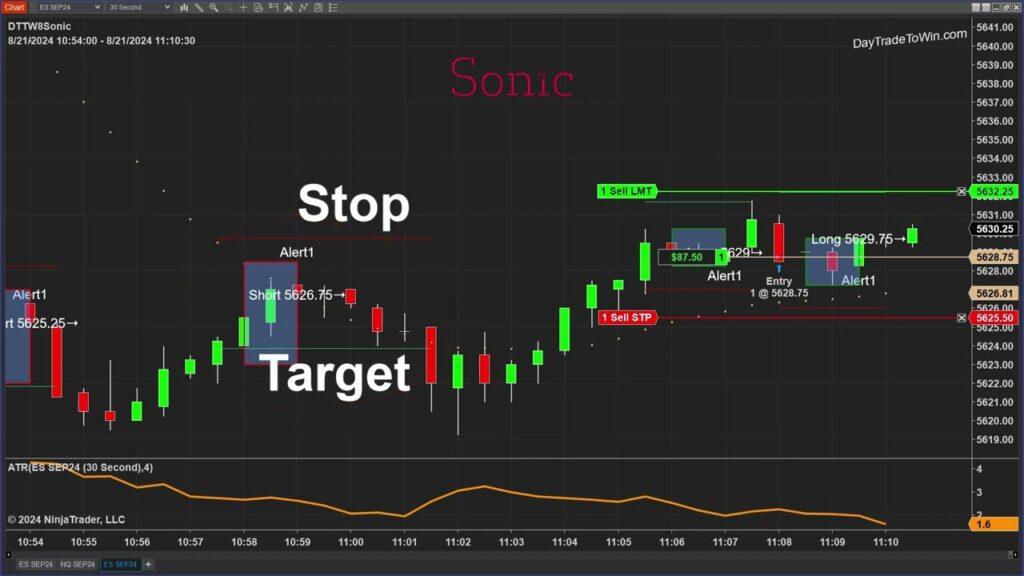
Today, I’m thrilled to introduce something new and powerful—the Sonic Trading System. After extensive development and testing, this hybrid trading system is ready to help you make more informed trading decisions with clear signals, precise targets, and well-defined stops. In this post, I’ll walk you through how the Sonic Trading System works and how it can enhance your trading strategy. What is the Sonic Trading System? The Sonic Trading System is a hybrid model designed to simplify the trading process. Here’s what it offers: Remember: Trading is inherently risky. Only trade with money you can afford to lose. How Does the Sonic Trading System Work? Let’s explore the system in action with a live trade example: Adapting the Sonic Trading System to Your Style The Sonic Trading System is versatile, allowing you to tailor it to your preferred trading style: Real-World Trading Examples Here’s a look at some recent trades using the Sonic Trading System: The Sonic Trading System streamlines your trading experience, cutting through market noise to provide clear, actionable signals that adapt to real-time conditions. Conclusion The Sonic Trading System isn’t just another tool; it’s a comprehensive, battle-tested approach to trading that can enhance your performance. Whether you trade the E-mini, NASDAQ, or currencies, this system offers the flexibility and precision you need to succeed. If you’re interested in learning more or getting started with the Sonic Trading System, contact us via email or visit daytradetowin.com. Here’s to smarter, more successful trading!

Goldman
Market News

Goldman Explains Hedge Funds’ Reluctance in Rebound Rally

Hedge funds have largely refrained from participating in the recent market rally following the unwinding of the yen carry trade over the past two weeks, according to a new analysis from Goldman Sachs’ prime brokerage division. Despite a strong rebound that has seen the Nasdaq 100 rise by 11% and the S&P 500 climb 8% since both indices hit multi-month lows on August 5, money managers have continued to reduce their exposure to equities. Goldman Sachs reports that hedge funds are now on track to sell global equities at their fastest pace since March 2022, when markets were disrupted by Russia’s invasion of Ukraine. “Despite the market’s recovery, gross and net leverage ratios have fallen in August, indicating a limited rebound in risk appetite after July’s significant de-grossing,” wrote Goldman Sachs analysts, led by Vincent Lin. The current sell-off is primarily driven by short sales in the U.S. and long sales elsewhere, with net selling across both single stocks and macro products through August 21, the analysis reveals. Bruno Schneller, managing partner at Erlen Capital Management, told MarketWatch that while there is broader market optimism, hedge funds remain cautious about the sustainability of the rally and are wary of potential headwinds. Schneller pointed out that despite ongoing institutional inflows into U.S. equities, hedge funds appear to be hedging against downside risks and maintaining a cautious stance until there is more clarity in the economic outlook. North America has seen the highest level of net selling this month, largely driven by short sales. In the U.S., hedge funds have been selling large-cap stocks while increasing their investments in small caps, according to Goldman Sachs. Meanwhile, energy, utilities, and real estate have been the most net bought sectors, signaling a shift toward high-dividend stocks. Schneller also suggested that hedge funds’ caution may reflect concerns about the impact of potential Federal Reserve rate cuts and ongoing market volatility. He highlighted the elevated levels of the VVIX, which measures volatility in the VIX, along with heightened volatility in bond and forex markets. “Hedge funds might be concerned that the market’s optimism is premature or that economic conditions could deteriorate before any rate cuts take effect, potentially leading to another downturn,” Schneller said. Additionally, developed market Asia has been the second most sold region globally, following the largest 10-day cumulative sell-off of Japanese stocks in over five years, triggered by the unwinding of the yen carry trade. Emerging markets in Asia and Europe have also experienced net selling, driven by significant risk unwinds in China, South Korea, and Taiwan, as well as modest net selling in Europe. “While the market’s surface-level optimism suggests a strong rally, underlying market stress and volatility are keeping hedge funds on edge,” Schneller concluded.

Scroll to Top