daytrading

Stock market
Market News

Bubble Trouble: Assessing the Risk of an Overvalued Stock Market

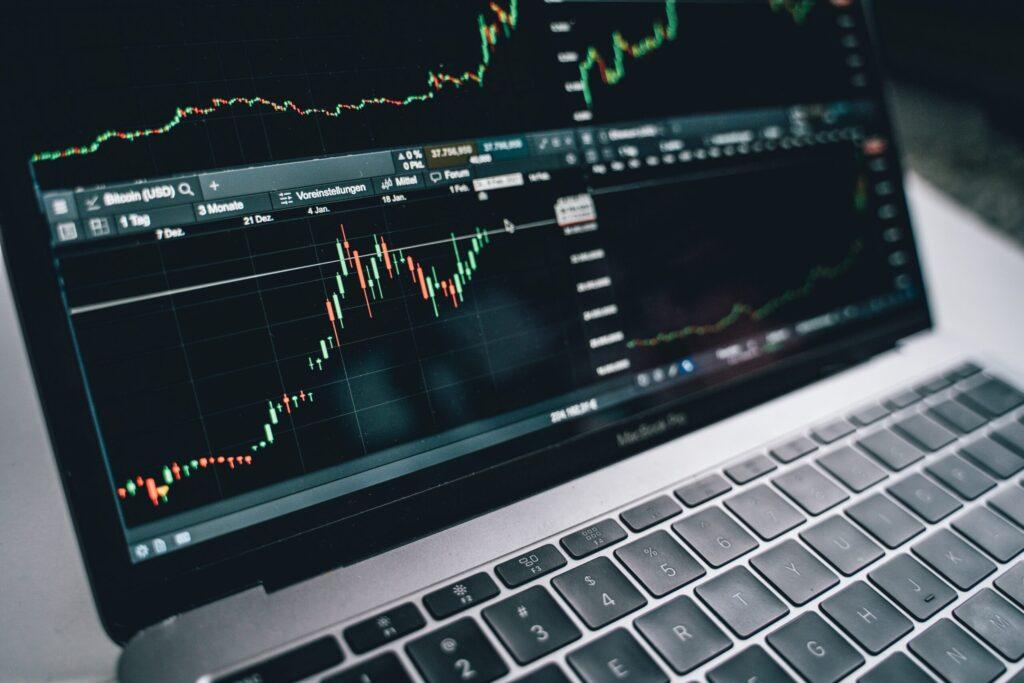
After a terrible year in 2022, the US stock market saw a big increase in 2023. The S&P 500 has increased by 15.36%, and the tech-focused Nasdaq Composite has gained an impressive 31.69% since the start of January. Multiple factors have caused the sudden rise. One is the paradoxical situation where large-scale layoffs have unexpectedly strengthened shareholders’ confidence in greater profitability. Furthermore, the enthusiasm surrounding artificial intelligence has also influenced the increase in the worth of technology stocks. However, it is undeniable that, at its core, there is an economy that presents conflicting information, to say the least. Even though the job market is prospering, the cost of living has increased significantly. To tackle this problem, interest rates have been raised significantly, leading to a stagnant housing market. Meanwhile, wages are still not growing at a pace that keeps up with inflation. Is it possible for this rally to persist for a lengthy duration, or is the current upward trend in the stock market based on unreliable assurances? Now, we will analyze the precise details. Consider investing in value stocks if you are looking for stable companies that can perform well in favorable market conditions and withstand market declines. Renowned investor Warren Buffet favors this strategy, which focuses on companies like Johnson & Johnson and Walmart for their potential long-term growth. To enhance this strategy with artificial intelligence innovation, we have introduced the Value Vault Kit. ARGUMENT FOR A STOCK MARKET BUBBLE Many different circumstances can lead to the creation of a bubble. Recently, we have seen a popular kind of bubble called crypto, characterized by substantial increases in worth mainly caused by actions on social media platforms such as Twitter and TikTok, as well as endorsements from well-known individuals. The quick and significant increase of the bubble led to many people becoming wealthy overnight, but when it burst, it caused severe damage to the entire industry. Many companies went bankrupt, many fraudulent activities were revealed, and several influential figures in the field were caught. These occurrences unfolded in a highly dramatic fashion. The rapid rise in prices does not always imply the presence of a bubble. However, the current enthusiasm regarding AI resembles the hype surrounding cryptocurrencies a few years ago. In the past few months, there has been a small noise reduction. However, from the introduction of ChatGPT until around May 2023, there has been a noteworthy rise in news related to artificial intelligence, new startups emerging, and people proclaiming themselves as AI experts. Being a company well-versed in AI, it becomes apparent that many of these initiatives and individuals will not endure in the long run. Thus, the rationale behind the claim of a bubble is that the exorbitant enthusiasm regarding AI has led to inflated worth. While this occurrence is mainly seen in the tech industry, its substantial scale frequently affects financial markets greatly. Jeremy Grantham, a renowned investor who accurately predicted both the dot com crash in 2000 and the financial crisis in 2008, believes that these occurrences are just parts of a larger “super bubble” which includes not just the stock market, but also real estate and commodities. During an interview with the Wall Street Journal, he noted that our superbubble seemed complex yet somewhat recognizable. It had been releasing air the usual way, until this recent sudden increase. Opposing perspective on the presence of a stock market bubble AI is distinct from crypto due to its tangible uses and widespread adoption. For several years, AI and machine learning have been effectively implemented in different sectors. Instead of introducing a brand-new technology, ChatGPT cleverly freshly presents pre-existing AI capabilities. Amazon CEO Andy Jassy believes that although certain startups and AI functionalities may not succeed, the current stage of generative AI will move from a time of excessive enthusiasm to a more significant and substantial phase. In simpler terms, it’s possible that the market could deflate. However, only the top-notch and highly valuable technological innovations will survive, resulting in continued growth in shareholder worth. When considering the overall situation, there is substantial proof suggesting that our current economy is very strong. Even though the Federal Reserve has implemented a very aggressive interest rate policy, similar to what was done in the 1980s, the job market remains exceptionally healthy. According to the latest ADP jobs report, the number of jobs in June is almost double the anticipated and previous month’s figures. This notable result suggests that employers are actively hiring and expanding their workforce. HOW INVESTORS SHOULD MANEUVER THROUGH UNSTABLE MARKETS Similar to any market cycle, it is difficult to foresee the timing or occurrence of a bubble burst, and it may not even be evident if we are currently experiencing a bubble. If there is a bubble, it could take several years to collapse, and individuals who opt to avoid the market during this period may forego substantial financial gains. BOTTOM LINE Furthermore, individuals with a long-term outlook should not view a market decline as inherently negative. In a recent interview with the Wall Street Journal, Ben Inker, the co-head of asset allocation at the prestigious global asset management firm GMO, emphasized that a market crash in the current situation could offer a unique and highly profitable opportunity. He described it as a “fantastic opportunity with enduring advantages.” Thus, the approach for retail investors in the individual market is simple. They should retain a long-term viewpoint, capitalize on any speculative market patterns, gather profits progressively, and, whenever possible, try to gain from a decline in the market. Asset bubbles are a regular phenomenon that occurs in life, continually emerging and vanishing. Although they are short-lived, these bubbles can create significant riches, even in the absence of any substantial basis. The cryptocurrency industry serves as an instance illustrating this. It is crucial to have a diversified strategy in different markets to safeguard yourself when there is an inevitable decrease in the market. Are you concerned about the possibility of a weakening economy and a drop
Wall street
Market News

Investor Alert: Wall Street’s Decline Continues as Attention Shifts to Upcoming Jobs Data

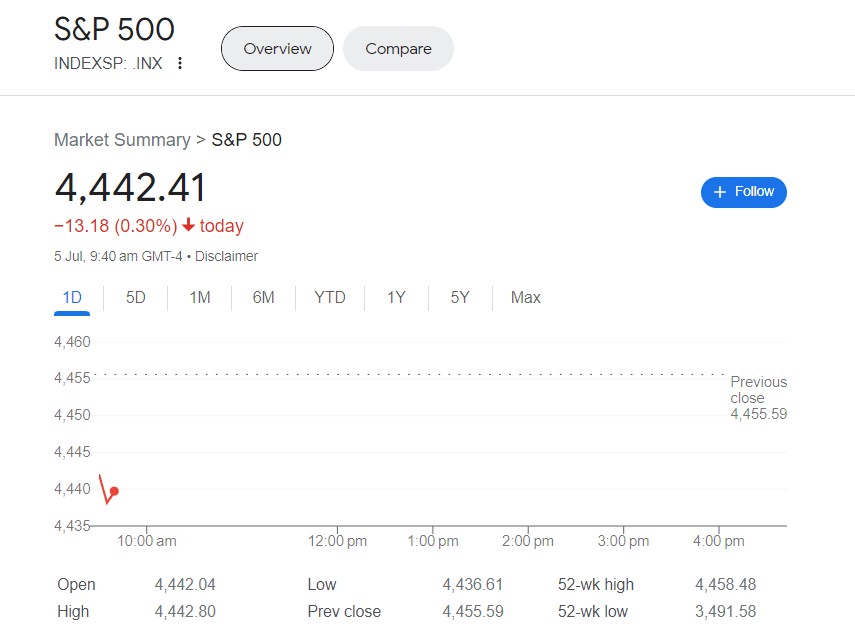
Wall Street, for the second day in a row, witnessed a decrease, and a similar decline was observed in both European and Asian markets. In the meantime, Janet Yellen, the U.S. Treasury Secretary, took action in China on Thursday to ease tensions between the world’s two biggest economies. The futures of the S&P 500 and the Dow Jones Industrial Average weakened by 0.5%. Recently, share prices have significantly increased due to mounting proof that the U.S. economy is doing well and successfully avoiding a recession despite high-interest rates. Nonetheless, the Federal Reserve is currently encountering difficulty in its attempts to control inflation, and a flourishing economy is not what it seeks currently. The latest minutes from the Federal Reserve’s policy meeting, released on Wednesday, revealed that a small group of central bank officials were leaning towards raising interest rates in mid-June. However, in the end, all members decided to keep rates unchanged. The potential for more rate hikes has been causing a decrease in investor confidence. The Federal Reserve has a specific emphasis on the employment situation in the United States. The Labor Department will release the weekly job figures and a report on job opportunities on Thursday. Furthermore, the essential monthly employment data will be provided by them on Friday. After its new app Threads, Meta Platforms, the parent company of Facebook, Instagram, and WhatsApp, saw a 1.9% rise in its stocks. Threads, a competitor to Twitter, has been a challenge for the latter since its acquisition by Elon Musk. Meta’s shares have already witnessed a substantial rise this year, with their value more than doubling. After receiving a downgrade from Goldman Sachs, which expressed concerns about the Chinese banks’ association with debt and the economy’s sluggishness, there was a notable drop in the Hang Seng index in Hong Kong. It fell by 3%, reaching a level of 18,533.05. Additionally, the Shanghai Composite Index also witnessed a decline of 0.5%, resting at 3,205.57. China Construction Bank Corp. shares on the Hong Kong stock exchange witnessed a decrease of 2.8%. China Merchants Bank also recorded a decline of 1.4%, whereas the Industrial and Commercial Bank of China faced a notable drop of 3.2%. In Japan, the Nikkei 225 index decreased by 1.7% and finished the day at 32,773.02. The S&P/ASX 200 index in Australia also decreased by 1.3% to 7,157.80, and the Kospi index in Seoul lost 1.1% and hit 2,551.10. On the other hand, India’s Sensex index went up by 0.3%, although Taiwan saw a 1.7% drop in shares, and Bangkok experienced a 1.1% decline. At midday, the CAC 40 in Paris reduced 1.8%, whereas Germany’s DAX and Britain’s FTSE 100 both witnessed a drop of 1.2%. There is an increasing belief that inflation is lowering to a level where the Federal Reserve may soon stop raising interest rates. These interest rate increases have been slowing down the economy and reducing inflation. Many people in the finance industry predict that the Fed will raise rates this month and possibly one more time before the year ends, as suggested by clues from the Fed. The American stock market might go through a period of slow activity while people wait to see if the predicted economic decline happens. The upcoming season where companies report their earnings from the spring, could offer clues and give investors some understanding. Yields in the bond market showed some diversity, as the 10-year Treasury yield rose to 3.97% from 3.94% on Tuesday. The 10-year yield is highly influential in setting interest rates for important loans like mortgages. The interest rate on the two-year Treasury bond, which is influenced by expectations about the actions of the Federal Reserve, saw a small rise from 4.95% to 4.96%. The price of U.S. benchmark crude oil on the New York Mercantile Exchange online platform rose by 30 cents to $72.09 per barrel in various trading. The day before, it had increased by $2 to $71.79 per barrel. The cost of Brent crude, which serves as the basis for worldwide trading, rose by 22 cents and hit $76.87 per barrel. Compared to its previous rate of 144.64 yen, the American dollar saw a decrease in value to 143.74 Japanese yen. In contrast, the euro slightly increased and increased from $1.0857 to $1.0896. On Wednesday, the S&P 500 saw a small decrease of 0.2%, falling from its highest point since April 2022. Similarly, the Dow experienced a decline of 0.4%, and the Nasdaq only recovered 0.2% of its previous gains. John PaulJohn Paul is the founder of DayTradeToWin, a trading education and software company established in 2008, supporting traders worldwide. His expertise focuses on price action-based futures trading strategies and structured market analysis. DayTradeToWin delivers trading education, indicators, and software tools designed to help traders apply disciplined, rule-based decision-making across global futures markets. He is the creator of multiple trading methodologies, including the Sonic System, Atlas Line, and Trade Scalper, which help traders identify structured opportunities in markets such as the E-mini S&P 500 (ES), Nasdaq (NQ), crude oil (CL), and gold (GC). Official website: https://daytradetowin.com daytradetowin.com

s&p 500
Market News

S&P 500 Futures Tumble: Premarket Trading Takes a Dive

As the U.S. stock market opening draws near with just two hours to go, Wolfspeed Inc. (WOLF) has seen a notable 16.5% increase during the pre-market trading session, while Rivian Automotive Inc. Cl A (RIVN) has risen by 7.2%. Concurrently, RBC Bearings Inc. (RBC), Transocean Ltd. (RIG), and R1 RCM Inc. (RCM) have all observed a gain of at least 3%. In the early trading phase, Thor Industries Inc. (THO) and Ceridian HCM Holding Inc. (CDAY) have experienced drops of 5.0% and 3.3%, respectively. S&P 500 futures have also dropped by a modest 0.42%, aligning with the 0.42% decrease in the Dow Jones Industrial Average futures. The Cboe Volatility Index futures have additionally reduced by 0.73%. In the commodities market, Brent crude oil futures have fallen by 0.29%, while gold futures increased by 0.26%. In the cryptocurrency realm, Bitcoin has faced a 1.20% downturn, standing at $30,431. Currently, the 10-Year Treasury yield has risen, reaching 3.865%. Reflecting on the previous regular trading session, both the S&P 500 and the Dow observed minimal growth of 0.12% and 0.03%, respectively. In contrast, Asian stocks declined overnight, with Japan’s NIKKEI 225 Index dropping 0.25% and China’s Shanghai Composite Index falling 0.69%. This afternoon, European stocks are facing a downturn, as the STOXX Europe 600 Index and the FTSE 100 Index have reduced by 0.51% and 0.58% from the previous close, respectively. Take note that the U.S. stock market opens for trading at 9:30 a.m. ET, so stay updated with regular progress throughout the trading day. John PaulJohn Paul is the founder of DayTradeToWin, a trading education and software company established in 2008, supporting traders worldwide. His expertise focuses on price action-based futures trading strategies and structured market analysis. DayTradeToWin delivers trading education, indicators, and software tools designed to help traders apply disciplined, rule-based decision-making across global futures markets. He is the creator of multiple trading methodologies, including the Sonic System, Atlas Line, and Trade Scalper, which help traders identify structured opportunities in markets such as the E-mini S&P 500 (ES), Nasdaq (NQ), crude oil (CL), and gold (GC). Official website: https://daytradetowin.com daytradetowin.com

stock market
Market News

Recession Canceled? S&P 500’s Record Half-Year Revives U.S. Stock Market

The S&P 500 index had a strong start to the year, making it the best first half since 2019. Despite concerns about a possible recession in the United States, it now appears that the likelihood of that happening is decreasing. Therefore, there is uncertainty about whether the stock market rally will continue for the remainder of 2023. According to José Torres, a senior economist at Interactive Brokers, determining when the US government’s pandemic-related liquidity measures will run out is difficult. He specifically referred to the fiscal and monetary stimulus implemented from 2020 to 2021. Despite the Federal Reserve’s attempts to control inflation by raising interest rates since 2022, their intervention in March, which occurred after regional bank failures, added more liquidity to the financial system. According to Torres, the stage was set for risky investments to flourish, leading to increased assets. Moreover, the current surge in artificial intelligence has further stimulated the upward movement of American stocks. Torres anticipates a subsequent decrease in the market from now on. During the middle of March, the S&P 500 was trading at a comparable level to the start of 2023. However, the performance of stocks was adversely impacted by issues in regional banks until the Federal Reserve stepped in. On March 12, the central bank’s introduction of a program for funding terms for banks assisted and increased trust in the banking system. This alleviated the major strain on financial circumstances, marked by Torres. Based on information from Dow Jones Market Data, the S&P 500 achieved its strongest performance in the first half of the year since 2019, with a notable 15.9% rise within the initial six months of 2023. In June, all 11 index sectors saw growth, a situation not observed since November. Although the Federal Reserve raised interest rates quickly in 2022, aiming to reduce inflation and demand, the U.S. economy has proven to be resilient. Investors do not appear worried about a potential economic downturn because recent indicators have been positive. On June 29, Bernard Baumohl, the chief global economist at the Economic Outlook Group, sent out an email declaring that the recession had come to an end effectively. The writer highlights that despite the strong performance of the economy in the initial quarter, prices have continued to decline. The writer proposes that all inflation indicators have shown a decrease, and if inflation stays low, the Federal Reserve should maintain its current pause. The Federal Reserve has decided to lower the frequency of raising interest rates this year. They temporarily stopped increasing rates during their meeting in June, but they have suggested that there might be more rate increases later on. Currently, traders predict that there will be a quarter-point increase in the Federal Reserve’s benchmark rate in July, based on the Federal-funds futures. This increase would result in a targeted range of 5.25% to 5.5%, according to the CME FedWatch Tool. Numerous investors are satisfied with the Federal Reserve’s choice to halt temporarily, as they interpret it as an indication that the period of increasing interest rates is nearing its end. This particular period had previously inflicted substantial damages on stocks and bonds in the preceding year. During the past week, several economic indicators in the United States brought pleasant surprises. The revised estimate for the country’s economic growth in the first quarter exceeded what was expected. Moreover, the orders for durable goods from manufacturers in May demonstrated increased strength compared to previous predictions. The sales of newly built homes in the same month exceeded economists’ forecasts. Additionally, consumer confidence reached its highest level in 17 months in June, based on a survey conducted by the Conference Board. Lastly, there was a decrease in the number of people filing for initial jobless claims for the week ending on June 24. Investors were additionally satisfied to observe indications of a decline in inflation. As per a government report disclosed on Friday, inflation in the United States, as measured by the personal-consumption-expenditures price index, decreased to 3.8% in May compared to the corresponding period last year. This signifies the least rapid rate of growth since April 2021. Nevertheless, Torres voiced worries about the possibility of the American economy growing too rapidly for the Federal Reserve to combat inflation effectively. This scenario may lead to the central bank taking a tougher approach by implementing tighter monetary measures. ‘Shocked’ The speaker states that there is a noticeable disparity between the current yield of two-year Treasury bonds, which is at 4.925%, and the rate that the Federal Reserve has indicated as their intended target after finishing their series of interest rate hikes. This discrepancy has emerged following a recent rise in two-year yields, which had previously decreased during a period of difficulty for regional banks. The Federal Reserve recently published a report in June which outlined economic projections, suggesting that its policy rate may potentially reach a high of 5.6% by the year’s end. Presently, the targeted range lies between 5% and 5.25%. Based on information from Dow Jones Market Data, the interest rate on the two-year Treasury note rose by 81.7 basis points in the second quarter, reaching 4.877% on Friday. This is the highest level seen since March 9, as indicated by data collected at 3 p.m. Eastern Time. Torres was taken aback by how rapidly the market adapted to the rise in yields. He also thinks that there is room for yields to go even higher. Torres pointed out that the two-year Treasury rates are often used to gauge the Federal Reserve’s position on interest rates. The stock market in the United States had a positive day on Friday, bringing the month of June to a close with overall gains for the week, month, and quarter. According to information from Dow Jones Market Data, the S&P 500 and Nasdaq Composite have recently reached their highest closing levels since April 2022. Furthermore, both indexes have had their longest consecutive months of wins since 2021. In the first half of 2023, the Nasdaq,

stock money
Market News

Decoding the Paradox: Big Tech’s Defiance to Traditional Market Theories

Delving into a volatile market—both high-risk and high-quality stocks have experienced surges this year. This typically isn’t the norm, but there’s a logical explanation backing it. Usually, when investors choose high-volatility stocks, thereby increasing their prices, they commonly sell their high-quality stocks. The objective is to benefit from increased earnings as the economy stages a comeback—a scenario favoring volatile stocks. Contrarily, to shield their portfolios from economic strife, investors generally invest in high-quality stocks, sometimes by selling off the more economically sensitive and volatile ones. High-quality stocks usually exhibit a mix of steady earnings and sturdy cash reserves. However, this year’s market dynamics don’t seem to follow this trend. Take, for instance, the Invesco S&P 500 High Beta ETF (ticker: SPHB)—a fund that handpicks the 100 most volatile stocks within the S&P 500—it has enjoyed almost a 20% increase this year. Remarkably, the Invesco S&P 500 Quality ETF (SPHQ)—which selects companies based on various parameters such as high return on equity—is nearly 13% up. The simultaneous gains of both funds is intriguing. To make sense of this irregularity, let’s start with the high-volatility aspect. Stocks that are susceptible to economic fluctuations are climbing, stemming from the market’s confidence in an impending uplift in demand for goods and services. The underlying premise is the Federal Reserve is nearing its cycle of increasing interest rates, intended to suppress inflation by curbing demand. Spearheading these economically sensitive stocks, Generac (GNRC), Royal Caribbean Group (RCL), Norwegian Cruise Line (NCLH), and Caesars Entertainment (CZR) have all witnessed marked increases this year. Additional stocks, including those from Big Tech, are contributing to these gains. Nvidia (NVDA), the fund’s most significant holding, almost tripled its value, indicating a rising market appetite for future profits. The unexpected parity performance of high-quality stocks compared to high-volatility ones can be attributed to the influence of Big Tech in the quality category. As a persistently high-growth sector, Big Tech benefits from stable rates. Victor Cossel, Macro Strategist at Seaport Global Securities, explains, “When you unwind recession, and you unwind inflation, that’s why you can have beta and quality working simultaneously.” Prominent Big Tech companies like Apple (AAPL), Microsoft (MSFT,) and Alphabet (GOOGL) have recorded significant growth this year. Collectively, these stocks account for nearly 30% of the quality fund. If this fund were equal-weighted, it would record gains under 9% for the year, which is less than half the gains of high-volatility stocks, according to Dow Jones Market Data. Tech stocks are categorized as high-quality because, despite having their own volatile triggers, they have redeeming features, such as, Apple’s vast cash reserves and Microsoft’s impressive return on equity in 2022, which significantly trumps the S&P 500’s average. In essence, there are times when high-volatility and high-quality stocks rally simultaneously, thereby challenging conventional market theory. John PaulJohn Paul is the founder of DayTradeToWin, a trading education and software company established in 2008, supporting traders worldwide. His expertise focuses on price action-based futures trading strategies and structured market analysis. DayTradeToWin delivers trading education, indicators, and software tools designed to help traders apply disciplined, rule-based decision-making across global futures markets. He is the creator of multiple trading methodologies, including the Sonic System, Atlas Line, and Trade Scalper, which help traders identify structured opportunities in markets such as the E-mini S&P 500 (ES), Nasdaq (NQ), crude oil (CL), and gold (GC). Official website: https://daytradetowin.com daytradetowin.com

stock market
Market News

Years of Subpar Stock Market Returns Ahead, Warns Fed Economist: Two Key Tailwinds Fade ??

US stock investors may need to prepare for potential disappointments, as recent warnings from a Federal Reserve researcher suggest. Corporate tax reductions and interest-rate cuts have been driving stock returns for a prolonged period, according to Federal Reserve economist Michael Smolyansky. Smolyansky foresees a rather challenging future for stocks, characterized by slowing earnings growth and dissipating tailwinds. US stock investors have enjoyed strong tailwinds for years, but their fortunes may soon change, according to a Federal Reserve researcher. Smolyansky recently published a research paper titled “End of an Era: The Coming Long-run Slowdown in Corporate Profit Growth and Stock Returns.” In the paper, he concludes that the S&P 500’s real return of 5.5% (excluding dividends) from 1989 to 2019 was mainly due to declines in interest rates and corporate tax, a trend unlikely to continue in future years. Stock prices generally rise when corporate profits grow, or P/E multiples expand. Smolyansky’s research found that more than 40% of the real corporate profit growth between 1989 and 2019 can be attributed to reductions in corporate tax and interest rates. Additionally, the lowered interest rates led to decreased risk-free rates (the guaranteed return from assets such as US Treasuries), accounting for the P/E multiples expansion during this period. Smolyansky states, “Investors, therefore, got lucky. I argue that this streak of good luck is likely over.” Even before the 2020 COVID-19 pandemic, interest rates were historically low, leaving little room for further reductions, particularly given the reemerging inflation risks. Simultaneously, the effective corporate tax rate for S&P 500 non-financial firms declined from 34% in 1989 to 15% by 2019. Further cuts seem unlikely given the current near-record levels of the US debt-to-GDP ratio and the Biden administration’s implementation of a 15% minimum tax rate last year. Smolyansky contends that if corporate tax and interest rates remain around their 2019 lows in the future, corporate profits will grow only at the same pace as EBIT. He cites a lag in EBIT growth compared to US GDP growth between 1962 and 2019, suggesting that it is unlikely to exceed a growth rate of 2% annually in the long term. Limitless expansion of P/E multiples also appears improbable. “This scenario carries serious implications for stock returns,” says the economist. “If actual earnings growth fails to surpass 2% per annum in the long run, then the stock prospects are grim.” “Expect future stock returns and corporate profit growth to be significantly lower,” he warns, describing the continuous boost to earnings growth from tax reductions and interest rate cuts as “a trend that has now reached its limit.” Smolyansky cautions that his pessimistic outlook could be seen as conservative. If the stock market hasn’t already priced in slower earnings growth, P/E multiples could rapidly contract once it does. Moreover, the reduction in interest and corporate tax rates may have artificially stimulated EBIT growth in recent decades, paving the way for an even greater slowdown than anticipated. “The risks associated with this forecast, if anything, lean towards the downside,” he concludes. John PaulJohn Paul is the founder of DayTradeToWin, a trading education and software company established in 2008, supporting traders worldwide. His expertise focuses on price action-based futures trading strategies and structured market analysis. DayTradeToWin delivers trading education, indicators, and software tools designed to help traders apply disciplined, rule-based decision-making across global futures markets. He is the creator of multiple trading methodologies, including the Sonic System, Atlas Line, and Trade Scalper, which help traders identify structured opportunities in markets such as the E-mini S&P 500 (ES), Nasdaq (NQ), crude oil (CL), and gold (GC). Official website: https://daytradetowin.com daytradetowin.com

Scroll to Top