
daytrading

stocks
Market News

Why Stocks Are Walking a Tightrope Right Now

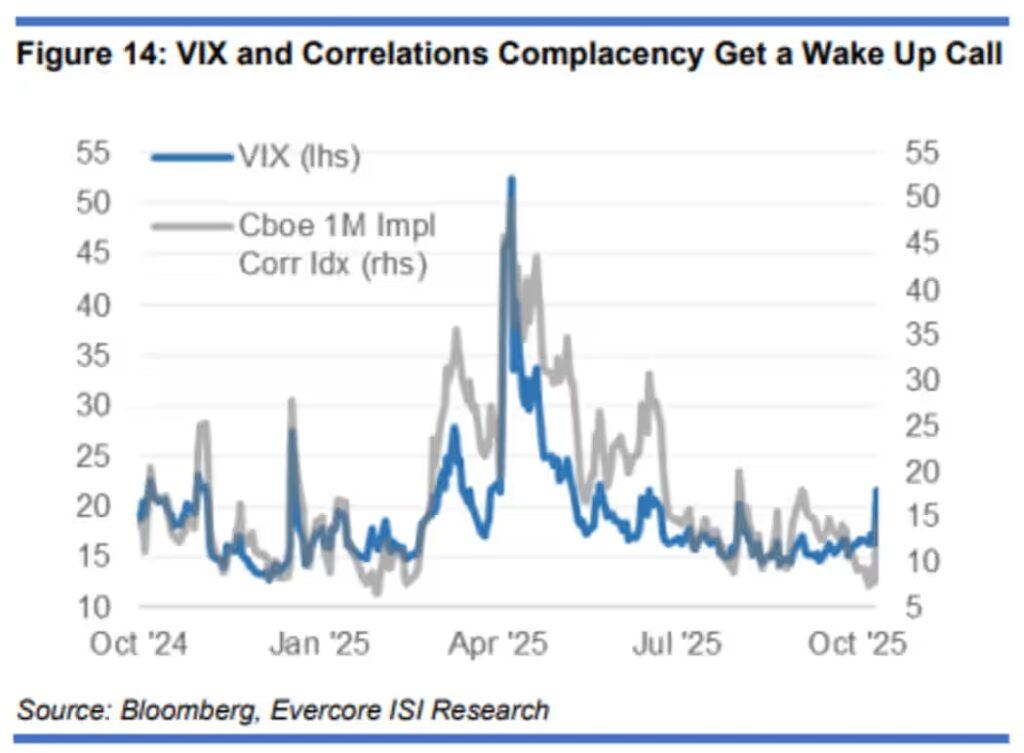
Stocks Are Priced for Perfection — and That’s a Risk Stock futures kicked off Monday trying to recover from Friday’s selloff, which was sparked after President Donald Trump reignited trade tensions with China. A quick follow-up post from Trump claiming the dispute “will all be fine” helped calm some nerves, triggering traders’ usual buy-the-dip reflex. Still, the episode served as a reminder of how fragile this market can be — and how easily optimism can crack. The Bar Is Set High for Earnings Season The bigger story, however, may be what’s ahead. The third-quarter earnings season starts Tuesday, and expectations are running hot. Julian Emanuel, chief equity and quantitative strategist at Evercore ISI, says investor sentiment is far more upbeat than in previous quarters. “In contrast to the first half of the year, S&P 500 earnings per share estimates have been revised materially higher ahead of 3Q,” Emanuel wrote in a note on Sunday. Consensus now sees S&P 500 EPS growth at 7.5%, Nasdaq-100 at 10.5%, and Russell 2000 at 19.5%. That optimism is being fueled by a resilient economy, the Fed’s ability to cut rates without panic, stronger capital markets, and ongoing enthusiasm around AI-driven investments. “All of these, plus a nearly 40% rally from April’s lows, have reignited corporate and investor ‘animal spirits,’” Emanuel said. Valuations Leave No Room for Error That optimism comes at a price. The S&P 500 now trades at 25.6 times trailing earnings — one of the highest levels outside the dot-com bubble. “Friday’s China-policy-driven selloff exposed complacency,” Emanuel noted. Low volatility and tight stock correlations show how confident investors have become — perhaps too confident — heading into October’s earnings rush. With both valuations and expectations running high, Emanuel warns that stock reactions to earnings could be “varied and violent,” just as they were last quarter. Volatility may keep rallies capped through the end of October unless there’s meaningful progress on the China front. The Potential Winners and Losers Evercore’s analysis divides companies into two camps: High Earnings Hurdlers — consistent performers with a strong record of beating estimates and reasonable valuations.Top picks include: High Earnings Stumblers — names that often miss estimates and trade at elevated valuations.Likely underperformers include: Bottom Line Stocks have rallied hard this year — maybe too hard. With earnings expectations and valuations both stretched, the market is priced for near-perfection. And in an environment this sensitive, even small disappointments can trigger outsized reactions. The bull run may still have legs, but investors would be wise to remember: perfection doesn’t last forever. John PaulJohn Paul is the founder of DayTradeToWin, a trading education and software company established in 2008, supporting traders worldwide. His expertise focuses on price action-based futures trading strategies and structured market analysis. DayTradeToWin delivers trading education, indicators, and software tools designed to help traders apply disciplined, rule-based decision-making across global futures markets. He is the creator of multiple trading methodologies, including the Sonic System, Atlas Line, and Trade Scalper, which help traders identify structured opportunities in markets such as the E-mini S&P 500 (ES), Nasdaq (NQ), crude oil (CL), and gold (GC). Official website: https://daytradetowin.com daytradetowin.com


market
Market News

Market Melt-Up or Meltdown? Bulls Bet Big Again

Bubble Talk Returns as Bulls Eye Another Big Run The market paused briefly after another record high this week — but bullish confidence is still running hot. Despite sky-high valuations, investors are betting that the upcoming third-quarter earnings season will justify their optimism. Even Washington’s political chaos isn’t shaking sentiment. Fundstrat’s Tom Lee says investors see through the U.S. government shutdown “noise,” expecting any slowdown to make the Federal Reserve more dovish. Add the typical year-end rally, as fund managers chase performance and load up on winning stocks, and the stage seems set for another leg higher. Lee still sees the S&P 500 reaching 7,000 by year-end. But a familiar warning is back: talk of a market melt-up. Billionaire trader Paul Tudor Jones compared today’s setup to late 1999, when the Nasdaq doubled in six months before the dotcom bubble burst. “All the ingredients are in place… you have to position yourself like it’s October 1999,” Jones told CNBC. That remark caught attention — especially from traders who believe they can ride the rally and get out before it pops. The Nasdaq is already up 19% this year. Yet Matthew Maley of Miller Tabak says investors shouldn’t expect a straight climb. “Even during that 1999 melt-up, the Nasdaq saw multiple 13–14% pullbacks before peaking,” he noted. Maley warns that similar volatility could strike again as earnings season heats up and fresh data flood in once the government reopens. His takeaway: even if Jones is right and another surge is coming, the ride could be far bumpier than most traders think. John PaulJohn Paul is the founder of DayTradeToWin, a trading education and software company established in 2008, supporting traders worldwide. His expertise focuses on price action-based futures trading strategies and structured market analysis. DayTradeToWin delivers trading education, indicators, and software tools designed to help traders apply disciplined, rule-based decision-making across global futures markets. He is the creator of multiple trading methodologies, including the Sonic System, Atlas Line, and Trade Scalper, which help traders identify structured opportunities in markets such as the E-mini S&P 500 (ES), Nasdaq (NQ), crude oil (CL), and gold (GC). Official website: https://daytradetowin.com daytradetowin.com
tesla
Market News

Tesla Bounces Back: Investors Bet on Robotaxi Future

Tesla Shares Rebound as Focus Shifts from Cars to Robotaxis and AI Tesla stock regained some lost ground Wednesday after a sharp drop on Tuesday, when investors were left underwhelmed by the company’s unveiling of cheaper Model 3 and Model Y trims — updates that fell short of the market’s hopes for entirely new models or deeper price cuts. The midweek rebound wasn’t just bargain hunters buying the dip. Wall Street’s focus on Tesla is increasingly shifting beyond electric vehicles toward its ambitions in autonomous driving, humanoid robots, and a future robotaxi network — ventures many see as the company’s next big profit drivers. Reinforcing that bullish narrative, Tesla rolled out a new Full Self-Driving (FSD) update promising “overall improvements” in smoothness and confidence. The update also introduced a new driving mode called “Sloth”, designed to operate more cautiously at lower speeds with gentler lane changes. Although Tesla still requires driver supervision when using FSD, the technology continues to draw both investor excitement and regulatory scrutiny. Critics argue the branding overstates the system’s current capabilities, but analysts remain optimistic about its long-term potential. Earlier this week, Stifel analysts raised their Tesla price target to $483 from $440, citing the company’s continued FSD progress and expanding robotaxi vision. They expect a U.S. launch of “Unsupervised FSD” — a fully autonomous version — could arrive as early as next year, though a mid-term timeline seems more realistic. Looking ahead, analysts see Tesla’s robotaxi network as a potential game-changer, one that could significantly boost revenue and reshape the company’s financial outlook by late 2026. Still, Tuesday’s event underscored Tesla’s balancing act — appealing to mainstream buyers with affordable EVs while convincing investors its true future lies in AI-driven mobility and robotics. John PaulJohn Paul is the founder of DayTradeToWin, a trading education and software company established in 2008, supporting traders worldwide. His expertise focuses on price action-based futures trading strategies and structured market analysis. DayTradeToWin delivers trading education, indicators, and software tools designed to help traders apply disciplined, rule-based decision-making across global futures markets. He is the creator of multiple trading methodologies, including the Sonic System, Atlas Line, and Trade Scalper, which help traders identify structured opportunities in markets such as the E-mini S&P 500 (ES), Nasdaq (NQ), crude oil (CL), and gold (GC). Official website: https://daytradetowin.com daytradetowin.com

AI
Market News

Goldman Warns: Competition Could Cool the AI Craze

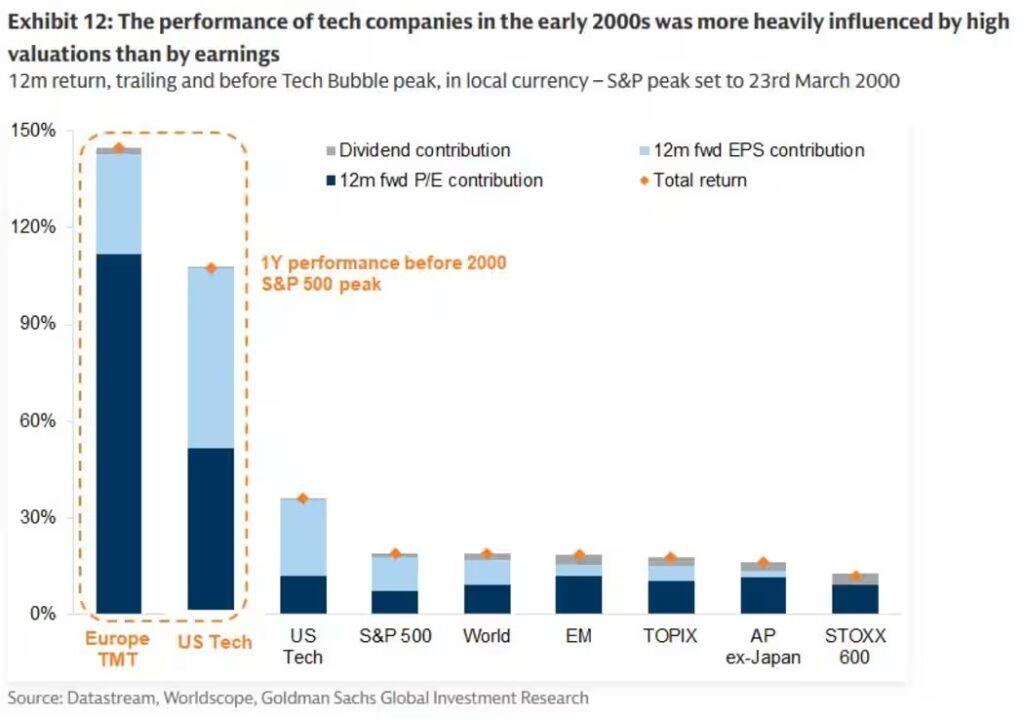
Competition Could Be the Biggest Threat to the AI Tech Boom Stocks are eyeing a rebound after Tuesday’s tech-driven selloff sparked by mounting concerns over AI spending — fears that even found their way into a recent Bank of England report. But is this the start of a bubble, or just another pause in a powerful rally? Goldman Sachs strategists don’t see a bursting bubble just yet. In a note led by chief global equity strategist Peter Oppenheimer, they argue that today’s AI boom differs sharply from past speculative frenzies. “Bubbles form when stock prices and valuations soar far beyond the future cash flows companies can realistically deliver,” Oppenheimer explained. “This time, much of the growth in leading tech names is grounded in strong fundamentals and real profit expansion — not hype.” Goldman points out several distinctions from the dot-com era: Still, the firm warns that competition could emerge as the biggest challenge to the AI narrative. “The AI space is currently dominated by a few incumbents,” Goldman noted. “But every major innovation cycle invites new players — just as none of the S&P 500’s top 10 companies from 1985 stayed in the top 10 by 2020.” That influx of competitors could reshape the sector, creating new winners while pressuring today’s leaders. Goldman advises investors to stay diversified, as the benefits of the AI revolution are spreading across industries — from capital goods and energy to real estate and transport — all supported by Big Tech’s infrastructure buildout and rising global capex spending. In short: while the AI boom isn’t a bubble yet, the real test will come when competition heats up and the market decides who the long-term winners truly are. John PaulJohn Paul is the founder of DayTradeToWin, a trading education and software company established in 2008, supporting traders worldwide. His expertise focuses on price action-based futures trading strategies and structured market analysis. DayTradeToWin delivers trading education, indicators, and software tools designed to help traders apply disciplined, rule-based decision-making across global futures markets. He is the creator of multiple trading methodologies, including the Sonic System, Atlas Line, and Trade Scalper, which help traders identify structured opportunities in markets such as the E-mini S&P 500 (ES), Nasdaq (NQ), crude oil (CL), and gold (GC). Official website: https://daytradetowin.com daytradetowin.com
amd
Market News

AMD x OpenAI: The Next AI Chip King?

Jefferies analysts have flipped bullish on Advanced Micro Devices (AMD) — upgrading the stock to buy after its sharp rally driven by a new partnership with ChatGPT creator OpenAI. The research note sounded almost like a mea culpa. “We rarely do this,” admitted analysts led by Blayne Curtis. “We raised estimates and our [price target] last week following positive server checks but couldn’t triangulate the AI ramp.” That ramp came into focus after OpenAI agreed to purchase up to 6 gigawatts of AMD chips, a move Jefferies says could generate well over $100 billion in revenue potential. AMD has said each gigawatt equates to “double-digit billions” in value. OpenAI’s buying spree doesn’t stop there — the company is also investing heavily in Nvidia, Oracle, Hynix, and Samsung, as it races to secure massive computing capacity for its growing AI infrastructure. “While none of these deals are binding, they highlight just how massive OpenAI’s AI compute ambitions have become,” Jefferies wrote. “This is a land grab — not just for GPUs, but for gigawatts of data center power. There’s still a lot to sort out, but what’s clear is that AI spending is accelerating from here.” Jefferies lifted its price target to $300 from $170, now the most optimistic on Wall Street, according to FactSet. Other analysts may soon have to follow suit: Goldman Sachs’s target remains at $150, while Deutsche Bank and Wedbush sit below AMD’s recent close of $203.71. AMD shares jumped 23.7%, a six-standard-deviation move, according to MarketWatch — its second-biggest percentage gain this year, narrowly trailing the 23.8% surge on April 9. John PaulJohn Paul is the founder of DayTradeToWin, a trading education and software company established in 2008, supporting traders worldwide. His expertise focuses on price action-based futures trading strategies and structured market analysis. DayTradeToWin delivers trading education, indicators, and software tools designed to help traders apply disciplined, rule-based decision-making across global futures markets. He is the creator of multiple trading methodologies, including the Sonic System, Atlas Line, and Trade Scalper, which help traders identify structured opportunities in markets such as the E-mini S&P 500 (ES), Nasdaq (NQ), crude oil (CL), and gold (GC). Official website: https://daytradetowin.com daytradetowin.com

dollar
Market News

⚖️ Is the Dollar Losing Power?

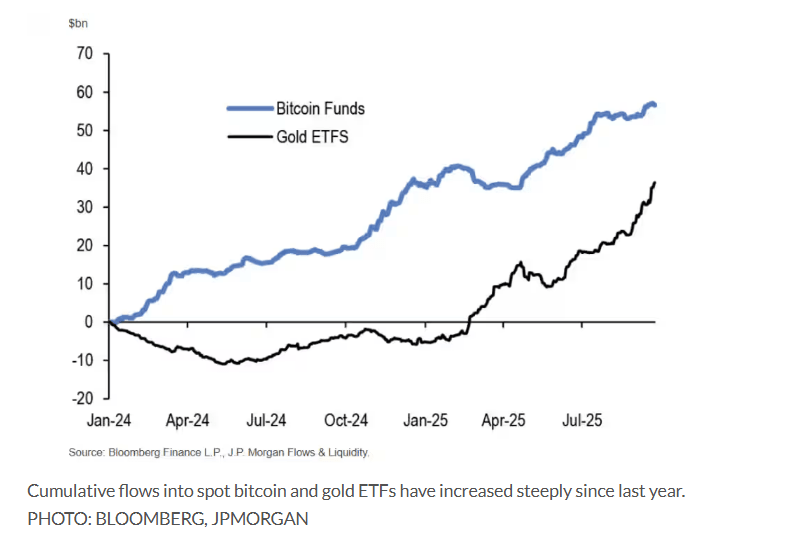
Dollar Weakness Fuels the “Debasement Trade” as Gold and Bitcoin Surge The “debasement trade” — a strategy embraced by investors to hedge against a weakening U.S. dollar — is accelerating as market uncertainty deepens during the federal government’s partial shutdown. The trade, which gained traction among retail investors ahead of the November 2024 presidential election, centers on diversifying away from fiat currencies like the dollar. With concerns over fiscal stability, inflation, and Federal Reserve independence, assets such as gold and bitcoin have become top picks for investors seeking safety. On Friday, gold for December delivery closed at a record $3,908.90 per ounce, marking its 41st record-high settlement this year. Over the weekend, bitcoin briefly surpassed $125,000, hitting a new all-time high. Meanwhile, the ICE U.S. Dollar Index (DXY) fell 0.1% on Friday and is down about 10% year-to-date, underscoring the greenback’s weakness. “The debasement trade has shown remarkable strength this year, with both gold and bitcoin delivering strong returns,” said Matt Stucky, chief portfolio manager at Northwestern Mutual Wealth Management. “Declining real interest rates and renewed rate cuts, even with elevated inflation, have helped drive this momentum.” Although past government shutdowns haven’t always triggered a rush into hard assets, the current environment of persistent deficits, fiscal dysfunction, and inflation uncertainty has made the narrative more compelling. According to J.P. Morgan strategists, the trend accelerated in the third quarter as retail investors increased their exposure to both gold and bitcoin ETFs. Institutional investors are now following suit, adding further momentum to the trade. At Citi, analyst Alex Saunders described bitcoin as “digital gold,” projecting a 12-month target of $181,000, citing steady inflows from investors. Still, not everyone is equally bullish on crypto. Komal Sri-Kumar, president of Sri-Kumar Global Strategies, prefers gold as a longer-term store of value, arguing that the metal’s centuries-old track record makes it more reliable. “You can’t hide in fiat currencies when all are being debased,” he said. “That makes gold particularly attractive. I expect it to climb above $4,000 before year-end.” Veteran fund manager Jeff Muhlenkamp of Muhlenkamp & Co. echoed those concerns, saying the U.S. faces deep structural issues tied to runaway deficits. His firm has increased its gold exposure to 18%, citing the growing gap between spending and GDP. “We’re running a deficit equal to 6% of GDP,” Muhlenkamp said. “That’s not sustainable. The problem is getting worse, not better.” As fiscal pressures mount and confidence in fiat currencies wanes, the debasement trade — once a niche hedge — is fast becoming one of 2025’s defining investment themes. John PaulJohn Paul is the founder of DayTradeToWin, a trading education and software company established in 2008, supporting traders worldwide. His expertise focuses on price action-based futures trading strategies and structured market analysis. DayTradeToWin delivers trading education, indicators, and software tools designed to help traders apply disciplined, rule-based decision-making across global futures markets. He is the creator of multiple trading methodologies, including the Sonic System, Atlas Line, and Trade Scalper, which help traders identify structured opportunities in markets such as the E-mini S&P 500 (ES), Nasdaq (NQ), crude oil (CL), and gold (GC). Official website: https://daytradetowin.com daytradetowin.com

Scroll to Top