
stock market

Market News

Goldman Sachs Raises S&P 500 Target to 5,200: Big Tech Takes the Lead

Goldman Sachs has raised its year-end S&P 500 target to 5,200 ahead of Nvidia Corp.’s pivotal earnings this week. The forecast largely relies on the sustained profitability of Big Tech. According to David Kostin, chief U.S. equity strategist at Goldman Sachs, the upgraded 2024 EPS forecast of $241 (8% growth) exceeds the median top-down strategist forecast of $235 (6% growth). This reflects expectations for robust economic growth and increased profits in the Information Technology and Communication Services sectors, which encompass five of the ‘Magnificent 7’ stocks. Goldman Sachs aligns with other optimistic forecasters like Oppenheimer’s John Stoltzfus and Fundstrat’s Tom Lee, who also anticipate a 5,200 finish for the S&P 500. This follows Goldman’s previous adjustment from 4,700 to 5,100 in late December, alongside similar moves from RBC Capital and UBS earlier this year. The upbeat economic forecast stems from Goldman’s economists revising their 2024 real U.S. GDP growth forecast to 2.4%, fueled by robust consumer spending and residential investment. However, the bank emphasizes that the outlook heavily depends on the performance of Big Tech. Analysts highlight Nvidia’s upcoming earnings as a significant market event, with expectations for over a 700% surge in earnings per share compared to the same quarter last year. The company’s performance is seen as pivotal for overall market sentiment. Goldman Sachs anticipates that the Information Technology and Communications Services sectors, which include five of the Magnificent 7 (Meta, Microsoft, Apple, Alphabet, and Nvidia), will lead in earnings growth within the S&P 500 this year, while the rest of the index may see more modest improvements. The bank notes that the strength of Big Tech has also influenced upward revisions in earnings estimates among its peers, with Magnificent 7 earnings estimates and margins forecasts surpassing those of other stocks. While Goldman Sachs acknowledges potential upside risks from stronger-than-expected U.S. growth or positive surprises from major companies, it also warns of downside risks from disappointing macroeconomic growth or underperformance from key stocks. Additionally, any acceleration in input cost inflation could dampen the outlook for profit margins and overall corporate earnings growth. John PaulJohn Paul is the founder of DayTradeToWin, a trading education and software company established in 2008, supporting traders worldwide. His expertise focuses on price action-based futures trading strategies and structured market analysis. DayTradeToWin delivers trading education, indicators, and software tools designed to help traders apply disciplined, rule-based decision-making across global futures markets. He is the creator of multiple trading methodologies, including the Sonic System, Atlas Line, and Trade Scalper, which help traders identify structured opportunities in markets such as the E-mini S&P 500 (ES), Nasdaq (NQ), crude oil (CL), and gold (GC). Official website: https://daytradetowin.com daytradetowin.com

Market News

Inflation Impact: How the Stock Market Rebounded and What Investors Should Consider

The strategist emphasizes that whether the economy avoids recession holds greater importance than the number of rate cuts. Recent market fluctuations, characterized by sharp declines followed by rapid rebounds, prompt analysis into the underlying drivers of the ongoing bull market, which has propelled the S&P 500 and Dow industrials to multiple record highs in 2024. The situation unfolded when Tuesday’s release of the January consumer-price index surpassed expectations, causing a reevaluation of forecasts for potential Federal Reserve rate cuts, possibly up to six quarter-point reductions starting as early as March or May. However, over the subsequent two days, stocks largely recovered from their losses, with the S&P 500 closing Thursday at its 11th record high of the year. According to Tim Hayes, chief global investment strategist at Ned Davis Research, the delay in rate cuts doesn’t signal disaster as initially feared. He distinguishes between doubts about the timing of positive events, such as rate cuts, and concerns about negative developments like resurgent inflation or economic contraction. While Tuesday saw significant market declines, with the Dow dropping over 500 points and the S&P 500 and Nasdaq also experiencing losses, the following two days witnessed rebounds. Thursday’s gains were partly attributed to a weaker-than-anticipated January retail sales report, which alleviated concerns about a potential resurgence of inflation driven by a surging economy. However, Friday brought another inflationary jolt with a hotter-than-expected reading from the January producer-price index, resulting in slight market retreats for the week. Chris Zaccarelli, chief investment officer at the Independent Investor Alliance, emphasizes that the investment outlook hinges on maintaining economic expansion without slipping into recession, rather than the exact number of Fed rate cuts. The recent volatility in response to economic data underscores the cautious market sentiment, with uncertainty prevailing until further data releases establish a clearer trend. Mark Arbeter, president of Arbeter Investments, expresses frustration at the market’s tendency for short-lived declines followed by swift recoveries, signaling a persistent upward trend. While technical indicators suggest a potential downside correction, major indexes remain in uptrends, with specific support levels providing guidance for potential future movements. John PaulJohn Paul is the founder of DayTradeToWin, a trading education and software company established in 2008, supporting traders worldwide. His expertise focuses on price action-based futures trading strategies and structured market analysis. DayTradeToWin delivers trading education, indicators, and software tools designed to help traders apply disciplined, rule-based decision-making across global futures markets. He is the creator of multiple trading methodologies, including the Sonic System, Atlas Line, and Trade Scalper, which help traders identify structured opportunities in markets such as the E-mini S&P 500 (ES), Nasdaq (NQ), crude oil (CL), and gold (GC). Official website: https://daytradetowin.com daytradetowin.com

Market News

S&P 500 Set to Surge: Producer Prices and Sentiment Data in Focus

Futures indicate the S&P 500 could hit another record high by Friday’s close, driven by the tech sector’s potential for a third straight day of gains and anticipation of fresh economic data. Here’s a snapshot of current stock-index futures: On Thursday, the S&P 500 surpassed its previous record close, reaching 5,029.73. The Dow Jones Industrial Average rose to 38,773.12, and the Nasdaq Composite climbed to 15,906.17. Market drivers: Thursday’s record-setting performance by the S&P 500 coincided with mixed manufacturing data and a notable drop in January retail sales, easing concerns about potential Federal Reserve interest rate adjustments following recent inflation reports. According to Ipek Ozkardeskaya, senior analyst at Swissquote Bank, the significance of economic data is waning as investors maintain a positive outlook, seemingly unaffected by the numbers. She attributes this optimism to the promise of rate cuts. Investors are gearing up for a busy day of data releases, including January housing starts and the producer price index, both expected at 8:30 a.m. Additionally, the University of Michigan preliminary consumer sentiment survey for February is due at 10 a.m. Federal Reserve Vice Chair for Supervision, Michael Barr, is scheduled to speak at 9:10 a.m., followed by San Francisco President Mary Daly at 12:10 p.m. Technology stocks are leading the way on Friday, with the Nasdaq poised for a third consecutive day of gains, despite being down 0.5% for the week as of Thursday’s close. Applied Materials Inc. (AMAT) surged 13% in premarket trading following upbeat results and guidance. Tesla Inc. (TSLA) rose 2% in premarket trade, while Nvidia Corp. (NVDA) saw a 1.5% increase. Nvidia is expected to report fourth-quarter results next week. John PaulJohn Paul is the founder of DayTradeToWin, a trading education and software company established in 2008, supporting traders worldwide. His expertise focuses on price action-based futures trading strategies and structured market analysis. DayTradeToWin delivers trading education, indicators, and software tools designed to help traders apply disciplined, rule-based decision-making across global futures markets. He is the creator of multiple trading methodologies, including the Sonic System, Atlas Line, and Trade Scalper, which help traders identify structured opportunities in markets such as the E-mini S&P 500 (ES), Nasdaq (NQ), crude oil (CL), and gold (GC). Official website: https://daytradetowin.com daytradetowin.com
Market News

The S&P 500 Pathway: Anticipating Market Rally Pre-Fed Rate Cut

Wednesday witnessed a relaxation in the VIX, commonly referred to as the stock market’s ‘fear gauge,’ following its surge on Tuesday in response to higher-than-expected inflation figures. Despite this spike in volatility, U.S. stocks might maintain their upward momentum before the Federal Reserve’s anticipated initial interest rate cut, according to research from DataTrek. Although the S&P 500 experienced a significant 1.4% decline on Tuesday, marking its most substantial drop since January 31, it remains in positive territory for the year and since the Fed’s last rate hike in July, as per FactSet. The index, which tracks the performance of large-cap U.S. stocks, showed signs of recovery on Wednesday afternoon with around a 0.6% increase. Since the Fed’s July rate hike, the S&P 500 has surged by 8.5%, aligning with historical patterns of post-rate-hike rallies, as noted by Jessica Rabe, co-founder of DataTrek. Rabe’s analysis suggests further potential gains for the S&P 500, citing historical data that indicates an average increase of 28% in the year following a rate-hike cycle cessation, except for the period after the dot-com bubble burst in 2000. Despite these positive indicators, Rabe cautions that the Fed has not yet initiated a rate-cut cycle, primarily due to a robust U.S. labor market and persistent inflationary pressures, as highlighted in Tuesday’s consumer-price index report. The surge in U.S. stock market volatility on Tuesday, prompted by the CPI inflation report, saw the CBOE Volatility Index (VIX) spiking to nearly 18 during intraday trading, although remaining below its long-term average of 20, according to Nicholas Colas, co-founder of DataTrek. Colas emphasizes that even with the VIX hovering around 17, the market still reflects a bullish sentiment rather than a bearish one. Following Tuesday’s inflation report, Treasury yields surged, leading to a sell-off in stocks. The 10-year Treasury note yield rose to 4.315%, its highest level since late November, while the 2-year Treasury yield reached 4.654%, the highest since mid-December. Investor expectations for Fed rate cuts this year have moderated, with Fed-funds futures now suggesting approximately four rate reductions based on 25-basis-point cuts, and potential rate decreases starting as early as June. Despite the optimism, historical trends suggest that while U.S. equities may receive an initial boost from the Fed’s first rate cut, sustained gains are not guaranteed, especially given the prevailing macroeconomic and geopolitical landscape. Nonetheless, the S&P 500 has shown resilience, posting gains both this year and in the previous year, underscoring a continued bullish outlook for U.S. large-cap stocks. John PaulJohn Paul is the founder of DayTradeToWin, a trading education and software company established in 2008, supporting traders worldwide. His expertise focuses on price action-based futures trading strategies and structured market analysis. DayTradeToWin delivers trading education, indicators, and software tools designed to help traders apply disciplined, rule-based decision-making across global futures markets. He is the creator of multiple trading methodologies, including the Sonic System, Atlas Line, and Trade Scalper, which help traders identify structured opportunities in markets such as the E-mini S&P 500 (ES), Nasdaq (NQ), crude oil (CL), and gold (GC). Official website: https://daytradetowin.com daytradetowin.com

Market News

Riding the Bull: How Sideline Cash Reserves Signal Continued Stock Market Growth

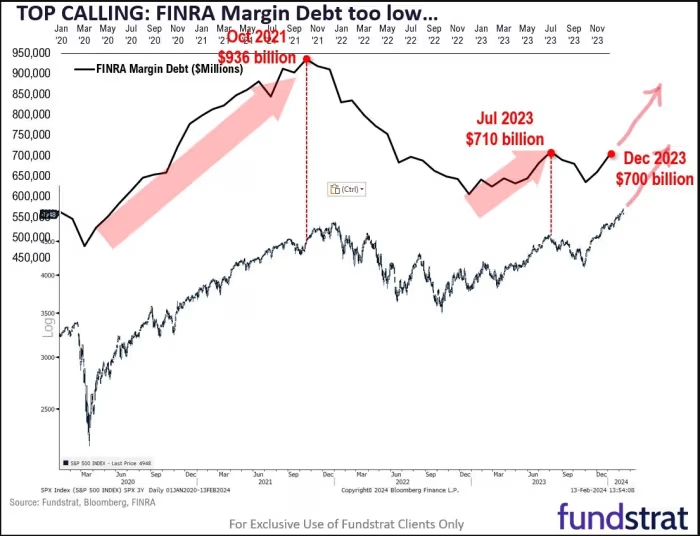
The stock market saw a sharp downturn just before Valentine’s Day, leading some to question if it was an overreaction. However, indications from stock futures suggest that bargain hunters are already on the lookout. Chris Weston, head of research at Pepperstone, explains that the market was caught off guard, lacking adequate safeguards and being overly optimistic about risk. He notes the frustration among those betting against risk, as such sell-offs often lack sustained momentum. Additionally, the Federal Reserve’s preferred inflation data is yet to be released, scheduled for February 29. Tom Lee, head of research at Fundstrat and a notable bullish figure on Wall Street, describes Tuesday’s stock plunge as an overreaction, predicting that it won’t gain traction. Lee, who accurately turned bullish in 2023 when others were bearish, believes this downturn will be temporary, though he warns investors to brace for a challenging first half of the year. Lee’s optimism is supported by several factors. Firstly, he observes that markets typically don’t falter on positive news, as was the case with Tuesday’s Consumer Price Index (CPI) data. He also notes that despite inflation concerns, the downward trend hasn’t halted. Secondly, Lee points to ample “dry powder” on the sidelines, suggesting that buying power has yet to peak. He compares the current level of NYSE margin debt to previous market tops, indicating room for further borrowing before a downturn. Furthermore, the presence of significant cash reserves, as mentioned by a BlackRock executive in November, supports the notion that the market hasn’t reached its zenith. Lee emphasizes that skepticism remains prevalent, which typically doesn’t coincide with a market peak. Lee anticipates that a significant macroeconomic event triggering a stock sell-off could signal the peak. In the meantime, he advises investors to focus on small-cap stocks, particularly through the iShares Russell 2000 ETF, which he believes will rebound as the market stabilizes. The Russell 2000 index suffered the most on Tuesday, experiencing its largest single-day decline since June 2022, yet Lee remains optimistic about its prospects once the market regains its footing. John PaulJohn Paul is the founder of DayTradeToWin, a trading education and software company established in 2008, supporting traders worldwide. His expertise focuses on price action-based futures trading strategies and structured market analysis. DayTradeToWin delivers trading education, indicators, and software tools designed to help traders apply disciplined, rule-based decision-making across global futures markets. He is the creator of multiple trading methodologies, including the Sonic System, Atlas Line, and Trade Scalper, which help traders identify structured opportunities in markets such as the E-mini S&P 500 (ES), Nasdaq (NQ), crude oil (CL), and gold (GC). Official website: https://daytradetowin.com daytradetowin.com

Market News

Insights from a Former Hedge Fund Star: The Next Bear Market Signal

What hangs in the balance with the release of Tuesday’s CPI data? Many in the financial world are expecting a decrease in inflation, but if the numbers surpass expectations, it could dampen hopes for a rate cut in May, potentially affecting the S&P 500’s climb towards 5,000, warn some analysts. Despite this, given Nvidia’s impressive 47% increase this year and the frenzy surrounding AI companies like ARM, it appears prudent to refrain from opposing the momentum, at least for now. Indeed, the latest fund manager survey from Bank of America shows continued enthusiasm for tech stocks. So, what might eventually trigger a downturn in this market? Former hedge-fund manager Russell Clark suggests looking to Japan, where loose monetary policy persists as a significant factor. Clark, despite stepping away from his consistently bearish RC Global Fund in 2021 after a decade of misjudgments on stock markets, presents a compelling argument regarding Japan’s importance. In his recent Substack post, Clark argues that the true catalyst for a bear market could arise when the Bank of Japan ends quantitative easing. He suggests that we’re in a “pro-labor world,” where certain economic trends should be emerging: increasing wages, declining unemployment, and interest rates trending higher than anticipated. In line with his analysis, real assets began surging in late 2023 as the Fed adopted a dovish stance and the yield curve steepened. However, subsequent events haven’t unfolded as expected. While Clark anticipated that higher short-term rates would divert money from speculative assets, funds instead flowed into cryptocurrencies like Tether, and the Nasdaq fully recovered from its 2022 decline. Returning to Japan, Clark offers a less conventional explanation for the resilience of financial and speculative assets. He points out that during the 1990s, despite the Fed maintaining high interest rates, the dot-com bubble thrived. However, the bubble eventually burst when the Bank of Japan raised rates in 1999. Similarly, Japan’s attempt to raise rates in 1996 is associated with the Asian Financial Crisis. According to Clark’s analysis, it seems that markets are more sensitive to the Bank of Japan’s balance sheet than to the Fed’s policies. He argues that the BOJ’s introduction of quantitative easing in the early 2000s preceded the subprime crisis, which erupted shortly after the BOJ withdrew liquidity from the market in 2006. In summary, Clark suggests that the Bank of Japan is the central bank that truly matters and that a bearish stance on the U.S. might be warranted when the BOJ raises interest rates. He closely monitors the BOJ’s actions as they could signal impending market shifts. John PaulJohn Paul is the founder of DayTradeToWin, a trading education and software company established in 2008, supporting traders worldwide. His expertise focuses on price action-based futures trading strategies and structured market analysis. DayTradeToWin delivers trading education, indicators, and software tools designed to help traders apply disciplined, rule-based decision-making across global futures markets. He is the creator of multiple trading methodologies, including the Sonic System, Atlas Line, and Trade Scalper, which help traders identify structured opportunities in markets such as the E-mini S&P 500 (ES), Nasdaq (NQ), crude oil (CL), and gold (GC). Official website: https://daytradetowin.com daytradetowin.com

Scroll to Top