

stock market

DayTradeToWin Review

Investment Insights: Was the Midweek Dip a Brief Setback or the Start of a Larger Shift?

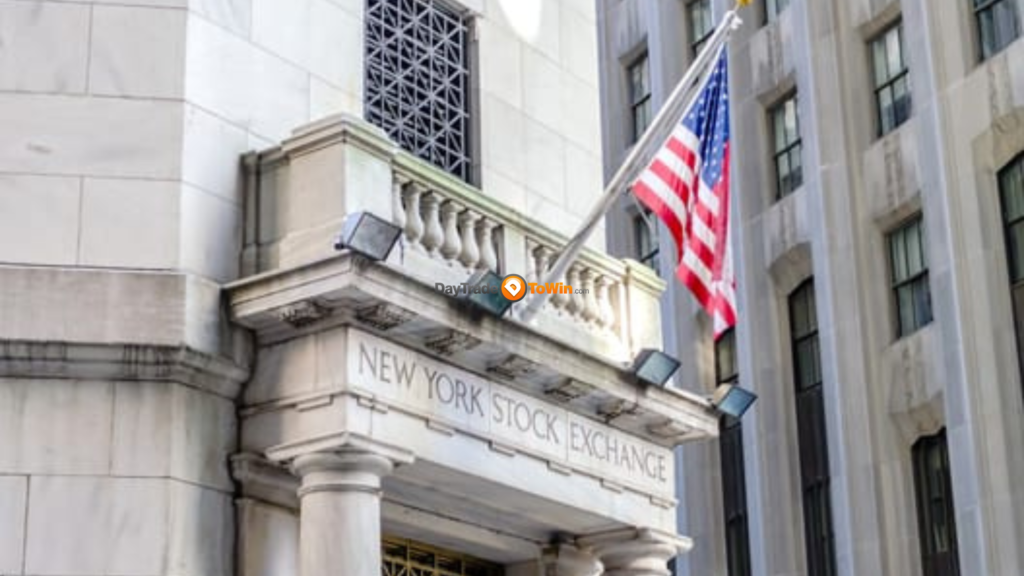
U.S. stocks were facing the potential for a technical pullback following a swift rally from October lows. However, the sudden downturn on Wall Street this Wednesday has led traders and analysts to consider whether more challenges lie ahead. Examining numerous charts, Mark Arbeter, President of Arbeter Investments and a technical analyst, remarked, “Some Technology stocks are extremely extended, and many of the laggards from 2023 have also shown significant extensions after substantial recoveries. This leaves few appealing charts, at least in the short term,” as noted in a Thursday communication. Arbeter added, “So, this was either a one-day wonder or the start of a decent pullback.” On Wednesday, the Dow Jones Industrial Average (DJIA) experienced a substantial drop of 475.92 points, or 1.3%, marking its most significant one-day percentage decline since October 3. This ended a five-day streak of record highs. The S&P 500 (SPX), which had approached its January 3, 2022, record close, retreated 1.5%, closing just below 4,700—the most substantial percentage decline since September 26. Simultaneously, the Nasdaq Composite (COMP) saw a 1.5% drop, the largest since October 26. Despite a partial recovery in all three major indexes on Thursday, Arbeter identified trendline support for the S&P 500 at 4,675, with the rising 21-day exponential moving average at 4,621. Stressing the significance of 4,600 as a crucial chart support level, he noted it marked the beginning of the last upside breakout. Both the Dow and Nasdaq had rallied for nine consecutive days before Wednesday’s setback. While the surge had rendered major indexes considerably overbought based on technical indicators, Arbeter noted that not all signs were pointing downward. Although price momentum and market breadth were extremely overbought, the absence of daily bearish momentum divergences and the continuation of strong breadth offered some positive indicators. Arbeter highlighted that the percentage of S&P 500 stocks above their 50-day moving average had spiked to 91%, while the Nasdaq-100-tracking Invesco Trust QQQ Series ETF (QQQ) recorded a 95% reading on December 19. Referring to historical data since the end of 2001, Arbeter mentioned that such “breadth thrusts” typically occur in the early or middle stages of a bull market, with a cautionary note on the exceptions in October 2007 and January 2018. Despite the likelihood of a near-term pullback, Arbeter expressed optimism about the bull market’s potential to continue based on price and breadth indicators. John PaulJohn Paul is the founder of DayTradeToWin, a trading education and software company established in 2008, supporting traders worldwide. His expertise focuses on price action-based futures trading strategies and structured market analysis. DayTradeToWin delivers trading education, indicators, and software tools designed to help traders apply disciplined, rule-based decision-making across global futures markets. He is the creator of multiple trading methodologies, including the Sonic System, Atlas Line, and Trade Scalper, which help traders identify structured opportunities in markets such as the E-mini S&P 500 (ES), Nasdaq (NQ), crude oil (CL), and gold (GC). Official website: https://daytradetowin.com daytradetowin.com

Market News

Top S&P 500 Target Strategist Advises: Time to Secure Profits

The stock market‘s streak of nine consecutive days of gains abruptly halted on Wednesday, just before the holiday break. The prevailing speculation attributes this interruption to the excessive bullish momentum driven by the recent pivot of the Federal Reserve, coupled with uncertainty surrounding the anticipated number of interest rate cuts in the coming year. While there was a slight improvement in market sentiment on Thursday, indicated by stock futures, caution remains a key recommendation from Ed Yardeni, the chief investment strategist at Yardeni Research. In an update to clients, Yardeni questions the prevailing optimism and underscores the necessity for a correction in response to the market’s overbought status. Despite his earlier forecast that the S&P 500 could reach 6,000 within two years, Yardeni maintains a year-end target of 4,600. He points to potential triggers for the recent market selloff, highlighting the escalating regional tensions in the Israel-Gaza conflict. The U.S.-led security operation in the Red Sea involving other nations is seen by Yardeni as a legitimate reason for profit-taking amid rising risks in the Middle East. Yardeni references bullish sentiment from recent surveys, such as the Investors Intelligence Bull/Bear Ratio and the American Association of Individual Investors. Additionally, he notes the CBOE equity put-call ratio falling to 0.61 on Wednesday, a potential sign of an overheated market. Yardeni also acknowledges concerns about the selloff being attributed to the surge in trading volumes of put options with short expirations (0DTEs), a risky derivative gaining popularity. Furthermore, Yardeni points out that crude oil prices failed to respond positively to Middle East tensions due to a weak global economy and record-high U.S. crude oil production. Despite heightened geopolitical risks, Yardeni closely monitors Brent crude prices for potential disruptions caused by the Israel-Gaza conflict. Yardeni issues a warning about potential economic risks arising from Houthi attacks and the escalating insurance shipping costs, which could impact global trade routes. He draws parallels to the Suez Canal blockage in 2021 and acknowledges analysts’ concerns about inflation linked to the current geopolitical situation. Looking ahead, Yardeni predicts a S&P 500 target of 5,400 for 2024, the highest among Wall Street strategists. John PaulJohn Paul is the founder of DayTradeToWin, a trading education and software company established in 2008, supporting traders worldwide. His expertise focuses on price action-based futures trading strategies and structured market analysis. DayTradeToWin delivers trading education, indicators, and software tools designed to help traders apply disciplined, rule-based decision-making across global futures markets. He is the creator of multiple trading methodologies, including the Sonic System, Atlas Line, and Trade Scalper, which help traders identify structured opportunities in markets such as the E-mini S&P 500 (ES), Nasdaq (NQ), crude oil (CL), and gold (GC). Official website: https://daytradetowin.com daytradetowin.com

Market News

Red Sea Shipping Incidents Shake Financial Markets with Inflation Apprehensions

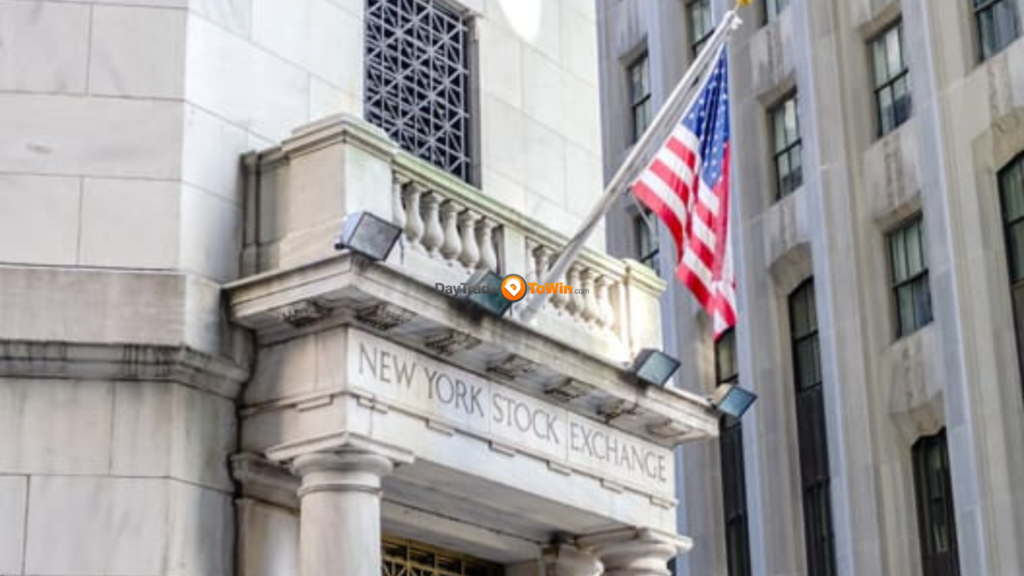
Recent attacks on commercial shipping in the Red Sea are raising broader concerns about the potential resurgence of inflation, especially in Europe, posing a threat to the central narrative in the financial markets for the new year. This narrative gained traction after the Federal Reserve’s recent shift towards a more dovish stance, continuing to unfold on Tuesday, indicating that inflation is expected to ease enough to prompt a series of interest-rate cuts in 2024. Financial markets positioned themselves for this optimistic scenario in various ways: Treasury yields mostly decreased, traders maintained expectations for five to seven quarter-point rate cuts in the U.S. next year, and stocks closed higher, with the S&P 500 SPX just falling short of breaking a record set in January 2022. The developments in the Red Sea prompted the U.S. to announce a new international effort to counter the attacks on Monday, causing oil prices CL.1, +1.26% CLG24, +1.26% to rise for a second consecutive day on Tuesday as shipping companies rerouted their cargoes. Investors were reminded of the world’s heavy reliance on what Deutsche Bank strategists have termed a network of invisible connections spanning seas, skies, and land. Derek Tang, an economist at Monetary Policy Analytics in Washington, noted that the Red Sea events primarily impact Europe, but if they persist over a three- to six-month period, the U.S. could also be affected, triggering a domino effect on various fronts. BMO Capital Markets strategists Ian Lyngen and Ben Jeffery emphasized that “further disruptions in the Red Sea or any other major channels of commerce present potential upside inflationary impulses,” complicating efforts to keep the 10-year Treasury yield BX:TMUBMUSD10Y below 4%. Investors face significant implications, including the potential need to recalibrate their inflation outlook and expectations for lower interest rates in the coming year. Despite a decline from the peak of 9.1% in June 2022, inflation has consistently remained above the Fed’s 2% target. If inflation is perceived to resurface, akin to the period between 1966-1982, market-implied rates may rise, leading policymakers to reconsider recent plans to refrain from further rate hikes. Fed Gov. Chris Waller even flagged the possibility of the U.S. central bank cutting borrowing costs simply due to falling inflation, irrespective of economic growth. Macro strategist Will Compernolle of FHN Financial in New York highlighted that the recent Fed pivot was driven by sustained improvement in inflation, and markets may have prematurely embraced the significant narrative shift. The potential return of inflation could also influence investors’ decisions regarding the nearly $6 trillion cash pile in money-market accounts. Debates are ongoing about whether a portion of this pile will remain, flow back into stocks, or return to bond funds, depending on whether the Fed cuts rates or maintains them at a 22-year high of between 5.25%-5.5%. On Tuesday, the Treasury market remained relatively stable, with the benchmark 10-year yield BX:TMUBMUSD10Y finishing at 3.921%, the lowest level since July 26. Meanwhile, stocks rallied, with the Dow Jones Industrial Average DJIA and Nasdaq Composite COMP both gaining almost 0.7%. Bank of America’s latest survey of sentiment among global fund managers indicated that one of the major perceived risks is the potential for high inflation, compelling central banks to keep interest rates elevated. John PaulJohn Paul is the founder of DayTradeToWin, a trading education and software company established in 2008, supporting traders worldwide. His expertise focuses on price action-based futures trading strategies and structured market analysis. DayTradeToWin delivers trading education, indicators, and software tools designed to help traders apply disciplined, rule-based decision-making across global futures markets. He is the creator of multiple trading methodologies, including the Sonic System, Atlas Line, and Trade Scalper, which help traders identify structured opportunities in markets such as the E-mini S&P 500 (ES), Nasdaq (NQ), crude oil (CL), and gold (GC). Official website: https://daytradetowin.com daytradetowin.com
Market News

S&P 500’s Last Stand in 2023: Bearish ‘Doji’ Sparks Battle Between Bulls and Bears

A pair of ‘doji’ formations has surfaced on the S&P 500’s candlestick charts, indicating the potential for a significant market move, although the direction remains uncertain. Despite a notable surge, signs of bearish sentiment are emerging in a key U.S. index. The S&P 500 is poised within 2% of its previous record high from January 3, 2022, while the Dow Jones Industrial Average has secured three consecutive all-time highs and is eyeing a fourth on Monday. Nevertheless, a time-honored charting technique has unveiled a cautionary signal, hinting at a possible reversal in the prevailing bullish trend in the widely monitored stock-market index. Following a robust post-Federal Reserve meeting rally, the S&P 500 displayed a classic doji chart on Thursday, followed by a less conventional doji formation on Friday. In the realm of candlestick charts, the “doji” pattern, originating from Japan over 200 years ago, is interpreted by market analysts as a potential harbinger of future market movements based on investor psychology. Dojis, characterized by their thin bodies reflecting closely aligned opening and closing prices, along with equal-length vertical lines or “wicks,” denote the day’s trading range. Drawing parallels to a frozen ball midair before descending after being thrown upward, MarketWatch‘s Tomi Kilgore underscores the significance of doji patterns, particularly after substantial gains like the S&P 500’s 1.4% rise on Wednesday and the Dow Jones breaching 37,000 for the first time. The importance of the doji lies in its capacity to assist in gauging whether an asset has reached its peak, signaling a potential reversal of gains, or if there is still room for growth. Steve Nison, credited with introducing candlestick charts to the West, emphasizes that a doji in an extended rally indicates buyer indecision and potential for a reversal. However, it is essential to underscore that a doji does not guarantee a reversal in momentum but rather provides insights into market psychology. In the view of Vladimir Ribakov, writing for TradingBud, the doji pattern signifies a temporary equilibrium of power between buyers and sellers before an impending significant move. The occurrence of two consecutive dojis, observed in the S&P 500 on Thursday and Friday, heightens the probability of a substantial move in either direction. Ribakov suggests a powerful move may follow, leaving the outcome uncertain between bullish and bearish forces. Market optimism stems from investor expectations that the Federal Reserve will not only cease interest rate hikes but also implement significant rate cuts, potentially lowering benchmark rates from the current 5.25%-5.5%. The Fed’s dot plot anticipates approximately three rate reductions, implying at least a 0.75% cut. While the Fed’s shift from rate hikes has led to decreased yields for benchmark bonds, reducing overall borrowing costs, the battle between stock bulls and bears hinges on the success of the Fed’s soft landing attempt in 2024. Although the odds seem favorable, the prospect of multiple rate cuts raises concerns about the economy’s stability in the coming year. John PaulJohn Paul is the founder of DayTradeToWin, a trading education and software company established in 2008, supporting traders worldwide. His expertise focuses on price action-based futures trading strategies and structured market analysis. DayTradeToWin delivers trading education, indicators, and software tools designed to help traders apply disciplined, rule-based decision-making across global futures markets. He is the creator of multiple trading methodologies, including the Sonic System, Atlas Line, and Trade Scalper, which help traders identify structured opportunities in markets such as the E-mini S&P 500 (ES), Nasdaq (NQ), crude oil (CL), and gold (GC). Official website: https://daytradetowin.com daytradetowin.com

Market News

S&P 500 Futures Approach 2023 Highs as Last Full Week Unfolds

On Monday, U.S. stock futures flirted with reaching their peak for the year, buoyed by benchmark borrowing costs lingering near their summer lows. Here’s a snapshot of how stock-index futures are performing: In the previous session, the Dow Jones Industrial Average rose by 57 points, or 0.15%, to 37305, the S&P 500 remained unchanged at 4719, and the Nasdaq Composite gained 52 points, or 0.35%, reaching 14814. Driving market trends: Stock-index futures are displaying modest strength as the final full trading week of the year commences, with the S&P 500 hovering near its highest level in nearly two years and within 2% of its record high. The equity benchmark has sustained a seven-week winning streak, marking its most robust run in six years, with a 14.6% gain amid optimism that the Federal Reserve will initiate interest rate cuts next year. The 10-year Treasury yield (BX:TMUBMUSD10Y), which surpassed 5% in October, is presently around 3.9%, reflecting a recent decline following the Fed’s indication of a more dovish monetary policy last week. However, early Monday trading in stock futures and bonds demonstrated less enthusiasm following recent statements from Fed officials, including New York Federal Reserve Bank President John Williams and Chicago Fed President Austan Goolsbee, tempering expectations of imminent rate cuts. Stephen Innes, managing partner at SPI Asset Management, remarked, “The surge in risk appetite, fueled by the U.S. Federal Reserve’s recent stance, has paused as [S&P 500] bulls are likely catching their breath at the open.” Innes added, “Despite some pushback from Fed officials, interest rate futures markets are still currently pricing 150 basis points of rate cuts from the Federal Reserve next year. So, the recent decline in bond yields and the dollar is expected to underpin risk assets throughout the week.” Remaining optimistic, Tom Lee, head of research at Fundstrat, anticipates support for stocks from fund managers who, until recently, had defensively positioned themselves due to macroeconomic concerns. Lee foresees performance chasing into year-end, coupled with retail investors withdrawing $240 billion from ETF and mutual funds, contributing to the underlying demand for equities. Economic updates expected on Monday include the release of the homebuilder confidence index for December at 10 a.m. Eastern. John PaulJohn Paul is the founder of DayTradeToWin, a trading education and software company established in 2008, supporting traders worldwide. His expertise focuses on price action-based futures trading strategies and structured market analysis. DayTradeToWin delivers trading education, indicators, and software tools designed to help traders apply disciplined, rule-based decision-making across global futures markets. He is the creator of multiple trading methodologies, including the Sonic System, Atlas Line, and Trade Scalper, which help traders identify structured opportunities in markets such as the E-mini S&P 500 (ES), Nasdaq (NQ), crude oil (CL), and gold (GC). Official website: https://daytradetowin.com daytradetowin.com

Market News

S&P 500 Shines: Clocks Longest Weekly Winning Streak in Six Years

U.S. stock markets capped off their seventh consecutive week of gains as they closed mostly higher on Friday, following the Federal Reserve’s policy meeting. According to Dow Jones Market Data, the S&P 500 achieved its lengthiest weekly winning streak since November 2017. Breaking down the performance of key indices on Friday: The week witnessed a broad market rally fueled by positive responses to crucial U.S. inflation data, the Federal Reserve’s policy statement, and interest rate projections. The Dow, S&P 500, and Nasdaq Composite all secured a seventh straight week of gains. Russell Price, Chief Economist at Ameriprise Financial, expressed confidence in the market’s optimistic tone, attributing recent positive trends to potential rate cuts by the Federal Reserve in 2024, supported by declining 10-year Treasury yields. Price predicted a potential start to rate cuts in June, leading to sustainable economic growth in 2024, with a projected real GDP increase of 1.8% to 1.9% next year. The majority of S&P 500 sectors saw gains, with small-cap stocks, represented by the Russell 2000 index, outperforming large-cap equities with a weekly gain of approximately 5.6%. While Federal Reserve Chair Jerome Powell hinted at a favorable trajectory for inflation and possible lower rates in the coming year, caution emerged as traders appeared overly optimistic about rate cuts. Federal-funds futures suggested a potential rate reduction starting as early as March, according to the CME FedWatch Tool. Friday’s trading session encountered a brief setback after New York Federal Reserve Bank President John Williams downplayed expectations of imminent rate cuts, stating, “We aren’t really talking about cutting interest rates right now.” In terms of economic indicators, the consumer-price index showed a year-over-year inflation rate of 3.1% in November, a notable decrease from the peak of 9.1% in June. Powell emphasized the Fed’s commitment to its 2% inflation target. Mark Hackett, Chief of Investment Research at Nationwide, interpreted Powell’s statements as signaling a soft landing without the need for a recession. Economic data from Friday highlighted challenges in U.S. manufacturing, while the 10-year Treasury yield experienced its largest weekly drop since November 2022. Despite Friday’s flat close, the S&P 500 remained just 1.6% below its record close on January 3, 2022, reflecting the market’s robust momentum. Companies in focus included Palantir Technologies Inc., Steel Dynamics Inc., Costco Wholesale Corp., JD.com, and Alibaba Group Holding Ltd., each experiencing notable stock movements based on various news and earnings reports. John PaulJohn Paul is the founder of DayTradeToWin, a trading education and software company established in 2008, supporting traders worldwide. His expertise focuses on price action-based futures trading strategies and structured market analysis. DayTradeToWin delivers trading education, indicators, and software tools designed to help traders apply disciplined, rule-based decision-making across global futures markets. He is the creator of multiple trading methodologies, including the Sonic System, Atlas Line, and Trade Scalper, which help traders identify structured opportunities in markets such as the E-mini S&P 500 (ES), Nasdaq (NQ), crude oil (CL), and gold (GC). Official website: https://daytradetowin.com daytradetowin.com

Scroll to Top