
stock news

JPMorgan
Market News

JPMorgan New Market Signal Defies Expectations

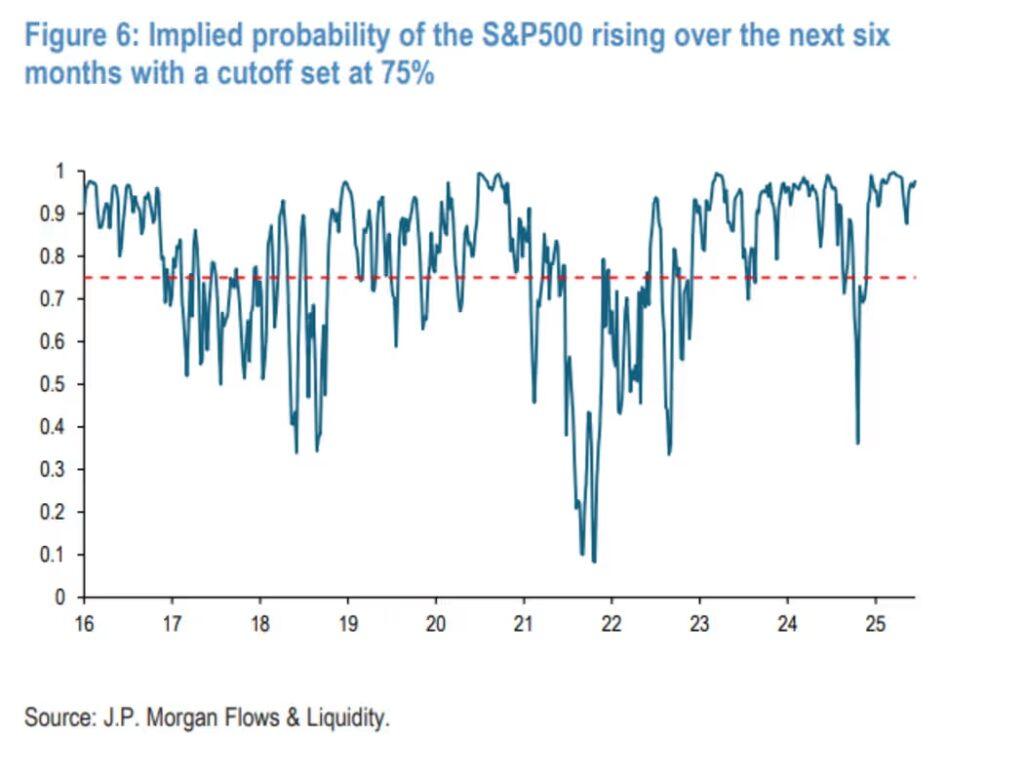
Attractive Valuations for the S&P 500 Could Spell Trouble for Future Returns Markets took a breather on Wednesday as attention shifted from geopolitical tensions to upcoming economic data, interest rate expectations, and tariff developments. With a busy slate of economic reports due over the next two days, investor sentiment may shift quickly. But economic indicators aren’t the only thing guiding markets. Strategists at JPMorgan, led by Nikolaos Panigirtzoglou, have developed a six-month forecasting model for the S&P 500 that incorporates six signals: volume, valuation, investor positioning, fund flows, economic momentum, and price momentum. Each factor is measured relative to its historical average using z-scores. Trained on data through late 2022 and tested with more recent figures, the model prioritizes predicting downturns—since simply being long equities would have been correct over 90% of the time. In testing, the model accurately predicted market declines 76% of the time in its training sample and 63% of the time in out-of-sample data—significantly outperforming other models, which tended to miss downside risks. Among its insights: The most surprising takeaway? Attractive valuations often precede weaker returns. The strategists suggest this is because valuations are closely tied to shifts in the 10-year Treasury yield—so when yields fall, it may be a signal of economic weakness ahead. Despite that, the model’s current reading is optimistic: it sees a 96% chance the S&P 500 will rise over the next six months. John PaulJohn Paul is the founder of DayTradeToWin, a trading education and software company established in 2008, supporting traders worldwide. His expertise focuses on price action-based futures trading strategies and structured market analysis. DayTradeToWin delivers trading education, indicators, and software tools designed to help traders apply disciplined, rule-based decision-making across global futures markets. He is the creator of multiple trading methodologies, including the Sonic System, Atlas Line, and Trade Scalper, which help traders identify structured opportunities in markets such as the E-mini S&P 500 (ES), Nasdaq (NQ), crude oil (CL), and gold (GC). Official website: https://daytradetowin.com daytradetowin.com

apple
Market News

Apple Drops—Is Perplexity the Fix?

Apple Eyes AI Acquisition to Escape ‘Penalty Box’ and Shed Laggard Label Apple Inc. has had a rough 2025 so far. Its stock is down over 19%, hurt by lingering trade tensions and investor anxiety over its slow rollout of artificial intelligence features. While rivals have surged ahead with AI breakthroughs, Apple has faced criticism for falling behind—especially with delays to Siri’s evolution and limited integration of its own “Apple Intelligence” platform. But a potential strategic shift may be in the works. According to Bloomberg, Apple executives have held internal talks to acquire Perplexity AI, a startup known for its search-based chatbot powered by multiple large language models. While the deal isn’t finalized, the market is already responding. Apple shares have risen nearly 2.4% since the report surfaced on Friday. For months, Wall Street analysts have flagged Apple’s AI posture as underwhelming. A recent note from TD Cowen suggested that Apple might need to buy or partner with an AI firm to close the gap with peers like Google and Microsoft. Bank of America echoed that sentiment, calling the potential acquisition “positive for shares that are currently in the penalty box.” Investor frustration has stemmed partly from Apple’s reliance on OpenAI to supply core generative AI features. Confidence took another hit when OpenAI announced in May that it had acquired the AI hardware startup founded by former Apple design chief Jony Ive—a move seen by some as laying the groundwork for a future Apple competitor. There’s growing concern that if Apple doesn’t innovate quickly in AI, its core product—the iPhone—could lose its centrality. As AI tools become more powerful and ubiquitous, consumer behavior may shift away from traditional handheld devices. Even Meta’s Ray-Ban smart glasses are being positioned as next-gen alternatives. If Apple moves forward with acquiring Perplexity, analysts see three big upsides: it would gain independent access to generative AI capabilities, improve Siri and other services through tighter integration, and tap into high-value AI talent. It could also enter the search-based ad market—a new potential revenue stream. Still, the path won’t be easy. Integrating Perplexity’s tech into Apple’s walled ecosystem could pose engineering and user-experience challenges. Legal questions also loom over Perplexity’s data-scraping practices. And any deal of this size—it would be Apple’s largest acquisition ever—comes with risk. Bank of America has a $235 price target on Apple stock, about 16% above Tuesday’s trading level around $202. The average target among 50 analysts surveyed by FactSet is slightly lower, at $228. Apple’s next move could determine whether it remains a hardware-first company or finally makes the leap to becoming a serious AI player. For now, Wall Street is watching closely. John PaulJohn Paul is the founder of DayTradeToWin, a trading education and software company established in 2008, supporting traders worldwide. His expertise focuses on price action-based futures trading strategies and structured market analysis. DayTradeToWin delivers trading education, indicators, and software tools designed to help traders apply disciplined, rule-based decision-making across global futures markets. He is the creator of multiple trading methodologies, including the Sonic System, Atlas Line, and Trade Scalper, which help traders identify structured opportunities in markets such as the E-mini S&P 500 (ES), Nasdaq (NQ), crude oil (CL), and gold (GC). Official website: https://daytradetowin.com daytradetowin.com
investors
Market News

Why Patience Pays for Today’s Investors

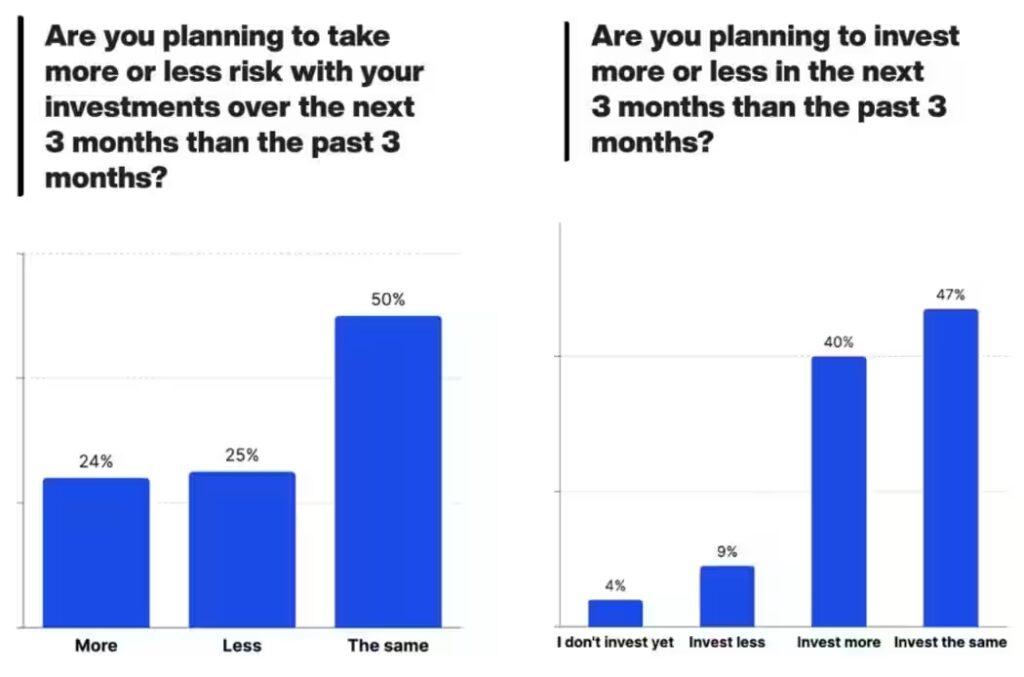
Retail Investors Stay Confident in Stocks, Even as the Economy Wobbles A weakening economy hasn’t shaken retail investors’ confidence in the stock market. While economic uncertainty prompts consumers to rein in spending, many are actually doubling down on investing. According to a June survey by Finimize, a platform for retail investors, 70% of the 2,338 respondents expect global stock markets to rise over the next 12 months. Confidence in crypto is also rising, with 67% anticipating gains—both notable jumps from Finimize’s prior survey during a time of trade tensions and market pressure. “This feels like a return to optimism,” said Carl Hazeley, CEO of Finimize. “We’re just shy of our all-time high in investor confidence, which tops out around 72% to 74%.” That optimism has held firm even after April’s market volatility, when the Dow slipped into correction and the S&P 500 and Nasdaq briefly dipped into bear territory. Yet most retail investors stayed the course: 47% said they plan to invest the same amount over the next three months, and 40% said they’ll invest even more. Nearly half said they expect to put at least $10,000 into the market over the next year. At the same time, many are adjusting their day-to-day finances. The survey found 44% are cutting back on spending to boost their investments: Hazeley said this reflects growing caution about recession risk, job security, and lingering inflation. But it’s also a sign of intentional, long-term thinking. “Many are treating their investments like savings—89% said exactly that,” he noted. “They’re pulling back on lifestyle expenses to secure their future. It’s exactly what a financial advisor or money app would recommend.” In short, retail investors are staying bullish on markets while preparing for economic uncertainty—investing more, spending less, and thinking long term. John PaulJohn Paul is the founder of DayTradeToWin, a trading education and software company established in 2008, supporting traders worldwide. His expertise focuses on price action-based futures trading strategies and structured market analysis. DayTradeToWin delivers trading education, indicators, and software tools designed to help traders apply disciplined, rule-based decision-making across global futures markets. He is the creator of multiple trading methodologies, including the Sonic System, Atlas Line, and Trade Scalper, which help traders identify structured opportunities in markets such as the E-mini S&P 500 (ES), Nasdaq (NQ), crude oil (CL), and gold (GC). Official website: https://daytradetowin.com daytradetowin.com

tel aviv
Market News

Tel Aviv Backs the U.S. Bull Run

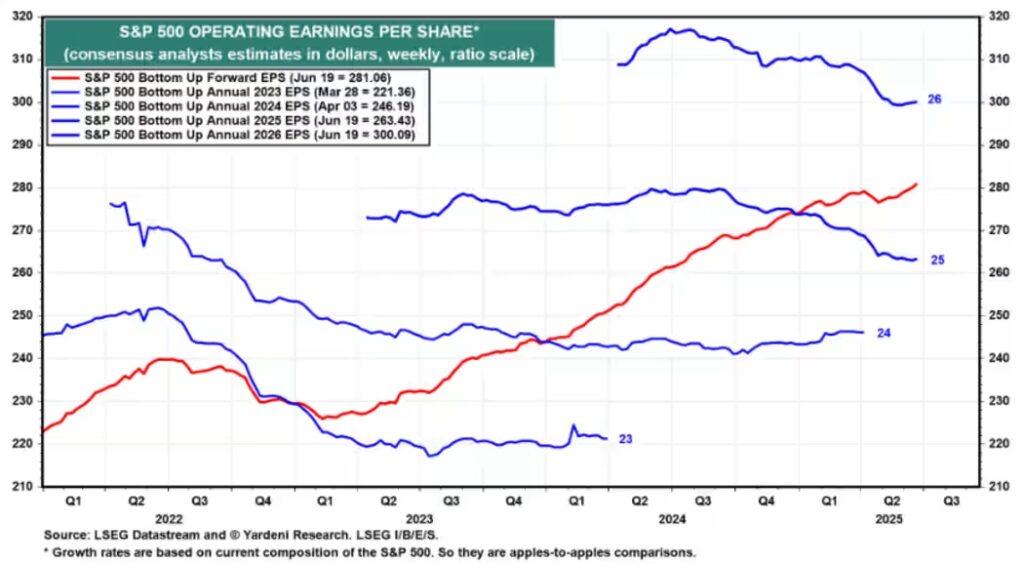
Tel Aviv Stocks Hit Record Highs as Markets Look Past Iran-Israel Tensions Global markets are showing surprising resilience amid rising tensions between Israel and Iran. Oil prices briefly fell, stock futures climbed, and even gold—typically a safe-haven asset—lost ground. This muted reaction suggests investors are betting the conflict will not escalate further. Ed Yardeni of Yardeni Research believes the worst may be over. “The next move is up to the Iranians. Our bet is that they will sue for peace,” he wrote in a note to clients. If Iran avoids further retaliation, Yardeni expects oil prices to retreat and global stock markets to advance. He sees any pullback in gold as a buying opportunity, given central banks’ continued interest in the metal. The optimism is most evident in Israel’s own stock market. The Israel MSCI Index has reached record highs, reflecting investor confidence that the regional outlook may be improving. “Predicting Middle East geopolitics is risky,” Yardeni said, “but Israel’s market suggests a potential turning point, especially now that Iran has been de-nuked.” Yardeni is hopeful that the Trump administration could expand the 2020 Abraham Accords to include Saudi Arabia and other Arab nations, reducing regional volatility. In an ideal outcome, he envisions a new Iranian government focused on economic development rather than conflict. Still, he warns of a darker path: Iran’s current regime could survive—or be replaced by a military dictatorship—leading to prolonged instability, attacks on Israel, threats to U.S. interests, and efforts to block the Strait of Hormuz. Such a scenario could trigger a surge in oil prices and raise the risk of global recession. But for now, Yardeni remains bullish. He believes the S&P 500’s rally, which began in October 2022, is intact. His year-end target for the index is 6,500, with a long-term goal of 10,000 by 2030, supported by what he calls a “Roaring 2020s” scenario. Adding to the optimism, corporate earnings forecasts are on the rise. Forward earnings for the S&P 500 have hit record highs for the third week in a row. Concerns about tariffs are fading, with analysts expecting little to no impact on profit margins. “The bottom line,” Yardeni said, “is that the bull market is alive and well.” John PaulJohn Paul is the founder of DayTradeToWin, a trading education and software company established in 2008, supporting traders worldwide. His expertise focuses on price action-based futures trading strategies and structured market analysis. DayTradeToWin delivers trading education, indicators, and software tools designed to help traders apply disciplined, rule-based decision-making across global futures markets. He is the creator of multiple trading methodologies, including the Sonic System, Atlas Line, and Trade Scalper, which help traders identify structured opportunities in markets such as the E-mini S&P 500 (ES), Nasdaq (NQ), crude oil (CL), and gold (GC). Official website: https://daytradetowin.com daytradetowin.com
S&P 500
Market News

History Shows S&P 500 Bounces Back

S&P 500 Holds Steady Amid Israel-Iran Tensions — History Points to Resilience The S&P 500 has remained remarkably stable since the Israel-Iran conflict erupted, slipping just 1% as of Tuesday’s close. And if history is any guide, any market dip may prove short-lived. Deutsche Bank Research analyzed 32 past geopolitical events and found a consistent pattern: markets tend to sell off quickly—but recover just as fast. “The escalation in the Middle East highlights the typical playbook for geopolitical shocks—sharp equity pullbacks followed by surprisingly swift rebounds,” wrote strategists Parag Thatte and Binky Chadha. Historically, the S&P 500 drops around 6% over three weeks but recovers fully within the next three weeks. The median recovery includes a 15% rally from the bottom over the following 12 months. Some shocks, however, have left a deeper mark. The 1973 oil embargo triggered by the Israel-Arab War led to a 15% plunge and took nearly six years—1,475 trading days—for the index to recover. Other major selloffs followed events like: Yet rebounds can also be powerful. The S&P soared 42% in the year following the Israel-Hamas conflict in 2023, and over 30% after the Korean War, Iraq War (2003), and Cuban Missile Crisis (1962). Still, risks remain. Deutsche’s Jim Reid warns that a more severe market reaction could come if the U.S. is drawn into the conflict, Iranian oil facilities are attacked, or the Strait of Hormuz—vital for 20% of global oil flows—is blocked. While it’s too early to assess how the Israel-Iran conflict will rank among historic market events, past data shows the S&P typically weathers geopolitical turmoil. But as the 1970s oil crisis reminds investors, some shocks can leave lasting scars. John PaulJohn Paul is the founder of DayTradeToWin, a trading education and software company established in 2008, supporting traders worldwide. His expertise focuses on price action-based futures trading strategies and structured market analysis. DayTradeToWin delivers trading education, indicators, and software tools designed to help traders apply disciplined, rule-based decision-making across global futures markets. He is the creator of multiple trading methodologies, including the Sonic System, Atlas Line, and Trade Scalper, which help traders identify structured opportunities in markets such as the E-mini S&P 500 (ES), Nasdaq (NQ), crude oil (CL), and gold (GC). Official website: https://daytradetowin.com daytradetowin.com

juneteenth
Market News

Juneteenth 2025: Are Markets Closed?

What’s Closed on Juneteenth, June 19 Juneteenth, observed on June 19, commemorates the end of slavery in the United States. The holiday marks the day in 1865 when Union troops arrived in Galveston, Texas, to enforce the freedom of enslaved people—more than two years after the Emancipation Proclamation was issued. While Juneteenth has been celebrated in Black communities since the 1800s, it became a Texas state holiday in 1980 and was officially recognized as a federal holiday in 2021. Here’s what’s closed in observance of Juneteenth: Stock MarketsThe New York Stock Exchange, Nasdaq, and U.S. bond markets are closed for the day. Trading resumes on June 20. Mail ServicesU.S. Postal Service mail delivery is paused for the holiday. However, FedEx and UPS will continue operating on their regular schedules. BanksMost banks are closed today, though ATMs and mobile banking remain available. Government OfficesAll nonessential federal offices are closed, and most state and local government offices will follow suit. If you need to visit a DMV or another agency, it’s best to check ahead. SchoolsPublic schools typically close for Juneteenth, but schedules can vary by district. Be sure to confirm with your local school. John PaulJohn Paul is the founder of DayTradeToWin, a trading education and software company established in 2008, supporting traders worldwide. His expertise focuses on price action-based futures trading strategies and structured market analysis. DayTradeToWin delivers trading education, indicators, and software tools designed to help traders apply disciplined, rule-based decision-making across global futures markets. He is the creator of multiple trading methodologies, including the Sonic System, Atlas Line, and Trade Scalper, which help traders identify structured opportunities in markets such as the E-mini S&P 500 (ES), Nasdaq (NQ), crude oil (CL), and gold (GC). Official website: https://daytradetowin.com daytradetowin.com

Scroll to Top