

stock news

stock
Market News

Election Year Boom: Key Factors for Sustaining the Stock Market’s Record Rally

U.S. stocks have posted an impressive election-year rally so far in 2024. As investors question whether the rally will continue, they’re closely watching inflation and economic-growth data to gauge the Federal Reserve’s potential interest-rate decisions and corporate earnings in the second half of the year. The S&P 500 is on track for its best first-half performance during an election year since 1976 and the second-best performance in an election year in its history, according to Dow Jones Market Data. However, the rally has “left valuations stretched, sentiment optimistic, and the market overbought,” say analysts at Ned Davis Research. Several factors leave the U.S. stock market vulnerable to a correction in the second half of the year, the analysts noted — including corporate earnings estimates, uncertainty around potential Fed rate cuts, the upcoming presidential election, and the limited breadth of the market’s rally. While earnings estimates have been improving since the start of the year — with analysts now expecting earnings growth of 12% to 13% for 2024 — valuations are rising even faster, said Sam Stovall, chief investment strategist at CFRA. This could be concerning, Stovall told MarketWatch. “We have to see whether the rising stock prices and price-to-earnings ratios are actually the result of the market expecting better earnings,” he said. For now, as investors wait for the second-quarter earnings season to kick off, such data is mostly on the back burner, he added. Investors are even more concerned about persistent inflation, which together with growth data will influence the timing and magnitude of any interest-rate cuts by the Fed this year, said William Northey, investment director at U.S. Bank. While the Fed has forecasted only one rate cut for the rest of the year, fed-funds futures traders are currently pricing in two cuts starting in September, according to the CME FedWatch Tool. The most important inflation-related data point to be released next week is the personal-consumption expenditures, or PCE, price index due out Friday. James Ragan, director of wealth-management research at D.A. Davidson, expects the PCE numbers for May to confirm that inflation is slowing, as was reflected in consumer-price index data released earlier this month. Stovall echoed that point, saying he expects both the headline and core PCE inflation figures to be lower than in the previous month, which may bode well for the stock market. Meanwhile, economic-growth data remains another major focus, as the market is expecting U.S. GDP growth to slow but stay positive, Ragan noted. “If we get weaker data, it’s not necessarily bad for the market,” he said, as that could spur the Fed to move quicker on rate cuts. “Bad news is good news — as long as it’s not too bad news.” For the stock market to continue its rally, investors will need to see a broadening of the rally from both a price perspective and an earnings-contribution perspective, said U.S. Bank’s Northey. He observed that so far this year, the stock market’s strength has mostly been driven by megacap tech companies like Nvidia Corp., due to their outsized earnings growth and excitement around artificial intelligence applications. The S&P 500’s 14.6% gain so far this year has mostly been driven by its information-technology sector, which has risen 28.7%, and its communication-services sector, which has advanced 24.8%, according to FactSet data. “If the economy is achieving a soft landing and stays positive, we would expect to see better participation from some of the cyclical sectors such as energy, financials, materials, and industrials,” Ragan said. “We should watch those sectors pretty carefully; if they start to perform better, that’s how we’ll have a more sustainable rally.” U.S. stocks ended this past week higher, with the Dow Jones Industrial Average up 561.17 points, or 1.5%, to 39,150.33, according to Dow Jones Market Data. The S&P 500 finished the week up 33.02 points, or 0.6%, at 5,464.62, while the Nasdaq Composite closed the week up 33.02 points, or 0.6%, at 5,464.62. Next week, investors will also be watching for new consumer-confidence data on Tuesday, new home-sales data on Wednesday, and initial jobless-claims numbers on Thursday. John PaulJohn Paul is the founder of DayTradeToWin, a trading education and software company established in 2008, supporting traders worldwide. His expertise focuses on price action-based futures trading strategies and structured market analysis. DayTradeToWin delivers trading education, indicators, and software tools designed to help traders apply disciplined, rule-based decision-making across global futures markets. He is the creator of multiple trading methodologies, including the Sonic System, Atlas Line, and Trade Scalper, which help traders identify structured opportunities in markets such as the E-mini S&P 500 (ES), Nasdaq (NQ), crude oil (CL), and gold (GC). Official website: https://daytradetowin.com daytradetowin.com
Market News

Market Surge Hits Shorts Hard, Warns JPMorgan: Brace for Potential Stock Volatility

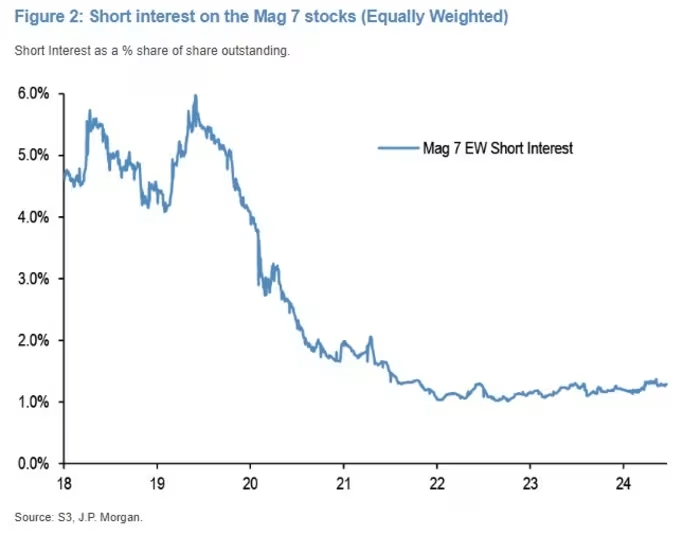
On Thursday, Nvidia NVDA saw a roughly 7% peak-to-trough range, ending the day down 3.5%. This volatility has become a hot topic on Wall Street, with Friday’s futures indicating a cautious start. Is this dip a sign of waning exuberance that recently made Nvidia the world’s most valuable company, lifting many AI stocks along with it? Or is it simply a brief bout of profit-taking for an overbought stock? Time will tell. However, Nvidia’s downturn on Thursday rattled several major tech stocks, suggesting that the market, after reaching record highs, may now be more sensitive to doubts and unexpected bad news. One potential reason for this fragility is record-low bearish positions in key assets, according to JPMorgan analysts led by Nikolaos Panigirtzoglou. “A key support for the U.S. equity market over the past year was the decline in short interest on the two biggest equity ETFs, SPY (S&P 500) and QQQ (Nasdaq 100),” they noted on Thursday. Short positions benefit from selling an asset and buying it back at a lower price, and they can also hedge long bets. JPMorgan explains that SPY and QQQ are primary tools for betting on equities at an index level, and the reduction in short interest has supported these indices as short positions were covered. However, data shows no significant increase in short interest in individual stocks like the Magnificent 7 (Alphabet, Apple, Amazon, Meta, Microsoft, Nvidia, Tesla) or the S&P 500 over the past year. Why the decline in short positions? JPMorgan cites three reasons: it’s tough to stay short in a rising market, regulatory demands for transparency squeeze short sellers, and the 2021 meme-stock frenzy deterred some shorts. Short-bias equity hedge funds have seen a sharp decline in assets under management in recent years. As short positions fall, non-bank investors globally hold the highest proportion of equities since the financial crisis. “This steady flow of support from covering short positions has suppressed realized volatility, allowing volatility-targeting investors to take larger equity positions,” says JPMorgan. Essentially, the decrease in short positions in SPY and QQQ is a bet on low volatility. Given the current low short interest, this implicit short volatility trade is historically extended, posing a risk to U.S. equities if negative news reverses the past year’s decline in short interest, the bank concludes. John PaulJohn Paul is the founder of DayTradeToWin, a trading education and software company established in 2008, supporting traders worldwide. His expertise focuses on price action-based futures trading strategies and structured market analysis. DayTradeToWin delivers trading education, indicators, and software tools designed to help traders apply disciplined, rule-based decision-making across global futures markets. He is the creator of multiple trading methodologies, including the Sonic System, Atlas Line, and Trade Scalper, which help traders identify structured opportunities in markets such as the E-mini S&P 500 (ES), Nasdaq (NQ), crude oil (CL), and gold (GC). Official website: https://daytradetowin.com daytradetowin.com

deflation
Market News

Brace for a Gentle Decline: Slow Deflation vs. a 40% Market Drop

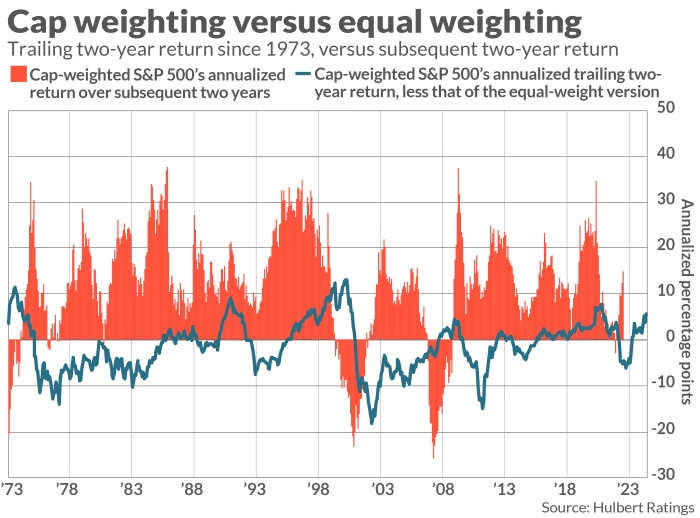
Current forecasts suggest that the likelihood of a U.S. stock market crash is below average. According to State Street Associates’ “froth forecasts,” which draw on Harvard professor Robin Greenwood’s research, there’s an 18% chance of a 40% market decline within the next two years, compared to a five-year average of 26%. This outlook extends to the high-tech sector, known for its recent dynamic returns. State Street estimates its crash probability to be four percentage points lower than the five-year average. Yale University’s Will Goetzmann contends that bubble predictions often reflect more about the analysts making them than the actual risk. Many lack precise definitions and criteria for what constitutes a bubble or a crash, leading to more subjective and less reliable predictions. The crash probabilities by Greenwood and State Street are linked to the market’s performance over the past two years. Higher past performance correlates with a higher likelihood of a crash. For instance, a 100% price increase over two years raises the crash probability to 50%, while a 150% increase nearly guarantees it. However, the S&P 500’s 48.9% return over the past two years is well below these critical levels. Some argue that the market’s reliance on the largest stocks indicates an imminent bubble. The cap-weighted S&P 500 has outperformed the equal-weight version by more than 10 percentage points this year and by 12 percentage points last year. This concentration in large stocks is viewed by some as a sign of market vulnerability. However, historical data since 1970 shows no consistent pattern supporting this theory. Although the U.S. stock market is overvalued, there are various ways it can correct itself besides crashing. According to State Street’s forecasts, a gradual adjustment through mediocre performance is more likely than a sudden crash. John PaulJohn Paul is the founder of DayTradeToWin, a trading education and software company established in 2008, supporting traders worldwide. His expertise focuses on price action-based futures trading strategies and structured market analysis. DayTradeToWin delivers trading education, indicators, and software tools designed to help traders apply disciplined, rule-based decision-making across global futures markets. He is the creator of multiple trading methodologies, including the Sonic System, Atlas Line, and Trade Scalper, which help traders identify structured opportunities in markets such as the E-mini S&P 500 (ES), Nasdaq (NQ), crude oil (CL), and gold (GC). Official website: https://daytradetowin.com daytradetowin.com
juneteenth
Market News

Juneteenth Closure Updates: Stock Market and Post Office Hours

Here’s what’s closed on Juneteenth this Wednesday, June 19, in observance of the newest federal holiday. As Americans prepare to celebrate Juneteenth, which commemorates the end of slavery in the U.S., they should be aware of the closures associated with the holiday. This includes financial markets taking the day off. June 19 marks the day in 1865 when federal troops arrived in Galveston, Texas, to free enslaved Black people in the state, almost two and a half years after President Lincoln signed the Emancipation Proclamation on January 1, 1863. Not every state ended slavery immediately following the proclamation. Juneteenth has been celebrated in Black communities since the 19th century and became a Texas state holiday in 1980. Other states followed, and in 2021, President Joe Biden signed legislation making Juneteenth the 12th federal holiday. “This is a day of profound weight and profound power, a day in which we remember the moral stain, the terrible toll that slavery took on the country and continues to take,” Biden said at the time. Here are details about what will be closed on Juneteenth: Are financial markets open on June 19? The New York Stock Exchange, Nasdaq, and U.S. bond markets are closed on June 19. Trading will resume on the morning of June 20. Does the post office deliver mail? The U.S. Postal Service will not deliver mail on June 19. However, FedEx and UPS will operate on their normal schedules. Are banks open? Banks are generally closed, but ATMs and banking apps are still available. Are government offices open? Since Juneteenth is a federal holiday, all nonessential federal government offices are closed. This generally applies to state government offices as well. Are schools open? Schools are typically closed on Juneteenth, but it’s best to check with your local school district. John PaulJohn Paul is the founder of DayTradeToWin, a trading education and software company established in 2008, supporting traders worldwide. His expertise focuses on price action-based futures trading strategies and structured market analysis. DayTradeToWin delivers trading education, indicators, and software tools designed to help traders apply disciplined, rule-based decision-making across global futures markets. He is the creator of multiple trading methodologies, including the Sonic System, Atlas Line, and Trade Scalper, which help traders identify structured opportunities in markets such as the E-mini S&P 500 (ES), Nasdaq (NQ), crude oil (CL), and gold (GC). Official website: https://daytradetowin.com daytradetowin.com

nvidia
Market News

Nvidia Sets a New Benchmark in the Chip Sector with Its Latest Stock-Price Target

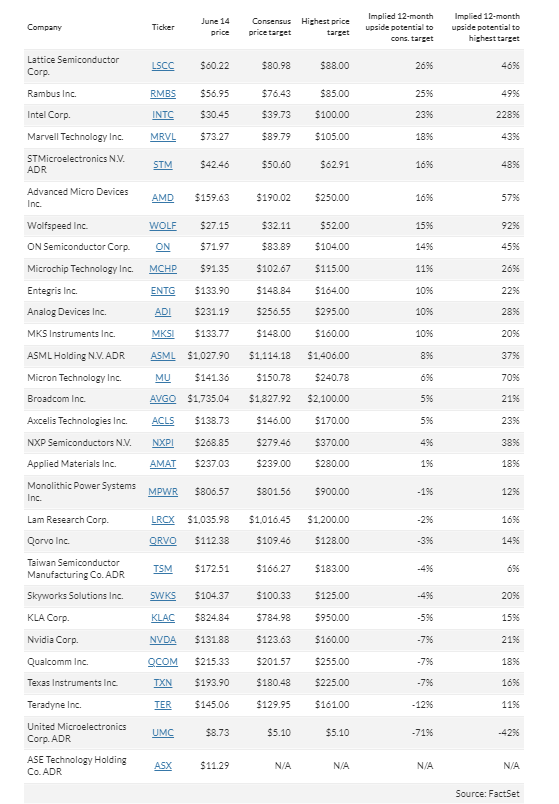
Nvidia’s new highest stock-price target suggests a 21% upside from Friday’s close, but several other chip stocks have even more bullish targets indicating greater growth potential. Nvidia Corp. shares have surged 165% this year, yet Susquehanna analyst Chris Rolland believes they can go higher. He raised his price target on Nvidia’s stock (NVDA) to $160 from $145, suggesting a 21% increase from Friday’s closing price. This target is based on a multiple of about 51.5 times his estimated adjusted earnings per share for 2025. “While this multiple is higher than the group median of ~28.5x, we view it as warranted due to Nvidia’s strong position in flourishing end markets,” Rolland wrote. Over three-quarters of analysts polled by FactSet rate Nvidia’s stock as a buy. However, the average price target is below Friday’s closing price, likely because some analysts haven’t updated their models following the stock’s recent 40%-plus rally. Despite Rolland’s optimism, his target is now the highest on FactSet. Three stocks within the PHLX Semiconductor Index have average price targets implying at least a 23% upside: Lattice Semiconductor Corp. (LSCC), Rambus Inc. (RMBS), and Intel Corp. (INTC). The table below lists all stocks in the index, sorted by their 12-month upside potential based on average and highest analyst price targets. Lattice, Rambus, and Intel have struggled this year, with Lattice down 13%, Rambus down 18%, and Intel down 39%. Analysts are generally positive about Lattice and Rambus, with 71% of FactSet-tracked analysts giving buy ratings for each. Lattice’s average price target suggests a 26% upside, while Rambus’s suggests 25%. Intel’s outlook is more mixed. Despite an average price target suggesting a 23% rise, only 28% of analysts surveyed by FactSet are bullish. Of the 47 analysts, 13 have buy ratings, 30 have neutral ratings, and four have sell ratings. Conversely, 11 stocks in the PHLX Semiconductor Index have average price targets implying negative returns. Many of these cases likely reflect outdated models, as analysts hold majority bullish ratings on seven of these stocks. Half of the stocks in the PHLX Semiconductor Index have high price targets implying more upside than Nvidia’s. Intel leads with a target suggesting over 200% growth, followed by Wolfspeed Inc. (WOLF) at 92% and Micron Technology Inc. (MU) at 70%. John PaulJohn Paul is the founder of DayTradeToWin, a trading education and software company established in 2008, supporting traders worldwide. His expertise focuses on price action-based futures trading strategies and structured market analysis. DayTradeToWin delivers trading education, indicators, and software tools designed to help traders apply disciplined, rule-based decision-making across global futures markets. He is the creator of multiple trading methodologies, including the Sonic System, Atlas Line, and Trade Scalper, which help traders identify structured opportunities in markets such as the E-mini S&P 500 (ES), Nasdaq (NQ), crude oil (CL), and gold (GC). Official website: https://daytradetowin.com daytradetowin.com

inflation
Market News

How Inflation is Sharpening Economic Divides: Wealthy vs. Everyone Else

Lower-Income Americans Increasingly Worried About the Economy Despite a steadily growing economy and low unemployment easing some of the pain of high inflation, middle- and low-income Americans are feeling more stress. Recent evidence includes a drop in the consumer sentiment index in June to a seven-month low, primarily due to rising anxiety among middle- and lower-income Americans. This widening gap in economic perception is not surprising. Wealthier households have larger financial cushions and benefit from a surging stock market that boosts their wealth. In contrast, lower-income Americans have largely depleted their pandemic-era savings and must now rely on their job earnings to keep up with rising prices. Persistent high inflation and interest rates are straining their budgets, leading to increased credit card usage and more loan defaults. One positive development is the significant income growth in recent years. A tight labor market has forced businesses to pay more, and job switchers have received substantial raises. A recent Congressional Budget Office (CBO) report found that incomes have slightly outpaced inflation since 2019. As a result, most families spend a smaller portion of their income on essentials. However, these benefits are unevenly distributed. The highest earners spent 6.3% less of their income on goods and services in 2023 than in 2019, while the lowest earners spent only 2% less. This disparity explains why the wealthy are less worried about inflation. Moreover, lower-income households face higher price increases for their typical purchases compared to wealthier people, and their wages have not risen as quickly. What does the growing lack of confidence among many Americans mean for the economy? Nationwide financial market economist Oren Klachin noted that middle- and lower-income people spend most of their earnings on consumer goods and services. If they reduce spending, it could disrupt the economy. “This will be an important dynamic to watch in the second half of this year,” he said. John PaulJohn Paul is the founder of DayTradeToWin, a trading education and software company established in 2008, supporting traders worldwide. His expertise focuses on price action-based futures trading strategies and structured market analysis. DayTradeToWin delivers trading education, indicators, and software tools designed to help traders apply disciplined, rule-based decision-making across global futures markets. He is the creator of multiple trading methodologies, including the Sonic System, Atlas Line, and Trade Scalper, which help traders identify structured opportunities in markets such as the E-mini S&P 500 (ES), Nasdaq (NQ), crude oil (CL), and gold (GC). Official website: https://daytradetowin.com daytradetowin.com

Scroll to Top