
stock trading

stocks
Uncategorized

Why Global Stocks Are Leaving the U.S. Behind

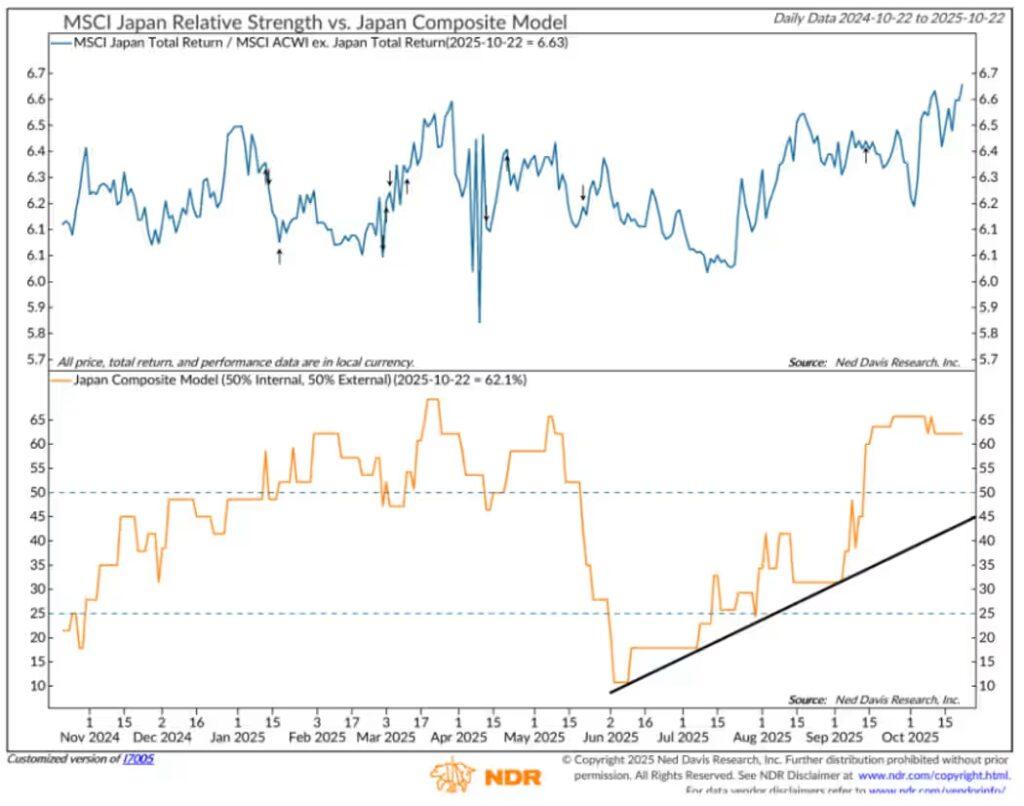
Ned Davis Research: Shift Toward Japan and Emerging Markets, Away from U.S. Stocks The U.S. market may be hitting record highs, but one top strategist says it’s time to look elsewhere. Despite a steady run for the S&P 500 — up 14.6% this year — and the Nasdaq Composite gaining 18.8%, Ned Davis Research (NDR) believes investors should start reducing U.S. exposure and reallocating to Japan and emerging markets (EM). In a recent note, Tim Hayes, NDR’s global chief strategist, warned that signs of fading relative strength in U.S. equities suggest a period of underperformance ahead, while Japan and EM are showing strong momentum, attractive valuations, and positive capital flows. U.S. Strength Starting to Fade U.S. stocks make up nearly two-thirds of the MSCI All-Country World Index (ACWI), but despite their global influence, they’ve underperformed both year-to-date and over the past several weeks. In comparison, the MSCI Emerging Markets Index has surged 25% in 2025, and the MSCI Japan Index is up 4% in the last 21 days — both ahead of U.S. benchmarks. This divergence has triggered an NDR sell signal for U.S. stocks as the 20-day relative strength reading hits its weakest level since April. Meanwhile, both EM and Japan have generated buy signals, suggesting stronger price momentum ahead. Attractive Valuations and Currency Tailwinds Hayes points out that emerging markets are far cheaper than the U.S., which remains the most expensive regional market based on NDR’s global valuation metrics. EMs have also benefited from rising currencies and steady inflows into exchange-traded funds, signaling renewed investor confidence. Japan, on the other hand, is being propelled by a weaker yen that supports exporters and boosts earnings. Investor sentiment has strengthened further amid optimism that the new government will deliver on its pro-growth policies. NDR’s internal data shows that 86% of Japan’s market indicators are bullish, the highest in over a year. Portfolio Rebalancing Ahead Given the shifting dynamics, NDR has downgraded U.S. equities to underweight, while upgrading Japan to overweight and increasing exposure to emerging markets. “The duration of these trends can’t be predicted,” Hayes concludes, “but our models clearly favor continued U.S. underperformance — and leadership from Japan and EM.” Investors seeking exposure to these regions can consider: John PaulJohn Paul is the founder of DayTradeToWin, a trading education and software company established in 2008, supporting traders worldwide. His expertise focuses on price action-based futures trading strategies and structured market analysis. DayTradeToWin delivers trading education, indicators, and software tools designed to help traders apply disciplined, rule-based decision-making across global futures markets. He is the creator of multiple trading methodologies, including the Sonic System, Atlas Line, and Trade Scalper, which help traders identify structured opportunities in markets such as the E-mini S&P 500 (ES), Nasdaq (NQ), crude oil (CL), and gold (GC). Official website: https://daytradetowin.com daytradetowin.com
gold
Market News

JPMorgan Sees Gold Doubling by 2028

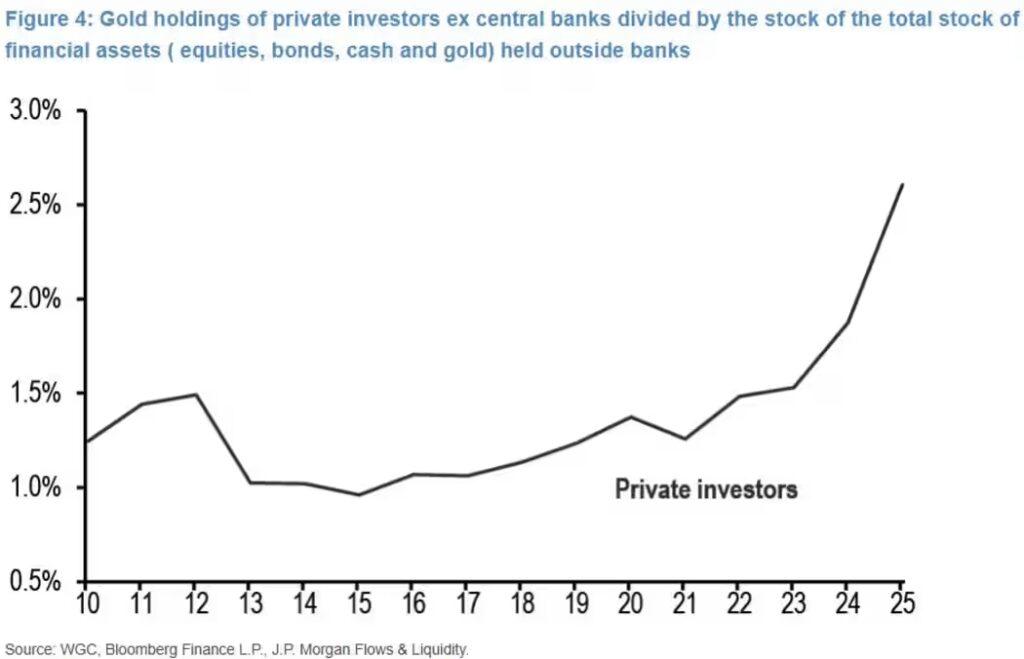
Goldman Sachs Doubles Down on Its Bullish Gold Outlook For those exhausted by the nonstop AI market debate, gold’s dramatic fall this week has offered a welcome change of topic. After its steepest one-day drop in more than ten years on Tuesday, the focus has turned to whether the metal can recover. Goldman Sachs believes it can. The bank is sticking with its end-2026 gold target of $4,900 per ounce, expecting further upside driven by central bank and institutional investor demand. “The pace of ETF inflows and client feedback suggests that long-term investors — including sovereign-wealth funds, central banks, pension funds, and asset managers — are preparing to raise their gold exposure as a strategic portfolio diversifier,” Goldman analysts Lina Thomas and Daan Struyven said in a note. That view aligns with JPMorgan’s latest forecast, where strategists led by Nikolaos Panigirtzoglou predict gold prices could more than double over the next three years as investors increasingly use the metal to hedge equity risk. According to JPMorgan, the recent selloff wasn’t sparked by retail investors leaving the market but by trend-following commodity trading advisers taking profits on gold futures — which have already risen 56% this year. The strategists argue that much of today’s gold demand isn’t about fears of a weakening dollar — the traditional “debasement trade” — but rather a shift toward protecting portfolios against rising stock prices. Unlike in past years, investors are now buying both equities and gold while avoiding long-term bonds, a sign that gold is reclaiming its place as a preferred hedge. By JPMorgan’s estimates, nonbank investors now hold about 2.6% of their portfolios in gold, equivalent to roughly $6.6 trillion in holdings. But if investors continue swapping bonds for gold as a hedge, that share could rise sharply. The strategists note that during last year’s market volatility — following tariff-related announcements from President Donald Trump — long-dated bonds failed to protect investors, prompting a rethink of traditional hedging strategies. If just 2% of bond allocations shift to gold, the total allocation could climb to 4.6%, implying a near doubling in gold prices. Factoring in rising equity values and expanding global financial assets, JPMorgan estimates gold prices may need to increase by 110% by 2028 to reach that level. In essence, both Goldman Sachs and JPMorgan see gold as entering a new golden age — not a relic of the past, but a modern hedge for an equity-driven era, with powerful tailwinds from central banks, institutions, and retail investors alike. John PaulJohn Paul is the founder of DayTradeToWin, a trading education and software company established in 2008, supporting traders worldwide. His expertise focuses on price action-based futures trading strategies and structured market analysis. DayTradeToWin delivers trading education, indicators, and software tools designed to help traders apply disciplined, rule-based decision-making across global futures markets. He is the creator of multiple trading methodologies, including the Sonic System, Atlas Line, and Trade Scalper, which help traders identify structured opportunities in markets such as the E-mini S&P 500 (ES), Nasdaq (NQ), crude oil (CL), and gold (GC). Official website: https://daytradetowin.com daytradetowin.com
fund
Market News

Einhorn’s Fund Says AI Math Doesn’t Add Up

David Einhorn’s Greenlight Fund: “We Can’t Make Sense of the AI Math” Just how massive can AI spending get? Meta Platforms’ latest move — a record-breaking $27 billion private-credit deal to fund a new Louisiana data center — might have pushed even Wall Street’s limits. But it’s not just everyday investors who are struggling to make sense of the numbers. In our Call of the Day, billionaire David Einhorn and his $2 billion hedge fund Greenlight Capital say they’re “refusing to join the AI frenzy,” calling the current enthusiasm mathematically unsound. Einhorn, who correctly called Lehman Brothers’ downfall before the 2008 crash, said a month ago that AI-related spending is “so extreme that it’s really, really hard to understand.” In its latest quarterly letter, Greenlight doubled down: “When it comes to AI, doing the math is essential. The numbers simply have to make sense — and right now, they don’t.” The firm cited McKinsey’s projection of $6.7 trillion in global data center investment by 2030 — a figure it believes will require “extraordinary leverage” to finance. By Greenlight’s calculation, the industry would need to generate $2 trillion in annual revenue by 2030 just to earn a reasonable return. “Something’s got to give,” the letter warns, likening today’s hype to the dot-com bubble, when nobody knew “who would be the last buyer or the last short seller.” It’s been a tough road for Greenlight this year — the fund reported a 3.6% loss in Q3, bringing its 2025 gains to just 0.4%, compared to the S&P 500’s 14.8% rise. Still, Einhorn says there are no regrets: “While others are doing better right now, many are taking risks that we find hard to justify.” Instead of chasing AI, Greenlight is leaning into biotech and utilities. The fund highlighted Coya Therapeutics (COYA) — where it’s the largest shareholder — as a potential standout, citing optimism around the company’s clinical trials for an ALS (Lou Gehrig’s disease) treatment. “When AI startups with little more than a PowerPoint are getting multi-billion valuations, we’d rather invest in Coya — a $100 million company with real potential.” Greenlight also disclosed a medium-sized stake in Pacific Gas & Electric (PCG), expecting state-backed recovery after devastating wildfires. Its gold exposure through Green Brick Partners (GRBK) helped cushion the quarter’s losses, though gains were partly offset by a housing hedge. The fund closed out its Teck Resources (TECK) position with a solid profit but criticized the miner’s coal spinoff and merger with Anglo American (AAL). Einhorn’s bottom line: “This is still the most expensive market we’ve ever seen. Our best move is to stay cautious and disciplined.” John PaulJohn Paul is the founder of DayTradeToWin, a trading education and software company established in 2008, supporting traders worldwide. His expertise focuses on price action-based futures trading strategies and structured market analysis. DayTradeToWin delivers trading education, indicators, and software tools designed to help traders apply disciplined, rule-based decision-making across global futures markets. He is the creator of multiple trading methodologies, including the Sonic System, Atlas Line, and Trade Scalper, which help traders identify structured opportunities in markets such as the E-mini S&P 500 (ES), Nasdaq (NQ), crude oil (CL), and gold (GC). Official website: https://daytradetowin.com daytradetowin.com
Wall Street
Market News

Wall Street Roars Back with Record Earnings

Wall Street’s Big Banks Reap the Rewards of a Dealmaking Revival Bank of America (BAC) and Morgan Stanley (MS) delivered impressive third-quarter earnings as Wall Street dealmaking resurgence powered profits sharply higher. Bank of America’s profit jumped 23% to $8.47 billion, while Morgan Stanley’s soared 45% to $4.6 billion—each exceeding analyst expectations by more than $1 billion. The standout performance was fueled by a boom in mergers, acquisitions, and IPOs that gathered pace over the summer. Investment banking fees surged 43% at Bank of America to $2 billion, and 44% at Morgan Stanley to $2.1 billion from a year earlier. Trading also played a key role. Bank of America’s trading revenue rose 8% to $5.3 billion, while Morgan Stanley’s climbed 24%, lifting total trading income to $6.28 billion across equities, fixed income, currency, and commodities. Morgan Stanley CEO Ted Pick described the quarter as “outstanding,” and Bank of America’s Brian Moynihan credited “strong fee performance from our market-facing businesses.” The results add momentum to what’s becoming a strong quarter across major U.S. banks. Bank of America secured the lead role advising Union Pacific’s $71 billion acquisition of Norfolk Southern, the year’s largest deal so far. Morgan Stanley also advised on that merger and co-facilitated Keurig Dr Pepper’s $18 billion purchase of JDE Peet’s. Following their reports, Bank of America shares rose 4%, and Morgan Stanley’s gained over 6% in early trading. Other banking heavyweights—Goldman Sachs, JPMorgan Chase, Citigroup, and Wells Fargo—also beat expectations, thanks to similar tailwinds. Banks are benefiting from a faster merger approval process and looser capital requirements under the Trump administration—conditions that have revived Wall Street’s appetite for big deals. Commenting on the current landscape, Morgan Stanley’s Ted Pick noted that “macro uncertainty and enormous opportunity uncomfortably coexist,” likening the environment to the mid-1990s era of rapid financial expansion. Beyond Wall Street, Main Street lending also strengthened. Bank of America’s net interest income rose 9% year-over-year to $15.38 billion, setting a new record for quarterly lending revenue and underscoring continued resilience in its core business. John PaulJohn Paul is the founder of DayTradeToWin, a trading education and software company established in 2008, supporting traders worldwide. His expertise focuses on price action-based futures trading strategies and structured market analysis. DayTradeToWin delivers trading education, indicators, and software tools designed to help traders apply disciplined, rule-based decision-making across global futures markets. He is the creator of multiple trading methodologies, including the Sonic System, Atlas Line, and Trade Scalper, which help traders identify structured opportunities in markets such as the E-mini S&P 500 (ES), Nasdaq (NQ), crude oil (CL), and gold (GC). Official website: https://daytradetowin.com daytradetowin.com

bill smead
Market News

Bill Smead Warns: The AI Boom Won’t Last Forever

Bill Smead Bets on Forgotten Sectors as AI Mania Runs Hot As Wall Street rides an AI-fueled rally, veteran investor Bill Smead is staying grounded — and looking far beyond Silicon Valley. Smead, founder and chief investment officer of Smead Capital Management, believes that when the AI boom fades, it’ll be average Americans — not tech giants — who keep portfolios alive. Through his $4.5 billion Smead Value Fund (SMVLX), Smead focuses on “buying great businesses when they’re deeply out of favor” and holding them long term. “We look for consistent profits, strong balance sheets, and defendable market positions,” he told MarketWatch. Avoiding the AI Frenzy Unlike many funds chasing big tech, Smead’s top holdings sit in consumer discretionary and energy, not AI. While his fund has lagged the Russell 1000 Value Index this year, it’s ahead over the past five and ten years. “I don’t envy people making money in the racy stuff,” he said, adding that AI investments are being made “like drunken sailors on leave.” Smead expects a “lost decade” ahead — similar to the years after the dot-com bubble and financial crisis — with two bear markets likely in the next seven to eight years. His strategy: avoid what will hurt most when the tide turns. Investing in Everyday America Smead sees risk in baby boomer spending drying up when markets stumble, though his son and co-manager Cole believes younger generations will carry on the economy. Their solution is to invest in companies tied to the real economy — the kind that serve the everyday consumer. One Quiet Tech Bet Though skeptical of AI hype, Smead still holds Qualcomm (QCOM), a company delivering 40–50% returns on equity for a decade. “Nobody’s paying attention to them because they’re not part of the AI story — and that’s exactly why they’re cheap,” he said. If Qualcomm grows earnings 10% annually for the next ten years, Smead believes it could be “a spectacular stock” — proof that patience and value still matter, even in an AI-obsessed market. John PaulJohn Paul is the founder of DayTradeToWin, a trading education and software company established in 2008, supporting traders worldwide. His expertise focuses on price action-based futures trading strategies and structured market analysis. DayTradeToWin delivers trading education, indicators, and software tools designed to help traders apply disciplined, rule-based decision-making across global futures markets. He is the creator of multiple trading methodologies, including the Sonic System, Atlas Line, and Trade Scalper, which help traders identify structured opportunities in markets such as the E-mini S&P 500 (ES), Nasdaq (NQ), crude oil (CL), and gold (GC). Official website: https://daytradetowin.com daytradetowin.com

Wall street
Market News

Wall Street Pulls Back — Is the Rally Losing Steam?

Wall Street Takes a Breather After Record-Breaking Run U.S. markets cooled off Thursday as both stocks and gold slipped from record highs, signaling a brief pause after weeks of powerful gains. The S&P 500 fell 0.3%, marking only its second loss in 10 days. The Dow Jones Industrial Average dropped 243 points (0.5%), while the Nasdaq edged down 0.1%. After a stellar rally, gold also retreated — down 2.4% to below $4,000 per ounce — as traders caught their breath following a surge fueled by expectations that the Federal Reserve may soon begin cutting rates to support the economy. Markets have been on a relentless climb — with the S&P 500 up 35% since April — raising concerns that prices might have run too far, too fast, particularly among AI-related stocks that have dominated recent gains. Dell Technologies dropped 5.2%, the day’s biggest S&P 500 loser, though it remains up nearly 11% for the week after highlighting strong AI growth prospects. Tesla slipped 0.7% after U.S. regulators opened a probe into its “Full Self-Driving” software. Helping offset those losses, Delta Air Lines jumped 4.3% after reporting better-than-expected summer profits and projecting stronger year-end earnings, citing a steady recovery in business travel and solid demand. With the U.S. government shutdown halting key economic updates — including the weekly jobless claims report — investors are turning to corporate earnings to gauge the economy’s pulse. PepsiCo rose 4.2% after beating quarterly expectations and posting stronger North American drink sales. Akero Therapeutics surged 16.3% after Novo Nordisk announced plans to buy the biotech firm for up to $5.2 billion. MP Materials gained 2.4% after China imposed new export restrictions on rare earths, and Costco climbed 3.1% on an 8% year-over-year revenue jump in September. At the close: Overseas, performance was mixed. Ferrari slid 15.4% in Italy after disappointing forecasts, while Shanghai stocks rose 1.3% after reopening from a holiday. Japan’s Nikkei 225 advanced 1.8%, driven by an 11.4% jump in SoftBank Group following its $5.4 billion deal to acquire ABB’s robotics division. In bonds, the 10-year Treasury yield inched higher to 4.14% from 4.13%. John PaulJohn Paul is the founder of DayTradeToWin, a trading education and software company established in 2008, supporting traders worldwide. His expertise focuses on price action-based futures trading strategies and structured market analysis. DayTradeToWin delivers trading education, indicators, and software tools designed to help traders apply disciplined, rule-based decision-making across global futures markets. He is the creator of multiple trading methodologies, including the Sonic System, Atlas Line, and Trade Scalper, which help traders identify structured opportunities in markets such as the E-mini S&P 500 (ES), Nasdaq (NQ), crude oil (CL), and gold (GC). Official website: https://daytradetowin.com daytradetowin.com

Scroll to Top