
DayTradeToWin Review

sonic
DayTradeToWin Review

How 8 Trades Prove the Sonic Trading System Works

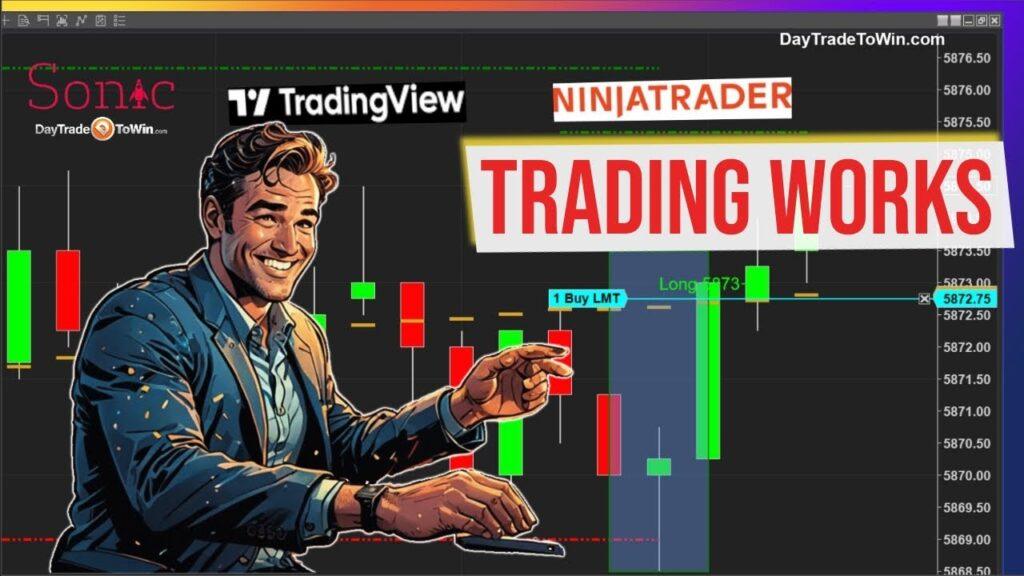
Today, we’re diving back into the Sonic Trading System, following up on yesterday’s session where we executed five trades consecutively. Our goal today is to build on that momentum, analyzing market activity from the opening bell and tracking trades throughout the day. Trading carries significant risk, and it’s important to only use capital you can afford to lose. Always be aware of the downsides and protect your capital by using stops strategically. Today’s Performance We kicked off the day around 11:00 AM with several trades on the Sonic system. Our first long signal appeared at 58.73, but I missed the fill by a tick while recording. Missing a fill is part of the game—never chase the market. Successful trading demands patience. Here’s how things stand so far: With a 5-to-1 win-loss ratio, today’s performance is exactly what you want from any trading system. The Sonic system has consistently demonstrated an ability to capture quick profits, and today is no exception. Example Trade Breakdown Our next trade came in at 58.78.50, with the target set at 58.88.75—a 2.25-point move, translating to over $100 per contract. Even accounting for slippage and fees, this trade yielded a solid profit, and it only took a few minutes to reach the target. The Importance of Price Action Price action trading focuses on reacting to the market rather than trying to predict its next move. In this case, we took a long position, and within minutes, the trade hit its target. Fast, decisive profits are ideal, and if a trade lingers too long or moves sideways, it’s often better to exit early and move on to the next opportunity. Sonic System Flexibility The semi-automated nature of the Sonic trading system makes it compatible with funded trading programs like Apex or Topstep, which often don’t allow fully automated strategies. The system is a hybrid approach, emphasizing price action over traditional indicators. The flexibility of Sonic is great for both NinjaTrader and TradingView users, as you can customize your stop losses and targets to match your trading style and risk tolerance. Whether you prefer tight stops or larger profit targets, the system allows you to adapt accordingly. Trade Recap This trade played out in less than 10 minutes, demonstrating the power of Sonic in fast-moving markets. When you’re on the right side of a trade, quick exits with profits in hand are the ultimate goal. Wrapping Up If you’re new to Sonic or price action trading, now is a great time to get involved. With a free membership at DayTradeTowin.com, you can access essential tools like free software and courses to get you started. Our system integrates seamlessly with both NinjaTrader and TradingView, and for those looking to dive deeper, we offer an Accelerated Mentorship program that bundles all our tools and training into one complete package. Be sure to subscribe to the DayTradeTowin YouTube channel for daily updates and insights, or visit our website to create your free member account. Trade smart, stay safe, and always prioritize risk management! John PaulJohn Paul is the founder of DayTradeToWin, a trading education and software company established in 2008, supporting traders worldwide. His expertise focuses on price action-based futures trading strategies and structured market analysis. DayTradeToWin delivers trading education, indicators, and software tools designed to help traders apply disciplined, rule-based decision-making across global futures markets. He is the creator of multiple trading methodologies, including the Sonic System, Atlas Line, and Trade Scalper, which help traders identify structured opportunities in markets such as the E-mini S&P 500 (ES), Nasdaq (NQ), crude oil (CL), and gold (GC). Official website: https://daytradetowin.com daytradetowin.com
sonic
DayTradeToWin Review

A Day in the Life of a Sonic Trader: 5 Live Trades Analyzed

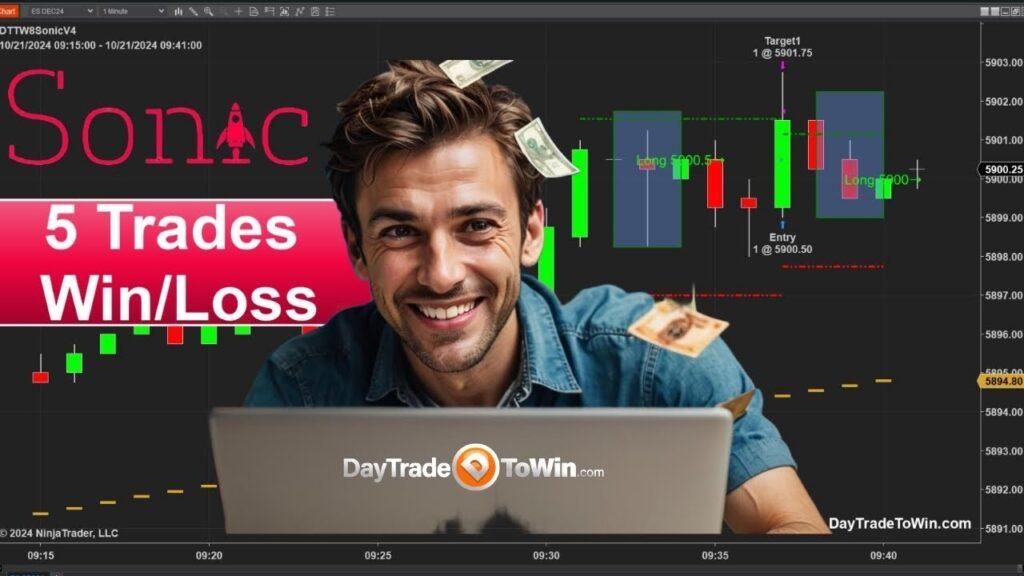
Hello Traders! Today is Monday, October 21st, and I’m excited to dive into the Sonic Trading System with you. I’ll be walking you through the first five trades of the day, showing the results in real-time to give you a clear picture of how the Sonic system performs in both winning and losing scenarios. Trade #1: Kicking Off with a Win The market opened at 9:30 AM New York time, and we quickly got our first signal to go long at 5950. I entered right at the target price, and within moments, the target was hit. This fast movement is typical at market open, where volatility tends to spike. While it’s tempting to jump in right away, especially with strong momentum, I always advise new traders to wait 5-10 minutes to let the initial volatility settle down. Whether you’re trading the NASDAQ, crude oil, or gold, this rule applies. The open can be unpredictable, so patience is key. The first trade was a winner, using the default settings of the Sonic system. Sonic Trading System Overview The Sonic Trading System is unique in that it’s based on price action—no momentum indicators, moving averages, or Keltner channels here. The signals are generated purely by analyzing price patterns and trends. That dashed line you see on the chart? It’s a filter. If the price is above the line, we focus on long trades, and if it’s below, we switch to short trades. This filter is adjustable to suit your strategy. Overtrading is a common issue, so we emphasize taking only the best setups. If a stop is too large or if the market conditions aren’t right, don’t force the trade. In our daily training sessions, we drill this into our traders. Many traders combine Sonic with other systems like the Roadmap or Atlas Line. It can be a great addition to your day trading toolbox. Remember, if there’s a high-priority news event, it’s better to avoid trading. You can download our free news indicator on DayTradeToWin.com to stay on top of major events. Trade #2: A Small Setback The second trade was a signal at 5900. The setup looked good—target and stop at a 1:1 ratio. However, this one didn’t go in our favor. After entering, the market went against the position, and the trade was stopped out. That’s part of the game. No system wins 100% of the time, but the Sonic system aims for a balanced risk-to-reward ratio on every trade. Adapting to Different Markets One of the best features of the Sonic system is its adaptability. It works on any market: NASDAQ, Dow, currencies, you name it. That’s because it’s entirely based on price action, which is universal across markets. For instance, during our third trade, we got a signal to go long at 5899.75. While some traders might enter immediately, I recommend aiming for a better price, even if it’s just a tick or two. A small improvement in entry can make a big difference, especially if the stop is a bit too far from the target. Trade #3: A Strong Comeback Our third trade hit the target with precision. The entry, stop, and target were well-balanced, and the market followed through nicely. Using a one-minute chart, we got a quick resolution to the trade—something you can expect if you prefer smaller time frames. If you’re more of a long-term trader, you can still use Sonic with higher time frames like 5-minute or even tick charts. It’s highly versatile and gives traders control over how they want to trade. ATR-Based Targets and Quick Profits The Sonic system uses the Average True Range (ATR) to calculate profit targets. This means that the size of the target adapts to the volatility of the market. If the market is moving fast, the target will be larger. If it’s slower, the target shrinks, making it more likely to hit. For quicker profits, you can even set the target to half of the ATR. This increases the chances of hitting the target sooner and getting out of the trade faster—a great approach if you don’t like holding positions for too long. Trade #4: A Missed Opportunity The fourth signal gave us an entry at 5927.5, but before I could place the order, the market had already gapped and hit the target. Sometimes, the market moves too fast, and there’s no reason to chase a trade. If it’s missed, it’s missed. Discipline is crucial in trading. Trade #5: Closing Strong The fifth and final trade of the day gave us another solid setup at 5991.25. I took my time analyzing the trade, considering the stop and target. Once again, the Sonic system delivered a balanced risk-to-reward ratio, and the target was hit almost immediately. The key takeaway here is not to rush your trades. You always have control—analyze the setup, determine if the stop is manageable, and only enter if the trade makes sense for you. Wrapping It Up In just a few hours, I completed five trades using the Sonic Trading System. With three wins and one loss (plus one missed opportunity), the system performed as expected. The beauty of Sonic is its simplicity, focusing purely on price action with no reliance on complex indicators. If you’re interested in adding the Sonic system to your trading arsenal, or want to learn more about our other systems like the Roadmap or Atlas Line, visit DayTradeToWin.com. You can also sign up for a free member account to access helpful tools like the news indicator and trial versions of our software. Ready to take your trading to the next level? Join our accelerated mentorship program and get instant access to all our courses and software. Let’s trade the right way—by understanding price action. Visit DayTradeToWin.com and sign up for your free account to access free trading tools and trials. John PaulJohn Paul is the founder of DayTradeToWin, a trading education and software company established in 2008, supporting traders worldwide. His expertise focuses on price action-based

sonic
DayTradeToWin Review

How Limit Orders Can Boost Your Trading using Sonic System

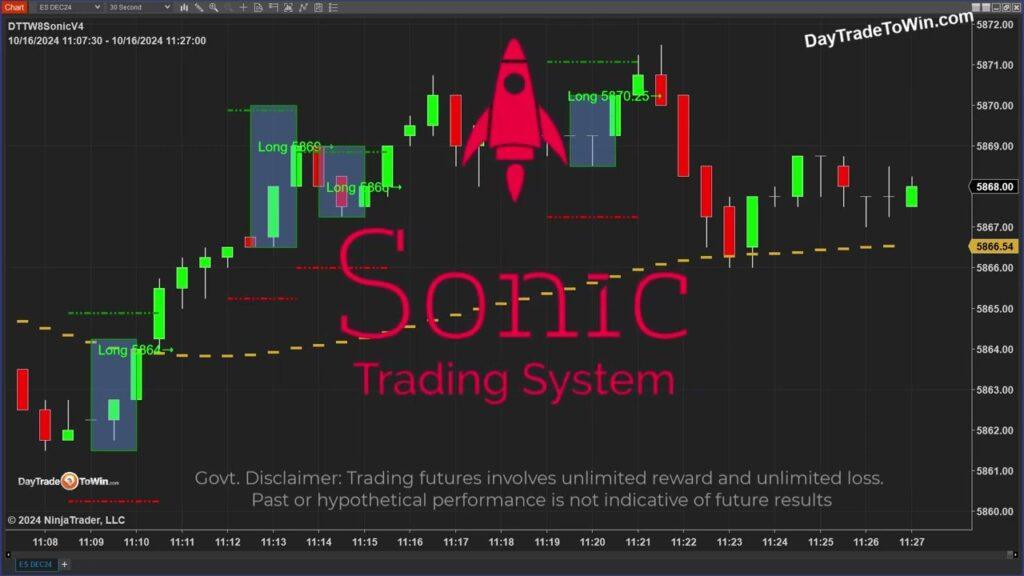
Hello, traders! Today, I’m excited to guide you through the Sonic Trading System, an advanced method for identifying both long and short trade opportunities. We’ll dive into how this system operates, focusing on how to leverage price action, optimize your entries and exits, and avoid common mistakes like overtrading and slippage. The Sonic Trading System: An Overview The Sonic Trading System is a powerful tool that provides real-time trading signals for both long and short trades. These signals are driven by price action, which means you’re making decisions based on the actual movement of price rather than relying on lagging indicators. A key feature of this system is the use of the Average True Range (ATR) to calculate targets and stops, helping traders to account for market volatility. By understanding the mechanics of the system, you can better follow market momentum, manage risk, and position yourself for success. Executing Long Trades: Maximizing Opportunities Let’s start with a long signal example. Suppose the system generates a signal at 5868.25, indicating it’s time to buy. The key here is following the system’s guidance for setting targets and stops. Targets are often determined by the ATR, a metric that adjusts based on whether the market is fast or slow. For instance, if the ATR suggests four ticks of movement per candle, setting a target of 1x or 2x the ATR can offer a balanced risk-reward ratio. One advantage of the Sonic system is that it allows traders to place limit orders instead of market orders. By placing a limit order, you can aim for a slightly better entry price, reducing slippage and maximizing your potential profit. For example, if the system suggests entering at 5868.25, you could place a limit order at 5868 or better. This way, when the market hits your target, you’ll have captured more profit, or, if the trade moves against you, your loss will be smaller. Mastering Short Trades: Profiting in a Falling Market The Sonic system also shines when it comes to identifying short trade opportunities. A short trade involves selling at a higher price with the aim of buying back at a lower one. For example, if a short signal is generated at 5867.75, the goal is to sell at that price and buy back lower to lock in a profit. The system includes a useful filter line that helps distinguish between long and short trades. Any trade signal below the filter line is a short, and any trade above the line is a long. This ensures that you’re always trading with the prevailing trend, reducing the risk of getting caught on the wrong side of a move. As with long trades, short trades can benefit from using limit orders to secure better prices. If the system signals a short at 5867.75, placing a limit order at 5868 (or even one tick higher) allows you to sell at a more advantageous price, increasing your potential profit. Slippage and Risk Management: Why Limit Orders Matter Slippage, which occurs when your order is filled at a worse price than expected, can erode profits. To combat this, the Sonic system encourages the use of limit orders. By setting a limit order one or two ticks better than the system’s recommended entry, you can avoid the impact of slippage and improve your overall trade outcome. For example, instead of entering a long trade at 5868.25 with a market order, placing a limit order at 5868 gives you a better price and reduces risk. If the trade hits your target, you earn more profit. If it hits your stop, the loss is minimized. Managing Risk and Avoiding Overtrading A crucial element of successful trading is knowing when to cut your losses or exit a trade. The Sonic Trading System is designed for efficiency, meaning it expects trades to hit their targets or stops relatively quickly. If your trade isn’t moving as expected within 5-10 minutes, it’s better to exit with a small win, break even, or even a small loss. Another key point is to avoid overtrading. While it’s tempting to chase every signal, it’s wiser to limit yourself to 4-6 solid trades in a session. Overtrading can lead to poor decision-making, especially during volatile market conditions or news events. Short-Term vs. Long-Term Targets The Sonic system’s versatility allows for both scalping and longer-term trades. While shorter trades focus on smaller targets, you can also use the system to set larger targets based on the ATR. For instance, if the ATR suggests four ticks of movement per candle, setting a target of two times the ATR can provide a more substantial profit opportunity. Keep in mind that while larger targets may offer bigger rewards, they also require more patience. Be sure to adjust your trading style to match your strategy. Adapting to Market Conditions As with any trading system, flexibility is crucial. The market is always changing, and the Sonic system allows you to adapt by tweaking entries, stops, and targets. For instance, if you notice that price action is stalling, consider exiting early to protect your account. Similarly, if the market allows you to secure a better entry price, take it! Trading isn’t about hitting every target perfectly; it’s about making smart decisions based on the available data. Join the Sonic Trading Community The Sonic Trading System is part of a broader suite of trading tools that include the Trade Scalper and Atlas Line. To enhance your trading skills, consider joining a live trading room or mentorship program where you can receive real-time guidance and support. These programs allow you to learn directly from experts, ask questions, and and refine your strategy. Ready to elevate your trading? Visit DayTradeToWin.com to open a free member account. Get access to live trading rooms, proprietary strategies like the Sonic system, and one-on-one mentorship. Whether you’re a beginner or a seasoned pro, the right tools and guidance can help you master price action trading and achieve consistent success. John PaulJohn Paul is the founder

roadmap
DayTradeToWin Review

Guide to Pivot Points in Roadmap Trading

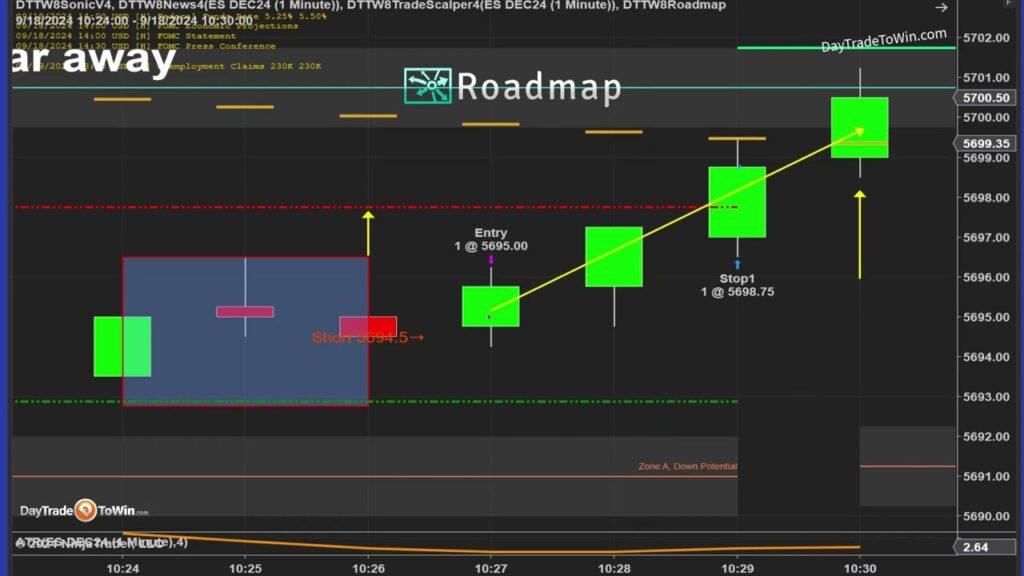
In day trading, timing and precision are crucial for maximizing profits and minimizing risk. One highly effective method is the Second Candle Close Trading Strategy in combination with the Roadmap signal. This approach helps traders make informed decisions by identifying key market zones and managing risk effectively. Here’s a breakdown of how it works and why it can be a game-changer for short trades. Understanding the Roadmap Setup The Roadmap signal helps traders identify critical price zones where the market has previously reacted. It acts as a guide for finding optimal entry points and placing stop-losses. The process starts by identifying a setup bar—a key candle that signals the potential start of a move. Here’s how to use it: Applying the Strategy in Real Time When a new setup bar forms, you want to time your entry carefully. Waiting for the second candle close is generally the safest approach, but if the market is volatile and you’re close to the roadmap zone, an earlier entry can give you a better price. The key advantage of using the roadmap is that it often indicates where the market has previously retraced. This gives you a better chance to enter at a favorable price. As the price pulls back to the roadmap zone, you can enter short, knowing that the market frequently retests these areas. Using the Pivot for Effective Risk Management Managing risk is one of the most important aspects of this strategy. The pivot point—either the setup bar high/low or a couple of ticks beyond the zone—becomes your stop-loss. By placing your stop here, you limit your downside risk while allowing the trade room to move in your favor. The goal is to time your entry so that your stop-loss is as small as possible while leaving enough room for the price to move in the direction of your trade. Knowing where your stop is in advance helps you stay disciplined and prevents emotional decision-making. Enhancing Your Strategy with Sonic Tools and Timeframes For added precision, traders can combine the roadmap with Sonic tools. Sonic strategies allow you to fine-tune your entry by using shorter timeframes, such as the one-minute or 30-second charts, especially in a strong market. Average True Range (ATR) can guide you on when to adjust your timeframe. If the ATR is low or normal, a one-minute chart is typically sufficient. However, if the ATR rises, indicating more volatility, you may want to use a shorter timeframe or pay closer attention to each open-close candle pattern for more accurate entries. In summary, the Second Candle Close Trading Strategy paired with the Roadmap signal provides a structured and effective approach to short trades. By focusing on setup bars, using pivot points for risk management, and utilizing tools like Sonic, you can confidently time your entries, limit risk, and maximize profits. To dive deeper into this strategy and start using the roadmap in your own trading, visit daytradetowin.com and sign up for a free trial. You’ll gain access to powerful tools like the ABC software, helping you master price action and make informed trading decisions with confidence. John PaulJohn Paul is the founder of DayTradeToWin, a trading education and software company established in 2008, supporting traders worldwide. His expertise focuses on price action-based futures trading strategies and structured market analysis. DayTradeToWin delivers trading education, indicators, and software tools designed to help traders apply disciplined, rule-based decision-making across global futures markets. He is the creator of multiple trading methodologies, including the Sonic System, Atlas Line, and Trade Scalper, which help traders identify structured opportunities in markets such as the E-mini S&P 500 (ES), Nasdaq (NQ), crude oil (CL), and gold (GC). Official website: https://daytradetowin.com daytradetowin.com

price action
DayTradeToWin Review

How Market Manipulation Impacts Price Action

In the world of trading, no two scenarios are identical. Each market event presents unique challenges and subtle differences. Seasoned traders recognize the impact of market manipulation on price action, often misleading less experienced participants. When a large price move occurs—such as a significant candle—it typically results from a surge of orders hitting the market simultaneously, overwhelming either buyers or sellers. The Trap of Traditional Indicators Many traders heavily rely on traditional indicators like moving averages or MACD (Moving Average Convergence Divergence). These tools often signal “buy” when a trend appears favorable, drawing traders into positions. However, even when all indicators point to a bullish scenario, unforeseen events can lead to sudden reversals. This can catch traders off guard, as many rush to exit long positions, or professional traders take profits at key price levels. These sudden moves are often orchestrated by experienced market players who have been quietly accumulating positions and are now selling off. This classic form of manipulation can leave the majority of traders blindsided. The Value of Price Action and Volatility To navigate these market traps, traders need to focus on price action. Unlike traditional indicators, price action reflects real-time market behavior. One effective approach is using a “roadmap” based on key price zones and market volatility. For example, in a highly volatile market, the initial reaction zone (the first price movement after volatility spikes) might not be reliable. When the Average True Range (ATR) is elevated—five or eight points, for instance—traders should concentrate on further-out zones to find more dependable trading opportunities. These distant price levels offer a clearer picture of market direction and highlight where professional traders may be making their moves. Position Yourself for the Right Opportunity Understanding accumulation and distribution phases is crucial for traders aiming to stay ahead. By identifying how markets tend to behave, you can position yourself to take advantage of optimal trade entries. The greater the volatility, the more important it is to focus on the right zones and avoid getting caught up in the initial frenzy. This patient approach allows you to avoid the noise and capitalize on significant market movements. Take Control of Your Trading To succeed in trading, relying solely on conventional indicators isn’t enough. Mastering price action and recognizing market manipulation will give you an edge. If you’re interested in exploring this approach further, DayTradetowin.com provides valuable resources, including a free membership and access to trial software like the ABC system. Start trading with a focus on price action, and avoid falling into the common traps of traditional indicators. Take control of your trading strategy today. John PaulJohn Paul is the founder of DayTradeToWin, a trading education and software company established in 2008, supporting traders worldwide. His expertise focuses on price action-based futures trading strategies and structured market analysis. DayTradeToWin delivers trading education, indicators, and software tools designed to help traders apply disciplined, rule-based decision-making across global futures markets. He is the creator of multiple trading methodologies, including the Sonic System, Atlas Line, and Trade Scalper, which help traders identify structured opportunities in markets such as the E-mini S&P 500 (ES), Nasdaq (NQ), crude oil (CL), and gold (GC). Official website: https://daytradetowin.com daytradetowin.com
over-trading
DayTradeToWin Review

Stop Over-Trading: Boost Your Profits with Discipline

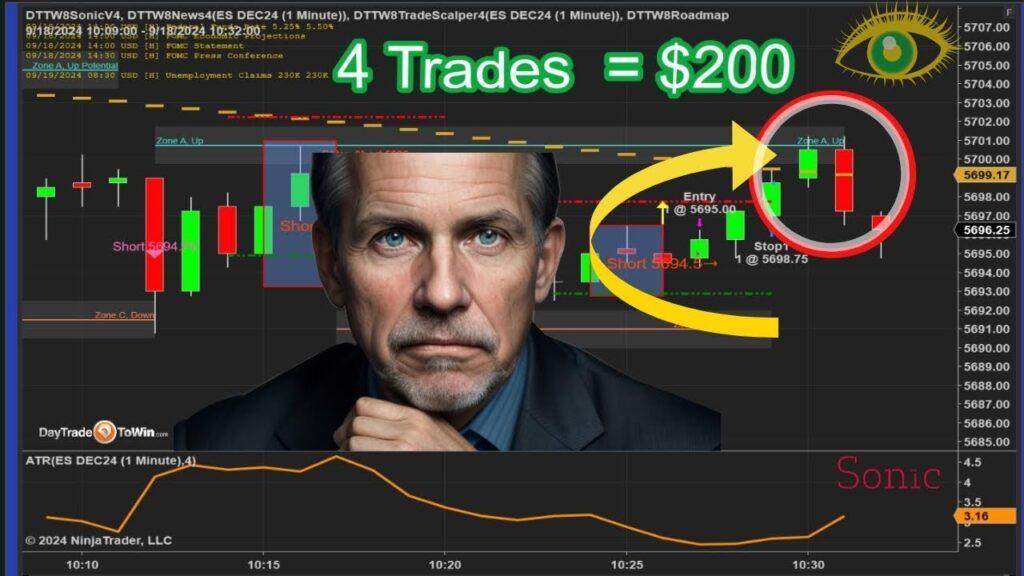
Over-trading is a common pitfall in day trading, leading to excessive risk and diminishing returns. Many traders, fueled by the excitement of the market, make numerous trades without a solid strategy. By the end of the day, they may find they’ve gained little—or worse, lost ground. In fact, trading excessively can erode your profits and take a toll on your mental well-being. Why Over-Trading Can Hurt Your Success As highlighted in the transcript, trading constantly throughout the day without clear gains is a recipe for failure. Making frequent trades doesn’t guarantee better results and often leads to a loss of focus. The key lesson here is to prioritize quality over quantity. For instance, if you make five to ten trades in a day and end up profitable, that’s great! That’s a signal to stop. One of the biggest mistakes traders make is continuing to trade after reaching their goal, driven by overconfidence or greed. At that point, you risk not just your profits but also your emotional discipline. The secret is to make fewer trades with clear intent. Breaking your day into manageable sessions—such as taking a few trades in the morning and again in the afternoon when market volatility is higher—helps maintain focus and balance. Set Clear Targets and Stop Once You Achieve Them Let’s say each point on a trade is worth $50, and after four trades, you’ve made $200—that’s a solid stopping point. From there, consider scaling up your contracts as your confidence and account size grow. The goal is not to take more trades but to trade more strategically. This also means recognizing when the market has moved past an ideal entry point and resisting the urge to chase. Jumping in after missing the optimal entry often results in poor outcomes. For example, if the market hits a key roadmap zone and reverses immediately, you may be too late to benefit. Entering after a move can put you at a disadvantage, especially if seasoned traders have already profited from the shift. Timing Is Critical: Strategic Entries Matter Discipline is key when entering trades. Spotting a roadmap zone and placing a limit order just a few ticks higher can help you secure a better price. This approach not only minimizes risk by keeping you closer to your stop but also ensures you’re entering at a favorable point. Of course, not all trades will work out perfectly. The transcript reminds us that sometimes the market moves unexpectedly. If it “runs away” from you, don’t chase it. Accept that you missed the trade and move on. The market offers countless opportunities, so there’s no need to rush or force a bad trade. Final Thoughts: Patience Over Prediction Nobody can predict the market with certainty. The best approach is to make informed, well-timed decisions. Forcing trades or over-trading leads to burnout and potential losses. By sticking to a clear plan and focusing on quality trades, you’ll be in greater control of both your strategy and your results. Day trading isn’t about sitting in front of a screen all day, clicking buy and sell. It’s about observing the market, exercising patience, and entering trades when the risk-to-reward ratio is in your favor. Want to learn more advanced trading techniques? Join our community at DayTradetowin.com to access free trials, expert educational resources, and our powerful ABC software. Start trading smarter and master price action strategies today! John PaulJohn Paul is the founder of DayTradeToWin, a trading education and software company established in 2008, supporting traders worldwide. His expertise focuses on price action-based futures trading strategies and structured market analysis. DayTradeToWin delivers trading education, indicators, and software tools designed to help traders apply disciplined, rule-based decision-making across global futures markets. He is the creator of multiple trading methodologies, including the Sonic System, Atlas Line, and Trade Scalper, which help traders identify structured opportunities in markets such as the E-mini S&P 500 (ES), Nasdaq (NQ), crude oil (CL), and gold (GC). Official website: https://daytradetowin.com daytradetowin.com
Scroll to Top