
DayTradeToWin Review

ATR
DayTradeToWin Review

Maximize Trades with ATR and News Insights

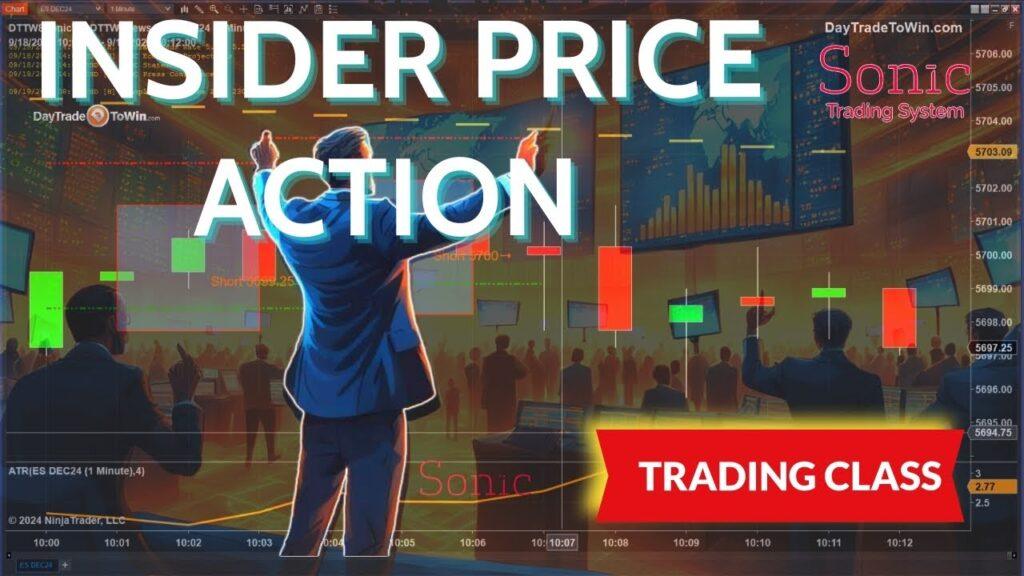
In today’s trading session, we’re diving into critical market factors, including news events, the Average True Range (ATR), and practical trading strategies. Let’s explore how to interpret these elements for a successful trading day. 1. Monitoring News Events: The Backbone of Market Movements When entering a trading session, it’s essential to check for upcoming news events. Market-shifting announcements, particularly those from the U.S., often drive significant price movements. By focusing on high-impact news, such as those released by the Federal Open Market Committee (FOMC), you can anticipate periods of increased volatility and plan your trades accordingly. For example, during today’s session, a 2:00 PM FOMC event was highlighted as a key moment to watch for market movement. Pro Tip: Adjust your news calendar to filter for only high-impact U.S. events. Medium- or low-impact events tend to clutter your charts without offering much trading value. 2. Understanding the ATR: A Guide to Market Speed The Average True Range (ATR) is a vital indicator that tells you whether the market is moving quickly, slowly, or somewhere in between. This information is especially useful when planning your trades for the day. The market often moves in cycles, with days of high volatility followed by quieter periods. Typically, after three to four days of fast or slow movement, the market shifts gears. For instance, if yesterday’s market was slow, you can expect a similarly slow environment today. Conversely, if the previous day was chaotic, brace yourself for more volatility. The ATR helps you quantify this pace, enabling you to set realistic trade targets based on current conditions. Key Takeaway: When the ATR is around 2.5, it indicates that each candle (on a 1-minute chart) is moving by about 2.5 points from high to low. Understanding this can help you set achievable trade targets. If the ATR increases to 5 or 6, expect sharper, quicker movements that require faster decision-making. 3. Setting Trade Targets: The Power of ATR-Based Planning Now that we understand how to read the ATR, let’s apply it to trade targeting. If the market’s ATR is 2.5 points, you can expect the market to move approximately 2.5 points in either direction within the next few bars. This information is crucial when setting your profit targets. For day traders, hitting a target just under the ATR (e.g., 2 points when the ATR is 2.5) is often more achievable than aiming for 5 points in a slower market. If the ATR rises to 3 points, adjust your strategy accordingly, recognizing that it’s easier to achieve a target of 2 points than to push for larger profits when the market may not have the momentum to sustain that. Pro Tip: To maximize profits while minimizing risk, set trade targets slightly below the ATR, as this allows for quicker, more consistent exits. 4. Upgrading Your Tools: Maximizing Version 4 of Sonic For those using Sonic, it’s important to ensure you’re using the latest version. Version 4 includes essential upgrades, including customizable ATR-based trade targets, making it easier to adapt your strategy based on real-time market conditions. When setting your target, adjusting it to half of the ATR (0.5) allows for faster exits with smaller targets. Conversely, setting it at 1x ATR offers a larger target but takes longer to achieve and comes with increased risk. Key Insight: Whether you’re using Sonic, Trade Scalper, or your own strategy, leveraging ATR-based targets can help you exit trades at the optimal moment. 5. Refining Your Entry: Using Limit Orders for Better Prices In fast-moving markets, precision is key. Avoid chasing trades with market orders, which can lead to bad fills, especially in volatile conditions. Instead, use limit orders to secure a better entry price. For example, if a signal is triggered and the market moves up a few ticks, using a limit order allows you to enter at a better price and improves your potential return. When looking at signals from tools like Trade Scalper, waiting for the price to move up a few ticks before entering a short trade gives you a more favorable entry point. This small adjustment can significantly impact your overall profit, especially when dealing with tight ATR-based targets. Pro Tip: Always strive for better entries by using limit orders and avoiding slippage, which can cost you valuable ticks in fast-moving markets. 6. The Road Map: Aligning Your Strategy with Market Conditions The Road Map tool is another essential resource for traders. It offers a clear visual of market direction and helps you anticipate reversals or continuations. For those using the Sonic system, coupling it with the Roadmap provides an extra layer of confidence in your trades. For example, when you receive a Sonic signal to short the market, wait for a slight price uptick before entering your trade. This approach increases your odds of a favorable entry and allows you to align your strategy with market momentum as shown by the Road Map. Final Thoughts: Trading is a game of precision and patience. By using tools like news event calendars, ATR indicators, and the Roadmap, you can create a comprehensive strategy that maximizes your chances of success. Stay disciplined, and always adjust your targets and entries based on the real-time conditions of the market. By understanding how news events impact market movements, leveraging ATR for better target-setting, and refining your entry points, you’ll be well-equipped to make smarter, more profitable trades. Happy trading! John PaulJohn Paul is the founder of DayTradeToWin, a trading education and software company established in 2008, supporting traders worldwide. His expertise focuses on price action-based futures trading strategies and structured market analysis. DayTradeToWin delivers trading education, indicators, and software tools designed to help traders apply disciplined, rule-based decision-making across global futures markets. He is the creator of multiple trading methodologies, including the Sonic System, Atlas Line, and Trade Scalper, which help traders identify structured opportunities in markets such as the E-mini S&P 500 (ES), Nasdaq (NQ), crude oil (CL), and gold (GC). Official website: https://daytradetowin.com daytradetowin.com
Ninjatrader
DayTradeToWin Review

Master NinjaTrader: Remove, Restart, and Import Indicators

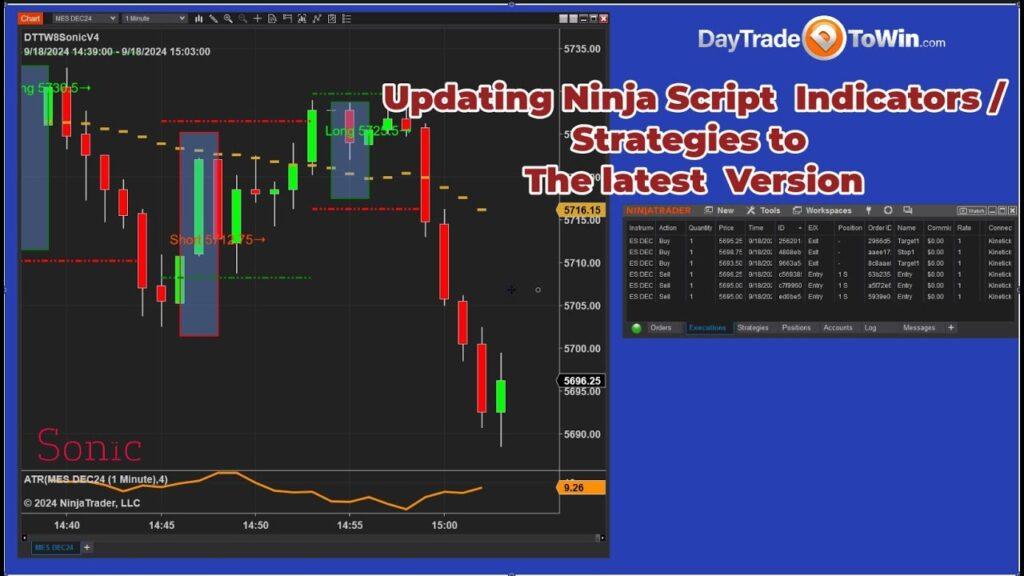
Keeping your NinjaTrader indicators and strategies up to date is crucial for efficient trading. In this guide, we’ll walk you through how to upgrade an indicator or strategy, such as the Sonic indicator, in just a few simple steps. Step 1: Remove the Old Indicator Before installing the new version, you need to remove the old one from both your charts and NinjaTrader’s system. Step 2: Import the Latest Version Now that the old version is gone, you can install the latest one. Step 3: Verify the Installation After importing the new version, double-check that everything is working correctly. Final Steps Once your licensing is confirmed and the new version is in place, you’re ready to start using the upgraded indicator or strategy. Remember, the only time you’ll need to update your Machine ID is if you’re using a different computer or if there’s been a major system update on your PC. By following these straightforward steps, you can easily upgrade any indicator or strategy in NinjaTrader. Should you run into any difficulties, reach out to support for help. Keep your tools up to date, and trade confidently with the latest versions! Happy trading! John PaulJohn Paul is the founder of DayTradeToWin, a trading education and software company established in 2008, supporting traders worldwide. His expertise focuses on price action-based futures trading strategies and structured market analysis. DayTradeToWin delivers trading education, indicators, and software tools designed to help traders apply disciplined, rule-based decision-making across global futures markets. He is the creator of multiple trading methodologies, including the Sonic System, Atlas Line, and Trade Scalper, which help traders identify structured opportunities in markets such as the E-mini S&P 500 (ES), Nasdaq (NQ), crude oil (CL), and gold (GC). Official website: https://daytradetowin.com daytradetowin.com
sonic trading
DayTradeToWin Review

Day Trading NASDAQ & E-mini S&P: Sonic Strategy

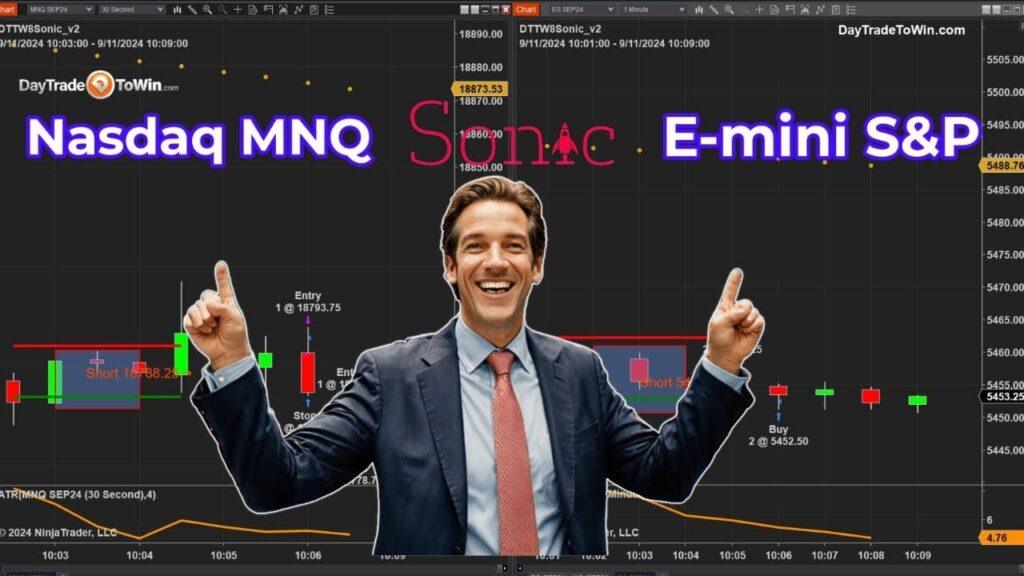
Hello traders! In today’s session, we’ll explore how to effectively trade both the NASDAQ and E-mini S&P 500 simultaneously using the Sonic Trading System. Whether you’re new to trading or an experienced pro, this guide will help you leverage price action strategies for success in fast-moving markets. What’s New with the Sonic Trading System? For those already using the Sonic Trading System, exciting updates are on the way! You’ll soon be able to customize the color of your targets, stops, and line thickness, based on the latest feedback from traders. This will improve your chart’s visual clarity and make it easier to execute trades swiftly. Expect this update by the end of the week! Risk Disclaimer: Trade Wisely Before we dive in, a quick reminder: trading involves risk. Only trade with money you can afford to lose, and ensure you understand the potential risks before entering the market. Why Use a 30-Second Chart for the NASDAQ? The NASDAQ is known for its volatility and speed, making it ideal for shorter timeframes like a 30-second chart. This allows you to capture quick price movements without holding positions for long periods. Many traders prefer the Sonic system for this market because it helps them make fast, decisive trades. Today, I’ll walk you through how to trade the NASDAQ and E-mini S&P side by side, giving you a clear view of how price action works in both markets. Executing a Short Trade on the Micro E-mini NASDAQ Let’s start with a short trade at 1877.25 in the Micro E-mini NASDAQ. Once you receive the entry signal, it’s crucial to adjust your targets and stops according to the Sonic system’s rules. You’ll see green and red lines on your chart representing your target and stop positions. In the upcoming system update, you can change these colors to suit your preference—for example, using yellow instead of green for targets. This flexibility helps you visually track your trades, especially in a fast-paced market like NASDAQ. Short Trade on the E-mini S&P 500 Next, we’ll look at a short trade on the E-mini S&P 500. While the S&P tends to move at a slower pace compared to the NASDAQ, the principles of the Sonic system still apply. Using a 1-minute chart for the E-mini, you’ll find that trades take a bit longer to generate, but they’re just as effective. Always aim for a better price when placing your trade. This is something we emphasize in the Sonic system training. A small improvement in entry price can make a big difference in your trade’s success. Managing Your Trades with the Sonic System A key aspect of trading with the Sonic system is time management. You should avoid staying in a trade for too long. The Sonic system’s time-based stops are designed to help you get out of unproductive trades quickly. Ideally, trades using short timeframes like the 30-second chart should last no more than 10-15 minutes. If the market isn’t moving in your favor by then, it’s better to exit and avoid unnecessary risk. Start Small and Scale Up Gradually If you’re new to the Sonic system, start with just one contract—whether it’s a micro or mini. This allows you to get comfortable with the process without exposing too much capital. As you gain confidence, you can scale up to two, three, or more contracts, depending on the market conditions. Starting small and gradually increasing your trade size is key to long-term success. Explore the Accelerated Mentorship Program If you want to take your trading to the next level, consider enrolling in our Accelerated Mentorship Program. This comprehensive package includes all our trading courses, proprietary software, and live training sessions, where we showcase the Sonic system in action. You’ll also get access to our live trading room, where you can see real-time examples of trades using the Sonic system and other strategies. The Sonic system, when combined with disciplined time management and a focus on price action, is a powerful tool for day traders. Whether you’re trading the NASDAQ, E-mini S&P, or another market, the key is to stay patient, follow your strategy, and avoid overtrading. Conclusion: Ready to Level Up Your Trading? If you’re interested in learning more about the Sonic Trading System, visit DayTradeToWin. You can sign up for a free membership and get access to our proprietary tools, including the Sonic system. Until next time, trade smart and happy trading! John PaulJohn Paul is the founder of DayTradeToWin, a trading education and software company established in 2008, supporting traders worldwide. His expertise focuses on price action-based futures trading strategies and structured market analysis. DayTradeToWin delivers trading education, indicators, and software tools designed to help traders apply disciplined, rule-based decision-making across global futures markets. He is the creator of multiple trading methodologies, including the Sonic System, Atlas Line, and Trade Scalper, which help traders identify structured opportunities in markets such as the E-mini S&P 500 (ES), Nasdaq (NQ), crude oil (CL), and gold (GC). Official website: https://daytradetowin.com daytradetowin.com
sonic
DayTradeToWin Review

Sonic System: Strategies to Recover from Trading Losses

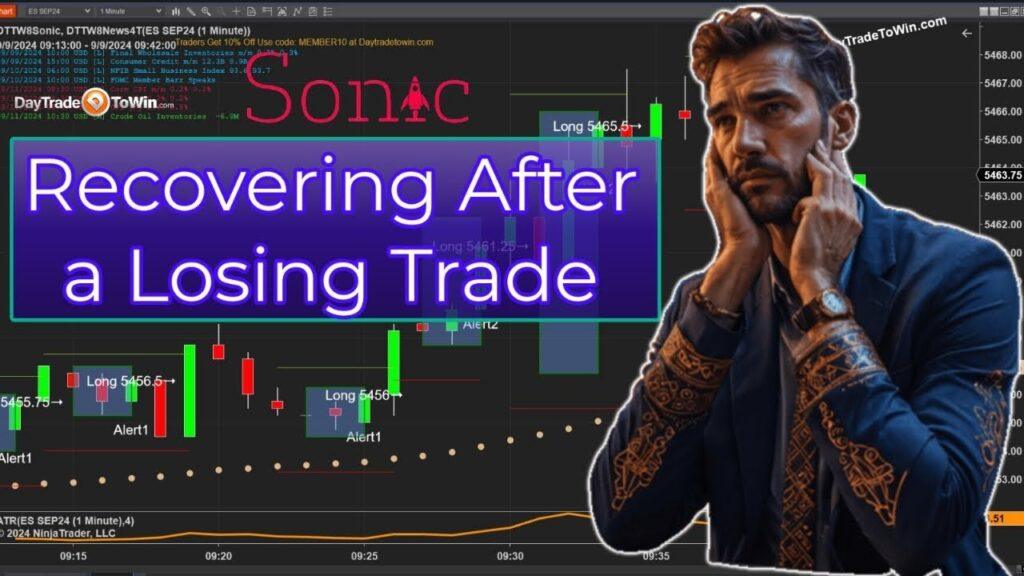
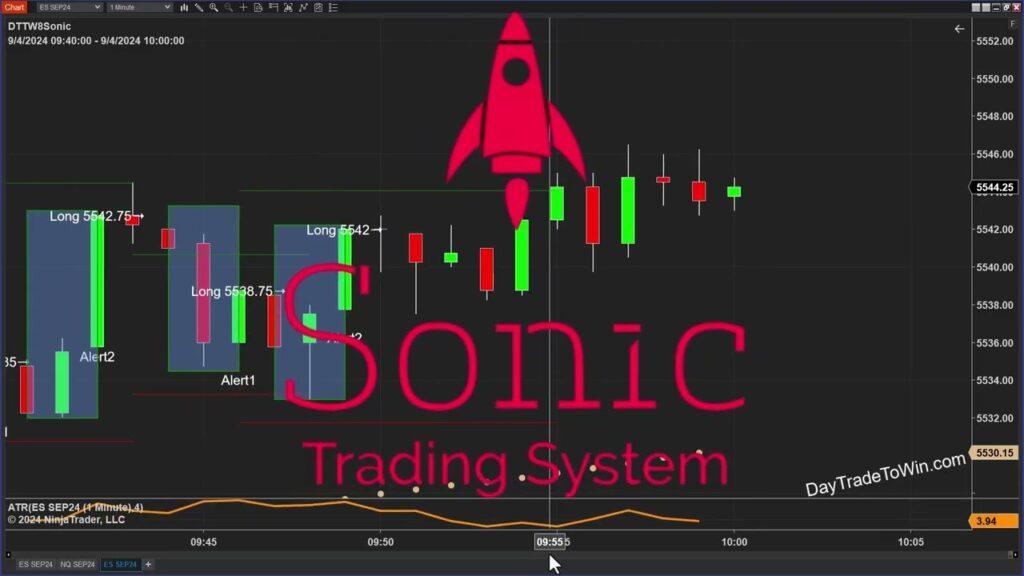
Today, we’re going to discuss an inevitable part of trading—losing trades—and more importantly, how to recover from them using the Sonic Trading System. Whether you’re a beginner or an experienced trader, losses are part of the process. However, how you manage these losses and recover is key to long-term success. Let’s break down a real trading scenario and learn from it. Facing a Losing Trade This morning, before the market opened, we had five successful trade signals between 9:15 and 9:35. These were winning trades based on Sonic’s signals. Yet, many traders fall into a common trap—they try to jump back into a trade they’ve missed. Don’t chase a trade after it’s gone. If you miss it, be patient and wait for the next signal. Now, here’s an example of a losing trade: I received a signal to go long at 5466, but instead of following the system’s suggested target, I aimed higher out of greed. This mistake cost me, as my target wasn’t hit, and I eventually got stopped out. The lesson here is simple—stick to the system. Deviating from the recommended target rarely ends well. The Danger of Overtrading One of the most common mistakes traders make is re-entering a trade after a loss. You may think you can make back your money by trying the same trade again, but this often leads to further losses. If you get stopped out, accept the loss and move on to the next trade without trying to force it. Recovering from a Loss Here’s where the Sonic Trading System really shines. After that initial loss, I refocused and followed the system exactly. The next trade was a winner, and by sticking to the plan, I began to recover. When recovering from a loss: This approach helped me recover after a single loss by following the system faithfully. Consistency is Key Another important point: If you’ve had a streak of 3, 4, or more winning trades in a row, consider stopping for the day. It’s tempting to keep trading, but more trades don’t necessarily mean more profits. Sometimes, the best move is to lock in your gains and return the next day. The Importance of Sticking to the Plan When you’re recovering from a losing trade, the temptation to adjust targets or stops is strong, but resist it. Stick to the system and trust the process. The Sonic Trading System is designed to avoid the kind of emotional flip-flop many traders struggle with. By sticking to the system, you can avoid unnecessary losses. Final Thoughts: Turn Losses into Lessons Losing trades are part of the journey, but how you respond is what matters. Stick to a solid strategy like the Sonic Trading System, and you’ll find that recovery is possible—even after a tough loss. It’s not about perfection; it’s about persistence and discipline. If you’re ready to elevate your trading game, consider joining the Accelerated Mentorship Program. You’ll get access to the Sonic Trading System and all of our exclusive tools designed to help you trade with confidence. Start your trading journey today! Visit daytradetowin.com for a free membership and get access to proven trading methods and software. John PaulJohn Paul is the founder of DayTradeToWin, a trading education and software company established in 2008, supporting traders worldwide. His expertise focuses on price action-based futures trading strategies and structured market analysis. DayTradeToWin delivers trading education, indicators, and software tools designed to help traders apply disciplined, rule-based decision-making across global futures markets. He is the creator of multiple trading methodologies, including the Sonic System, Atlas Line, and Trade Scalper, which help traders identify structured opportunities in markets such as the E-mini S&P 500 (ES), Nasdaq (NQ), crude oil (CL), and gold (GC). Official website: https://daytradetowin.com daytradetowin.com
sonic
DayTradeToWin Review

Stay Ahead with News Alerts and Sonic Signals

Hello, traders! Today, we’re taking a closer look at the Sonic Trading System, a powerful tool designed to help you navigate the market with precision. We’ll break down how to interpret its signals, and I’ll share key tips on handling trades during major news events like a pro. The Sonic Trading System at Work The Sonic Trading System identifies high-probability entry points across various timeframes. Recently, it triggered a long signal at 55.4550, coinciding with a major news event at 10:00 AM New York time. As expected, the market reacted with volatility—a common occurrence during news releases. If you’re new to trading, this kind of volatility can feel overwhelming, making it important to remain patient when a signal aligns with a news event. Why Timing Matters During News Releases Market-moving news often results in sharp, unpredictable movements, which can be risky for traders. A good rule of thumb is to wait a few minutes after a news event before entering a trade, allowing the market to stabilize. For example, after the 10:00 AM news release, waiting seven minutes brought the market to a more predictable state. The Sonic Trading System issued another long signal at 55.444, but even then, it’s crucial to monitor the market conditions. If the average true range (ATR) remains high (around 8), it signals that volatility is still elevated. Conservative traders may prefer waiting for the ATR to drop to more normal levels (around 5 or 6) before entering a trade. Staying Informed: News Indicators and Economic Calendars Keeping ahead of market-moving news is essential for making informed trading decisions. Using reliable economic calendars and news indicators is key. The Day Trade to Win economic calendar provides a comprehensive list of upcoming news events that could affect the markets. Additionally, the Day Trade to Win news indicator provides an audible alert before major news hits, giving you time to either prepare or hold off on trades. You can access these tools during their free trial, or use the economic calendar available online. Choosing the Right Chart and Timeframe The Sonic Trading System is versatile, working effectively across various chart types and timeframes. Whether you’re using 1-minute charts, 15-second charts, or tick charts, the system adapts seamlessly. For instance, on a recent 15-second chart, the ATR was around 2.5, indicating a more controlled trading environment. This setup allowed for gains of $125 to $150 on the E-mini S&P—a solid return for short-term trades. Whether you prefer minute charts, tick charts, or range charts, the Sonic Trading System’s flexibility allows you to find trades throughout the day. Within just 10 minutes, multiple winning trades were signaled, each with clear entries and exits. Don’t Overtrade: Quality Over Quantity While the Sonic Trading System provides ample opportunities, it’s essential to trade smart, not often. If you achieve three or four winning trades, that may be enough to hit your daily profit target. Overtrading, especially in volatile markets, can lead to unnecessary losses. As we saw with a signal at 55.546, if the market moves away from your limit order, it’s okay to let the trade pass. Another setup is always around the corner. Final Thoughts Successful trading is about finding balance—knowing when to take action and when to wait. The Sonic Trading System is a powerful tool for spotting high-probability trades, but staying informed and patient, especially during news events, is crucial. Using tools like the Day Trade to Win news indicator and economic calendar can help you manage risk and improve your trading performance. Remember, trading involves risks, and it’s important to trade with capital you can afford to lose. Always approach the market with caution and a solid plan. Until next time, happy trading! For more information on the Sonic Trading System and to try it for free, visit daytradetowin.com and start trading with confidence. John PaulJohn Paul is the founder of DayTradeToWin, a trading education and software company established in 2008, supporting traders worldwide. His expertise focuses on price action-based futures trading strategies and structured market analysis. DayTradeToWin delivers trading education, indicators, and software tools designed to help traders apply disciplined, rule-based decision-making across global futures markets. He is the creator of multiple trading methodologies, including the Sonic System, Atlas Line, and Trade Scalper, which help traders identify structured opportunities in markets such as the E-mini S&P 500 (ES), Nasdaq (NQ), crude oil (CL), and gold (GC). Official website: https://daytradetowin.com daytradetowin.com

sonic
DayTradeToWin Review

Maximizing Profit with Sonic Trading: Target Adjustments

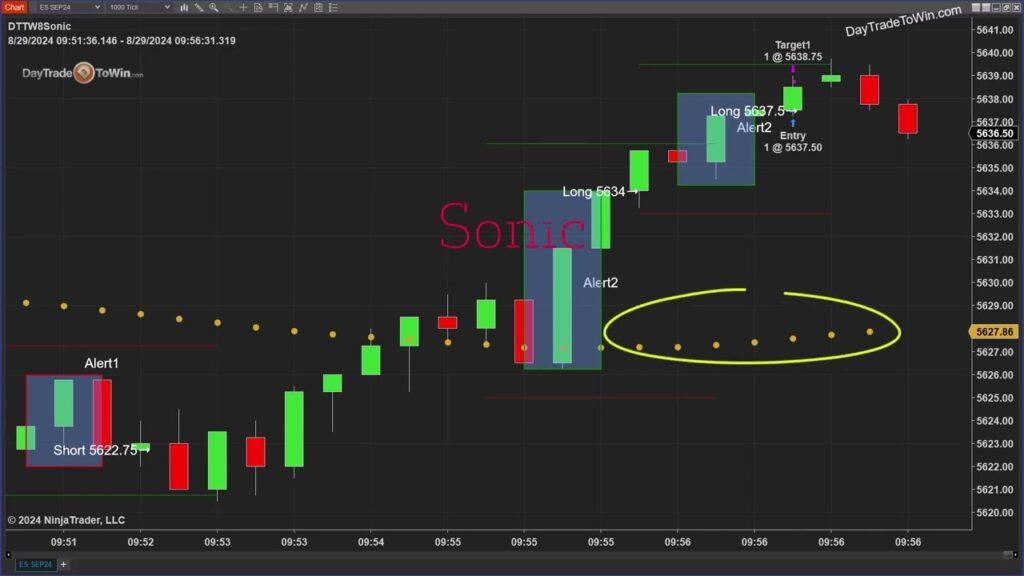
Hello, Traders! In today’s session, we’re focusing on the Sonic Trading System, specifically on how to fine-tune your profit targets for optimal trading results. Whether you’re new to trading or have years of experience, mastering these adjustments can help you capture profits more effectively. Why Adjusting Your Targets is Crucial Trading success often hinges on your ability to adapt to changing market conditions. The Sonic Trading System uses the Average True Range (ATR) to set profit targets, giving you a dynamic approach to trading. By adjusting these targets, you align your strategy with the market’s current volatility, increasing your chances of securing profitable trades. Fine-Tuning with ATR Standard practice might involve setting targets at 1x or 2x the ATR, but today, we’re focusing on a more precise adjustment: setting the target at 75% of the ATR. This allows for quicker exits, which can be particularly advantageous in fast-moving markets. Utilizing Market Filters The Sonic Trading System also includes a market filter, represented by a dotted line on your chart. This filter helps you decide whether to go long or short. For example, if the price is above the dotted line, the system signals long trades; if below, it signals short trades. This straightforward filter helps streamline your trading decisions, allowing you to focus on high-probability opportunities. Real-Time Trading Examples Let’s explore some practical examples: The Role of Stops While adjusting targets is important, setting appropriate stops is equally critical. The Sonic Trading System automatically determines stops based on the ATR, but you can adjust these settings to suit your risk tolerance. For instance, in one trade today, the stop was strategically placed just below a key support level, protecting the trade from significant loss. Always ensure your stops are in place to safeguard your capital. Avoiding Overtrading Overtrading is a common pitfall, and the Sonic Trading System generates plenty of signals throughout the day. However, it’s important to recognize when enough is enough. If you’ve had several winning trades, consider stepping away to avoid unnecessary risk. Even with a solid system, not every trade will be a winner, so it’s wise to protect your gains. Why the Sonic Trading System is Ideal for Prop Traders For those trading on prop firms or seeking funded accounts, the Sonic Trading System is particularly beneficial due to its small stop sizes. These smaller stops help maintain a favorable risk-to-reward ratio, which is essential for meeting the strict requirements of these trading environments. Final Thoughts The Sonic Trading System offers a powerful, adaptable approach to trading that can be tailored to fit various markets and strategies. By adjusting your ATR settings and utilizing the system’s built-in filters and stops, you can enhance your trading performance and make more informed decisions. As we head into the final quarter of 2024, the markets are expected to become increasingly volatile, especially with the upcoming elections. Now is the perfect time to refine your strategy and prepare for the opportunities ahead. Remember, trading carries risks, so always trade responsibly. If you’re ready to elevate your trading, visit Daytradetowin.com to take advantage of our end-of-summer special and save 15% on the Sonic Trading System. Happy trading! John PaulJohn Paul is the founder of DayTradeToWin, a trading education and software company established in 2008, supporting traders worldwide. His expertise focuses on price action-based futures trading strategies and structured market analysis. DayTradeToWin delivers trading education, indicators, and software tools designed to help traders apply disciplined, rule-based decision-making across global futures markets. He is the creator of multiple trading methodologies, including the Sonic System, Atlas Line, and Trade Scalper, which help traders identify structured opportunities in markets such as the E-mini S&P 500 (ES), Nasdaq (NQ), crude oil (CL), and gold (GC). Official website: https://daytradetowin.com daytradetowin.com

Scroll to Top