

Market News

stocks
Market News

Why These Underdog Stocks Will Sizzle This Summer

Evercore Strategist: June Could Be Prime Time for Small-Cap Stocks Stocks continue to face pressure from lingering trade concerns, but Monday’s rebound showed that investors are still willing to look past the noise. That resilience could carry over into Tuesday—and according to Evercore ISI, it might be small-cap stocks’ time to shine. Despite strong gains from large caps, the S&P 500 is only 3.78% below its February peak after a record-breaking May. But while the broader index has managed to stay afloat, small-cap stocks have struggled. The Russell 2000 is down 7.17% so far in 2025 and remains over 15% below its all-time high from November 2021. In contrast, the S&P is up nearly 1% year to date. This underperformance sets the stage for Evercore ISI’s latest call. Led by strategist Julian Emanuel, the team sees June as a key seasonal window for small caps to outperform. Large-cap names have beaten small caps by 9% through May, a wide gap driven by factors such as trade tensions, higher interest rates, and weakening consumer sentiment—issues that tend to hit smaller, U.S.-focused companies harder. However, Evercore notes that June’s historical trends, coinciding with the annual Russell Index rebalancing, typically favor small caps. “When large-cap outperformance through May has been this strong, June has historically delivered a sharp reversal in favor of small-cap stocks,” the team wrote. Beyond seasonality, Evercore sees strong fundamentals supporting the case. Small caps are trading at attractive valuations relative to large caps, and with the Federal Reserve expected to cut rates as economic growth continues at a modest pace, the macro backdrop may finally start to tilt in their favor. To gain exposure, the team recommends the iShares Russell 2000 ETF (IWM). While small caps overall have underperformed, there are standout names in the index: Though the call on small caps remains a contrarian one—most major Wall Street firms have largely ignored the sector—Evercore isn’t alone. Tom Lee of Fundstrat Global Advisors also sees opportunity. He believes that once investors look past the current tariff pressures and anticipate a more accommodative Fed in 2026, small-cap stocks could see a major rebound. John PaulJohn Paul is the founder of DayTradeToWin, a trading education and software company established in 2008, supporting traders worldwide. His expertise focuses on price action-based futures trading strategies and structured market analysis. DayTradeToWin delivers trading education, indicators, and software tools designed to help traders apply disciplined, rule-based decision-making across global futures markets. He is the creator of multiple trading methodologies, including the Sonic System, Atlas Line, and Trade Scalper, which help traders identify structured opportunities in markets such as the E-mini S&P 500 (ES), Nasdaq (NQ), crude oil (CL), and gold (GC). Official website: https://daytradetowin.com daytradetowin.com

Goldman
Market News

Goldman Case for More S&P Gains

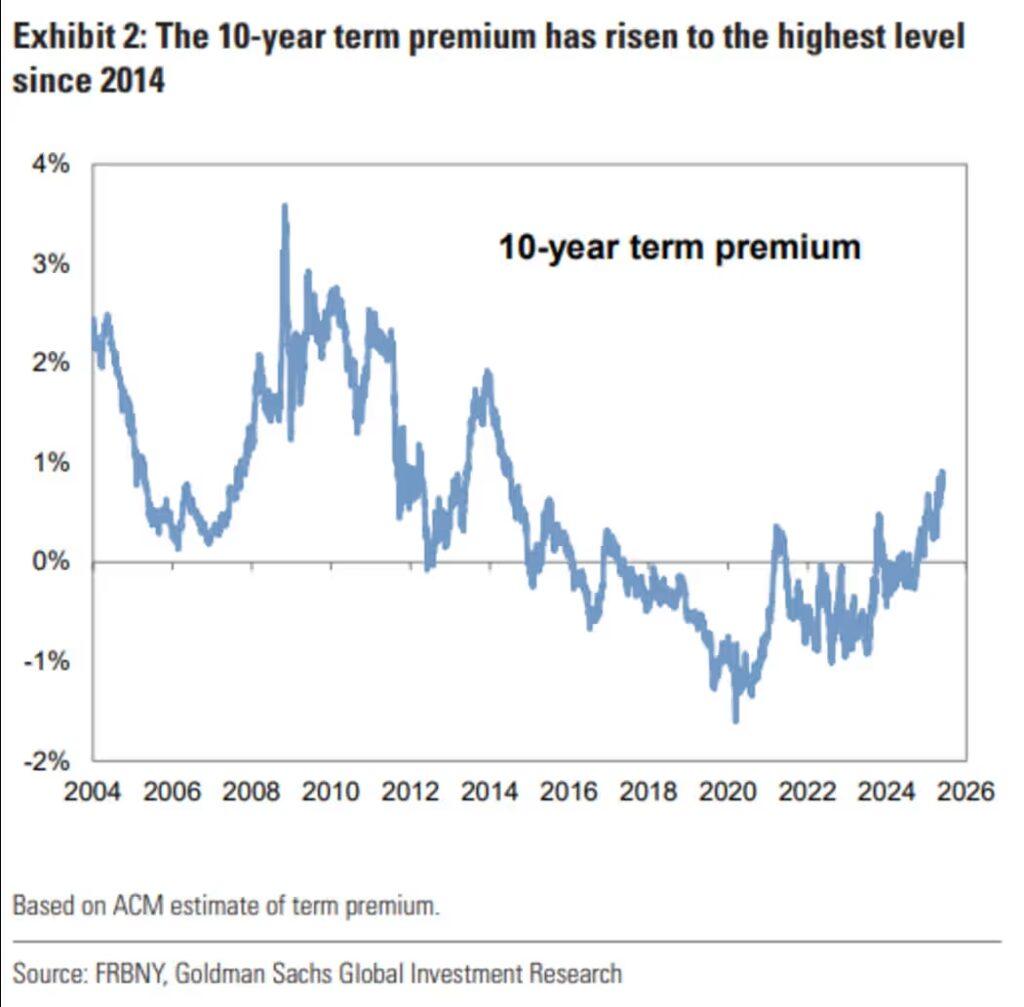
Goldman Sachs Holds 6,500 S&P 500 Target Despite Rising Yields Goldman Sachs is maintaining its 12-month S&P 500 target of 6,500, even as bond yields rise. The yield on the 10-year U.S. Treasury has jumped from 4% in late April to 4.43%, fueled by concerns over tariffs, inflation, and increased term premia—investors demanding higher returns for longer-term debt. In a note released Friday, strategists led by David Kostin analyzed the impact of higher yields on equities. They forecast the 10-year yield will end 2025 at 4.5%, rising slightly to 4.55% in 2026. Goldman emphasized that for equities, the drivers and speed of rate changes matter more than the actual yield level. Markets typically react better when yields rise due to stronger growth expectations. However, if inflation or fiscal risks are behind the increase—or if yields rise sharply in a short time—a market correction becomes more likely. Since U.S.-China tariff tensions escalated on April 2, investors have become more focused on the connection between yields and stock returns, though Goldman notes there’s no consistent historical relationship. Goldman expects the S&P 500’s forward P/E ratio—currently near fair value—to remain stable over the next year. Large-cap companies with long-term, fixed-rate debt are less exposed to rate volatility. Small caps, by contrast, are more vulnerable due to their reliance on shorter-term, floating-rate borrowing. Given this outlook, Goldman continues to recommend investors prioritize companies with strong balance sheets. John PaulJohn Paul is the founder of DayTradeToWin, a trading education and software company established in 2008, supporting traders worldwide. His expertise focuses on price action-based futures trading strategies and structured market analysis. DayTradeToWin delivers trading education, indicators, and software tools designed to help traders apply disciplined, rule-based decision-making across global futures markets. He is the creator of multiple trading methodologies, including the Sonic System, Atlas Line, and Trade Scalper, which help traders identify structured opportunities in markets such as the E-mini S&P 500 (ES), Nasdaq (NQ), crude oil (CL), and gold (GC). Official website: https://daytradetowin.com daytradetowin.com
market
Market News

Hold Tight: 5 Pillars for the Bull Market

Jim Paulsen Sees More Market Tailwinds Ahead Tariffs and trade tensions continue to shape market sentiment, but despite the noise, the S&P 500 remains just 3.8% below its February 19 closing high. Still, with trade policy grabbing most of the headlines, it’s worth asking: What other forces might drive the market from here? According to veteran Wall Street strategist Jim Paulsen, now retired and writing on his Paulsen Perspectives blog, several key indicators could begin offering much stronger support for equities in the coming months. Paulsen points to five main pillars: the Fed funds rate, the 10-year Treasury yield, inflation, M2 money supply growth, and consumer confidence. Based on historical analysis going back to the 1960s, he finds that the S&P 500 tends to perform significantly better when these factors are moving in a favorable direction. For example, when M2 money supply is expanding, the S&P 500 has returned an average of 12.7% annually, compared to just 2.2% during periods of slowing growth. Similarly, the index has gained an average of 10.5% more during times when the Fed is cutting rates rather than hiking them. Each of the five factors individually correlates with stronger market performance, but the real kicker comes when all five are aligned. In such cases, Paulsen says, the S&P 500 has posted an average annual gain of 16.3%. So where does that leave investors now? Paulsen believes the market setup is turning more favorable. He notes that this bull market, which began in October 2022, has unfolded largely without help from the usual supports. The Fed has maintained a tight policy stance, and money supply growth has been unusually weak—just 0.8% annually, with real M2 contracting at a rate of -2.2%. Long-term bond yields haven’t provided much relief either. The 10-year Treasury yield has hovered between 3.5% and 4.75%, lacking the kind of downward trend that typically bolsters stocks. The one clear tailwind has been inflation. Since the rally began, inflation has dropped from 7.75% to 2.3%. And while new tariffs could cause a modest uptick, Paulsen expects inflation to remain stable—or even drift lower—over the next year. Consumer confidence, meanwhile, has been weak but is showing early signs of recovery. Paulsen concedes that some investors view this bull run as overstretched, especially given high valuations. But he argues that as economic growth slows and inflation remains tame, the environment could shift in favor of equities. “If sentiment moves toward a low-inflation, sluggish-growth outlook,” he writes, “the market could benefit from multiple supports working in its favor. Investors should think twice before abandoning this bull market—it’s not out of fuel yet. John PaulJohn Paul is the founder of DayTradeToWin, a trading education and software company established in 2008, supporting traders worldwide. His expertise focuses on price action-based futures trading strategies and structured market analysis. DayTradeToWin delivers trading education, indicators, and software tools designed to help traders apply disciplined, rule-based decision-making across global futures markets. He is the creator of multiple trading methodologies, including the Sonic System, Atlas Line, and Trade Scalper, which help traders identify structured opportunities in markets such as the E-mini S&P 500 (ES), Nasdaq (NQ), crude oil (CL), and gold (GC). Official website: https://daytradetowin.com daytradetowin.com
nvidia
Market News

Nvidia Proves Tech Loyalty Pays, Says Strategist

Retail Investors Have Played the Dip Right — But the Real Test May Still Lie Ahead, Strategist Says A renewed wave of optimism is sweeping through markets, thanks to Nvidia blockbuster earnings and a court challenge to the so-called “Liberation Day” tariffs. According to Ross Mayfield, investment strategist at Baird, these developments are reigniting interest in tech and AI — and could support a broader market rebound after a muted start to 2025. “Nvidia results, especially the relentless demand for its core products, are helping to recharge confidence in the AI trade,” Mayfield told MarketWatch in comments following a recent interview. “The company remains the bellwether for what is arguably the most powerful secular trend in the market today.” Mayfield has been bullish on AI-adjacent stocks since the April pullback, and he continues to view the sector as a structural winner — less susceptible to political volatility and policy shifts. “There’s massive capital going into data centers, chips, and infrastructure to support an AI-driven future. That’s not something short-term politics can derail,” he said. For him, Nvidia, big tech and AI leaders present long-term opportunities, especially when prices dip. “When you get the chance to buy companies you believe in for the next five years — and they’re trading at a discount — you don’t want to miss that,” he said. Looking out six to twelve months, Mayfield remains optimistic. While the recent rally has left stocks looking a bit overbought, he sees positive momentum not just in tech but across cyclical sectors including consumer, financials, and industrials. “We’re in a risk-on environment,” he noted. “From the April lows, we’ve seen leadership return to the Magnificent Seven and other AI-linked stocks.” He does caution, however, that risks remain. A market bubble, akin to the one in the late 1990s, can’t be ruled out. “If ChatGPT was the modern ‘Aha’ moment, we may still have runway before hitting those excesses — but the comparison is worth keeping in mind,” he said. Valuations are another concern. “Markets tend to get into trouble when prices are stretched. We’re near that point,” he warned. A shift in trade policy or tariffs under a future Trump administration could also trigger renewed volatility. “Investors should be prepared for more turbulence — potentially at levels we haven’t seen since the pandemic.” One key difference in this market cycle, Mayfield argues, is the emergence of more consistent retail investor participation. In recent weeks, individual investors have stepped in to buy the dip while institutional players remained cautious. “There’s been a real shift — retail investors are becoming more disciplined, contributing regularly to retirement accounts and staying invested,” he said. “It’s changing how we think about the divide between so-called ‘smart money’ and ‘dumb money.’” Still, the durability of that retail resilience remains uncertain. “The past decade has seen a number of short-lived bear markets. Dip-buying has worked — and fast. Eventually, that playbook will get tested in a deeper, more sustained downturn,” Mayfield said. John PaulJohn Paul is the founder of DayTradeToWin, a trading education and software company established in 2008, supporting traders worldwide. His expertise focuses on price action-based futures trading strategies and structured market analysis. DayTradeToWin delivers trading education, indicators, and software tools designed to help traders apply disciplined, rule-based decision-making across global futures markets. He is the creator of multiple trading methodologies, including the Sonic System, Atlas Line, and Trade Scalper, which help traders identify structured opportunities in markets such as the E-mini S&P 500 (ES), Nasdaq (NQ), crude oil (CL), and gold (GC). Official website: https://daytradetowin.com daytradetowin.com
market
Market News

Hot Weather, Cold Market Truths

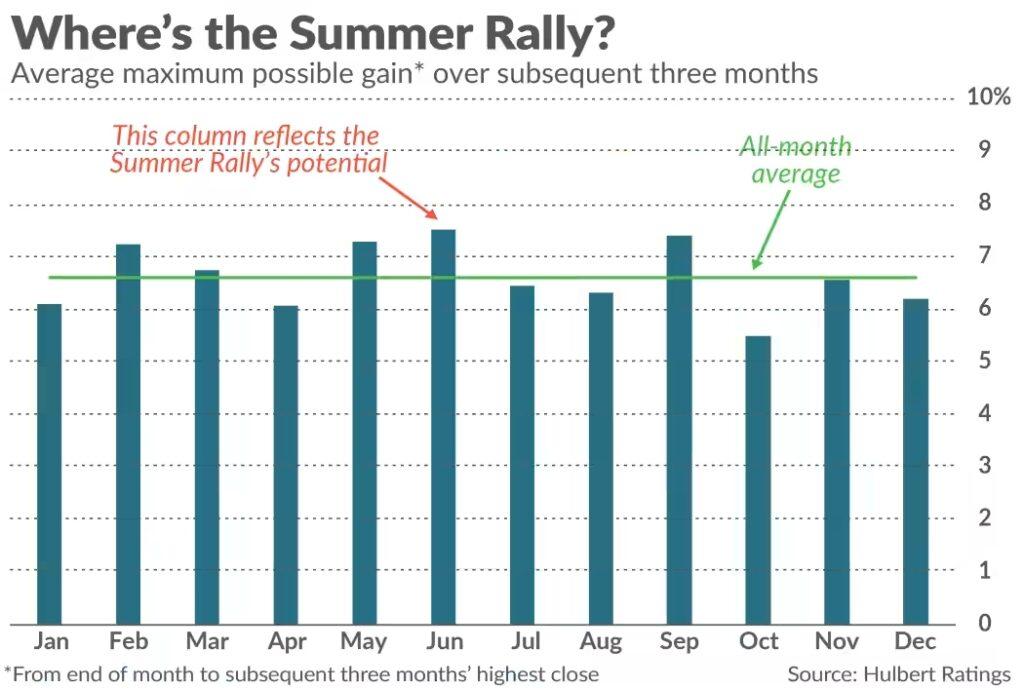
June Market Myths: Don’t Bet on a Swoon or a Rally Two seasonal stock market clichés tend to resurface each June: the ominous “June swoon” and the optimistic “summer rally.” Neither stands up to scrutiny. Wall Street lore says stocks either fall sharply in June or kick off a strong summer run. But historical data suggests otherwise. Since its inception in 1896, the Dow Jones Industrial Average has posted an average monthly gain of 0.62%. June is neither better nor worse than that — just average. Debunking the “June Swoon” Yes, stocks often decline at some point during a month — any month. But to test the so-called June swoon, we need to ask: is June uniquely prone to bigger drops? Looking at more than a century of data on the Dow, the average maximum intra-month loss in June is nearly identical to the average for all months. In fact, May, September, and October have shown larger average declines. There’s nothing special — or especially negative — about June. The Reality of the “Summer Rally” What about the summer rally? To test that theory, we examined the Dow’s biggest gain from early June through late August. While June does show slightly more upside potential than other months, the difference — just 0.9 percentage points — isn’t statistically significant. And even if it were, capturing it would require perfect foresight. A Flip of the Coin The takeaway? Acting on these seasonal narratives is no better than guessing. Neither the swoon nor the rally has reliable evidence behind it. Why Theory Matters Even if a seasonal trend did show a statistical edge, you shouldn’t act on it unless there’s a plausible reason it exists. Many patterns are flukes, not signals — a point emphasized by David Leinweber in “Stupid Data Miner Tricks,” which details how spurious correlations can mislead investors. And as Lawrence Tint, former U.S. CEO of BGI, notes: if there were a clear reason behind a pattern, it would quickly vanish. Once investors understand it, they act on it — and the edge disappears. Final Thought Seasonal patterns like the June swoon and summer rally make for catchy headlines, but not sound investment strategies. If you’re looking for reliable returns, skip the calendar myths and focus on fundamentals. John PaulJohn Paul is the founder of DayTradeToWin, a trading education and software company established in 2008, supporting traders worldwide. His expertise focuses on price action-based futures trading strategies and structured market analysis. DayTradeToWin delivers trading education, indicators, and software tools designed to help traders apply disciplined, rule-based decision-making across global futures markets. He is the creator of multiple trading methodologies, including the Sonic System, Atlas Line, and Trade Scalper, which help traders identify structured opportunities in markets such as the E-mini S&P 500 (ES), Nasdaq (NQ), crude oil (CL), and gold (GC). Official website: https://daytradetowin.com daytradetowin.com

retail
Market News

Retail Confidence May Backfire

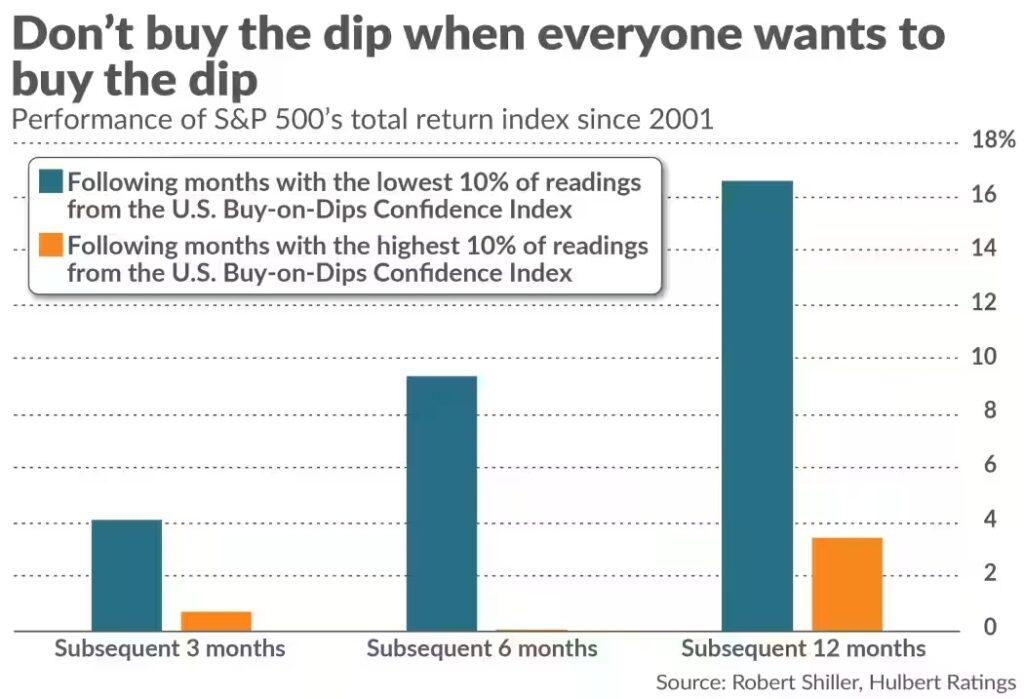
Retail Investors Are Rushing to Buy the Dip — And That’s a Problem Retail investors have been aggressively buying every market dip — a classic sign of overconfidence that often precedes a market top. As Warren Buffett famously said, “Be fearful when others are greedy.” Following the S&P 500’s sharp drop in early April — over 12% in just four trading days — retail traders piled in. “An army of amateur investors stepped up to buy the dip with both hands,” reported MarketWatch’s Joseph Adinolfi. JPMorgan analysts estimated that individuals bought $50 billion in stocks in April alone, accounting for nearly a third of daily trading volume at times. This kind of enthusiasm usually spells trouble. History shows that aggressive dip-buying by individual investors is far more common near market peaks than bottoms. In contrast, true market bottoms tend to occur when fear dominates — when investors sell into rallies, not buy into selloffs. One tool that highlights this dynamic is Yale professor Robert Shiller’s “Buy on Dips Confidence Index.” This survey gauges how likely retail investors believe the market will rebound after a drop. When confidence is high, forward returns are typically poor. When confidence is low — when investors doubt any rebound — future returns improve significantly. The data is statistically strong. Though Shiller’s index is released with a lag, recent behavior suggests we’re near the high end of its historical range. That’s a warning sign. Each successful dip-buy emboldens investors, reinforcing a cycle of confidence and risk-taking. But this cycle can’t last forever. Eventually, it takes a much deeper, more painful correction to shake that conviction and reset sentiment. Until then, the foundation for a sustainable rally just isn’t in place. And when the reset comes, it won’t be gentle. John PaulJohn Paul is the founder of DayTradeToWin, a trading education and software company established in 2008, supporting traders worldwide. His expertise focuses on price action-based futures trading strategies and structured market analysis. DayTradeToWin delivers trading education, indicators, and software tools designed to help traders apply disciplined, rule-based decision-making across global futures markets. He is the creator of multiple trading methodologies, including the Sonic System, Atlas Line, and Trade Scalper, which help traders identify structured opportunities in markets such as the E-mini S&P 500 (ES), Nasdaq (NQ), crude oil (CL), and gold (GC). Official website: https://daytradetowin.com daytradetowin.com

Scroll to Top