
Market News

silver
Market News

Silver Outlook: Volatility Now, Upside Ahead

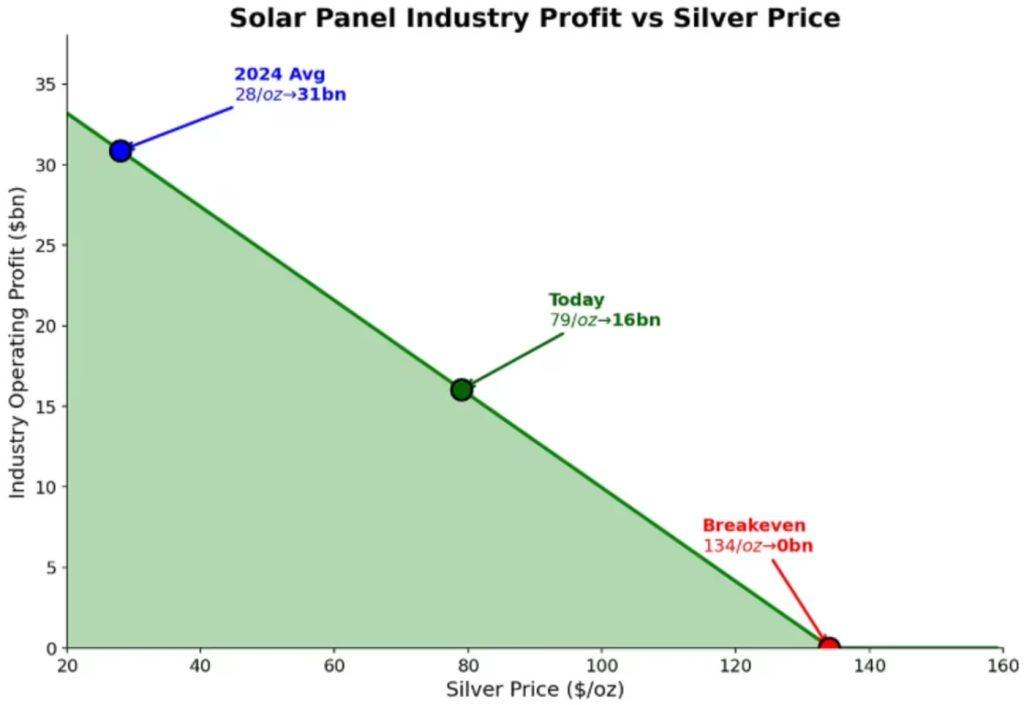
“This is where it’s fun. This is where it’s scary,” says veteran commodities analyst Alexander Campbell. The former head of commodities at hedge-fund giant Bridgewater warns that silver faces several near-term hurdles that investors may want to see cleared before buying. That’s how Campbell — once a global macro investor at Bridgewater and now founder and CEO of Black Snow Capital — describes the current trading environment for silver, which has rallied roughly 25% in December alone. Silver is up an extraordinary 156% so far in 2025, though prices pulled back on Monday after logging their largest one-day dollar gain on record last Friday. Campbell argued as early as February that booming solar demand had already pushed the silver market into a structural deficit. Even so, Campbell acknowledges in a recent Substack post that short-term risks are meaningful. The most immediate is the potential for tax-driven selling once trading resumes in the new year, particularly for positions held longer than 12 months. Capital gains taxes fall at that threshold, especially for deep-in-the-money options expiring Dec. 31, giving traders an incentive to hold through the final three trading sessions of 2025 before taking profits. Another headwind could come from the U.S. dollar, which Campbell expects may strengthen in the near term after a solid third-quarter GDP report. A firmer dollar typically pressures dollar-denominated commodities. He also highlights the Chicago Mercantile Exchange’s decision to raise margin requirements on silver trades effective Dec. 29, a move that reduces leverage and speculative appetite. Campbell also notes growing commentary around silver’s “overbought” condition and concerns that its sharp rise this year could encourage substitution with copper in industrial applications. Despite these factors, his bullish outlook remains firmly intact. On copper substitution, Campbell argues that while the case may hold over the long term, the roughly 18-month payback period required to retool facilities is too long for solar manufacturers to justify today. He adds that the solar industry — one of silver’s largest sources of demand — remains economically viable even with silver priced at $134 an ounce, roughly 70% above current spot levels. A major development on the immediate horizon is China’s new export-licensing rules, set to take effect Jan. 1. As a key net exporter, China’s annual silver output of about 121 million ounces will now require government approval to leave the country. Campbell sees today’s elevated physical premiums as especially telling. Physical silver is trading near $91 an ounce in Dubai and $85 in Shanghai, compared with around $75 on COMEX futures. “When physical diverges this sharply from paper,” he says, “one of them is wrong — and historically, it’s not physical.” Backwardation in London’s over-the-counter silver market — where spot prices exceed forward prices — is now the steepest in decades, according to Campbell. At the same time, options markets are pricing in significant upside tail risk. Technical signals also support higher prices. Commodity Futures Trading Commission data show no extreme positioning, suggesting there is still “fuel left,” while silver-backed ETFs such as the iShares Silver Trust are still catching up to underlying demand. Ultimately, Campbell says silver’s most powerful drivers are structural. He points to “inelastic” demand from solar — estimated at 290 million ounces in 2025 and rising to 450 million ounces by 2030 — alongside growing data-center needs. “Every AI query needs electrons,” he says. “The marginal electron is silver. Solar needs silver.” John PaulJohn Paul is the founder of DayTradeToWin, a trading education and software company established in 2008, supporting traders worldwide. His expertise focuses on price action-based futures trading strategies and structured market analysis. DayTradeToWin delivers trading education, indicators, and software tools designed to help traders apply disciplined, rule-based decision-making across global futures markets. He is the creator of multiple trading methodologies, including the Sonic System, Atlas Line, and Trade Scalper, which help traders identify structured opportunities in markets such as the E-mini S&P 500 (ES), Nasdaq (NQ), crude oil (CL), and gold (GC). Official website: https://daytradetowin.com daytradetowin.com
stocks
Market News

Stocks Hit Fresh Records on Christmas Eve Trading Session

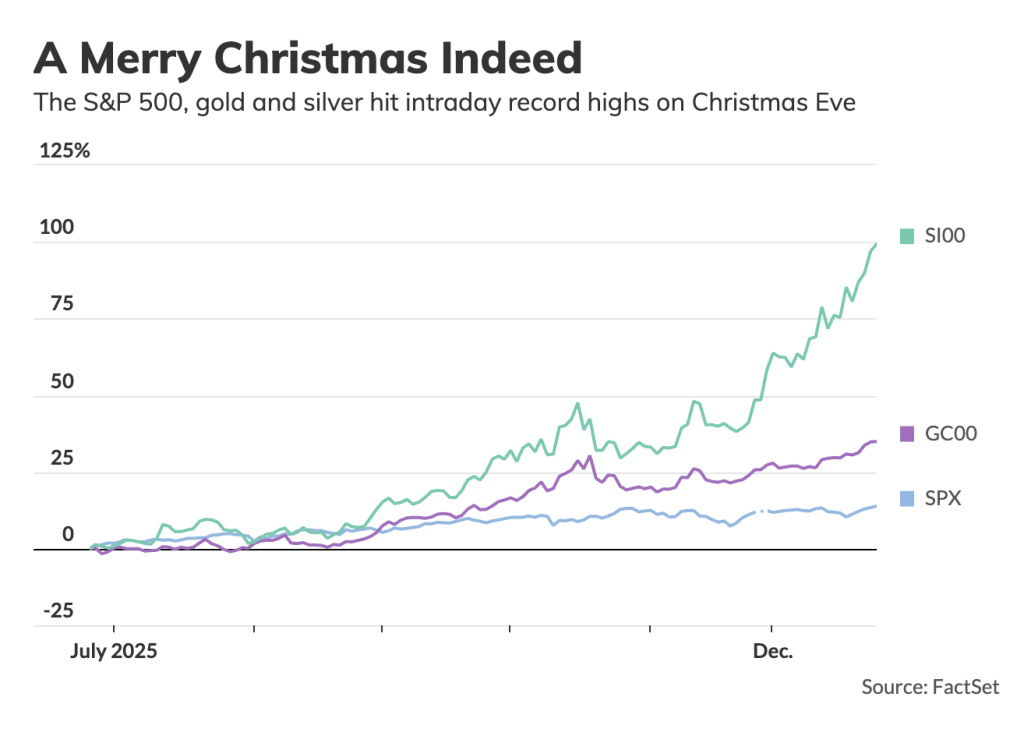
Investors had plenty to smile about this Christmas as stocks, gold and silver all surged further into record territory. Markets delivered a holiday boost on Wednesday, with U.S. equities and precious metals extending their rallies. The S&P 500 posted a fresh record close during the shortened Christmas Eve session — its first such close on that day since 2013, according to Dow Jones Market Data. The benchmark ended at 6,932.05 and also set a new intraday high, its first on Christmas Eve since 2014, FactSet data showed. Gold and silver joined the rally, each touching new intraday records earlier in the session. The most active gold futures climbed to $4,555.10 an ounce, while silver futures jumped as high as $72.75, Dow Jones Market Data showed. Both metals later pulled back from those highs by the time the stock market closed at 1 p.m. Eastern. The gains cap a resilient year for markets. After weathering a period of volatility — including the tariff-driven selloff in April — stocks have powered higher in 2025, with the S&P 500 on pace for a third straight year of double-digit gains. As 2026 approaches, investors are increasingly focused on signs the U.S. economy may be regaining momentum, even as a soft labor market continues to fuel concerns about consumer health. “It’s been a good year,” said Thomas Martin, senior portfolio manager at Globalt Investments. “There was a lot of uncertainty coming into it. After Liberation Day, it looked like things could turn ugly. But the economy and the consumer held up better than expected, and S&P 500 earnings growth also surprised to the upside. That’s why we’re here.” Wednesday’s advance was broad-based. Ten of the 11 S&P 500 sectors finished higher, with energy the lone laggard, according to FactSet. After climbing steadily through the spring and summer, stocks hit turbulence in November when pressure on the artificial-intelligence trade caused the Nasdaq Composite to snap a seven-month winning streak. More recently, however, delayed economic data released after the government shutdown has reinforced expectations that the economy will land in a “Goldilocks” zone in 2026. “The economic data over the past few weeks has been mixed, allowing investors to remain confident the Fed will continue easing into 2026,” said Gina Martin Adams, chief market strategist at HB Wealth. “It’s not weak enough to spark recession fears and not strong enough to force the Fed to tighten or halt the easing cycle.” She added that oil prices holding below $60 a barrel have also helped support stocks by easing pressure on consumer spending. “All of these factors have pushed equities to new highs in recent weeks,” Adams said. The Nasdaq, Dow Jones Industrial Average and Russell 2000 all finished higher on Wednesday as well, though each remains below recent record levels. Meanwhile, market volatility continued to retreat. The Cboe Volatility Index, Wall Street’s so-called fear gauge, slipped below 14 for the first time since Dec. 13, 2024, signaling a calm market mood heading into the holiday. John PaulJohn Paul is the founder of DayTradeToWin, a trading education and software company established in 2008, supporting traders worldwide. His expertise focuses on price action-based futures trading strategies and structured market analysis. DayTradeToWin delivers trading education, indicators, and software tools designed to help traders apply disciplined, rule-based decision-making across global futures markets. He is the creator of multiple trading methodologies, including the Sonic System, Atlas Line, and Trade Scalper, which help traders identify structured opportunities in markets such as the E-mini S&P 500 (ES), Nasdaq (NQ), crude oil (CL), and gold (GC). Official website: https://daytradetowin.com daytradetowin.com

trading
Market News

Seasonal Trading Trends Favor the Day After Christmas

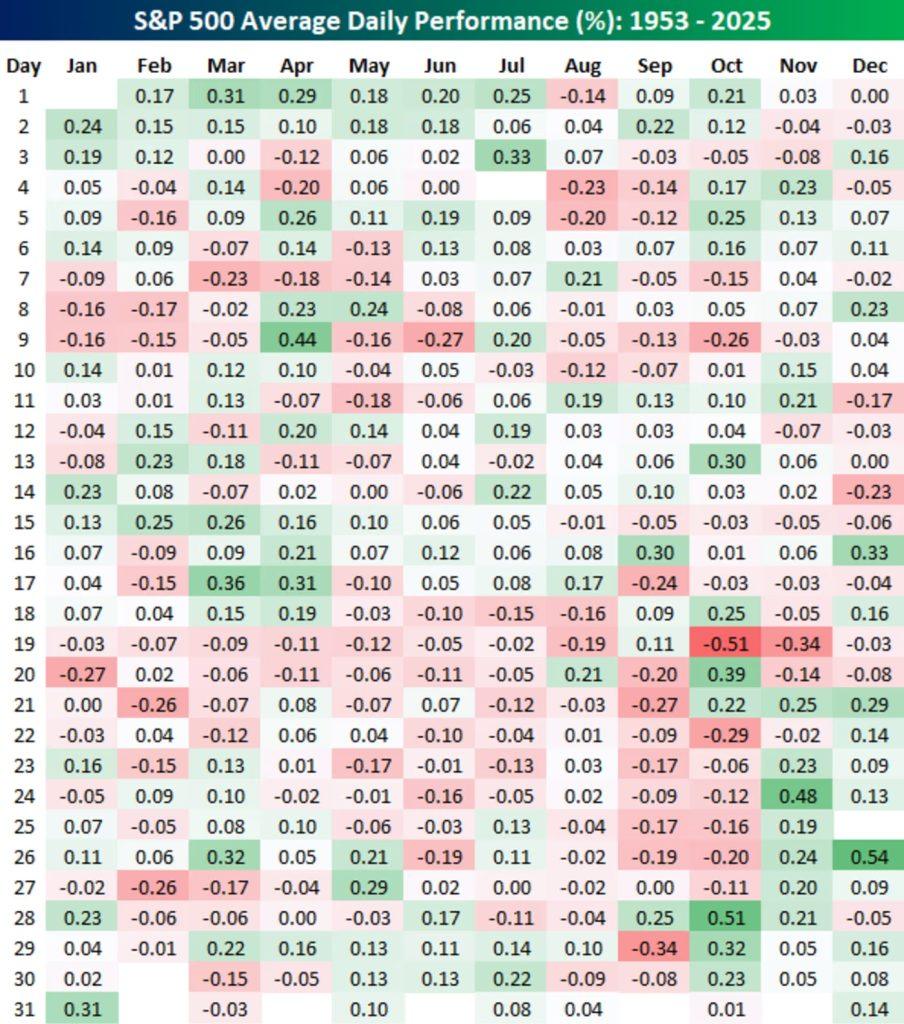
Dec. 26 is historically the market’s strongest trading day, according to Bespoke Investment Group. U.S. stocks rallied into the Christmas holiday on Wednesday, with the S&P 500 hitting a new intraday record during the shortened Christmas Eve session. For investors, however, the real holiday gift from Wall Street often comes after Christmas. Bespoke Investment Group data show that Dec. 26 has been the most reliably positive session of the year for the S&P 500. Since 1953, when markets were open the day after Christmas, the index has declined only six times over 39 years — and never by more than 0.5%. When trading takes place on Dec. 26, the S&P 500 also records its strongest average gain of the year at 0.5%, along with the highest median gain at 0.4%. “Seasonal trends should never be the sole basis for bullish or bearish positioning, but this is an unusually consistent pattern,” Bespoke said in commentary shared with MarketWatch. Friday’s session marks the second day of the Santa Claus rally, the seven-day stretch covering the final five trading days of one year and the first two of the next. The rally carries extra importance this year after delivering negative returns in each of the past two years. According to Dow Jones Market Data, Santa has never skipped three years in a row. Stocks were broadly higher Wednesday, with the S&P 500 up 0.3%, the Nasdaq edging 0.2% higher, and the Dow Jones Industrial Average leading with a 0.6% gain. John PaulJohn Paul is the founder of DayTradeToWin, a trading education and software company established in 2008, supporting traders worldwide. His expertise focuses on price action-based futures trading strategies and structured market analysis. DayTradeToWin delivers trading education, indicators, and software tools designed to help traders apply disciplined, rule-based decision-making across global futures markets. He is the creator of multiple trading methodologies, including the Sonic System, Atlas Line, and Trade Scalper, which help traders identify structured opportunities in markets such as the E-mini S&P 500 (ES), Nasdaq (NQ), crude oil (CL), and gold (GC). Official website: https://daytradetowin.com daytradetowin.com
christmas
Market News

Christmas Week: Who’s Open, Who’s Closed

Expect widespread schedule changes across financial markets, mail delivery, government offices, and retailers as Christmas approaches. Christmas Day falls on Thursday, Dec. 25, with Christmas Eve bringing a surge in last-minute shopping and deliveries. With holiday activity ramping up, many services will operate on reduced schedules or shut down entirely. Here’s what to know. Financial markets U.S. stock markets, including the New York Stock Exchange and Nasdaq, will close early at 1 p.m. Eastern on Wednesday, Dec. 24, and remain closed on Thursday, Dec. 25. Bond markets will close at 2 p.m. on Dec. 24 and stay closed on Christmas Day. Normal trading resumes Friday, Dec. 26. Mail and shipping services The U.S. Postal Service will deliver mail on Dec. 24, with post offices open for limited hours depending on location. There will be no regular mail delivery on Dec. 25, except for Priority Mail Express. Post offices will be closed. UPS will operate on a normal schedule on Dec. 24 but will limit service on Dec. 25, except for UPS Express Critical. UPS Store locations may be closed on Christmas Day. FedEx will provide modified service on Dec. 24 and suspend most operations on Dec. 25, excluding FedEx Custom Critical. FedEx Office locations will have reduced hours on Christmas Eve and close on Christmas Day. Banks Banks are generally closed on Dec. 25. ATMs and digital banking will remain available, though transaction posting may be delayed. Some branches may operate with shortened hours on Dec. 24. Government offices Nonessential federal government offices will be closed on Christmas Day. In addition, a presidential executive order mandates the closure of federal agencies on Dec. 24 and Dec. 26. State offices follow their own schedules, so closures may vary. Retailers Most stores and supermarkets will be open on Dec. 24, though many will close early. On Dec. 25, major retailers such as Costco, Walmart, and Target will be closed, while online shopping remains available. Some pharmacies may remain open with modified hours. Checking local hours in advance can help avoid disruptions during the holiday period. John PaulJohn Paul is the founder of DayTradeToWin, a trading education and software company established in 2008, supporting traders worldwide. His expertise focuses on price action-based futures trading strategies and structured market analysis. DayTradeToWin delivers trading education, indicators, and software tools designed to help traders apply disciplined, rule-based decision-making across global futures markets. He is the creator of multiple trading methodologies, including the Sonic System, Atlas Line, and Trade Scalper, which help traders identify structured opportunities in markets such as the E-mini S&P 500 (ES), Nasdaq (NQ), crude oil (CL), and gold (GC). Official website: https://daytradetowin.com daytradetowin.com
gold
Market News

Gold Gains Shine as Stocks Stall in December

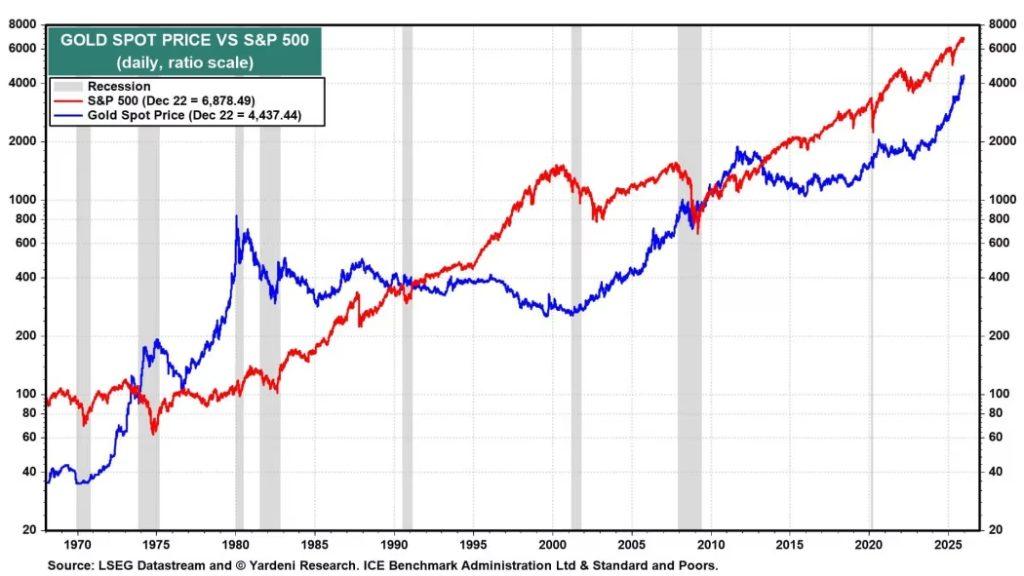
Yardeni: Investor anxiety over the federal deficit is well founded Stocks are heading for a quiet session on the final full trading day before the Christmas holiday, despite a heavy slate of economic data. The market is also just one day away from the official start of the Santa Rally — defined by the Stock Trader’s Almanac as the last five trading days of the year and the first two of the next. Equities could use the seasonal boost, as December has been lackluster for the S&P 500, which is up only 1.6%. That muted performance stands in sharp contrast to another powerful month for precious metals. Gold has climbed 9% in December, while silver has surged 36%, with fresh record highs for the complex appearing increasingly likely. Against this backdrop, Yardeni Research has lifted its outlook for gold. The firm noted that when gold broke above $3,000 earlier this year, it projected prices would reach $4,000 by year-end and $5,000 by the end of next year. With gold now trading above $4,500, Yardeni has raised its year-end 2026 target to $6,000 and reiterated its expectation that prices could reach $10,000 before the decade ends. That forecast surpasses even some of Wall Street’s most bullish calls. JPMorgan, for example, expects gold to peak near $5,055 an ounce by the end of next year. Yardeni argues that while gold and the S&P 500 often move in opposite directions over short periods, both have followed a similar upward trajectory over the long run — a relationship that supports its longer-term bullish thesis. “The price of gold is rapidly converging with the S&P 500 index,” the firm said. “If the S&P 500 reaches 10,000 by the end of 2029, as we expect, gold should also be trading near $10,000, assuming historical trends hold.” The research house turned bullish on gold in early 2024, when prices broke above $2,000, citing a surge in central-bank buying after the U.S. and EU froze Russia’s foreign reserves. More recently, geopolitical risks — including tensions between the U.S. and Venezuela and renewed Ukrainian attacks on Russian ports — have added momentum to gold’s rally. Yardeni also agrees with the view that concerns over money printing to erode government debt are underpinning demand. Although gold has lagged other precious metals this year — trailing silver by 139%, platinum by 133% and palladium by 95% — Yardeni says the move is unlikely to reflect a rebound in global economic growth, given the relatively modest gains in industrial metals. Instead, the firm believes precious metals are signaling growing unease about an overly stimulative mix of U.S. fiscal and monetary policy in the year ahead. Even if the Federal Reserve pauses rate cuts in early 2026, it remains committed to purchasing roughly $40 billion in Treasury bills per month through April, according to the New York Fed. Add to that expectations for potential $1,000–$2,000 government refunds to households and proposals for $2,000 “tariff dividend” checks, and the risk becomes clear: the federal budget deficit could balloon in early 2026. That, Yardeni warns, could push bond yields higher and leave stocks vulnerable to a pullback. John PaulJohn Paul is the founder of DayTradeToWin, a trading education and software company established in 2008, supporting traders worldwide. His expertise focuses on price action-based futures trading strategies and structured market analysis. DayTradeToWin delivers trading education, indicators, and software tools designed to help traders apply disciplined, rule-based decision-making across global futures markets. He is the creator of multiple trading methodologies, including the Sonic System, Atlas Line, and Trade Scalper, which help traders identify structured opportunities in markets such as the E-mini S&P 500 (ES), Nasdaq (NQ), crude oil (CL), and gold (GC). Official website: https://daytradetowin.com daytradetowin.com

gold
Market News

Gold Surges on Central Bank Debasement Fears

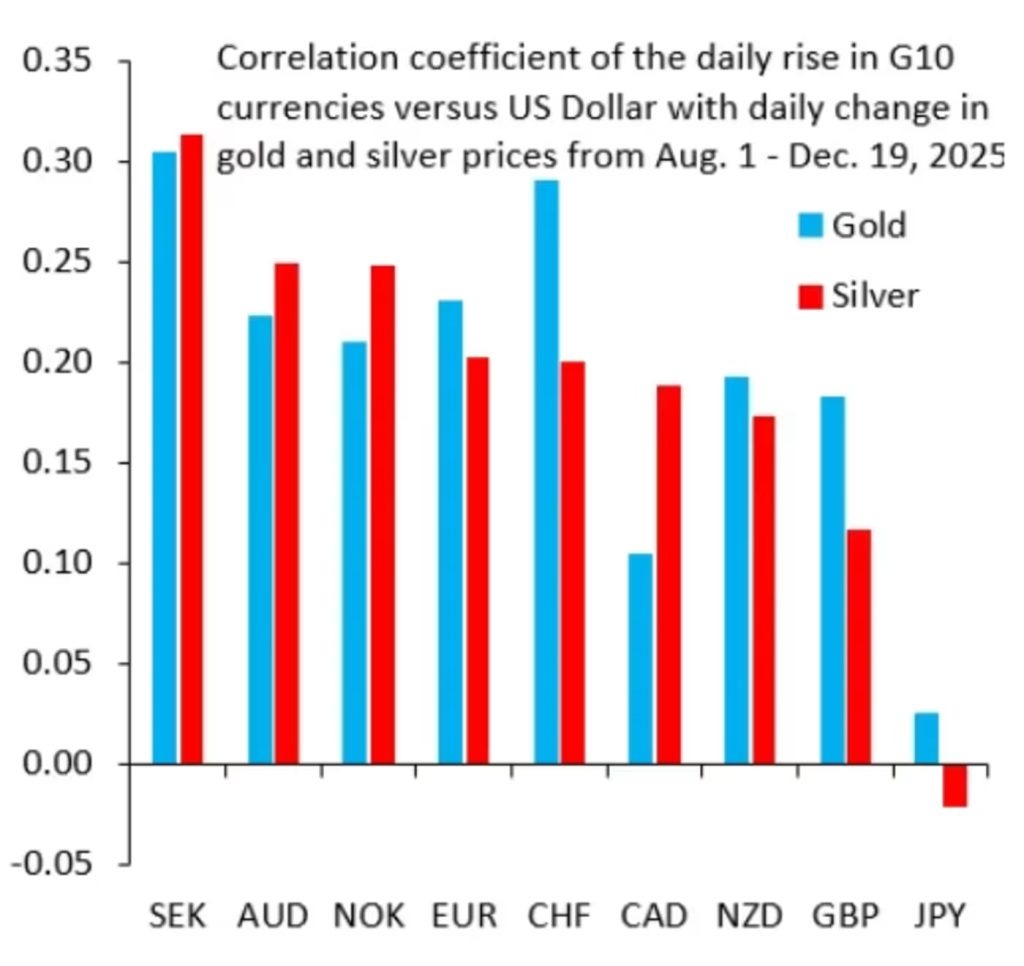
Concerns that central banks will eventually print money to erode the real value of government debt remain the primary force behind gold surge, while geopolitical tensions are reinforcing its safe-haven appeal. Gold’s move to a new record high signals the return of the so-called “great debasement trade,” according to Robin Brooks, senior economist at the Brookings Institution and former chief currency strategist at Goldman Sachs. His remarks came as bullion climbed above $4,400 an ounce. In a Substack post, Brooks said the rally reflects the Federal Reserve’s recent rate cut and growing fears of debt monetization — the risk that central banks will absorb government bond issuance. Gold is now up 68% in 2025, while silver, driven by many of the same dynamics, has surged 140% after also setting a fresh high this week. Geopolitical risks have added further momentum. Escalating tensions in Venezuela and Ukrainian attacks on Russian ports and shipping have heightened gold’s appeal as a store of value. Brooks traces the breakout in precious metals to Chair Jerome Powell’s dovish Jackson Hole speech on Aug. 22 and the Fed’s 25-basis-point rate cut on Dec. 10. Markets are now pricing in further easing by the central bank. He argues that the debasement trade is spreading beyond precious metals. Currencies with relatively low debt burdens, including the Swedish krona and the Swiss franc, are increasingly moving in line with gold and silver. A comparison of G10 currencies against the dollar shows rising correlations with precious metals. The krona’s strength, Brooks notes, is particularly striking given its history as a volatile currency rather than a traditional safe haven. He also cautions that the dollar’s apparent stability is misleading, as its strength against the weak Japanese yen masks broader softness against a wider basket of currencies. Jeroen Blokland, economist and manager of the Blokland Smart Multi-Asset Fund, highlights the ongoing Japanese yen carry trade as another pillar supporting gold. Investors continue to fund positions in higher-risk assets by borrowing yen, with precious metals among the favored destinations. Blokland wrote on X that last week’s Bank of Japan rate hike — taking policy rates to 0.75%, the highest since 1995 — has failed to unwind the carry trade. Inflation is likely to remain structurally elevated, while the interest-rate gap between Japan and the U.S. remains wide enough to sustain yen-funded trades. Japanese 10-year government bond yields have continued to climb and have nearly doubled this year, reaching around 2.08%. John PaulJohn Paul is the founder of DayTradeToWin, a trading education and software company established in 2008, supporting traders worldwide. His expertise focuses on price action-based futures trading strategies and structured market analysis. DayTradeToWin delivers trading education, indicators, and software tools designed to help traders apply disciplined, rule-based decision-making across global futures markets. He is the creator of multiple trading methodologies, including the Sonic System, Atlas Line, and Trade Scalper, which help traders identify structured opportunities in markets such as the E-mini S&P 500 (ES), Nasdaq (NQ), crude oil (CL), and gold (GC). Official website: https://daytradetowin.com daytradetowin.com

Scroll to Top