
Market News

AI
Market News

AI Investing Enters a More Critical Phase, Says Nomura

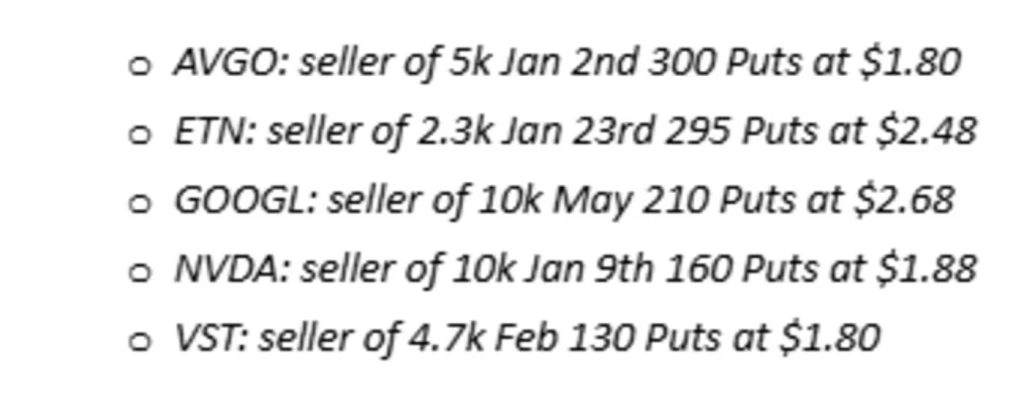
Nomura: A more critical take on AI winners is healthy Investors looking for a year-end rally to fresh record highs have had to temper their expectations. Since the start of December, the S&P 500 has moved sideways in a tight range, hovering just below new highs. Part of the drag on sentiment comes from recent stumbles in some of the market’s biggest winners. Heavyweights such as Nvidia, Microsoft and Broadcom have lost momentum, while smaller-cap former favorites — including CoreWeave, along with energy- and quantum-related stocks — have also struggled. That weakness has fueled concerns that the pullback in momentum stocks could signal a broader shift in market sentiment, particularly toward AI plays, with negative implications for 2026. But Charlie McElligott, Nomura’s cross-asset strategist, says this pattern is typical for this time of year — and argues the AI trade is far from over. McElligott says the AI investment story has entered a more turbulent phase, as markets move beyond early capital-expenditure excitement and toward a more disciplined evaluation of fundamentals. Investors are now paying closer attention to balance sheets, return on investment, margin pressure and energy constraints — a development he views as constructive. Still, McElligott believes much of the recent selling reflects routine profit-taking after a strong run, made messier by the high levels of leverage tied to momentum trades. Historically, December has been a difficult month for momentum strategies. Since 1995, the momentum factor has averaged a 1.1% pullback during the month, and it is the worst median month for one-year momentum over the past 30 years. Since 2016, the median decline has been closer to 2.7%, as investors rotate ahead of the “January effect” and into prior laggards. In effect, investors are using last year’s winners as a funding source to broaden exposure to stocks expected to benefit from stronger economic conditions in 2026. Importantly, McElligott says recent selling does not suggest investors are abandoning AI-linked stocks. Options market activity during the latest equity selloff shows traders selling downside protection on AI proxies such as Broadcom, Eaton, Alphabet, Nvidia and Vistra — a sign the market does not expect much further downside and may be approaching an inflection point. John PaulJohn Paul is the founder of DayTradeToWin, a trading education and software company established in 2008, supporting traders worldwide. His expertise focuses on price action-based futures trading strategies and structured market analysis. DayTradeToWin delivers trading education, indicators, and software tools designed to help traders apply disciplined, rule-based decision-making across global futures markets. He is the creator of multiple trading methodologies, including the Sonic System, Atlas Line, and Trade Scalper, which help traders identify structured opportunities in markets such as the E-mini S&P 500 (ES), Nasdaq (NQ), crude oil (CL), and gold (GC). Official website: https://daytradetowin.com daytradetowin.com


AI
Market News

AI Market Shaken by Data-Center Debt Worries

The AI trade is showing signs of strain as investors grow increasingly uneasy about the heavy debt loads companies such as Oracle and CoreWeave are taking on to fund massive data-center expansions. Concerns over whether these firms can continue financing AI infrastructure have rattled the sector in recent weeks, with selling pressure intensifying on Wednesday following renewed worries tied to Oracle. Broadcom shares sank 4.5% on the day, extending their decline to more than 21% over the past five sessions — the stock’s worst five-day stretch since late March 2020, according to Dow Jones Market Data. Other semiconductor names also moved lower. Nvidia, Advanced Micro Devices and Micron Technology all fell, with Micron slipping ahead of its fiscal first-quarter earnings report after the close. The PHLX Semiconductor Index dropped for a fifth straight session and is now down more than 10% over that period. “The growing concern about whether neoclouds like Oracle and CoreWeave can finance their data-center buildouts is weighing on the entire AI sector,” D.A. Davidson analyst Gil Luria said. If these companies are unable to raise additional debt, their spending on chips would likely stall, he added. Oracle shares slid more than 5% after a report suggested talks with alternative-asset manager Blue Owl Capital for a $10 billion data-center project had stalled. The Financial Times reported that the proposed 1-gigawatt Michigan data center, intended to support OpenAI, had hit a snag. Oracle disputed the report, saying it is working with Related Digital and that final equity negotiations are proceeding as planned. Mizuho analyst Jordan Klein echoed that funding concerns around Oracle are pressuring AI stocks, noting that thin year-end trading volumes are amplifying market moves. CoreWeave shares also dropped sharply, falling more than 7% after criticism from prominent short seller Jim Chanos and reports of data-center delays. Speaking on the Monetary Matters podcast, Chanos described neocloud providers like CoreWeave as operating a “commodity business,” arguing that they capture little of the long-term value generated by AI workloads. He also warned that the rapid depreciation of AI chips poses a major risk, particularly for companies relying heavily on debt to acquire Nvidia hardware. Adding to the pressure, The Wall Street Journal reported that CoreWeave is facing months-long delays at a Texas data-center cluster intended for OpenAI. Still, not all analysts are bearish. Futurum CEO Daniel Newman said he sees “little to no evidence of a slowdown in the AI buildout.” While debt financing concerns represent “the biggest market overhang right now,” he believes investor fears are overstating the risk of a collapse in AI demand. “The selloff is more of a speed bump as investors digest capital spending, leverage and buildout risk,” Newman said. “The fundamentals remain intact, and AI demand is still insatiable.” John PaulJohn Paul is the founder of DayTradeToWin, a trading education and software company established in 2008, supporting traders worldwide. His expertise focuses on price action-based futures trading strategies and structured market analysis. DayTradeToWin delivers trading education, indicators, and software tools designed to help traders apply disciplined, rule-based decision-making across global futures markets. He is the creator of multiple trading methodologies, including the Sonic System, Atlas Line, and Trade Scalper, which help traders identify structured opportunities in markets such as the E-mini S&P 500 (ES), Nasdaq (NQ), crude oil (CL), and gold (GC). Official website: https://daytradetowin.com daytradetowin.com
tesla
Market News

Tesla Stock Hits First Record High Since 2024

Shares posted their first record close since December 2024, further cementing the dominance of the “Magnificent Seven.” Nearly a year after its previous all-time closing high, Tesla stock finally broke through on Tuesday. The shares ended the session at $489.88, their first record close since December 17, 2024, according to Dow Jones Market Data. Intraday, the stock also climbed above $490 for the first time, touching a high of $491.50. The new high reflects the dramatic shift in Tesla’s narrative over the past year. In late 2024, enthusiasm centered on expectations that CEO Elon Musk’s close relationship with President Donald Trump would benefit the company. That optimism faded quickly as the relationship deteriorated, while Tesla’s brand became increasingly politicized and sales momentum weakened. By February, anti-Tesla protests in the U.S. and abroad had intensified, driven by criticism of Musk’s political ties, including associations with far-right figures in Europe. At the same time, slowing demand in China weighed on results, pushing Tesla toward an annual sales decline and dragging the stock down to a low of $221.86 in early April. Since then, shares have mounted a sharp recovery, powered by growing confidence in Tesla’s artificial intelligence and robotics roadmap. Investor approval of a long-term compensation package binding Musk to the company for at least a decade has also bolstered sentiment, alongside anticipation of a future SpaceX initial public offering. The latest leg higher followed Musk’s confirmation that Tesla has begun testing fully autonomous vehicles in Austin, Texas, where it already operates a ride-hailing service. Currently, all trips using Tesla’s advanced driver-assistance system are supervised by employees. “Unsupervised is pretty much solved at this point,” Musk said recently at an event hosted by his xAI startup, which Tesla may invest in. “So there will be Tesla robotaxis operating in Austin with no one in them.” Musk has said those robotaxis could be on the road by the end of December. Tesla also plans to expand its fleet and roll out service in additional cities across Florida, Nevada, Arizona and Texas by month’s end, though regulatory approvals are still pending in some states. Optimism among Tesla supporters remains strong. Wedbush analyst Daniel Ives, a longtime Tesla bull, said Monday that the company’s AI and robotics ambitions could drive its valuation to as high as $3 trillion by the end of 2026. Tesla is currently valued at roughly $1.63 trillion and on Tuesday surpassed Broadcom to become the seventh-largest U.S. company by market capitalization, according to Dow Jones Market Data—a rank it had not held since late May. With Tesla’s advance, the seven largest U.S. companies are once again all part of the elite group of megacap tech stocks known as the “Magnificent Seven,” marking the first time that lineup has been complete since May 29. John PaulJohn Paul is the founder of DayTradeToWin, a trading education and software company established in 2008, supporting traders worldwide. His expertise focuses on price action-based futures trading strategies and structured market analysis. DayTradeToWin delivers trading education, indicators, and software tools designed to help traders apply disciplined, rule-based decision-making across global futures markets. He is the creator of multiple trading methodologies, including the Sonic System, Atlas Line, and Trade Scalper, which help traders identify structured opportunities in markets such as the E-mini S&P 500 (ES), Nasdaq (NQ), crude oil (CL), and gold (GC). Official website: https://daytradetowin.com daytradetowin.com

markets
Market News

Markets Turn Skeptical as Layoffs Trigger Stock Declines

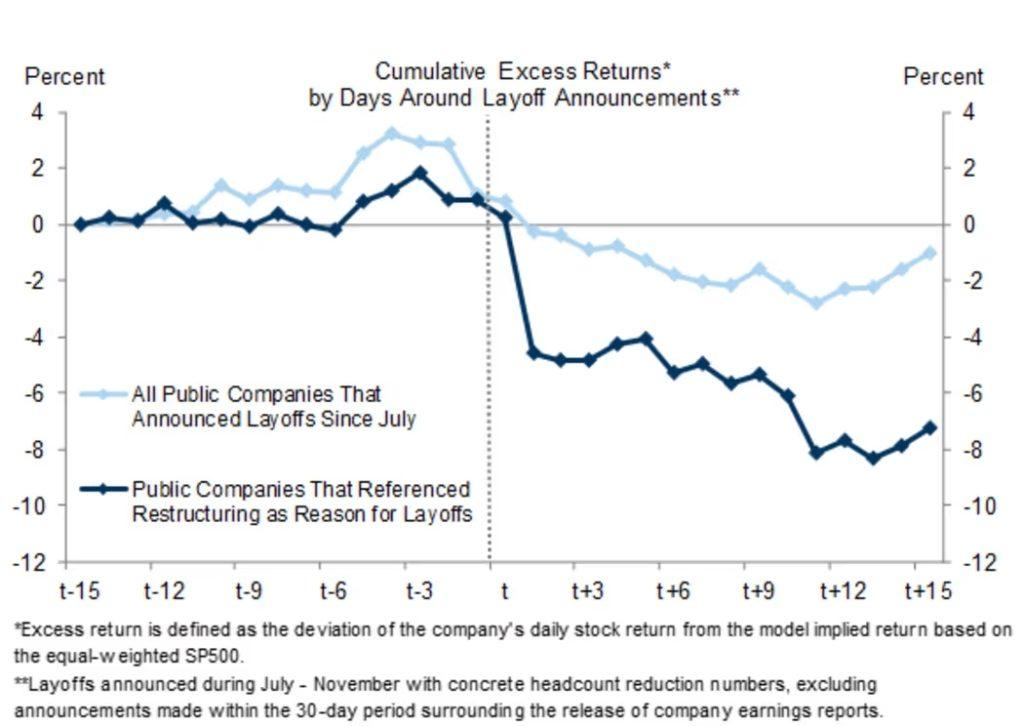
Markets No Longer Cheer Layoffs, Goldman Sachs Warns Announcing job cuts used to be a quick way for companies to boost their share prices, particularly when layoffs were framed as efficiency or cost-saving measures. That reaction has faded. Goldman Sachs says companies now underperform the broader market by around 2% after revealing layoffs. Investors appear increasingly unconvinced by management’s explanations. Even when job cuts are presented as part of harmless restructuring or productivity initiatives, equity markets are punishing stocks rather than rewarding them. Goldman Sachs analyst Elsie Peng says the shift reflects growing investor skepticism. In a research note published Monday, Peng analyzed stock performance following layoff announcements and found that markets may view claimed productivity gains as a cover for deeper problems, such as rising interest expenses or weakening profitability. According to Peng, labor market weakness in 2025 has been marked more by sluggish hiring than by traditional layoff indicators. Initial jobless claims and official layoff rates remain low, yet third-quarter earnings commentary suggested more job cuts could be coming. Many companies have blamed these reductions on automation and the use of AI to lower labor costs. Goldman’s findings show that the market reaction worsens when layoffs are explicitly tied to restructuring. While stocks announcing job cuts generally lag the market by about 2%, companies that directly cite restructuring have suffered much steeper declines, with average excess returns of negative 7%. The analysis also shows that firms announcing layoffs have experienced faster growth in capital spending, debt, and interest expenses, alongside weaker profit growth than industry peers this year. That pattern suggests layoffs may be driven by more concerning financial pressures than companies publicly admit. Despite this, Peng notes that Goldman’s equity and credit analysts see limited risk to the broader economy from layoffs so far. Corporate balance sheets remain broadly strong, and profit margins are still elevated. The S&P 500 ended slightly lower on Monday and is just over 1% below its record high after gaining 16% this year. U.S. stock index futures also edged lower ahead of key jobs data. John PaulJohn Paul is the founder of DayTradeToWin, a trading education and software company established in 2008, supporting traders worldwide. His expertise focuses on price action-based futures trading strategies and structured market analysis. DayTradeToWin delivers trading education, indicators, and software tools designed to help traders apply disciplined, rule-based decision-making across global futures markets. He is the creator of multiple trading methodologies, including the Sonic System, Atlas Line, and Trade Scalper, which help traders identify structured opportunities in markets such as the E-mini S&P 500 (ES), Nasdaq (NQ), crude oil (CL), and gold (GC). Official website: https://daytradetowin.com daytradetowin.com

AI
Market News

Citi Sees AI Adoption Driving S&P 500 Gains in 2026

Citi expects a shift in market leadership from AI “enablers” to AI “adopters” as investors head into what could be a more volatile 2026. With the bull market entering its fourth year, volatility is likely to increase, making it harder to separate winners from losers in the AI race. Even so, Citi strategists remain constructive, citing an accommodative Federal Reserve, earnings growth above consensus, and a stronger fiscal boost from the OBBBA. Together, these factors support a year-end S&P 500 target of 7,700. That forecast is above the MarketWatch consensus of 7,500, which already implies roughly 10% upside from Friday’s close. Citi projects total market returns of around 13% in 2026 but expects leadership to rotate away from companies that build AI infrastructure toward firms that successfully adopt AI to boost productivity. The firm also anticipates broader participation across the index. Starting from elevated valuations, U.S. equities will face growing pressure to deliver strong fundamentals to justify prices. Citi’s base-case target of 7,700—outlined by Scott Chronert, Drew Pettit, and Patrick Galvin in the firm’s 2026 U.S. equity outlook—assumes S&P 500 earnings of $320 per share and a valuation multiple of 24 times earnings. While that represents only modest compression from current levels, Citi warns that greater dispersion in returns, especially among AI-related stocks, will make stock selection more difficult. Wall Street consensus earnings estimates for 2026 are closer to $310 per share, though Citi points to the ongoing resilience of corporate earnings. AI remains a powerful tailwind, but Citi sees investor focus gradually shifting away from hyperscalers, whose outlook remains debated, toward companies that can effectively integrate AI into their business models. The firm also expects more idiosyncratic performance among AI enablers, which now make up roughly 40% of the S&P 500, adding complexity to portfolio construction. To benefit from broader market leadership, Citi recommends positioning for positive earnings revision momentum in value, cyclical, and small-cap stocks. Growth stocks, including mega-cap technology names, will need continued earnings beats and guidance upgrades to support valuations. Citi’s outlook also assumes the Fed will cut rates twice in early 2026—earlier than markets currently expect—as higher unemployment emerges as a side effect of AI-driven productivity gains. The firm forecasts the U.S. 10-year Treasury yield will fall to 3.75% by the end of 2026, from about 4.18% today. In a bull-case scenario, stronger-than-expected earnings growth could push the S&P 500 to 8,300. In a downside scenario marked by weaker fundamentals and multiple compression, Citi sees the index falling to 5,700. John PaulJohn Paul is the founder of DayTradeToWin, a trading education and software company established in 2008, supporting traders worldwide. His expertise focuses on price action-based futures trading strategies and structured market analysis. DayTradeToWin delivers trading education, indicators, and software tools designed to help traders apply disciplined, rule-based decision-making across global futures markets. He is the creator of multiple trading methodologies, including the Sonic System, Atlas Line, and Trade Scalper, which help traders identify structured opportunities in markets such as the E-mini S&P 500 (ES), Nasdaq (NQ), crude oil (CL), and gold (GC). Official website: https://daytradetowin.com daytradetowin.com

AI
Market News

Why Space Could Be the Next Big AI Boom

The next major investing edge in AI may come from identifying where capital for orbital computing flows first, according to Matthew Tuttle, CEO and CIO of Tuttle Capital. Just months ago, anything tied to OpenAI could send tech stocks soaring. Today, the mood has cooled. Investors are more skeptical, and the AI sector now faces the classic “front-cover curse” after Time named several AI leaders as Persons of the Year—including Nvidia’s Jensen Huang, who also just received Financial Times Person of the Year honors. AI’s narrative may need a fresh spark. That spark could be space. The Wall Street Journal reports that Jeff Bezos and Elon Musk are exploring orbital data centers designed to support Earth’s growing AI workloads. In a recent blog post, Tuttle breaks down how investors can position for this next frontier. The biggest constraint for AI’s expansion, he argues, isn’t chips—it’s power. “AI and data centers are set to drive a major surge in electricity demand this decade, which is why ‘grid tech’ has become a real market theme,” he writes. Space, however, has a distinct energy advantage. Orbital data centers can harness uninterrupted solar power. “That’s where ‘compute in orbit’ becomes a serious idea,” Tuttle says. “AI has extremely high revenue per kilowatt, and solar in space is always on—unlike Earth-based constraints.” Scaling orbital computing and delivering that power back to Earth remains the main challenge. The real opportunity, Tuttle says, is recognizing where capex flows first—into edge inference and space infrastructure—while full-scale gigawatt beamed power remains a long-term, sci-fi vision. He lays out a three-phase investable roadmap: Phase 1: Happening Now — On-Orbit InferenceExisting satellites used for weather, communications, Earth observation, maritime tracking, and missile warning. “If satellites classify, compress, and decide onboard, they downlink answers—not terabytes,” he writes. “That cuts bandwidth, speeds up action, and reduces the need for ground stations. That’s today’s ‘sky-brains.’” Phase 2: Purpose-Built AI SatellitesSatellites designed with compute modules. “You’re not just processing your own sensor stream—you’re renting compute,” Tuttle notes. Challenges include radiation tolerance, launch cadence, and networking. This works for niche workloads where latency or sovereignty matters more than cost. Phase 3: Space-Based Solar PowerBeaming solar power from space to Earth. This requires massive lightweight structures, conversion systems, beam-safety protocols, and grid integration—making it the hardest engineering challenge. For the first two phases, Tuttle highlights potential winners in space infrastructure: Redwire, Rocket Lab, L3Harris Technologies, RTX, Northrop Grumman, and Lockheed Martin. “These companies benefit from any version of orbital compute or space power,” he says, “because they supply spacecraft platforms, integration, communications, and space-qualified components.” Radiation-tolerant processors will also be crucial. Tuttle points to Microchip Technology as a direct play on space-grade silicon. But near term, most AI workloads will stay Earth-based. The real spending boom, he says, is still in the power grid—transformers, cooling systems, and distribution. His picks for that theme include Eaton, Hubbell, Quanta Services, and Vertiv. Asked whether any ETF captures this orbital-AI opportunity, Tuttle joked: “Not until I launch it.” John PaulJohn Paul is the founder of DayTradeToWin, a trading education and software company established in 2008, supporting traders worldwide. His expertise focuses on price action-based futures trading strategies and structured market analysis. DayTradeToWin delivers trading education, indicators, and software tools designed to help traders apply disciplined, rule-based decision-making across global futures markets. He is the creator of multiple trading methodologies, including the Sonic System, Atlas Line, and Trade Scalper, which help traders identify structured opportunities in markets such as the E-mini S&P 500 (ES), Nasdaq (NQ), crude oil (CL), and gold (GC). Official website: https://daytradetowin.com daytradetowin.com

Scroll to Top