
Market News

market
Market News

Will Trump Step In to Stop the Market Selloff?

Market analysts suggest that the S&P 500 would need to experience a decline of at least 10% to activate the so-called ‘Trump put.’ The recent downturn in the U.S. stock market has been modest, with the S&P 500 still only 3% below its record closing high from the previous week. Nevertheless, speculation persists on Wall Street about whether the Trump administration would intervene if the selloff were to intensify. Michael Hartnett, a strategist at Bank of America, shared his perspective on Bloomberg TV, suggesting that intervention would likely occur “if things go haywire.” He estimated that action might be triggered if the S&P 500 drops to around 5,600 or 5,700, possibly through fiscal policy adjustments or relaxing the Department of Government Efficiency (DOGE) spending cuts. The concept of the ‘Trump put’ originates from the belief that Trump perceives the stock markets as a barometer of his administration’s success. This notion is similar to the earlier ‘Fed put,’ where investors anticipated the Federal Reserve would intervene to mitigate market volatility. During Trump’s first term, he frequently touted stock market gains as evidence of his policies’ effectiveness. However, the administration’s responses to market volatility were mixed. In late 2018, amid a nearly 20% market drop driven by the trade war with China and Federal Reserve rate hikes, Trump’s efforts to reassure investors had limited success. Conversely, the aggressive fiscal stimulus and Federal Reserve actions during the COVID-19 market crash in 2020 helped stocks recover quickly. Whether the administration would take similar action this time remains uncertain. Some analysts believe Trump’s current focus on spending cuts and trade tariffs might make him more accepting of market fluctuations. Recent statements from Trump and his team suggest that any economic pain from tariffs and budget reductions could be seen as necessary sacrifices. There is also speculation that Trump’s new ‘put’ might prioritize the bond market over stocks. Treasury Secretary Scott Bessent and Elon Musk, a special government employee, have emphasized the administration’s commitment to reducing the U.S. budget deficit—a strategy that could boost demand for bonds. Musk recently remarked that betting against bonds could be an unwise move. While the notion of a ‘Trump put’ remains speculative, some experts argue that any substantial market downturn might attract buyers without requiring government intervention. If the S&P 500 were to decline by 10% or more, investors will closely monitor both market developments and the administration’s response. John PaulJohn Paul is the founder of DayTradeToWin, a trading education and software company established in 2008, supporting traders worldwide. His expertise focuses on price action-based futures trading strategies and structured market analysis. DayTradeToWin delivers trading education, indicators, and software tools designed to help traders apply disciplined, rule-based decision-making across global futures markets. He is the creator of multiple trading methodologies, including the Sonic System, Atlas Line, and Trade Scalper, which help traders identify structured opportunities in markets such as the E-mini S&P 500 (ES), Nasdaq (NQ), crude oil (CL), and gold (GC). Official website: https://daytradetowin.com daytradetowin.com

bitcoin
Market News

Bitcoin, XRP Rise – Will This Trigger a Crypto Surge?

Bitcoin, XRP, and other cryptocurrencies showed signs of recovery early Thursday following a sharp selloff that rattled the digital asset market. Bitcoin (BTC) extended its losing streak to four days on Wednesday, briefly plunging to $82,200 after an earlier attempt at a rebound failed to hold. By Thursday morning, Bitcoin climbed 2.3% to $86,164, according to CoinDesk, though the cryptocurrency remains down 17% from its recent high of $99,000 last Friday. XRP also faced significant losses, dropping 17% from $2.71 on Friday to $2.24. However, the popular altcoin edged up 1.5% Thursday, hinting that selling pressure could be easing. The recent selloff was triggered by a $1.5 billion hack on Dubai-based crypto exchange Bybit, which shook investor confidence. Broader market uncertainty, fueled by a tech stock selloff in the U.S., further weighed on sentiment. Cryptocurrencies had surged in the wake of Donald Trump’s Nov. 5 election victory, as traders bet on a more crypto-friendly administration. However, most of those gains have evaporated, with Bitcoin now trading at levels last seen on Nov. 11. “The rapid selloff leaves a steep climb ahead, despite a modest recovery,” said Susannah Streeter, an analyst at Hargreaves Lansdown. “Without clear signals of support from Trump, market nervousness is likely to persist.” While a statement from Trump could bolster sentiment, the market is still searching for a catalyst to spark a broader recovery. John PaulJohn Paul is the founder of DayTradeToWin, a trading education and software company established in 2008, supporting traders worldwide. His expertise focuses on price action-based futures trading strategies and structured market analysis. DayTradeToWin delivers trading education, indicators, and software tools designed to help traders apply disciplined, rule-based decision-making across global futures markets. He is the creator of multiple trading methodologies, including the Sonic System, Atlas Line, and Trade Scalper, which help traders identify structured opportunities in markets such as the E-mini S&P 500 (ES), Nasdaq (NQ), crude oil (CL), and gold (GC). Official website: https://daytradetowin.com daytradetowin.com
Wall Street
Market News

Wall Street Bullish Run Fades—6 Charts Explain

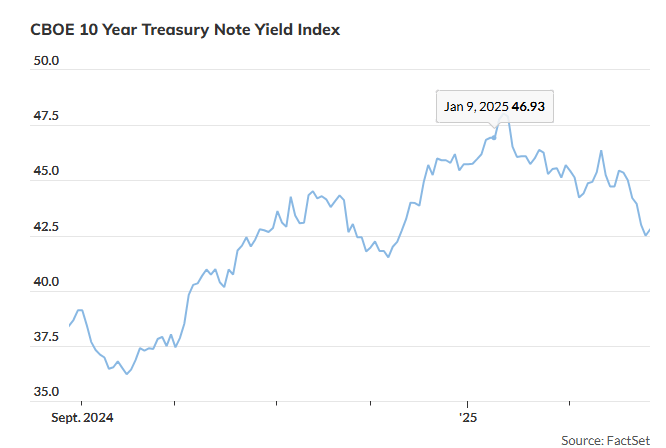
Investor Sentiment Shifts from Euphoria to Uncertainty on Wall Street Investor sentiment on Wall Street is shifting from optimism to uncertainty. Once buoyed by enthusiasm following President Donald Trump’s election victory, market confidence is now waning as concerns over the U.S. economic outlook mount. Declining Market Sentiment Since early 2025, signs of a more cautious market environment have emerged. On Tuesday, the S&P 500 (SPX) fell for the fourth consecutive day, potentially marking its longest losing streak since January, according to FactSet data. High-growth momentum stocks, such as Palantir Technologies Inc. (PLTR), have suffered significant declines, raising concerns about stretched valuations and their impact on investor confidence. Lori Calvasina, head of U.S. equity strategy at RBC Capital Markets, recently observed a weakening market sentiment, a view supported by other analysts. “I think the market’s mood is slipping, and there are many valid reasons why,” said Callie Cox, chief market strategist at Ritholtz Wealth Management, in an interview with MarketWatch. Factors Contributing to Market Uncertainty Several factors are fueling investor apprehension. Initial optimism over Trump’s deregulation and tax cuts has given way to concerns about tariffs and stricter immigration policies, which could slow economic growth while driving up inflation. Stagflation fears are re-emerging. Even prominent investors, such as Steve Cohen, founder of Point72 Asset Management and owner of the New York Mets, have reportedly warned of a potential market correction. Meanwhile, the Conference Board’s consumer-confidence survey dropped to an eight-month low on Tuesday, exacerbating investor anxiety. Key Indicators Reflect Growing Caution 1. Bull-Bear Sentiment Weakens The American Association of Individual Investors’ weekly sentiment survey shows a sharp increase in bearish outlooks. Earlier this month, bearish responses outnumbered bullish ones by nearly 19 percentage points—the widest gap since November 2023. Some analysts, including Fundstrat’s Tom Lee, argue that extreme bearish sentiment could paradoxically be a bullish signal. Historically, markets tend to rally after passing through periods of extreme pessimism. However, unlike in November 2023—when stocks were recovering from a 10% correction—the S&P 500 remains near record highs, suggesting a different market dynamic this time. 2. Defensive Stocks Take the Lead Investors are shifting toward defensive stocks. Healthcare and consumer staples have been the top-performing sectors in 2025, according to FactSet data. Meanwhile, the Roundhill Magnificent Seven ETF (MAGS), which tracks major megacap tech stocks, is on track to enter correction territory. “I think it’s important to point out that defensive stocks are leading the S&P 500 higher this year, which probably tells you something about how positioning is changing,” Cox noted. 3. Rising Demand for Hedging The options market indicates traders are increasingly hedging against downside risks. The Cboe Skew Index, which measures demand for out-of-the-money put options, surged above 183 last week—its highest level since at least 2005, according to Cboe data. 4. Bond Market Signals Economic Concerns Bonds are rallying, but for troubling reasons. Instead of signaling confidence that inflation will ease, the decline in the 10-year Treasury yield to its lowest level of 2025 suggests growing fears of economic stagnation. The Trump administration’s layoffs of thousands of government employees have intensified these concerns. “Yields in the bond market are tumbling as they smell recession in the air,” said Chris Rupkey, chief economist at FwdBonds. 5. Economic Reports Disappoint The Citi U.S. Economic Surprise Index has been consistently negative for the first time since September. A weaker-than-expected services-sector report and declining consumer confidence have deepened investor unease. Charlie McElligott, a cross-asset strategist at Nomura, warned that markets remain highly sensitive to economic surprises. If current trends persist, stocks could face another sharp downturn similar to the August 5 selloff, when a U.S. growth scare triggered a global market rout. 6. Bitcoin and Gold Show Diverging Trends Bitcoin’s role as “digital gold” is under scrutiny as it moves in the opposite direction of the physical commodity. While gold futures recently approached record highs near $3,000 per ounce, Bitcoin has fallen below $87,000, its lowest level since November. Wall Street analysts, including Stifel’s Barry Bannister, have observed that Bitcoin behaves more like a speculative growth asset than a defensive safe haven, further highlighting the shift in risk appetite. Market Protection Strategies on the Rise Despite the growing caution, some indicators remain relatively stable. The Conference Board’s CEO Confidence Survey showed improvement, suggesting corporate executives remain optimistic. Additionally, futures traders appear to be reducing their bets against the S&P 500, according to Commodity Futures Trading Commission data. However, the Cboe Volatility Index (VIX), often referred to as Wall Street “fear gauge,” briefly topped 20 on Tuesday. Although still below its January peak, the increase signals rising market anxiety. “People are adding protection, and I think it makes sense,” said Danny Kirsch, head of options trading at Piper Sandler. Conclusion As uncertainty grows, investors are adjusting their strategies, shifting away from riskier assets and increasing exposure to defensive stocks and hedging instruments. While some believe this cautious sentiment could set the stage for a future rally, others warn that the market may be entering a more prolonged period of volatility. The coming weeks will be crucial in determining whether this shift represents a temporary pullback or the start of a deeper market correction. John PaulJohn Paul is the founder of DayTradeToWin, a trading education and software company established in 2008, supporting traders worldwide. His expertise focuses on price action-based futures trading strategies and structured market analysis. DayTradeToWin delivers trading education, indicators, and software tools designed to help traders apply disciplined, rule-based decision-making across global futures markets. He is the creator of multiple trading methodologies, including the Sonic System, Atlas Line, and Trade Scalper, which help traders identify structured opportunities in markets such as the E-mini S&P 500 (ES), Nasdaq (NQ), crude oil (CL), and gold (GC). Official website: https://daytradetowin.com daytradetowin.com
price action
Market News

Price Action Trading – Trade with Confidence

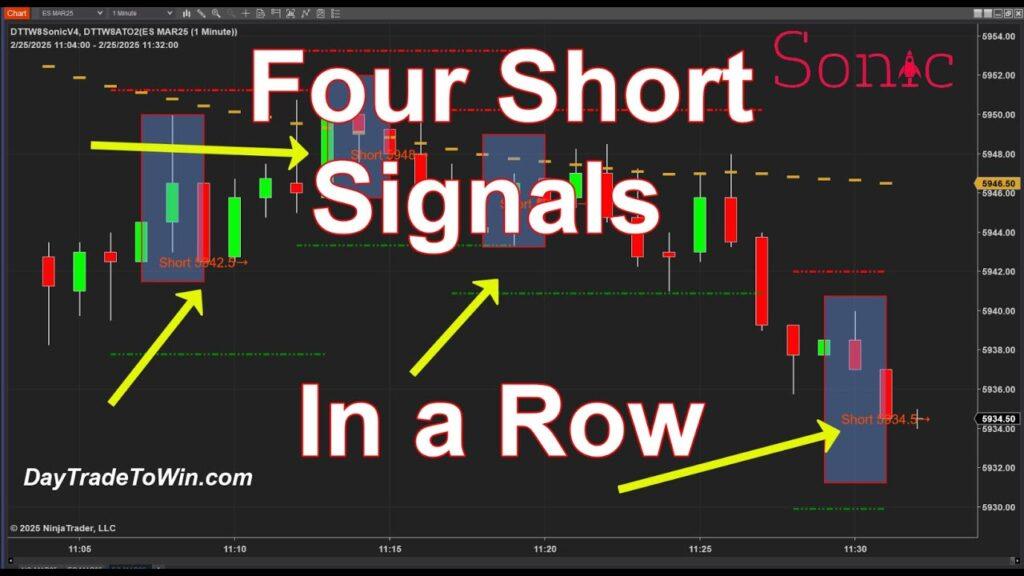
Are you tired of relying on outdated indicators that lag behind the market? At daytradetowin.com, we teach traders how to use price action—the most effective way to understand market movement and make informed decisions in real time. Why Choose Price Action Trading? Instead of relying on complex indicators, price action trading focuses on the pure movement of the market, helping you:✅ Identify key price levels and trends✅ Execute trades with greater confidence✅ Avoid misleading signals from traditional indicators✅ Gain a real edge using our proprietary Sonic System Get Started with a Free Membership We make it easy for you to learn! Sign up for a free member account at daytradetowin.com and get access to our ABC Software trial along with essential training materials. Accelerate Your Learning with Mentorship For those who want to fast-track their success, our Accelerated Mentorship Program provides:🚀 Instant access to all of our proprietary trading tools📈 A structured learning path with expert guidance🔍 A proven strategy for navigating today’s markets Take Control of Your Trading Future Don’t let outdated methods hold you back. Start trading the right way today! Visit daytradetowin.com and take the first step toward mastering the markets. Your journey to smarter, more confident trading starts now! 🚀 John PaulJohn Paul is the founder of DayTradeToWin, a trading education and software company established in 2008, supporting traders worldwide. His expertise focuses on price action-based futures trading strategies and structured market analysis. DayTradeToWin delivers trading education, indicators, and software tools designed to help traders apply disciplined, rule-based decision-making across global futures markets. He is the creator of multiple trading methodologies, including the Sonic System, Atlas Line, and Trade Scalper, which help traders identify structured opportunities in markets such as the E-mini S&P 500 (ES), Nasdaq (NQ), crude oil (CL), and gold (GC). Official website: https://daytradetowin.com daytradetowin.com
nvidia
Market News

Nvidia Earnings on Deck: Will It Spark a Breakout or More Uncertainty?

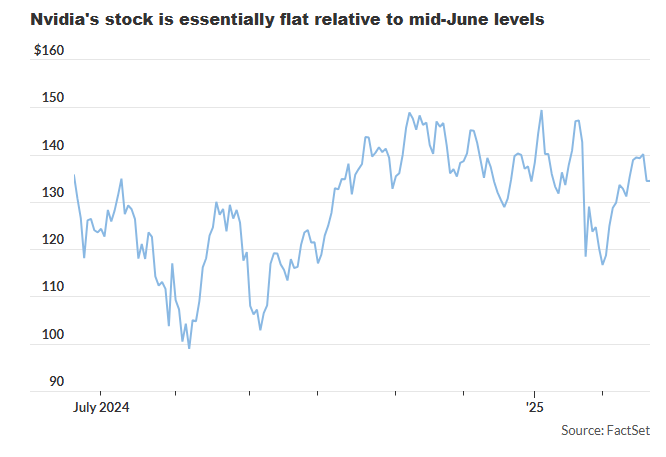
Nvidia Corp. is set to report earnings on Wednesday, and investors are eagerly watching for signs of momentum. The stock has been mostly flat since June, despite bouts of volatility. Will this report be the catalyst for a breakout, or will lingering concerns keep investors on edge? Bullish Sentiment: A Rally Waiting to Happen? Mizuho analyst Jordan Klein sees a potential surge ahead, noting that “a lot of money on the sidelines” could rush in if Nvidia (NVDA -3.09%) delivers strong results. He expects the stock to move “higher before lower” following its recent stagnation. A key reason for his optimism? Demand for Nvidia’s new Blackwell lineup is significantly outpacing supply. With production ramping up in the second half of the year, Klein believes Nvidia is well-positioned for continued growth. Concerns Loom: DeepSeek and Microsoft Uncertainty Despite the bullish outlook, some investors remain cautious. One source of concern is Chinese AI firm DeepSeek, which has sparked debate over whether future AI development will require less hardware—potentially impacting Nvidia’s long-term dominance. Another worry stems from Microsoft (MSFT -1.03%), which reportedly canceled some data-center leases. While this has added to market jitters, Mizuho’s Vikram Malhotra suggests it may simply be a “course correction” rather than a sign of reduced AI infrastructure investment. Skepticism Persists: No Immediate Catalyst? Stifel analyst Ruben Roy believes Nvidia’s earnings may not be the game-changer some investors hope for. With market uncertainty still lingering post-DeepSeek, he doubts earnings alone will drive a strong upside move. The Bigger AI Picture: A Long-Term Win for Nvidia? Melius Research’s Ben Reitzes takes a broader view, arguing that demand for AI chips is already being validated. Tech giants are in an arms race to dominate AI, and Nvidia stands to benefit from this relentless spending. Reitzes likens Nvidia’s hardware to Ferraris—elite, high-performance chips that companies like Elon Musk’s xAI highly value. Despite the short-term noise, he believes Nvidia will remain the go-to choice as AI workloads continue to grow. Bottom Line: Make-or-Break Moment for Nvidia? With earnings approaching, Nvidia finds itself at a crossroads. Will strong demand fuel a stock rally, or will lingering concerns weigh on investor sentiment? Either way, Nvidia’s role in the AI revolution is far from over. John PaulJohn Paul is the founder of DayTradeToWin, a trading education and software company established in 2008, supporting traders worldwide. His expertise focuses on price action-based futures trading strategies and structured market analysis. DayTradeToWin delivers trading education, indicators, and software tools designed to help traders apply disciplined, rule-based decision-making across global futures markets. He is the creator of multiple trading methodologies, including the Sonic System, Atlas Line, and Trade Scalper, which help traders identify structured opportunities in markets such as the E-mini S&P 500 (ES), Nasdaq (NQ), crude oil (CL), and gold (GC). Official website: https://daytradetowin.com daytradetowin.com

markets
Market News

Markets Moved On from Rate Fears—Are They Back?

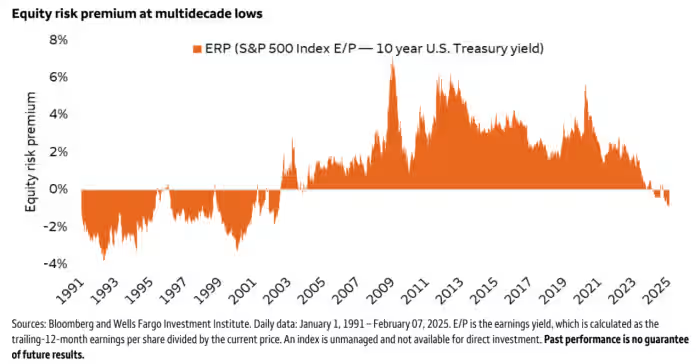
Interest-Rate Volatility Normalizing, Says J.P. Morgan’s Phil Camporeale Investors are showing less concern about rising interest rates, though key market risks remain. “The biggest risk is inflation making a comeback in the second half of this year,” said Phil Camporeale, portfolio manager for J.P. Morgan Asset Management’s global allocation strategy. He warned that inflation could not only remain persistent but also accelerate due to wage growth or rising prices in sectors like lodging and dining. On Friday, U.S. stocks fell sharply, with the Dow Jones Industrial Average experiencing its worst week since October. Investors analyzed economic data, including a consumer survey indicating heightened inflation expectations driven by tariff concerns. The upcoming week brings fresh inflation data from the Federal Reserve’s preferred measure, the personal-consumption expenditures (PCE) price index. Recently, stock markets have found relief as rate volatility has eased to levels last seen in early 2022—before the Fed’s aggressive rate hikes began. “Nothing worries equity investors more than interest-rate volatility,” Camporeale noted. However, with inflation slowing, prompting the Fed to adjust its monetary policy with rate cuts last year, rate volatility appears to be stabilizing. So far in 2025, the Fed has maintained its benchmark rate, pausing rate cuts in January. “The Fed is on the back burner now,” said Camporeale. “Nobody is calling for immediate action.” Investor focus has shifted from the Fed’s next move to fundamental drivers of the equity markets. Markets seem to accept inflation running slightly above the Fed’s 2% target, but investors remain cautious. The University of Michigan’s latest survey indicated that tariff-related developments have heightened inflation concerns. “Consumers are bracing for a resurgence in inflation,” said Joanne Hsu, director of the survey. “If these concerns persist, they could pose challenges for policymakers.” Investors will closely watch the Fed’s favored PCE gauge, due on February 28. Some analysts believe the Fed may now opt for an extended wait-and-see approach. “Bond-market volatility is no longer the key issue,” said Sameer Samana, head of global equities and real assets at Wells Fargo Investment Institute. He pointed to the ICE BofAML MOVE Index, a measure of bond-market volatility, which has dropped to its lowest level in three years despite a brief uptick on Friday. Over the past six months, the MOVE Index has declined nearly 18%. Despite last week’s market decline, the S&P 500 remains close to its all-time high from February 19, closing Friday at 6,013.13—just 2.1% below its record. The current bull market has broadened beyond technology stocks, with financials playing a key role. While the S&P 500’s technology sector has dipped 0.3% year-to-date, financials have gained 4.8%, according to FactSet data. Investors will also watch Nvidia’s quarterly earnings report on February 26. “It’s a significant shift from a market dominated by tech to one where financials and other sectors are driving gains,” said Samana. Equity Risk Premium at Historic Lows The U.S. stock market’s equity risk premium has fallen to multidecade lows, according to a Wells Fargo Investment Institute report. “Stocks aren’t as attractive as they were last year,” said Samana. However, he still sees the S&P 500 as more appealing than bonds, especially with the 10-year Treasury yield hovering around 4.5%. On Friday, the yield on the 10-year Treasury note fell 8 basis points to 4.419%, its lowest level since mid-December. “There’s little incentive to buy a 10-year Treasury when a money-markets fund offers a similar yield without duration risk,” said Camporeale. Camporeale remains overweight on equities, favoring U.S. stocks. He has reduced exposure to core bonds, including Treasurys, in favor of high-yield corporate credit and equities. Following the U.S. presidential election in November, he added value and midcap stocks to his portfolio. Looking ahead, he anticipates “low-double-digit returns” for the S&P 500 this year. John PaulJohn Paul is the founder of DayTradeToWin, a trading education and software company established in 2008, supporting traders worldwide. His expertise focuses on price action-based futures trading strategies and structured market analysis. DayTradeToWin delivers trading education, indicators, and software tools designed to help traders apply disciplined, rule-based decision-making across global futures markets. He is the creator of multiple trading methodologies, including the Sonic System, Atlas Line, and Trade Scalper, which help traders identify structured opportunities in markets such as the E-mini S&P 500 (ES), Nasdaq (NQ), crude oil (CL), and gold (GC). Official website: https://daytradetowin.com daytradetowin.com

Scroll to Top