
Market News

Stock Buybacks
Market News

Trump’s Economic Agenda: Cutting Back on Stock Buybacks

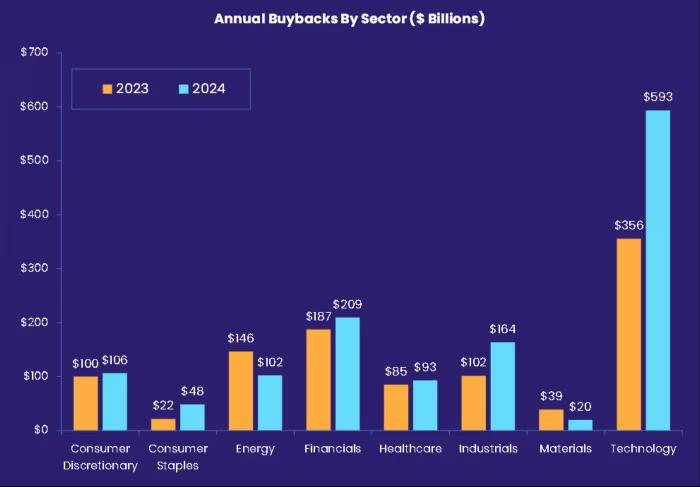
Tech Companies Ramp Up Stock Buybacks Despite Energy-Intensive Operations Tech companies have significantly increased their stock buybacks programs in recent years, prioritizing shareholder returns even as the industry’s energy demands continue to soar. Innovations like artificial intelligence (AI) and cloud computing require enormous amounts of energy to power data centers and support technological advancements, adding to the sector’s operational challenges. During Donald Trump’s second term, the administration’s “America First” policies focused on energy deregulation and revitalizing domestic industries. These priorities aimed to reduce costs and boost economic growth by leveraging abundant energy resources. However, experts from TS Lombard emphasized that achieving these goals would require U.S. companies to redirect more capital into infrastructure, equipment, and technology development rather than prioritizing stock buybacks and dividends. Steven Blitz, chief U.S. economist at TS Lombard, pointed out the dilemma: “Buybacks improve short-term returns on equity, which supports stock prices, but they divert funds from long-term investments crucial for growth.” In 2023, companies in the S&P 500 announced a record $1.34 trillion in buybacks, with nearly 70% of their internal funds going toward rewarding shareholders instead of reinvesting in growth-oriented initiatives. While tech firms have led buyback programs, they are also at the forefront of energy consumption due to their push to dominate AI and other high-demand technologies. Blitz noted that expanding energy infrastructure could indirectly benefit these companies by supporting the data-center growth necessary for the U.S. to maintain its leadership in emerging technologies. The challenge lies in finding a balance. While buybacks can enhance stock valuations in the short term, the tech sector’s reliance on energy underscores the importance of investing in sustainable infrastructure and innovation to secure long-term growth and competitiveness. John PaulJohn Paul is the founder of DayTradeToWin, a trading education and software company established in 2008, supporting traders worldwide. His expertise focuses on price action-based futures trading strategies and structured market analysis. DayTradeToWin delivers trading education, indicators, and software tools designed to help traders apply disciplined, rule-based decision-making across global futures markets. He is the creator of multiple trading methodologies, including the Sonic System, Atlas Line, and Trade Scalper, which help traders identify structured opportunities in markets such as the E-mini S&P 500 (ES), Nasdaq (NQ), crude oil (CL), and gold (GC). Official website: https://daytradetowin.com daytradetowin.com

Stock Investors
Market News

The Trump Effect 2.0: What Stock Investors Have Yet to Price In

Trump’s Second Term Begins: Markets Brace for Turbulence As Donald Trump officially begins his second term as president on January 20, the nation is watching how his administration will approach the ambitious economic and policy promises made during his campaign. Trump’s pledges on issues like immigration, trade, and even cryptocurrency captured headlines, but his economic agenda remains the cornerstone of his support base and a focal point for Wall Street. Investors are anticipating a period of uncertainty as Trump’s policies begin to take shape. Many experts suggest that the market has not yet fully accounted for the potential impacts of his initiatives. “I don’t think it’s priced in,” said Craig Sterling, head of U.S. equity research at Amundi U.S. “The market is going to pay for what it can see.” Market Reactions Ahead of Inauguration In the week leading up to Trump’s inauguration, the Dow Jones Industrial Average rose 3.7%, while the S&P 500 gained 2.9% and the Nasdaq Composite climbed 2.5%, according to Dow Jones market data. However, these figures represent the weakest post-election rally between Election Day and Inauguration Day since Barack Obama’s 2009 presidency during the global financial crisis. With reports suggesting that Trump plans to issue roughly 100 executive orders shortly after taking office, three key policy areas are dominating investor attention: tariffs, deregulation, and corporate tax reform. Tariffs: A Double-Edged Sword Trade policy, particularly tariffs, has been a hallmark of Trump’s platform. He has floated the idea of imposing 25% tariffs on imports from Mexico and Canada and 10% tariffs on Chinese goods, signaling potential tension with key trading partners. A report by Boston Consulting Group estimates that such tariffs could add $640 billion in costs to imports from major trade partners, significantly impacting industries reliant on global supply chains. Sectors like automotive manufacturing, apparel, and consumer electronics are particularly vulnerable to these cost increases. The ripple effects could extend beyond businesses reliant on imports. Investors are concerned that steep tariffs might drive inflation, undoing recent Federal Reserve efforts to stabilize price levels. “Some of the tariff fears have contributed to inflation risk and upward pressure on interest rates,” noted Mike Dickson, head of research at Horizon Investments. Deregulation: Boosting Business Confidence Trump’s push for deregulation aims to unleash economic growth by reducing government oversight. His stated goal of eliminating ten regulations for every new one introduced has generated optimism, particularly in the financial and energy sectors. Financial institutions stand to benefit significantly from less regulatory scrutiny. The S&P 500 Financials Sector Index surged 6.2% following Trump’s 2024 election win, with financial stocks continuing to rally in anticipation of regulatory rollbacks. Additionally, looser environmental regulations could provide a boost to the energy, materials, and industrial sectors. Corporate Tax Reform: Lower Rates on the Horizon Trump’s administration is also expected to focus on extending and deepening the tax cuts introduced in 2017, which lowered the corporate tax rate to 21%. Trump has proposed further reducing the rate to 15%, a move that could improve corporate profitability and investor sentiment. Jonathan Coleman, a portfolio manager at Janus Henderson Investors, emphasized the potential upside for smaller companies. “We expect small-cap earnings growth could exceed that of large caps in 2025, aided by easier earnings comparisons,” he said, highlighting the sensitivity of smaller firms to domestic policy changes. Looking Ahead While Trump’s policy announcements may bring clarity to some areas, their economic impacts will take time to materialize. “The U.S. economy isn’t a speedboat—it’s a massive supertanker,” said Adrian Helfert, chief investment officer at Westwood Holdings Group. “Even with the most aggressive policy changes, turning this ship takes time.” Although markets are closed on Inauguration Day for Martin Luther King Jr. Day, investors are bracing for volatility during the shortened trading week. Whether Trump’s second-term agenda will lead to sustained economic growth or market disruptions remains uncertain, but one thing is clear: the next few months will be critical in shaping the trajectory of both policy and market performance. John PaulJohn Paul is the founder of DayTradeToWin, a trading education and software company established in 2008, supporting traders worldwide. His expertise focuses on price action-based futures trading strategies and structured market analysis. DayTradeToWin delivers trading education, indicators, and software tools designed to help traders apply disciplined, rule-based decision-making across global futures markets. He is the creator of multiple trading methodologies, including the Sonic System, Atlas Line, and Trade Scalper, which help traders identify structured opportunities in markets such as the E-mini S&P 500 (ES), Nasdaq (NQ), crude oil (CL), and gold (GC). Official website: https://daytradetowin.com daytradetowin.com
S&P 500
Market News

Broad Market Rally Pushes S&P 500 Higher Pre-Inauguration

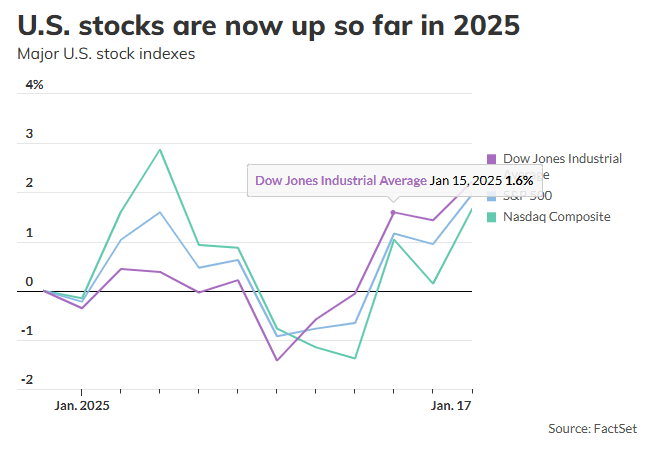
The U.S. stock market extended its rally this week, with all S&P 500 sectors closing higher as a decline in bond yields eased concerns about recent sharp increases in interest rates. The S&P 500, Dow Jones Industrial Average, and Nasdaq Composite each posted weekly gains, lifting all three indexes into positive territory for January, according to FactSet data. The S&P 500 and Dow achieved their largest weekly rallies since the week of Donald Trump’s 2016 election victory. “What’s encouraging is that the equal-weighted S&P is leading,” said Louis Navellier, Chief Investment Officer at Navellier, in a Friday email. This reflects a broadening market rally, bolstered by a significant drop in interest rates. The Invesco S&P 500 Equal Weight ETF, which gives each stock in the index an equal allocation, outpaced the traditional market-cap-weighted S&P 500, signaling broader participation in the rally. After a rocky start to 2025 fueled by rising Treasury yields, the market appears to be gaining momentum ahead of Donald Trump’s upcoming inauguration. Financials, energy, and materials were the top-performing sectors in the S&P 500 this week, each rising around 6%, according to FactSet. Financial stocks rallied on strong earnings reports from major banks, including Citigroup, Goldman Sachs, and Morgan Stanley, which each climbed about 12% for the week. “The banking sector continues to trade at a substantial discount to the broader S&P 500, despite this week’s gains,” said Chris Davis, chairman of Davis Advisors, in an interview. Davis, who manages the Davis Select Financial ETF, noted optimism among investors about potential deregulation under the new administration, which could simplify regulatory requirements for banks. Friday marked the final trading session of President Joe Biden’s term, with Trump’s inauguration set for Monday. Markets will be closed in observance of Martin Luther King Jr. Day. The major indexes ended Friday with gains: the Dow rose 0.8%, the S&P 500 climbed 1%, and the Nasdaq Composite advanced 1.5%. Treasury yields retreated, with the 10-year yield posting its largest weekly decline since November, after cooler-than-expected inflation data for December. For the week, it rose 2.9%, bringing its year-to-date gain to 2%, while the Invesco S&P 500 Equal Weight ETF surged 3.9% for a year-to-date increase of 2.7%. The Russell 2000 index of small-cap stocks jumped 4% for the week, now up more than 2% in 2025. The drop in bond yields has provided relief to the market, particularly for highly leveraged small-cap companies, said Navellier. “The retreat in interest rates has removed significant pressure, supporting a broader recovery across the U.S. stock market,” he said. John PaulJohn Paul is the founder of DayTradeToWin, a trading education and software company established in 2008, supporting traders worldwide. His expertise focuses on price action-based futures trading strategies and structured market analysis. DayTradeToWin delivers trading education, indicators, and software tools designed to help traders apply disciplined, rule-based decision-making across global futures markets. He is the creator of multiple trading methodologies, including the Sonic System, Atlas Line, and Trade Scalper, which help traders identify structured opportunities in markets such as the E-mini S&P 500 (ES), Nasdaq (NQ), crude oil (CL), and gold (GC). Official website: https://daytradetowin.com daytradetowin.com
market surges
Market News

One-Day Market Surges Aren’t Game-Changers

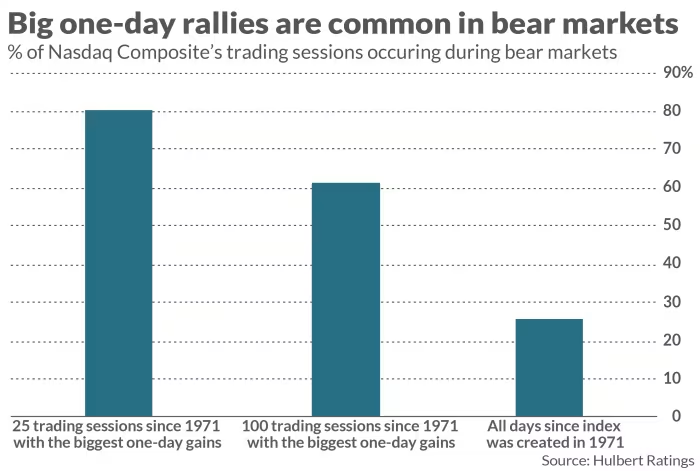
Price spikes are more common in bear markets than in bull markets. This is an important fact to keep in mind, especially when evaluating major market rallies like the one on January 15, which followed optimistic reactions to recent U.S. inflation data. On that day, the Nasdaq Composite Index (COMP) jumped 2.5%, leading some to claim that the bull market was back on track after a five-week slump that began in early December. However, historical trends suggest otherwise. Significant one-day rallies have disproportionately occurred during bear markets. Based solely on the January 15 rally, history would suggest that we’re likely in a bear market. An analysis of the Nasdaq since its inception in 1971, using market cycle classifications from Ned Davis Research, reveals a clear pattern. Over the past 50 years, about 25% of trading days have occurred during bear markets. If major rallies were distributed randomly, only 25% would align with bear markets. If rallies were a sign of a bull market, that percentage would be even lower. The reality, however, is strikingly different. Among the 25 largest single-day gains since 1971, 80% occurred during bear markets. Expanding to the 100 biggest rallies, 61% took place in bear markets. These figures highlight a key characteristic of bear markets: heightened volatility, where sharp gains are often driven by temporary sentiment shifts rather than a sustained recovery. John PaulJohn Paul is the founder of DayTradeToWin, a trading education and software company established in 2008, supporting traders worldwide. His expertise focuses on price action-based futures trading strategies and structured market analysis. DayTradeToWin delivers trading education, indicators, and software tools designed to help traders apply disciplined, rule-based decision-making across global futures markets. He is the creator of multiple trading methodologies, including the Sonic System, Atlas Line, and Trade Scalper, which help traders identify structured opportunities in markets such as the E-mini S&P 500 (ES), Nasdaq (NQ), crude oil (CL), and gold (GC). Official website: https://daytradetowin.com daytradetowin.com

S&P 500
Market News

S&P 500 Financials: A November-Level Comeback

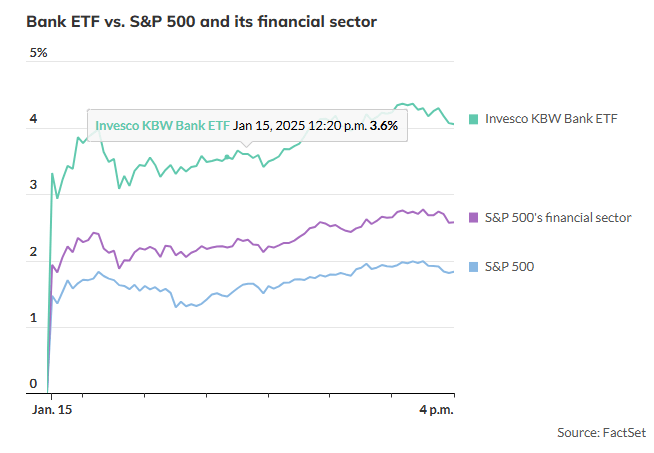
Major U.S. indexes ended the day on a high note: the S&P 500 rose 1.8%, the Dow Jones Industrial Average gained 1.7%, and the Nasdaq Composite jumped 2.5%. Cooling Inflation and Strong Bank Earnings Spark Market Rally, Says Wells Fargo’s Sameer Samana The stock market surged on Wednesday, driven by optimism around easing inflation and upbeat bank earnings that marked the start of earnings season. “The market was primed to rally,” said Sameer Samana, senior global market strategist at Wells Fargo Investment Institute, during a phone interview. Samana noted that investors had been anxious about rising Treasury yields, which had previously unsettled the market. However, Wednesday’s earnings results and inflation data helped turn the tide. Financial Stocks Lead Gains Bank stocks spearheaded the rally, with Citigroup Inc. and Wells Fargo & Co. both climbing over 6% by the close of trading. JPMorgan Chase & Co. and Goldman Sachs Group Inc. also posted strong earnings, further boosting sentiment. Sector-focused ETFs reflected this momentum: the Invesco KBW Bank ETF rose 4.1%, the SPDR S&P Bank ETF gained 2.6%, and the SPDR S&P Regional Banking ETF increased by 2.5%. Overall, the financial sector of the S&P 500 climbed 2.6%, its largest one-day gain since November 6, 2020, according to FactSet. Samana attributed the rally in financials to stronger-than-expected Wall Street trading revenues in the fourth quarter, alongside robust earnings results. Inflation Data Calms Market Nerves The rally was further fueled by the December Consumer Price Index (CPI) report from the Bureau of Labor Statistics, which showed inflation rising 0.4% month-over-month for a year-over-year rate of 2.9%. Core inflation, which excludes volatile food and energy prices, slowed to 0.2% in December from 0.3% in November. Its annual rate eased slightly to 3.2%. The cooler inflation data provided relief to investors worried about persistently high Treasury yields. On Wednesday, the yield on the 10-year Treasury note dropped 13.4 basis points to 4.653%, reversing its recent climb to multiyear highs. Broader Market Rally Stock futures rallied ahead of the market open following the CPI report, lifting investor confidence. JPMorgan Chase saw a pre-market boost and finished the day up 2%, while Goldman Sachs surged 6%. Major U.S. indexes ended the day on a high note: the S&P 500 rose 1.8%, the Dow Jones Industrial Average gained 1.7%, and the Nasdaq Composite jumped 2.5%. Louis Navellier, chief investment officer at Navellier, commented on the market’s strong performance: “Core CPI came in a tick light. Yields fell meaningfully, and stocks surged.” Looking Ahead Samana remains cautiously optimistic about the market outlook. He expects the Federal Reserve to implement only one interest rate cut in 2025, citing a strong U.S. economy and the possibility of inflation stabilizing near 3%. Wednesday’s gains showcased the market’s positive reaction to a mix of strong financial earnings and easing inflation, setting an encouraging tone for the new year. John PaulJohn Paul is the founder of DayTradeToWin, a trading education and software company established in 2008, supporting traders worldwide. His expertise focuses on price action-based futures trading strategies and structured market analysis. DayTradeToWin delivers trading education, indicators, and software tools designed to help traders apply disciplined, rule-based decision-making across global futures markets. He is the creator of multiple trading methodologies, including the Sonic System, Atlas Line, and Trade Scalper, which help traders identify structured opportunities in markets such as the E-mini S&P 500 (ES), Nasdaq (NQ), crude oil (CL), and gold (GC). Official website: https://daytradetowin.com daytradetowin.com

hedge funds
Market News

Why 60/40 Outperformed Hedge Funds

Barclays has estimated hedge fund investor returns to range between 10% and 11% in 2024, based on a weighted average across various investor types, such as pension funds, family offices, and private banks. This estimate aligns with Hedge Fund Research’s weighted composite index, which also reported a 10% increase last year. In contrast, a simple 60/40 portfolio, comprising 60% stocks and 40% bonds, significantly outperformed hedge funds in 2024. Using the Vanguard Total Stock Market ETF (VTI) and Vanguard Total Bond Market ETF (BND), this approach delivered a return of just under 15%, according to the Lazy Portfolio ETF site. Over the past five years, including the challenging 2022 market where stocks and bonds both fell, the 60/40 strategy averaged an 8% annual return. During the same period, hedge funds averaged just over 7%, with a 4% loss in 2022. “The outperformance of a simple 60/40 portfolio in 2024 underscores a persistent challenge for hedge funds: justifying their higher costs,” said Bruno Schneller, managing partner at Erlen Capital Management, a Swiss asset manager. Schneller pointed out that while hedge funds promote themselves as vehicles for diversification, downside protection, and alpha generation, their recent results indicate difficulty in consistently delivering on these promises, especially in low-volatility markets. He advised investors to weigh the potential advantages—such as specialized strategies and uncorrelated returns—against the simplicity and cost-efficiency of traditional portfolio models. John PaulJohn Paul is the founder of DayTradeToWin, a trading education and software company established in 2008, supporting traders worldwide. His expertise focuses on price action-based futures trading strategies and structured market analysis. DayTradeToWin delivers trading education, indicators, and software tools designed to help traders apply disciplined, rule-based decision-making across global futures markets. He is the creator of multiple trading methodologies, including the Sonic System, Atlas Line, and Trade Scalper, which help traders identify structured opportunities in markets such as the E-mini S&P 500 (ES), Nasdaq (NQ), crude oil (CL), and gold (GC). Official website: https://daytradetowin.com daytradetowin.com

Scroll to Top