
Market News

deflation
Market News

Brace for a Gentle Decline: Slow Deflation vs. a 40% Market Drop

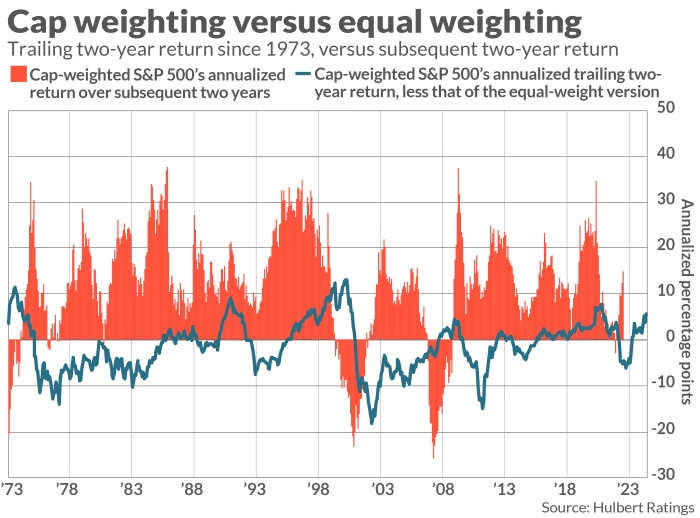
Current forecasts suggest that the likelihood of a U.S. stock market crash is below average. According to State Street Associates’ “froth forecasts,” which draw on Harvard professor Robin Greenwood’s research, there’s an 18% chance of a 40% market decline within the next two years, compared to a five-year average of 26%. This outlook extends to the high-tech sector, known for its recent dynamic returns. State Street estimates its crash probability to be four percentage points lower than the five-year average. Yale University’s Will Goetzmann contends that bubble predictions often reflect more about the analysts making them than the actual risk. Many lack precise definitions and criteria for what constitutes a bubble or a crash, leading to more subjective and less reliable predictions. The crash probabilities by Greenwood and State Street are linked to the market’s performance over the past two years. Higher past performance correlates with a higher likelihood of a crash. For instance, a 100% price increase over two years raises the crash probability to 50%, while a 150% increase nearly guarantees it. However, the S&P 500’s 48.9% return over the past two years is well below these critical levels. Some argue that the market’s reliance on the largest stocks indicates an imminent bubble. The cap-weighted S&P 500 has outperformed the equal-weight version by more than 10 percentage points this year and by 12 percentage points last year. This concentration in large stocks is viewed by some as a sign of market vulnerability. However, historical data since 1970 shows no consistent pattern supporting this theory. Although the U.S. stock market is overvalued, there are various ways it can correct itself besides crashing. According to State Street’s forecasts, a gradual adjustment through mediocre performance is more likely than a sudden crash. John PaulJohn Paul is the founder of DayTradeToWin, a trading education and software company established in 2008, supporting traders worldwide. His expertise focuses on price action-based futures trading strategies and structured market analysis. DayTradeToWin delivers trading education, indicators, and software tools designed to help traders apply disciplined, rule-based decision-making across global futures markets. He is the creator of multiple trading methodologies, including the Sonic System, Atlas Line, and Trade Scalper, which help traders identify structured opportunities in markets such as the E-mini S&P 500 (ES), Nasdaq (NQ), crude oil (CL), and gold (GC). Official website: https://daytradetowin.com daytradetowin.com

juneteenth
Market News

Juneteenth Closure Updates: Stock Market and Post Office Hours

Here’s what’s closed on Juneteenth this Wednesday, June 19, in observance of the newest federal holiday. As Americans prepare to celebrate Juneteenth, which commemorates the end of slavery in the U.S., they should be aware of the closures associated with the holiday. This includes financial markets taking the day off. June 19 marks the day in 1865 when federal troops arrived in Galveston, Texas, to free enslaved Black people in the state, almost two and a half years after President Lincoln signed the Emancipation Proclamation on January 1, 1863. Not every state ended slavery immediately following the proclamation. Juneteenth has been celebrated in Black communities since the 19th century and became a Texas state holiday in 1980. Other states followed, and in 2021, President Joe Biden signed legislation making Juneteenth the 12th federal holiday. “This is a day of profound weight and profound power, a day in which we remember the moral stain, the terrible toll that slavery took on the country and continues to take,” Biden said at the time. Here are details about what will be closed on Juneteenth: Are financial markets open on June 19? The New York Stock Exchange, Nasdaq, and U.S. bond markets are closed on June 19. Trading will resume on the morning of June 20. Does the post office deliver mail? The U.S. Postal Service will not deliver mail on June 19. However, FedEx and UPS will operate on their normal schedules. Are banks open? Banks are generally closed, but ATMs and banking apps are still available. Are government offices open? Since Juneteenth is a federal holiday, all nonessential federal government offices are closed. This generally applies to state government offices as well. Are schools open? Schools are typically closed on Juneteenth, but it’s best to check with your local school district. John PaulJohn Paul is the founder of DayTradeToWin, a trading education and software company established in 2008, supporting traders worldwide. His expertise focuses on price action-based futures trading strategies and structured market analysis. DayTradeToWin delivers trading education, indicators, and software tools designed to help traders apply disciplined, rule-based decision-making across global futures markets. He is the creator of multiple trading methodologies, including the Sonic System, Atlas Line, and Trade Scalper, which help traders identify structured opportunities in markets such as the E-mini S&P 500 (ES), Nasdaq (NQ), crude oil (CL), and gold (GC). Official website: https://daytradetowin.com daytradetowin.com

nvidia
Market News

Nvidia Sets a New Benchmark in the Chip Sector with Its Latest Stock-Price Target

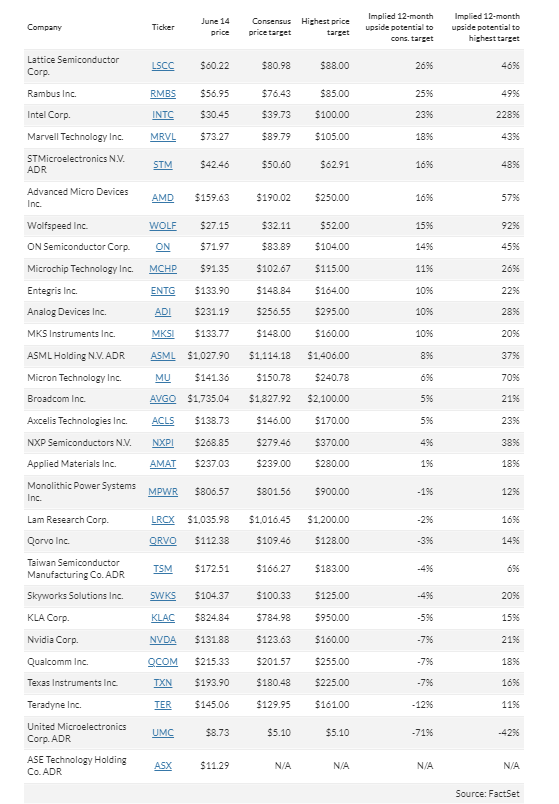
Nvidia’s new highest stock-price target suggests a 21% upside from Friday’s close, but several other chip stocks have even more bullish targets indicating greater growth potential. Nvidia Corp. shares have surged 165% this year, yet Susquehanna analyst Chris Rolland believes they can go higher. He raised his price target on Nvidia’s stock (NVDA) to $160 from $145, suggesting a 21% increase from Friday’s closing price. This target is based on a multiple of about 51.5 times his estimated adjusted earnings per share for 2025. “While this multiple is higher than the group median of ~28.5x, we view it as warranted due to Nvidia’s strong position in flourishing end markets,” Rolland wrote. Over three-quarters of analysts polled by FactSet rate Nvidia’s stock as a buy. However, the average price target is below Friday’s closing price, likely because some analysts haven’t updated their models following the stock’s recent 40%-plus rally. Despite Rolland’s optimism, his target is now the highest on FactSet. Three stocks within the PHLX Semiconductor Index have average price targets implying at least a 23% upside: Lattice Semiconductor Corp. (LSCC), Rambus Inc. (RMBS), and Intel Corp. (INTC). The table below lists all stocks in the index, sorted by their 12-month upside potential based on average and highest analyst price targets. Lattice, Rambus, and Intel have struggled this year, with Lattice down 13%, Rambus down 18%, and Intel down 39%. Analysts are generally positive about Lattice and Rambus, with 71% of FactSet-tracked analysts giving buy ratings for each. Lattice’s average price target suggests a 26% upside, while Rambus’s suggests 25%. Intel’s outlook is more mixed. Despite an average price target suggesting a 23% rise, only 28% of analysts surveyed by FactSet are bullish. Of the 47 analysts, 13 have buy ratings, 30 have neutral ratings, and four have sell ratings. Conversely, 11 stocks in the PHLX Semiconductor Index have average price targets implying negative returns. Many of these cases likely reflect outdated models, as analysts hold majority bullish ratings on seven of these stocks. Half of the stocks in the PHLX Semiconductor Index have high price targets implying more upside than Nvidia’s. Intel leads with a target suggesting over 200% growth, followed by Wolfspeed Inc. (WOLF) at 92% and Micron Technology Inc. (MU) at 70%. John PaulJohn Paul is the founder of DayTradeToWin, a trading education and software company established in 2008, supporting traders worldwide. His expertise focuses on price action-based futures trading strategies and structured market analysis. DayTradeToWin delivers trading education, indicators, and software tools designed to help traders apply disciplined, rule-based decision-making across global futures markets. He is the creator of multiple trading methodologies, including the Sonic System, Atlas Line, and Trade Scalper, which help traders identify structured opportunities in markets such as the E-mini S&P 500 (ES), Nasdaq (NQ), crude oil (CL), and gold (GC). Official website: https://daytradetowin.com daytradetowin.com
inflation
Market News

How Inflation is Sharpening Economic Divides: Wealthy vs. Everyone Else

Lower-Income Americans Increasingly Worried About the Economy Despite a steadily growing economy and low unemployment easing some of the pain of high inflation, middle- and low-income Americans are feeling more stress. Recent evidence includes a drop in the consumer sentiment index in June to a seven-month low, primarily due to rising anxiety among middle- and lower-income Americans. This widening gap in economic perception is not surprising. Wealthier households have larger financial cushions and benefit from a surging stock market that boosts their wealth. In contrast, lower-income Americans have largely depleted their pandemic-era savings and must now rely on their job earnings to keep up with rising prices. Persistent high inflation and interest rates are straining their budgets, leading to increased credit card usage and more loan defaults. One positive development is the significant income growth in recent years. A tight labor market has forced businesses to pay more, and job switchers have received substantial raises. A recent Congressional Budget Office (CBO) report found that incomes have slightly outpaced inflation since 2019. As a result, most families spend a smaller portion of their income on essentials. However, these benefits are unevenly distributed. The highest earners spent 6.3% less of their income on goods and services in 2023 than in 2019, while the lowest earners spent only 2% less. This disparity explains why the wealthy are less worried about inflation. Moreover, lower-income households face higher price increases for their typical purchases compared to wealthier people, and their wages have not risen as quickly. What does the growing lack of confidence among many Americans mean for the economy? Nationwide financial market economist Oren Klachin noted that middle- and lower-income people spend most of their earnings on consumer goods and services. If they reduce spending, it could disrupt the economy. “This will be an important dynamic to watch in the second half of this year,” he said. John PaulJohn Paul is the founder of DayTradeToWin, a trading education and software company established in 2008, supporting traders worldwide. His expertise focuses on price action-based futures trading strategies and structured market analysis. DayTradeToWin delivers trading education, indicators, and software tools designed to help traders apply disciplined, rule-based decision-making across global futures markets. He is the creator of multiple trading methodologies, including the Sonic System, Atlas Line, and Trade Scalper, which help traders identify structured opportunities in markets such as the E-mini S&P 500 (ES), Nasdaq (NQ), crude oil (CL), and gold (GC). Official website: https://daytradetowin.com daytradetowin.com
Market News

Stock Market Chaos: This Asset’s Signal on Investor Risk Preferences

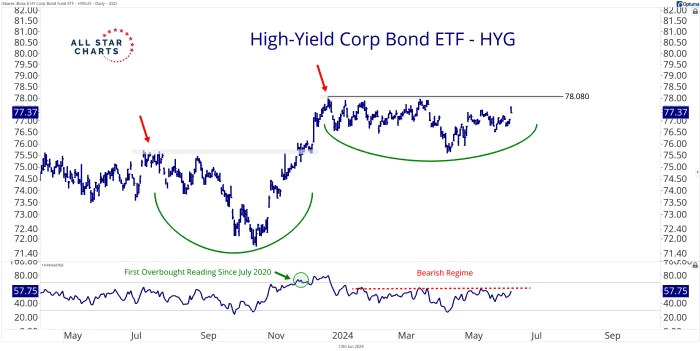
The S&P 500 has set 29 new records in 2024, peaking again on Thursday. However, lower futures on Friday suggest it may not reach 30 records in this session. Optimism about potential interest rate cuts and excitement over AI have driven this bull run. However, caution is advised. The Nasdaq 100’s 14-day relative strength index has surged to 77.5, surpassing the overbought threshold of 70. Additionally, the market is increasingly reliant on a small number of big-cap stocks, which are significantly more expensive than their small-cap counterparts. Doug Kass, founder of Seabreeze Partners Management, lists several concerns. He believes corporate profit expectations are “unrealistic” and notes that stocks are overvalued relative to Treasury yields. Kass also points to underestimated political risks, overly bullish investor sentiment, and potentially toxic market structures and investor positioning. Ian Culley, investment analyst at All Star Charts, highlights recent market volatility as evidence of ongoing instability. He suggests monitoring high-yield bonds for insights into investor sentiment. According to Culley, the performance of the iShares iBoxx $ High Yield Corporate Bond ETF compared to the Invesco S&P 500 High Beta ETF and the Invesco S&P 500 Low Volatility ETF provides a clear indication of risk appetite. “When investors feel comfortable buying high-risk bonds, riskier stocks with a higher beta outperform safer alternatives,” Culley explains. He adds that a breakout of the HYG above 78 would confirm a risk-on stock market rally. John PaulJohn Paul is the founder of DayTradeToWin, a trading education and software company established in 2008, supporting traders worldwide. His expertise focuses on price action-based futures trading strategies and structured market analysis. DayTradeToWin delivers trading education, indicators, and software tools designed to help traders apply disciplined, rule-based decision-making across global futures markets. He is the creator of multiple trading methodologies, including the Sonic System, Atlas Line, and Trade Scalper, which help traders identify structured opportunities in markets such as the E-mini S&P 500 (ES), Nasdaq (NQ), crude oil (CL), and gold (GC). Official website: https://daytradetowin.com daytradetowin.com

nvidia
Market News

Analyst Predicts a Stock with Higher Returns than Nvidia by 2030

Risk appetite appears to be rebounding as investors look past the prospect of prolonged high interest rates in the U.S., focusing instead on encouraging signs of slowing inflation. The Nasdaq is leading the market this Thursday, buoyed by strong earnings from AI chipmaker Broadcom. This brings us to our featured analysis from Beth Kindig, the lead tech analyst at the I/O Fund, who believes investors are missing a hidden gem among the AI frontrunners. Kindig and her firm have a history of making accurate predictions. In August 2021, she predicted that Nvidia’s (NVDA) valuation would surpass Apple’s by 2025—a forecast that briefly came true last week as Nvidia continues to challenge the iPhone giant. In a recent conversation with Real Vision, published on Wednesday, Kindig reiterated another bold prediction: Nvidia is on track for a $10 trillion market cap by 2030, which would imply a return of over 250%. However, she suggests that even this impressive potential is outshined by opportunities in other stocks, particularly rival AMD (AMD). Kindig expects significant gains for AMD by 2027, despite mixed opinions from Wall Street. Morgan Stanley recently downgraded AMD, arguing that investor expectations for its AI capabilities are too high, while other analysts believe the company deserves more attention. Nvidia’s stock has soared 152% this year, dramatically outperforming AMD’s 8.7% gain. A major challenge for AMD is Nvidia’s dominance, holding 98% of the GPU market due to its superior CUDA programming platform. However, Kindig believes AMD can carve out a niche with its more affordable GPUs, which could attract major tech companies with large capital expenditures. Kindig is optimistic about AMD’s potential to offer a lower total cost of ownership, appealing to big tech companies with substantial engineering resources to work with AMD GPUs. She sees a strategic opportunity for AMD to provide custom silicon solutions at a competitive price point compared to Nvidia. The analyst also highlighted other AI-related stocks, such as Dell (DELL), which recently saw a stock drop despite soaring AI demand due to concerns over AI server profitability. Kindig views Dell as a strong contender, particularly given its large scale and cash flow advantages compared to Super Micro (SMCI), which is nearing production capacity. In the current market environment, companies needing to raise cash face increased scrutiny. While Kindig acknowledges Super Micro as a solid company, she has shifted her focus to Dell, expecting it to become a key player as Nvidia and AMD navigate production capacity constraints. Key Takeaways Stay tuned to these developments as they unfold, offering potential investment opportunities in a dynamic market landscape. John PaulJohn Paul is the founder of DayTradeToWin, a trading education and software company established in 2008, supporting traders worldwide. His expertise focuses on price action-based futures trading strategies and structured market analysis. DayTradeToWin delivers trading education, indicators, and software tools designed to help traders apply disciplined, rule-based decision-making across global futures markets. He is the creator of multiple trading methodologies, including the Sonic System, Atlas Line, and Trade Scalper, which help traders identify structured opportunities in markets such as the E-mini S&P 500 (ES), Nasdaq (NQ), crude oil (CL), and gold (GC). Official website: https://daytradetowin.com daytradetowin.com

Scroll to Top