

Market News

autopilot
Market News

Boost Your Day Trading Success: When to Use Trailing Stops with AutoPilot

Today, we’ll delve into the Autopilot Trading System, focusing on the strategic use of trailing stops. Knowing when and how to use trailing stops can significantly enhance your trading success. We’ll showcase examples of the Autopilot Trading System in action and discuss the importance of avoiding overtrading. Harnessing the Power of Trailing Stops Trailing stops are vital in our trading strategy, helping to lock in profits while safeguarding against market reversals. The challenge lies in knowing the optimal times to use them. Market conditions vary, and sometimes large profit targets are not feasible. Instead, quick, strategic entries and exits are necessary. For instance, consider a market in a short position using the Autopilot Trading System. Our objective is to secure profits as soon as the market enters the profit zone. However, placing the stop too close can lead to premature trade closures due to normal market fluctuations. The key is to protect your gains without getting stopped out by minor movements. Understanding Market Conditions When managing a short position, remember that markets typically decline faster than they rise. A rapid move to the downside, particularly if it’s accelerating, often indicates more profit potential. But how can you determine if the market’s volatility suits this strategy? Analyzing historical volatility patterns offers valuable insights. Market volatility often clusters in groups of three to four days. If yesterday was slow, today might be similar until a change occurs. Recognizing these patterns helps you better anticipate market movements and adjust your strategy accordingly. Steering Clear of Overtrading Overtrading is a common pitfall for traders. A series of winning and losing trades can tempt you to keep trading, but this often results in unnecessary losses. If you’ve made profits in your initial trades, it’s usually wise to stop for the day. Continuous trading can erode gains and increase risk exposure. Set the Autopilot for specific trading hours—perhaps the morning session, the first hour, or the afternoon. This disciplined approach manages risk and prevents overtrading. It’s about quality, not quantity. If after 10-15 trades you haven’t seen significant movement, it’s best to shut down and return later or the next day. Implementing Smart Limits Incorporate both stops and targets in your strategy. Decide how many candles or bars you’re willing to let the market move against you before closing a position. For example, setting a limit of two or three bars prevents a full stop loss, protecting your capital while allowing for profitable trades. Monitoring the number of trades is crucial. Fewer, well-chosen trades are better than a high volume of trades with mixed results. By focusing on high-probability setups, the trailing stop can effectively follow the movement, securing profits as the market progresses. Join Our Community The Autopilot Trading System is designed to streamline and enhance your trading experience. For those interested in deeper insights and real-time trading discussions, we offer an accelerated mentorship program and a live trading room. Visit daytradetowin.com for more information, or contact us via call or email. Our team is here to answer your questions and support your trading journey. For our current subscribers, remember to join our live trading room sessions. These provide invaluable opportunities to understand market dynamics and refine your strategies with real-time guidance. Until next time, happy trading! John PaulJohn Paul is the founder of DayTradeToWin, a trading education and software company established in 2008, supporting traders worldwide. His expertise focuses on price action-based futures trading strategies and structured market analysis. DayTradeToWin delivers trading education, indicators, and software tools designed to help traders apply disciplined, rule-based decision-making across global futures markets. He is the creator of multiple trading methodologies, including the Sonic System, Atlas Line, and Trade Scalper, which help traders identify structured opportunities in markets such as the E-mini S&P 500 (ES), Nasdaq (NQ), crude oil (CL), and gold (GC). Official website: https://daytradetowin.com daytradetowin.com
markets
Market News

Treasury Yields Swing, Markets Stay Calm: Understanding the Steadying Forces in Stocks and Bonds

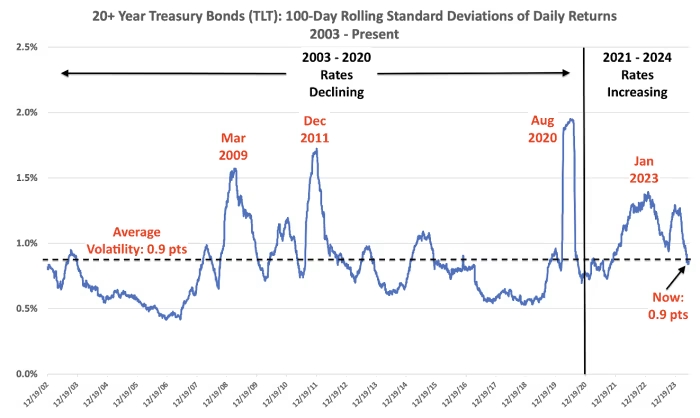
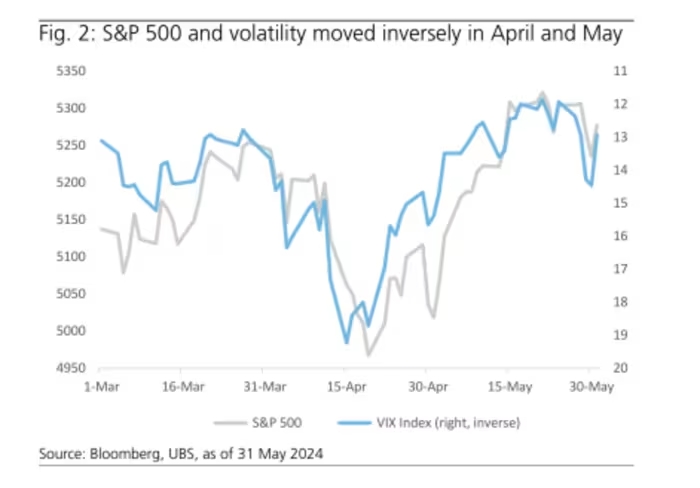
A fascinating dynamic is unfolding in the U.S. bond and stock markets, which remain calm despite recent fluctuations in Treasury yields. In the past two weeks, U.S. government debt rates have seen significant volatility. At the end of May, rates surged to one-month highs due to expectations that the Federal Reserve would not cut interest rates soon, unsettling the stock market. Then, last Thursday, rates dropped to their lowest levels since late March, driven by renewed concerns about a U.S. economic slowdown, marking the longest stretch of declines in a year. Despite these swings, overall market volatility has stayed low. This is reflected in both the ICE BofAML MOVE Index, which measures expected interest-rate volatility in the Treasury market, and the CBOE Volatility Index (VIX), which tracks expected volatility in the U.S. stock market and has barely moved this year. The MOVE Index has also decreased from its early 2023 peaks, a period when the Federal Reserve was still raising interest rates. “In 2022 and into 2023, there was significant volatility in the Treasury market as investors tried to anticipate the Fed’s actions,” said Van Hesser, chief strategist for Kroll Bond Rating Agency. “Uncertainty around the economy’s strength and the necessary interest rates to control inflation contributed to this volatility.” Hesser noted that as it became clearer that inflation was easing and the economy was heading towards a soft landing, volatility diminished. This relative calm persisted on Tuesday, ahead of the consumer-price index release for May and the Federal Reserve’s policy update. Treasury yields for the 2-year, 10-year, and 30-year bonds fell after a solid $39 billion 10-year auction, while U.S. stocks closed mostly higher. “Corporate earnings growth is positive, consumer spending remains robust, and investors are optimistic about economic growth,” Hesser said. “The key question now is the future outlook. Despite ongoing uncertainty, improved visibility has dampened bond market volatility.” DataTrek Research co-founders Nicholas Colas and Jessica Rabe highlighted the historical price action at the long end of the U.S. government-debt yield curve, examining the 100-day standard deviation of daily returns for the iShares 20+ Year Treasury Bond ETF (TLT) from 2003 to the present. They noted that bond-market volatility typically increases significantly only during crises, which benefits bondholders. “Current 20+ Year Treasury volatility is running at its long-term average,” Colas and Rabe wrote. “This indicates that yields are likely to remain stable until macroeconomic conditions change.” Owning long-term Treasurys is seen as a contrarian trade that may require considerable patience before it pays off, according to Colas and Rabe. John PaulJohn Paul is the founder of DayTradeToWin, a trading education and software company established in 2008, supporting traders worldwide. His expertise focuses on price action-based futures trading strategies and structured market analysis. DayTradeToWin delivers trading education, indicators, and software tools designed to help traders apply disciplined, rule-based decision-making across global futures markets. He is the creator of multiple trading methodologies, including the Sonic System, Atlas Line, and Trade Scalper, which help traders identify structured opportunities in markets such as the E-mini S&P 500 (ES), Nasdaq (NQ), crude oil (CL), and gold (GC). Official website: https://daytradetowin.com daytradetowin.com
stocks
Market News

UBS Predicts New Peaks: Stocks Poised for Record Highs

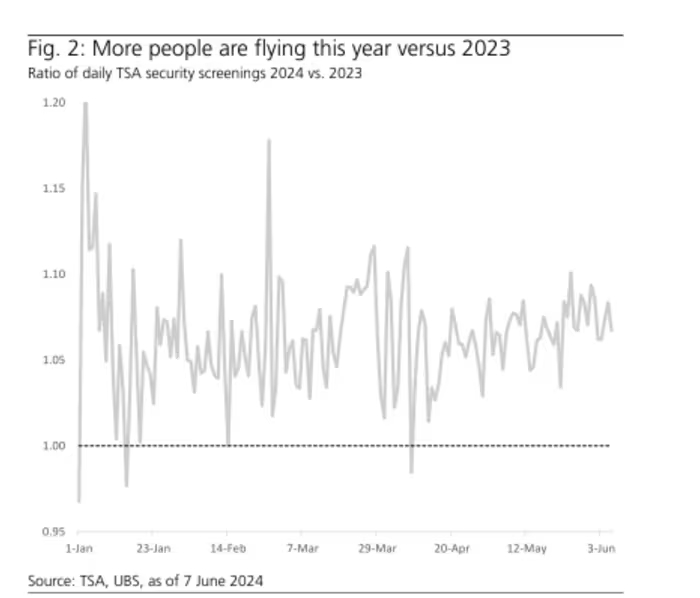
The S&P 500 index (SPX) notched its 26th record close of 2024 on Monday, ending at an all-time high of 5,360.79 after minor dips on Thursday and Friday. This milestone marks the 26th record close this year, per Dow Jones Market Data. The Nasdaq Composite (COMP) also reached its 14th record close of 2024, rising 0.4% on Monday, according to FactSet. U.S. stocks seem poised for more record highs, although potential challenges could arise from unexpected inflation data or outcomes from the Federal Reserve’s upcoming two-day policy meeting, UBS reports. A moderate reading from May’s consumer price index, expected on Wednesday, similar to April’s 3.4% annual increase, would likely reinforce investor confidence in a continuing disinflation trend, says Jason Draho, head of asset allocation at UBS Global Wealth Management. Draho noted that only a significant upside surprise, like those seen in the first quarter, could disrupt this confidence. Wednesday will also conclude the Fed’s June policy meeting. While no rate cuts are anticipated, updates to the Fed’s “dot plot”—the projected path of interest rates—are expected. The latest median projection of three rate cuts for this year is likely to be revised down to two cuts for 2024. Despite a slight rise in the unemployment rate to 4% in May, Draho points to positive economic indicators, such as a 6% increase in air travel this year compared to 2023. This suggests that while consumer spending is slowing, it is mainly impacting goods rather than services. Draho warned that any disappointments from the CPI report or the Fed could slow stock momentum but still anticipates more all-time highs. The S&P 500’s current record tally is the highest since 2021, which saw 70 new all-time highs. The record to beat, however, remains 1995, with 77 records. The Dow Jones Industrial Average (DJIA) closed up 0.2% on Monday, while the benchmark 10-year Treasury yield (BX:TMUBMUSD10Y) rose by 4 basis points to 4.468%. John PaulJohn Paul is the founder of DayTradeToWin, a trading education and software company established in 2008, supporting traders worldwide. His expertise focuses on price action-based futures trading strategies and structured market analysis. DayTradeToWin delivers trading education, indicators, and software tools designed to help traders apply disciplined, rule-based decision-making across global futures markets. He is the creator of multiple trading methodologies, including the Sonic System, Atlas Line, and Trade Scalper, which help traders identify structured opportunities in markets such as the E-mini S&P 500 (ES), Nasdaq (NQ), crude oil (CL), and gold (GC). Official website: https://daytradetowin.com daytradetowin.com
market
Market News

Summer Market Turbulence: The 5 Biggest Risks to Watch

Friday’s Jobs Report: A Key Test for the Stock Market This spring’s steadier backdrop has pushed U.S. stocks to record highs, but Friday’s jobs report is one of three major risks that could disrupt the summer calm in markets. The S&P 500 index (SPX) has risen more than 10% in 2024, with Wall Street’s fear index (VIX) and the bond market’s MOVE gauge both hitting their lowest levels since March 2022, when the Federal Reserve started raising rates. Recent market stability is due to a “convergence” among investors who believe the Federal Reserve will cut rates no more than twice this year while achieving a soft landing for the U.S. economy, according to Jason Draho, head of asset allocation at UBS Financial Services. Draho highlighted a “clear consensus view”: “Growth is slowing but not collapsing, inflation is stubborn but trending lower, and the bar for Fed rate cuts is low while hikes are effectively off the table,” he wrote in a Monday client note. This view suggests investors expect minimal changes to benchmark rates this year, which Draho said could maintain market calm into late summer. However, three near-term risks are on the horizon, starting with May’s jobs report due Friday. Any “significant surprises relative to expectations” could be disruptive, as could May’s consumer-price index and the conclusion of the Fed’s next policy meeting, both set for June 12. Stocks struggled for direction on Tuesday, following a turbulent session with trading glitches on the New York Stock Exchange. The Dow Jones Industrial Average (DJIA) was virtually unchanged, while the S&P 500 (SPX) and the Nasdaq Composite Index (COMP) both fell 0.2%, according to FactSet. John PaulJohn Paul is the founder of DayTradeToWin, a trading education and software company established in 2008, supporting traders worldwide. His expertise focuses on price action-based futures trading strategies and structured market analysis. DayTradeToWin delivers trading education, indicators, and software tools designed to help traders apply disciplined, rule-based decision-making across global futures markets. He is the creator of multiple trading methodologies, including the Sonic System, Atlas Line, and Trade Scalper, which help traders identify structured opportunities in markets such as the E-mini S&P 500 (ES), Nasdaq (NQ), crude oil (CL), and gold (GC). Official website: https://daytradetowin.com daytradetowin.com
Berkshire Hathaway
Market News

Thinking of Buying the Dip Post-Berkshire Hathaway Glitch? Proceed with Caution

Why Trades Following Monday’s NYSE Glitch Are Likely to Be Reversed Monday’s NYSE glitch prompted many investors to seize the opportunity to acquire Berkshire Hathaway’s Class A shares at a staggering discount exceeding 99%, according to FactSet data. However, even if some managed to execute orders before trading halted, it’s probable they won’t retain ownership of those shares, according to officials from two Wall Street trading firms. The New York Stock Exchange intends to review any trades potentially affected by the glitch, as stated by a spokesperson to MarketWatch. Moreover, Joe Saluzzi, co-founder of Themis Trading, emphasized that trades precipitating Monday’s drastic decline are expected to be voided under the exchange’s policy on “clearly erroneous transactions,” empowering market makers to challenge trades stemming from glitches. Jonathan Corpina, senior managing partner at Meridian Equity Partners, shares this sentiment, foreseeing a reversal of trades executed at incorrect prices. Berkshire BRK.A, +0.59%, Bank of Montreal BMO, -0.22%, Barrick Gold ABX, +2.19%, and 37 other stocks were subject to halts for volatility by New York Stock Exchange group exchanges on Monday, following significant declines, according to a statement from a New York Stock Exchange spokesperson. Berkshire shares plunged to 99.97% to $185.10, compared to $627,400 on Friday, before being halted at 9:50 a.m. Eastern time. In theory, this would have nearly halved Berkshire’s market capitalization to $536.3 billion by around 11 a.m. Eastern time on Monday, compared to $897.1 billion on Friday, according to Dow Jones Market Data. Trading in Berkshire’s Class B shares BRK.B remained unaffected. Trading in all affected stocks resumed shortly before noon. The glitch stemmed from a technical issue with industry-wide price bands published by the Consolidated Trade Association’s Securities Information Processor, triggering “limit-up/limit-down” trading halts soon after Monday’s market opening, according to the NYSE spokesperson. Monday’s incident echoed a trading glitch in January 2023, where NYSE’s opening auction issues led to trades in over 250 securities being filled at incorrect prices. At that time, the exchange stated that those trades wouldn’t be honored. John PaulJohn Paul is the founder of DayTradeToWin, a trading education and software company established in 2008, supporting traders worldwide. His expertise focuses on price action-based futures trading strategies and structured market analysis. DayTradeToWin delivers trading education, indicators, and software tools designed to help traders apply disciplined, rule-based decision-making across global futures markets. He is the creator of multiple trading methodologies, including the Sonic System, Atlas Line, and Trade Scalper, which help traders identify structured opportunities in markets such as the E-mini S&P 500 (ES), Nasdaq (NQ), crude oil (CL), and gold (GC). Official website: https://daytradetowin.com daytradetowin.com

S&P 500
Market News

How Two Crucial Factors Could Propel the S&P 500 to 6,500 in 2024

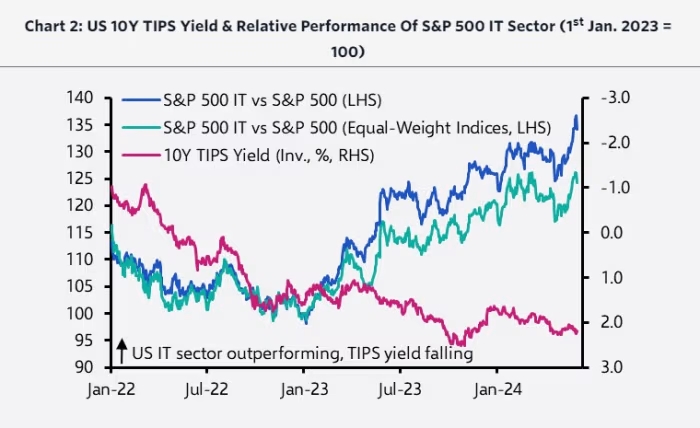
The new month of equity trading kicks off on a positive note, led by gains in Nvidia (NVDA) shares after the AI chipmaker announced its next-generation Rubin platform, set for release in 2026. However, benchmark Treasury yields are less than 20 basis points from their highest levels since early November, reflecting concerns over persistent inflation and prolonged high Fed funds rates, which are tempering stock market optimism. James Reilly, market economist at Capital Economics, observes that U.S. stocks have been navigating these alternating headwinds and tailwinds for some time. For instance, last week saw Treasury yields drop as PCE inflation data held no negative surprises, allowing nine of the eleven main S&P 500 sectors to gain ground on Thursday. Yet, the S&P 500’s progress was hindered by struggles in the information technology sector, following disappointing earnings reports from Salesforce (CRM) and Dell (DELL). Reilly highlights that “AI hype” has ultimately driven the S&P 500 to recent record highs. “What matters for IT matters for the market. And over the past year or so, that hasn’t been bond yields,” he explains. “Since late 2022, when ChatGPT was launched, AI enthusiasm has been the key driver.” Reilly expects AI to continue supporting the stock market, suggesting that narrow equity bull runs, like the current focus on Nvidia, can persist for years. He also believes the rally will broaden, noting that the early stages of the AI revolution still hold significant potential for broader gains as AI applications and leading providers become clearer. Importantly for stock market bulls, Reilly sees Treasurys providing a long-term tailwind. Recent softening economic data has led Capital Economics to lower its Q2 U.S. GDP growth forecast from an annualized 2.7% to just 1.2%. Reilly forecasts the 10-year Treasury yield to fall from around 4.5% now to 4.0% by the end of 2024, as investors may be underestimating the extent of future Fed rate cuts. “This expectation that AI hype will increase and that Treasury yields will fall underpins our forecast for the S&P 500 to hit 6,500 by the end of 2025,” concludes Reilly. John PaulJohn Paul is the founder of DayTradeToWin, a trading education and software company established in 2008, supporting traders worldwide. His expertise focuses on price action-based futures trading strategies and structured market analysis. DayTradeToWin delivers trading education, indicators, and software tools designed to help traders apply disciplined, rule-based decision-making across global futures markets. He is the creator of multiple trading methodologies, including the Sonic System, Atlas Line, and Trade Scalper, which help traders identify structured opportunities in markets such as the E-mini S&P 500 (ES), Nasdaq (NQ), crude oil (CL), and gold (GC). Official website: https://daytradetowin.com daytradetowin.com

Scroll to Top