
Market News

market
Market News

Market Trends Point to a December Cut

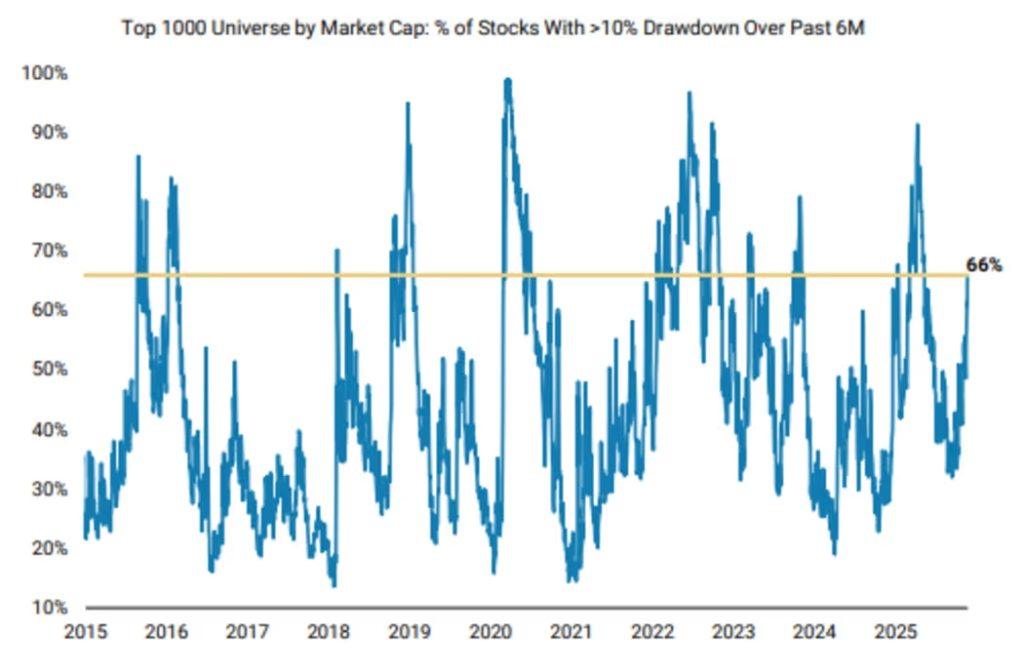
Market weakness and shrinking liquidity make a December Fed rate cut more likely, says Morgan Stanley’s Mike Wilson Equity markets have been under pressure as the Fed’s recent dovish messaging and tightening liquidity weigh on investor confidence and returns. Yet Morgan Stanley’s chief equity strategist Mike Wilson sees the pullback as an opportunity—not a warning. Wilson argues that the recent dip actually strengthens his bullish 12-month outlook and supports his long-standing “rolling recovery” thesis. In last week’s strategy note, his team outlined a contrarian view heading into 2026, projecting the S&P 500 to reach 7,800, supported by 17% EPS growth, outpacing Wall Street’s current 14% forecast. Why Wilson remains optimistic Morgan Stanley’s constructive stance is anchored in several trends: What’s behind the recent market softness Wilson points to two key pressures: While the S&P 500 has only slipped around 5% from its highs, the underlying damage is far deeper: two-thirds of the largest 1,000 stocks are down more than 10%, Morgan Stanley notes. Why the weakness may trigger a Fed cut Wilson believes this combination of tighter liquidity, broader asset weakness, and softer labor trends could actually increase the odds of a December rate cut, as the Fed aims to get ahead of a potential slowdown. This scenario, he says, strengthens the medium-term upside for equities. Where Morgan Stanley sees opportunity now Notably, the firm is steering clear of megacap tech. The Mag7 could still “catch down” to the market’s broader pullback, and underlying economic trends favor other areas. The sectors Morgan Stanley highlights include: The shift toward consumer discretionary is especially notable after years of underweighting the sector. Small caps also stand out, showing the strongest upward inflection in earnings projections. John PaulJohn Paul is the founder of DayTradeToWin, a trading education and software company established in 2008, supporting traders worldwide. His expertise focuses on price action-based futures trading strategies and structured market analysis. DayTradeToWin delivers trading education, indicators, and software tools designed to help traders apply disciplined, rule-based decision-making across global futures markets. He is the creator of multiple trading methodologies, including the Sonic System, Atlas Line, and Trade Scalper, which help traders identify structured opportunities in markets such as the E-mini S&P 500 (ES), Nasdaq (NQ), crude oil (CL), and gold (GC). Official website: https://daytradetowin.com daytradetowin.com


Wall Street
Market News

Wall Street Faces Its Sharpest Reversal in Months

Wall Street ‘Fear Gauge’ Spikes as AI Trade Loses Momentum What began as a promising Thursday rally quickly turned into a broad market selloff as renewed doubts surrounding the AI trade emerged following Nvidia’s latest earnings results. Nvidia shares initially surged overnight after the company delivered its strongest revenue beat in two years. CEO Jensen Huang said demand for its Blackwell Ultra GPUs was “off the charts,” lifting other AI names in premarket trading. But the enthusiasm didn’t last. By midmorning in New York, stocks—and even cryptocurrencies like bitcoin—were hit with a wave of selling as investors moved into safer assets. Treasury yields fell as buyers piled into bonds. “This is a coordinated risk-off move,” said Mark Hackett, chief market strategist at Nationwide. Sentiment was looking “pretty abysmal,” he added. The Cboe Volatility Index, or VIX, jumped nearly 12% to 26.05, its highest close since April. The market’s reversal was sharp. The S&P 500 logged its biggest intraday swing since April 8, dropping 3.5% from its morning high before closing 1.6% lower at 6,538.76. The Nasdaq Composite fell 2.2%—its worst decline since Nov. 13—while the Dow slipped 0.8%. All three indexes posted their largest blown gains since April. Strategists pointed to several possible triggers. Some warned that Nvidia’s strong results don’t guarantee that Big Tech’s huge AI investments will produce the returns investors expect. Others flagged shrinking liquidity as cash continues leaving the Federal Reserve’s reverse repo facility—a dynamic that tends to pressure risk assets like stocks and crypto. “Simply put, there is much less liquidity in the market today,” said Michael Kramer of Mott Capital Management. And even with Nvidia’s beat, investors may have been expecting more, noted Andy Constan of Damped Spring Advisors. Many traders had hoped Nvidia’s report would revive the market after a difficult November. With that bounce failing to appear—and earnings season coming to a close—Hackett said markets may be facing a “news vacuum” that keeps pressure on stocks. Fed Doubts Add to the Uncertainty Thursday’s labor-market data introduced even more confusion. Fed-funds futures briefly priced in higher odds of a December rate cut after the delayed September jobs report showed unemployment rising to 4.4%, a four-year high. But the report also revealed 119,000 new jobs—much stronger than expected. “The bigger story is uncertainty over the September jobs report,” said Daniel Tenengauzer of InTouch Capital Markets. Several banks have argued the data isn’t enough to confirm labor-market weakness. J.P. Morgan economist Michael Feroli agreed, noting the numbers don’t make a clear case either for or against a December cut. Brian Mulberry of Zacks Investment Management said the Fed is more likely to hold rates steady next month, which could push expectations for future cuts further into 2025. A Rare Rough Patch for Markets The S&P 500 is now down more than 5% from its late-October record, while the Nasdaq has fallen nearly 8%, edging closer to correction territory. Small-cap stocks have fared even worse, with the Russell 2000 down 8.5% from its recent high. At this pace, the S&P 500 is headed for its worst November since 2008. After six straight months of gains through October—its longest winning streak since 2021—the recent pullback may also reflect investors locking in profits before year-end, Nationwide’s Hackett said. Bitcoin dropped 3.5% to $86,337, and Nvidia closed 3.2% lower at $180.64. The Dow held up better than other major indexes, falling 0.8% to 45,752.26. One area of strength: consumer staples. Walmart’s strong earnings powered a 6.5% jump in its stock, lifting the entire sector—the only S&P 500 sector to finish the day in the green. John PaulJohn Paul is the founder of DayTradeToWin, a trading education and software company established in 2008, supporting traders worldwide. His expertise focuses on price action-based futures trading strategies and structured market analysis. DayTradeToWin delivers trading education, indicators, and software tools designed to help traders apply disciplined, rule-based decision-making across global futures markets. He is the creator of multiple trading methodologies, including the Sonic System, Atlas Line, and Trade Scalper, which help traders identify structured opportunities in markets such as the E-mini S&P 500 (ES), Nasdaq (NQ), crude oil (CL), and gold (GC). Official website: https://daytradetowin.com daytradetowin.com

AI
Market News

AI-powered stock market performance

“This is a truly game-changing technology that will reshape the global economy in the years ahead,” the bank says. On a day when Nvidia delivered blockbuster earnings and guidance, our call of the day argues that investors have officially crossed the point of no return with AI — and that nothing matters more heading into 2026 and beyond. “AI will be the most important macro force in 2026, as traditional drivers like monetary and trade policy fade,” writes Ajay Rajadhyaksha, global chairman of research at Barclays, in the bank’s 2026 outlook, “As Goes AI.” Rajadhyaksha says fears of the AI boom collapsing are overblown and expects the economic expansion to roll on for another year. Barclays has even raised its S&P 500 forecast for 2026 to 7400, up from 7000. Recent market hiccups have stemmed from worries that AI companies may not deliver on massive tech spending, alongside fading hopes for one final Fed rate cut this year. But Rajadhyaksha stresses how real AI’s economic impact already is: roughly 1% of U.S. growth in 2025 came from AI-related investment — from data centers to telecom upgrades and construction. “The scale of this build-out will likely dwarf the telecom boom. The U.S. is in the middle of its largest capex cycle in decades,” he says. AI has also been a powerful engine for investor wealth. Since the end of 2022, AI-linked stocks have driven 75% to 80% of the S&P 500’s earnings and overall performance — even as consumers grapple with trade concerns, job worries and a tough housing market. “Strong wealth gains from AI-sensitive equities are a big reason why. AI spending has fueled investment, and AI stocks have fueled consumption,” Rajadhyaksha notes. The biggest risk? The AI revolution losing steam. With U.S. households holding $45–$47 trillion in equities, a 30% drop in valuations could wipe out about $15 trillion — crushing consumer spending, stalling AI investment, and potentially pushing the economy into recession. Still, Barclays sees the analogy to the dot-com bust as overstated. Markets have recovered from every AI scare — including DeepSeek — and hyperscalers continue to show strong margins as real use cases multiply. Barclays forecasts 2.1% U.S. growth next year, helped by fading tariff drags and fresh fiscal support from the One Big Beautiful Bill. They do not expect large AI-driven job losses; instead, they see productivity gains driving the next year of growth. So how should investors position for the AI era?Barclays is turning positive on the entire technology, media and telecom sector, citing secular AI-driven growth, heavy capex, and double-digit gains in cloud and digital advertising. Other themes they favor include: Sectors likely to lag the S&P 500: consumer, commodity-linked and healthcare, due to firm inflation, oversupply and regulatory pressure. Style-wise, Barclays favors growth over value, driven by tech-led earnings strength. They also recommend exposure to 2-year Treasurys, expecting Fed cuts to remain in play. Internationally, Chile, Peru, Australia and South Africa stand to gain from rising demand for metals and critical minerals powering the AI boom. John PaulJohn Paul is the founder of DayTradeToWin, a trading education and software company established in 2008, supporting traders worldwide. His expertise focuses on price action-based futures trading strategies and structured market analysis. DayTradeToWin delivers trading education, indicators, and software tools designed to help traders apply disciplined, rule-based decision-making across global futures markets. He is the creator of multiple trading methodologies, including the Sonic System, Atlas Line, and Trade Scalper, which help traders identify structured opportunities in markets such as the E-mini S&P 500 (ES), Nasdaq (NQ), crude oil (CL), and gold (GC). Official website: https://daytradetowin.com daytradetowin.com
investors
Market News

Investors Turn Cautious as Warnings Flash

Stephanie Guild, chief investment officer at Robinhood Markets, says retail investors are staying remarkably calm despite recent volatility. Even with stocks under pressure and Nvidia earnings looming large, she hasn’t seen signs of panic—no surge in margin calls, no rushed selling. Guild oversees $1 billion for 180,000 long-term clients and authors a weekly market blog. She views the recent pullback as “healthy,” though she would have preferred it earlier in the fall. Her biggest worry: overcrowding in mega-cap tech, especially Nvidia and AI-related names. A correction there, she says, could ultimately set the stage for a stronger, more sustainable rally. In October, her team trimmed tech exposure, added healthcare, and boosted T-bill allocations. Friday’s volatility felt like the market’s “third warning,” prompting another round of profit-taking in tech and more capital shifting into T-bills. With few high-conviction ideas left on the table, Guild believes patience—and holding steady in safer assets—is the smart move. Still, she sees opportunity. Undervalued Chinese tech could reaccelerate as the country builds solutions to U.S. chip restrictions. She also likes industrials and defense companies positioned to benefit from government-driven capex. Guild says U.S. tech isn’t a blanket buy anymore: “It’s a stock-picker’s market.” Her team maintains solid exposure to Alphabet and grew more positive on Apple in September. She also views Gap as a defensive retail bet if consumers turn cautious. Retail investors, she argues, deserve more credit. They buy dips, trim gains, and look for companies with long-term potential—names like Opendoor Technologies, where they see underestimated growth ahead. But one area worries her: private credit. Echoing concerns from market veterans, Guild says the asset class lacks transparency, and it’s unclear which institutions could be exposed if cracks appear. What once looked like an appealing yield alternative in a zero-rate world could soon reveal risks the market hasn’t fully priced in. John PaulJohn Paul is the founder of DayTradeToWin, a trading education and software company established in 2008, supporting traders worldwide. His expertise focuses on price action-based futures trading strategies and structured market analysis. DayTradeToWin delivers trading education, indicators, and software tools designed to help traders apply disciplined, rule-based decision-making across global futures markets. He is the creator of multiple trading methodologies, including the Sonic System, Atlas Line, and Trade Scalper, which help traders identify structured opportunities in markets such as the E-mini S&P 500 (ES), Nasdaq (NQ), crude oil (CL), and gold (GC). Official website: https://daytradetowin.com daytradetowin.com
healthcare
Market News

Healthcare Steps Up: The Dark Horse of 2025

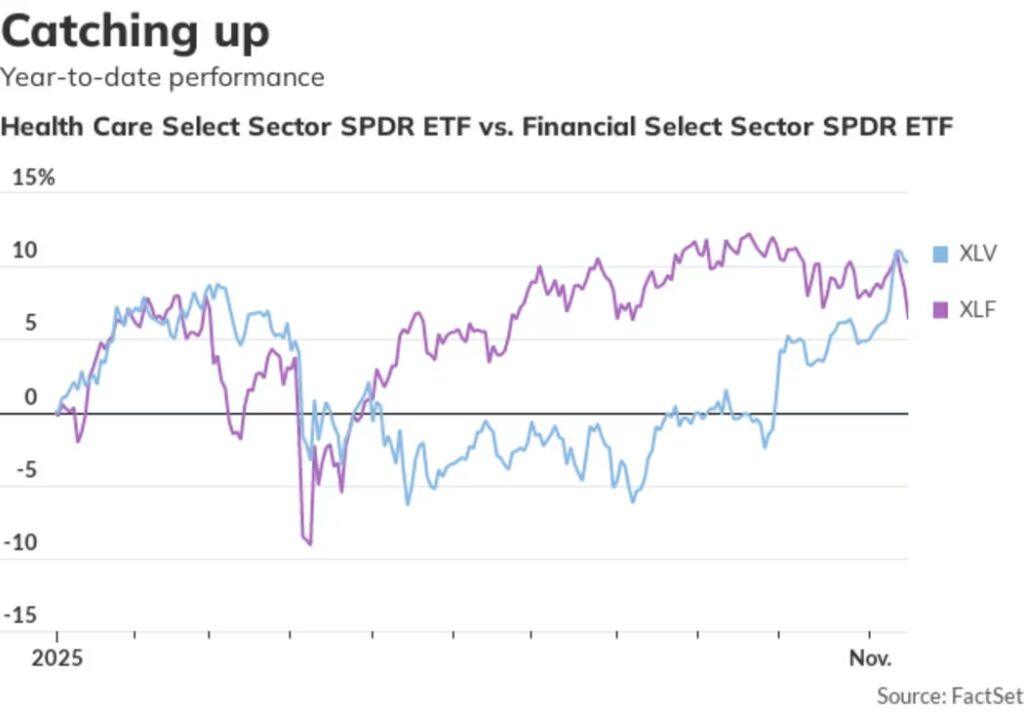
SoFi’s Liz Thomas Says a Surprise Sector Could Shine in 2025 Investor anxiety keeps building as the year winds down, with Monday’s selloff showing no appetite for dip-buying. Concerns over AI and fading hopes for more Fed rate cuts continue to shake the market. AI has been the go-to trade for 2025, but SoFi’s head of investment strategy Liz Thomas argues it may be time to look beyond tech. Her contrarian pick? Healthcare — a sector she believes could turn into a standout performer through 2025 and even into 2026. Thomas admits the call looked risky at first. With HHS Secretary Robert F. Kennedy Jr. taking office and pushing early policy changes, the sector was bracing for impact and had a tough year. “It was definitely a contrarian choice going into 2025,” she told MarketWatch. “The sector was pricing in a lot of fear.” But she still expects a strong catch-up trade, pointing out that healthcare could quickly close the gap with — or even overtake — industrials. Recent performance supports her case: healthcare has jumped from being one of the year’s laggards to outperforming financials. The XLV ETF is now up around 10% in 2024, compared with a little over 6% for XLF. Thomas says investors rotating out of pricey tech names are hunting for growth that doesn’t come with stretched valuations. “Earlier this year, healthcare was in the bottom percentile of valuations versus the S&P 500. It doesn’t get much cheaper than that,” she said. Pharma and biotech, in particular, are showing a promising mix of value and growth — something Thomas says could make healthcare a repeat pick for 2026 as SoFi finalizes its outlook. She also notes the sector tends to perform well in midterm election years, adding to its defensive appeal for 2026. Heading into 2025, SoFi was broadly optimistic but cautious about two risks: inflation heating back up and AI falling short on monetization. Neither issue has surfaced yet, though Thomas still sees potential cracks in the AI trade. One prediction that hasn’t hit: software beating semiconductors. Even so, she believes a rotation could still happen. “As tech investors become more valuation-conscious, software could be the next gateway that brings AI into real-world use,” she said. After Monday’s nearly 800-point drop in the Dow, Thomas thinks excess speculation is finally being flushed out — especially in momentum pockets. Still, she expects a late-year chase as fund managers try to catch up. Her warning: “Everyone thinks they’ll exit before a crash. You never know when it comes, but when stocks get this stretched, a reality check usually follows.” John PaulJohn Paul is the founder of DayTradeToWin, a trading education and software company established in 2008, supporting traders worldwide. His expertise focuses on price action-based futures trading strategies and structured market analysis. DayTradeToWin delivers trading education, indicators, and software tools designed to help traders apply disciplined, rule-based decision-making across global futures markets. He is the creator of multiple trading methodologies, including the Sonic System, Atlas Line, and Trade Scalper, which help traders identify structured opportunities in markets such as the E-mini S&P 500 (ES), Nasdaq (NQ), crude oil (CL), and gold (GC). Official website: https://daytradetowin.com daytradetowin.com

market
Market News

Market Rally: Can Earnings Keep It Going?

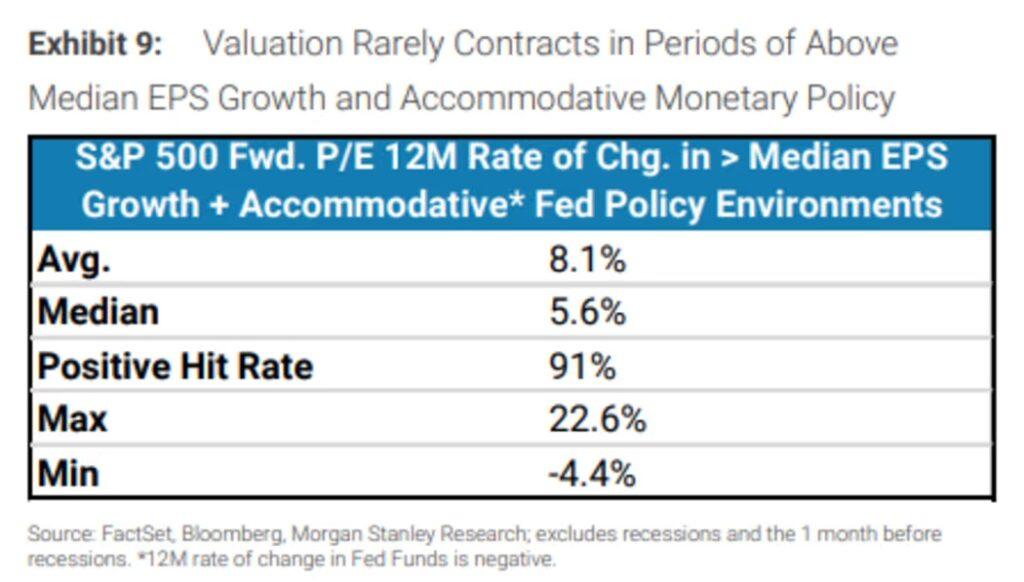
Earnings strength and a more supportive Federal Reserve should help sustain market valuations, says Morgan Stanley strategist Mike Wilson. Investors continue to buy the dips. S&P 500 futures opened the week 1.5% above Friday’s intraday low, reflecting a still-bullish tone. In a Monday note, Wilson and his team raised their 12-month S&P 500 target to 7,800, up from a prior 7,200 forecast for mid-2025. From current levels, that implies roughly 16% upside. Even if the index tops 7,000 this year, Morgan Stanley still expects double-digit gains through 2026. Wilson sees next year’s economy benefiting from growth-positive catalysts such as tax cuts and deregulation, reversing the drag from tariffs and government job reductions. “A new bull market and rolling recovery began in April, which means it’s still early days,” Wilson writes. “It may not look obvious yet, especially in lagging areas of the economy and market.” This backdrop supports a healthier earnings outlook. Morgan Stanley expects companies to gain from positive operating leverage, stronger pricing power, and AI-driven efficiency improvements. Recent data backs that up: third-quarter results showed a 2.2% revenue beat rate for the S&P 500 — double the average — and 8% median EPS growth for Russell 3000 stocks, the fastest in four years. The bank now forecasts S&P 500 EPS of $272 in 2025 (12% growth), $317 in 2026 (17% growth), and $356 in 2027 (12% growth). Monetary policy is another tailwind. Wilson believes markets are underestimating how accommodative the Fed will be over the next 6–12 months. He expects softer labor data and a willingness from policymakers to “run it hot” to result in a looser stance on both rates and the balance sheet. While Wilson anticipates a slight contraction in the market’s P/E multiple — from about 22.3 to 22 — he notes that strong earnings growth and easy monetary policy rarely trigger meaningful valuation compression. Despite underperformance this year — the Russell 2000 ETF has lagged the S&P 500 by roughly 7 percentage points — Wilson expects leadership to broaden. He is upgrading small caps to overweight, citing improving earnings revisions relative to large caps. Wilson is also shifting sector preferences. Morgan Stanley now favors consumer discretionary goods stocks — including Amazon, Dick’s Sporting Goods, AutoNation, and Wayfair — over services. He notes that earnings revisions in goods are improving, and the long-term performance ratio between goods and services is near historic lows and starting to turn higher. The firm also reiterates its overweight view on financials, and upgrades healthcare to overweight as its preferred “quality growth” sector. John PaulJohn Paul is the founder of DayTradeToWin, a trading education and software company established in 2008, supporting traders worldwide. His expertise focuses on price action-based futures trading strategies and structured market analysis. DayTradeToWin delivers trading education, indicators, and software tools designed to help traders apply disciplined, rule-based decision-making across global futures markets. He is the creator of multiple trading methodologies, including the Sonic System, Atlas Line, and Trade Scalper, which help traders identify structured opportunities in markets such as the E-mini S&P 500 (ES), Nasdaq (NQ), crude oil (CL), and gold (GC). Official website: https://daytradetowin.com daytradetowin.com

Scroll to Top