
Uncategorized

Uncategorized

U.S. Stock Futures Face Pressure Amidst Global Economic Uncertainty

U.S. Stock Futures Show Signs of Recovery After an Initial Decline In the early hours of Tuesday, U.S. stock index futures exhibited a partial rebound, though they remained in negative territory, as surging bond yields countered bleak economic reports from China and Europe. Here’s how stock-index futures were faring: Looking back, on Friday, the Dow Jones Industrial Average (DJIA) rose by 116 points, or 0.33%, closing at 34,838, while the S&P 500 (SPX) increased by 8 points, or 0.18%, ending at 4,516, and the Nasdaq Composite (COMP) dropped by 3 points, or 0.02%, to finish at 14,032. U.S. markets were closed on Monday in observance of Labor Day. Market Drivers: As U.S. traders returned from the Labor Day holiday, global markets appeared to adopt a risk-averse stance, influenced by disappointing economic news from China, the world’s second-largest economy. A survey by Caixin indicated that China’s service sector experienced its slowest expansion in eight months in August, raising concerns about the nation’s post-pandemic recovery. Additionally, a survey in the eurozone indicated that output within the bloc contracted at its swiftest pace in nearly three years. These developments led to a downturn in sentiment, affecting U.S. equity index futures. Susannah Streeter, Head of Money and Markets at Hargreaves Lansdown, noted that the data overshadowed the relief stemming from the struggling property giant, Country Garden, managing to make key interest payments on its debt, temporarily easing concerns about financial sector contagion. The rise in Treasury yields amid concerns about recent increases in oil prices, which, although slightly down on Tuesday, may reignite inflationary pressures, added to the grim tone in sovereign debt markets. Stephen Innes, Managing Partner at SPI Asset Management, highlighted the potential repercussions of surging oil prices on the August consumer price index reports, which present a new challenge for central banks in their efforts to control inflation levels. Moreover, the narrowing probability of an impending recession, as indicated by Goldman Sachs, added to market dynamics. The odds of a recession in the next 12 months decreased to 15%, down from 20% in July and 35% in March. While a slowdown may occur, it is expected to be “shallow and short-lived,” according to Jan Hatzius, Chief Economist at Goldman Sachs. In terms of economic updates, the release of July factory orders is scheduled for 10 a.m. Eastern on Tuesday. Companies in the Spotlight: John PaulJohn Paul is the founder of DayTradeToWin, a trading education and software company established in 2008, supporting traders worldwide. His expertise focuses on price action-based futures trading strategies and structured market analysis. DayTradeToWin delivers trading education, indicators, and software tools designed to help traders apply disciplined, rule-based decision-making across global futures markets. He is the creator of multiple trading methodologies, including the Sonic System, Atlas Line, and Trade Scalper, which help traders identify structured opportunities in markets such as the E-mini S&P 500 (ES), Nasdaq (NQ), crude oil (CL), and gold (GC). Official website: https://daytradetowin.com daytradetowin.com

Uncategorized

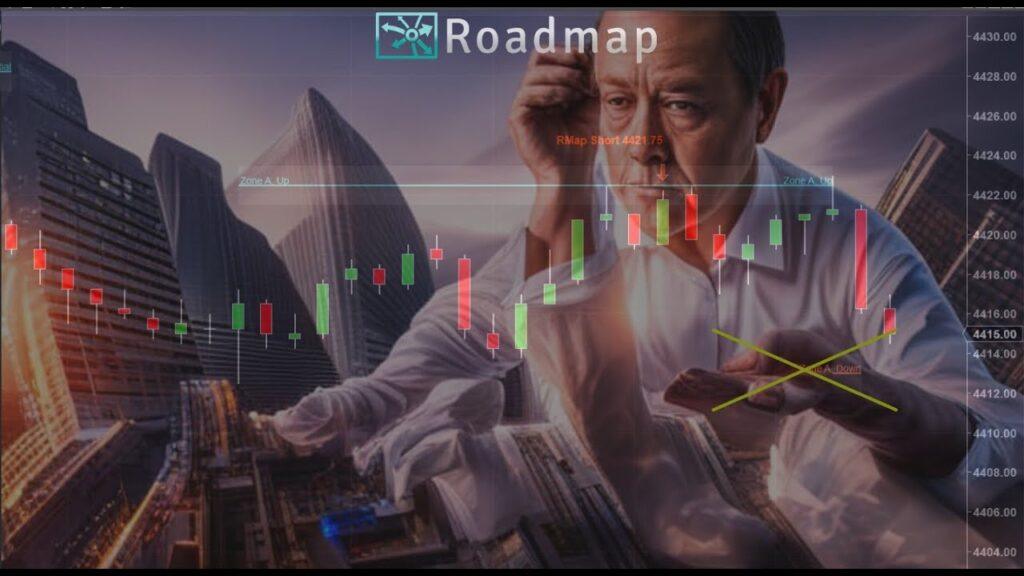
Mastering Choppy Markets: Navigating with Confidence Through the Roadmap Trading Approach

In trading, maneuvering through choppy markets can present a formidable challenge. The erratic price fluctuations, abrupt reversals, and concealed manipulations create an intricate puzzle that traders must solve to secure steady profits. However, there exists a method that has garnered considerable attention due to its prowess in predicting zones to evade and shielding traders from market manipulation – it’s known as the Roadmap trading system. In this article, we will explore the Roadmap system – its mechanics and how it can help you navigate volatile markets. Decoding the Roadmap Approach The Roadmap system transcends the realm of mere trading techniques; it embodies a holistic methodology that offers traders a clear trajectory amidst the chaos of volatile and uncertain market scenarios. Forged by experienced traders and serving as a cornerstone of the DayTradeToWin Accelerated Mentorship Program, the Roadmap system has cemented its reputation as a dependable conduit for effectively entering and sieving trades while deftly sidestepping potential pitfalls. At its essence, the Roadmap system is rooted in the analysis of price action. This methodology prioritizes uncluttered charts and established rules, rendering comprehension and implementation more seamless for traders. In stark contrast to conventional methods reliant on average indicators – often found wanting in choppy markets – the Roadmap system offers a distinctive perspective that transcends diverse asset classes, encompassing Forex, Futures, and Stocks. Navigating the Terrain: Predicting Zones and Eluding Manipulation Choppy markets possess a penchant for ensnaring traders in deceptive maneuvers and orchestrated price fluctuations. The Roadmap system, however, arms traders with the arsenal to preempt these realms of uncertainty and manipulation. By dissecting price action patterns and historical data, this method empowers traders to pinpoint potential danger zones and tactfully steer clear of them. The hallmark of the Roadmap system lies in its capacity to predict areas to avoid, setting it apart from conventional trading strategies. It’s akin to having a market GPS, steering you away from treacherous terrains and guiding you towards opportunities that brim with profitability. A Holistic Path to Mastery Traditionally confined to the enclave of the DayTradeToWin Accelerated Mentorship Program, access to the Roadmap system was a privilege reserved for the enrolled few. Yet, with an understanding of its transformative potential for traders, the Roadmap system now emerges as an autonomous entity. Whether you’re a seasoned trader looking to amplify your existing approach or a neophyte in search of a steadfast methodology to navigate markets, the Roadmap system emerges as your catalyst for transformation. This system encompasses live training sessions, software access, and an exhaustive course that steers you through every facet of the Roadmap system. From grasping the bedrock principles to executing trades with unwavering conviction, every resource necessary for triumph rests at your disposal. Practical Prowess: A Glimpse into Reality To illuminate the pragmatic facets of the Roadmap system, consider the embedded video showcasing signals and trade instances through the lens of the ES-mini S&P on a 1-minute chart. This visual exposé underscores how the Roadmap system adeptly navigates trading decisions in real-time, even when ensnared within the labyrinth of turbulent market conditions. In Conclusion Taming choppy markets necessitates a strategic blueprint that amalgamates price action analysis, prescient insights, and a profound grasp of market dynamics. The Roadmap system encapsulates these constituents, furnishing traders with an exceptional edge in navigating tempestuous market waters. Whether your focus is on Forex, Futures, or Stocks, the Roadmap system’s comprehensive architecture is poised to unlock consistent profits within even the most formidable market climates. The era of reliance on subpar indicators during volatile times has faded. Embrace the Roadmap system and seize command of your trading odyssey in unprecedented ways. Guided by this roadmap, navigate through choppy markets with unwavering confidence and emerge triumphant. John PaulJohn Paul is the founder of DayTradeToWin, a trading education and software company established in 2008, supporting traders worldwide. His expertise focuses on price action-based futures trading strategies and structured market analysis. DayTradeToWin delivers trading education, indicators, and software tools designed to help traders apply disciplined, rule-based decision-making across global futures markets. He is the creator of multiple trading methodologies, including the Sonic System, Atlas Line, and Trade Scalper, which help traders identify structured opportunities in markets such as the E-mini S&P 500 (ES), Nasdaq (NQ), crude oil (CL), and gold (GC). Official website: https://daytradetowin.com daytradetowin.com

Uncategorized

Stock Market Showdown: $2.2 Trillion Options Expiry Spells Volatile Friday Trading

Once more, the monthly stock market options for August are nearing their conclusion on Friday, which may lead to heightened instability in the stock market after a challenging three-week period. Rocky Fishman, the creator of Asym 500, a strategic firm, and former leader of index derivatives strategy at Goldman Sachs Group, states that there are American stock option contracts worth $2.2 trillion that are close to their expiry date. These contracts represent the total value of the stocks, indexes, and exchange-traded funds controlled by the options. It is worth mentioning that the actual amount paid by the option holders as premiums is considerably lesser in value. According to Fishman, the number of options contracts that will expire on Friday is normal for a month when there are not many expirations. Options expire every month. However, every three months in March, June, September, and December, a unique event called “Triple Witching” takes place. During Triple Witching, the value of expiring options increases significantly as both quarterly and sometimes yearly options expire, in addition to the monthly and weekly options. Experts in the options market warned that Friday may see an uptick in volatility, much like previous sessions when monthly options expire. Charlie McElligott, a derivatives strategist who shares his research with Nomura’s trading desk, has warned his clients about the dangers of option dealers being “short gamma” as the expiration day on Friday nears. This situation has the potential to intensify market volatility, according to McElligott, who presented a chart that illustrated this pattern. Fishman noted that the level of open interest in the option market set to expire on Friday is normal for a month that is not particularly busy. Monthly options expire every month, but there is a unique event known as “Triple Witching” that takes place once every quarter, in March, June, September, and December. This event is significant because it leads to a substantial increase in the value of expiring options. During Triple Witching, not only do monthly and weekly options expire, but also quarterly options, and occasionally yearly options as well. Experts in the options market warned that there could be more significant fluctuations on Friday, comparable to what is usually seen during sessions when monthly options expire. Charlie McElligott, a Nomura derivatives strategist, warned clients that option dealers face a disadvantage in terms of gamma value, which may lead to increased market volatility. McElligott used a chart to visually illustrate this. Gamma is employed by options analysts to gauge the pace at which an option’s delta alters. Delta represents the level of sensitivity of an option’s price towards adjustments in the underlying asset. As an option approaches its expiration, delta tends to rise considerably due to the fact that slight movements towards profitability or unprofitability can greatly impact the option’s price. SpotGamma’s founder, Brent Kochuba, recently discussed the potential risks of dealers having a short-gamma position in research he shared with clients. SpotGamma specializes in providing clients with valuable information and analysis specifically focused on the option market. The speaker mentioned that they have been noticing a decrease in market gamma, which has consistently remained in negative gamma territory over the course of the whole month. They pointed out that this led to increased unpredictability in the price fluctuation, just as expected in these situations. These remarks were communicated in written form to both MarketWatch and SpotGamma customers. Option contracts give traders the liberty to buy or sell different assets or currencies, without being obligated to do so. Usually, options tied to stock-market indexes, like the S&P 500, are resolved using futures or cash. On the other hand, options associated with exchange-traded funds, such as the SPDR S&P 500 ETF Trust (SPY), which replicates the S&P 500 index, are settled in the form of ETF shares. A put option allows the buyer to decide whether or not to sell stocks at a specific prearranged price known as the “strike price,” but it is not obligatory. In contrast, a call option gives the holder the privilege to buy stocks. Typically, when the value of the underlying stock or index decreases, put options tend to rise in value, whereas the opposite is true for call options. The S&P 500 and Nasdaq Composite faced a potential third consecutive week of decline on Thursday as U.S. stocks ended the day with a decrease. This would mark the S&P 500’s longest period of decline since February. The S&P 500 witnessed a decline of 0.8% on Thursday, while the Nasdaq Composite fell by 1.2% to a level of 13,316.93. In a similar fashion, the Dow Jones Industrial Average saw a drop of 290.91 points, which is also a decrease of 0.8%, bringing its value to 34,474.83. In addition to the monthly options that end on Friday, there are also weekly options known as “zero days until expiration” or “0DTE” options, which can complicate the market’s reaction. An experienced strategist from Goldman Sachs Group recently expressed worries, pointing out that 0DTE traders have been holding back stock price increases and adding pressure when the market is falling. John PaulJohn Paul is the founder of DayTradeToWin, a trading education and software company established in 2008, supporting traders worldwide. His expertise focuses on price action-based futures trading strategies and structured market analysis. DayTradeToWin delivers trading education, indicators, and software tools designed to help traders apply disciplined, rule-based decision-making across global futures markets. He is the creator of multiple trading methodologies, including the Sonic System, Atlas Line, and Trade Scalper, which help traders identify structured opportunities in markets such as the E-mini S&P 500 (ES), Nasdaq (NQ), crude oil (CL), and gold (GC). Official website: https://daytradetowin.com daytradetowin.com

Uncategorized

Bull vs. Bear: The Summer Challenge That Could Shape the Stock Market

Historical records show that August and September tend to be tumultuous months for the American stock market. Therefore it would not be surprising that there is instability during the beginning of the month. Since the S&P 500 index grew by 20% from January to July 2023 many investors have been hoping that the market would balance out after a sharp rise. As of October 16 the market has increased by 25% since its lowest point after the bear market which occurred on October 12 when it was 3,577.03 What could possibly put an end to the 2023 rally? Essaye commented in a note last week that if this situation materializes it would significantly weaken the three cornerstones of the rally; as such investors should prepare for a significant drop in stocks regardless of the recent retreat. He continued to mention that in the event of this happening more than 10% reduction can be forecasted thus possibly erasing almost all the enhancement of stocks since June and conceivably all the profits made this year. That scenario has yet to materialize. Last week it was reported that the US consumer price index had gone up from 3% in June to 3.2% in July which was higher than the rate from the previous year. On the other hand the core rate (excluding food and fuel prices) had decreased from 4.8% to 4.7% The July producer price index which records wholesale costs was a bit more favorable than anticipated; however investors still think the Federal Reserve will hold the rate when they convene in September. Policy makers are anticipating to view another collection of employment information such as the August job report and inflation numbers before their upcoming meeting. At the same time a sharp increase in Treasury yields with the 10-year interest rate surpassing 4.15% after peaking at its highest point since 2023 near 4.2% is causing the stock market to remain weak. This rise in bond yields makes government bonds more attractive than other investments as well as increasing businesses’ expenses when it comes to borrowing money. The price of stocks has climbed since the end of last year as investors’ fears ended up not being realized however that trend has now come to an end. The market rally was sparked by a pessimistic environment but the idea that inflation the Federal Reserve and the economy will be in balance — referred to as a “Goldilocks” situation — could spell trouble for those who are overly optimistic according to Hackett. Although these expectations don’t seem too extreme at the moment they still should be monitored closely. Investors are concerned about the typical patterns seen throughout the year. According to data provided by Dow Jones Market Data the S&P 500 has been relatively inactive in August in comparison to other months in the year since 1928. It has shown a mere increase of 0.67% which ranks August fifth as the worst month for the S&P 500. Meanwhile September stands as the worst with an average decline of 1.1% And then there’s volatility. He advised that attempting to be overly shrewd with the market is not ideal since it is likely going through a typical time of stabilization. He declared that it will not continue enduring a prolonged period of hardship. John PaulJohn Paul is the founder of DayTradeToWin, a trading education and software company established in 2008, supporting traders worldwide. His expertise focuses on price action-based futures trading strategies and structured market analysis. DayTradeToWin delivers trading education, indicators, and software tools designed to help traders apply disciplined, rule-based decision-making across global futures markets. He is the creator of multiple trading methodologies, including the Sonic System, Atlas Line, and Trade Scalper, which help traders identify structured opportunities in markets such as the E-mini S&P 500 (ES), Nasdaq (NQ), crude oil (CL), and gold (GC). Official website: https://daytradetowin.com daytradetowin.com

Uncategorized

From Relief to Restraint: Analyzing the Transition as Stock Markets Stabilize

The substantial growth in the stock market observed in the early portion of the year has now concluded. Investors should prepare themselves for reasonable returns from this point up until the end of 2023. Barry Bannister, the chief equity strategist at Stifel, alerted clients in a message on Thursday that the economic rally witnessed during non-recessionary times has ended. He additionally warned that there’s still a chance of a recession affecting the US economy in the initial quarter of 2024. Bannister claimed that the repercussions of past policy limitations, ongoing surveillance by the Federal Reserve, the potential for a slight oil crisis, and the impending total utilization of economic resources all contribute to the likelihood of a conventional, but not harsh, U.S. recession at the onset of 2024. Bannister’s viewpoint largely depends on the commitment of the Federal Reserve to lessen inflation to its long-term target of 2%, even though it’s currently approaching 3%. Bannister expressed that the previous ceiling for inflation has now turned into the base level of inflation. He suggested that considerable work and strategy would be necessary to reduce the inflation rate from about 3% to close to 2%. The Consumer Price Index (CPI) report for July likely reinforced Bannister’s viewpoint, as it disclosed a 0.2% monthly price escalation and an approximate 3.2% annual increment over the last year. These increases are more significant than the 3.0% recorded in June. Since the start of the year, the S&P 500 has seen an increase of around 17% but has experienced a decrease of about 3% since the onset of August. Bannister forecasts that the S&P 500 will close the year at 4,400, suggesting a likely fall of close to 2% from its current levels. Bannister anticipates that the stock market will remain fairly stable from now until the end of the year, a trend that seasonality data suggests would not be uncommon. Information from the Bank of America shows that during the third year of the Presidential Cycle, the stock market yields are typically lower from July to December. The Presidential Cycle is a four-year period in the stock market that corresponds with the tenure of the US President. Stephen Suttmeier from BofA issued a comment on Tuesday, highlighting the ongoing period of lower activity for the S&P 500 within the Presidential Cycle. He explained that average and middle monthly returns indicate the S&P 500 generally performs well from January to July during the third year, but it typically faces underwhelming performance from August to November. Nevertheless, it often recovers with a surge in December. Bannister’s perspective on the stock market nearing 2024 doesn’t seem too optimistic, given his existing projections on earnings. His forecast of the S&P 500 is to register earnings per share at $205 in 2023 and just a slight increment to $209 per share in 2024. This is notably lower than the widespread forecast of the S&P 500 yielding $226 earnings per share in the next year. “Bannister asserted that if our forecast of a relatively steady Earnings Per Share proves to be accurate, then the S&P 500 could possibly remain stable as well.” John PaulJohn Paul is the founder of DayTradeToWin, a trading education and software company established in 2008, supporting traders worldwide. His expertise focuses on price action-based futures trading strategies and structured market analysis. DayTradeToWin delivers trading education, indicators, and software tools designed to help traders apply disciplined, rule-based decision-making across global futures markets. He is the creator of multiple trading methodologies, including the Sonic System, Atlas Line, and Trade Scalper, which help traders identify structured opportunities in markets such as the E-mini S&P 500 (ES), Nasdaq (NQ), crude oil (CL), and gold (GC). Official website: https://daytradetowin.com daytradetowin.com

Uncategorized

Navigating the Future: The Revolution of AutoPilot Real-time Trading

In today’s dynamic financial landscape, the art of trading is transforming, thanks to the emergence of AutoPilot Real-time Trading. This innovative approach has caught traders’ attention worldwide, offering the allure of automated, efficient, and potentially profitable transactions. In this exploration, we delve into AutoPilot Real-time Trading and uncover how it is reshaping the trader’s experience. Imagine a trading system that operates seamlessly, analyzing market data and executing trades with precision, all in real-time. This is the core concept of AutoPilot Real-time Trading – a method that leverages advanced algorithms and real-time market information to make swift and calculated decisions. Unlike traditional trading, which is susceptible to human emotions, AutoPilot Trading remains objective, following a set of predetermined rules. Key Benefits Implementation of AutoPilot Real-time Trading Conclusion: AutoPilot Real-time Trading is ushering in a new era in the world of trading, offering traders the potential for streamlined and potentially profitable transactions. While it may not be suitable for every trader, it has the capacity to enhance existing strategies and complement trading practices. As technology continues to evolve, embracing the possibilities of AutoPilot Trading could unlock new dimensions of success in the ever-changing financial markets. Are you ready to embark on this journey and explore the potential of AutoPilot Real-time Trading? The future of trading beckons – let’s set sail! John PaulJohn Paul is the founder of DayTradeToWin, a trading education and software company established in 2008, supporting traders worldwide. His expertise focuses on price action-based futures trading strategies and structured market analysis. DayTradeToWin delivers trading education, indicators, and software tools designed to help traders apply disciplined, rule-based decision-making across global futures markets. He is the creator of multiple trading methodologies, including the Sonic System, Atlas Line, and Trade Scalper, which help traders identify structured opportunities in markets such as the E-mini S&P 500 (ES), Nasdaq (NQ), crude oil (CL), and gold (GC). Official website: https://daytradetowin.com daytradetowin.com

Scroll to Top