
Uncategorized

S&P 500
Uncategorized

Goldman Sachs Warns of Dismal S&P 500 Returns

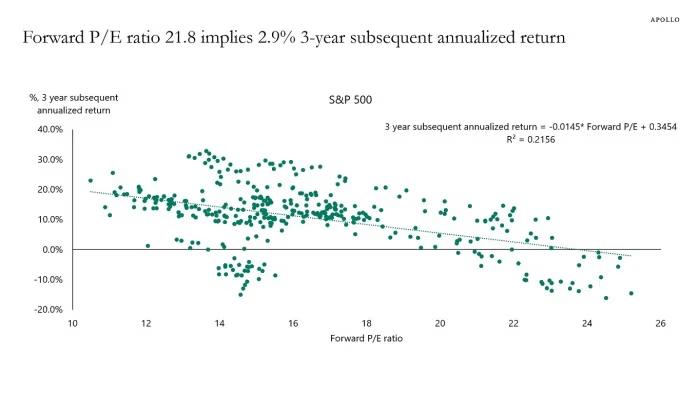
A report from David Kostin, chief U.S. equity strategist at Goldman Sachs, recently added fuel to this discussion. Kostin cautioned that the S&P 500 could be heading for one of its weakest stretches of returns in nearly a century. His warning echoed earlier concerns from strategists at J.P. Morgan and GMO, as well as Apollo Global Management’s chief economist, Torsten Slok, who predicted that the S&P 500 might see average annualized returns of less than 3% over the next three years, based on current valuations. Stocks have enjoyed an extraordinary run over the past decade, but the coming years may not be as promising. Increasingly, market experts are warning of a potential “lost decade,” where returns could fall well short of the gains investors have grown accustomed to over the past 15 years. Kostin’s forecast is even more pessimistic, suggesting the S&P 500 could deliver average annual returns of just 3% over the next 10 years. This would significantly lag behind the average return of the past decade and would fall well below the long-term average since 1928. Goldman attributes this gloomy outlook to two main factors: elevated stock valuations and extreme market concentration. Currently, the cyclically adjusted price-to-earnings (CAPE) ratio for the S&P 500 stands at 38 times forward earnings, a level not far from its dot-com bubble peak. Even more concerning is the unprecedented concentration in the market, with a handful of large companies holding significant weight in the index. According to Goldman, this level of concentration is the highest seen since the early 1930s. High concentration has historically weighed on stock returns because dominant companies often struggle to maintain their competitive advantages over time. Kostin noted that, without this concentration, Goldman’s forecast for S&P 500 returns would be four percentage points higher. In light of these risks, Goldman suggests that Treasurys could outperform the S&P 500 over the next decade, while the equal-weighted version of the index is also expected to outperform its capitalization-weighted counterpart. Still, Kostin acknowledged that a few factors could improve the outlook. Stronger-than-expected productivity growth or corporate tax cuts could help support higher valuations and extend the market rally. Another recent analysis, from GMO’s Ben Inker, highlighted that periods of poor returns, or “lost decades,” have been more common than many investors realize. These periods typically begin when both stocks and bonds are trading at high valuations, much like today. While there are reasons for optimism—such as strong economic growth, falling inflation, and interest rate cuts—high valuations remain a point of caution. As Aya Yoshioka, portfolio consulting director at Wealth Enhancement, noted, “There are a lot of things to like about this market, but valuations aren’t one of them.” Despite recent record highs, U.S. stocks slipped earlier this week, with the S&P 500 and Dow Jones retreating while the tech-heavy Nasdaq Composite edged higher. John PaulJohn Paul is the founder of DayTradeToWin, a trading education and software company established in 2008, supporting traders worldwide. His expertise focuses on price action-based futures trading strategies and structured market analysis. DayTradeToWin delivers trading education, indicators, and software tools designed to help traders apply disciplined, rule-based decision-making across global futures markets. He is the creator of multiple trading methodologies, including the Sonic System, Atlas Line, and Trade Scalper, which help traders identify structured opportunities in markets such as the E-mini S&P 500 (ES), Nasdaq (NQ), crude oil (CL), and gold (GC). Official website: https://daytradetowin.com daytradetowin.com
sonic
Uncategorized

Master Day Trading with the Sonic System

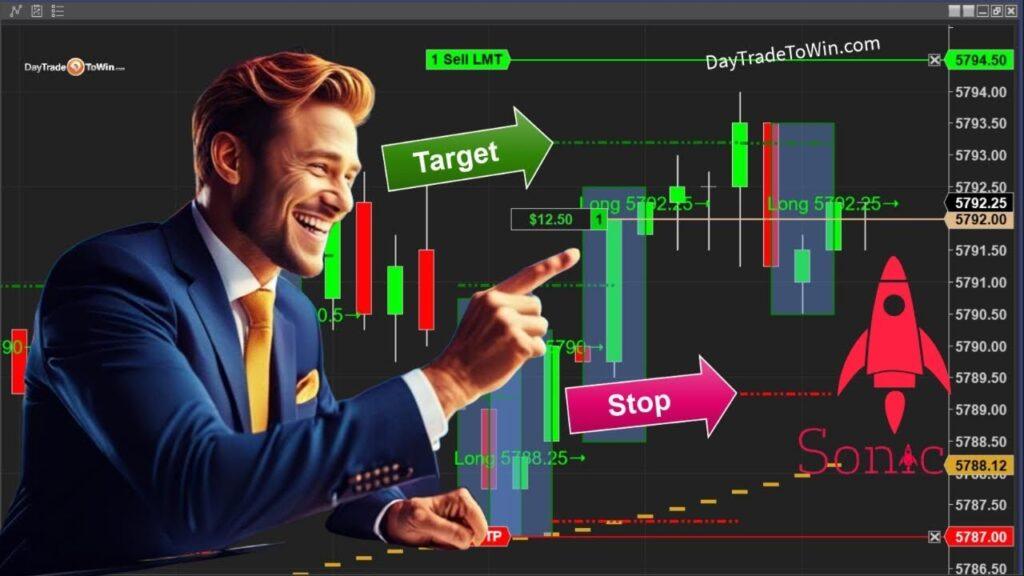
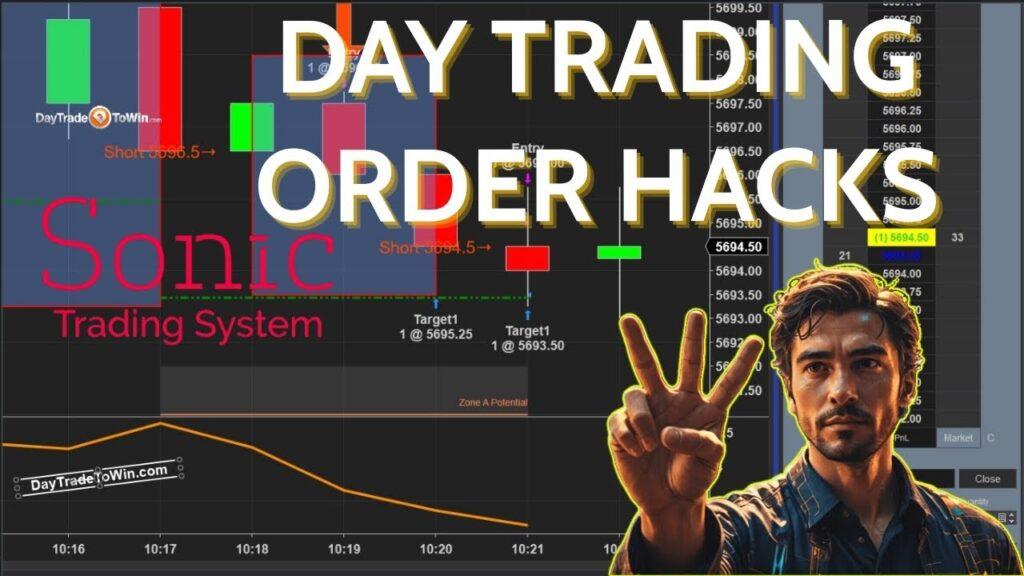
Hello, traders! Today, we’ll dive into using the Sonic Trading System from Day Trade to Win. This system provides the key elements you need for day trading success: entries, targets, and stops. However, managing trades based on the system’s rules is just as important. Let’s break down some critical lessons from today’s session and explore how you can improve your trading game. Handling Missed Trades Missed trades are a part of day trading, especially when the market moves fast. In today’s example, I attempted to enter at 5788 quarter, but I wasn’t filled before the market hit my target. In this situation, holding on or chasing the trade isn’t a good idea. If you miss your entry and the target is hit, cancel the order and move on. The market offers numerous opportunities, especially when using a system like Sonic. Don’t let one missed trade derail your focus. Adjusting Targets and Stops Properly After successfully entering at 5790, I adjusted my target and stop as per the system’s rules. Sonic makes it easy by providing clear targets and stops on the chart. However, it’s essential to manage these parameters yourself. If your target or stop is hit, avoid taking the same trade again. Many traders fall into the trap of trying to re-enter after missing out, which can lead to unnecessary losses. Stick to the system and wait for the next signal. Navigating Market Delays When I entered the trade at 5790, my target was 5791—just a few ticks away. But in fast-moving markets like the mini S&P, NASDAQ, or Dow, even small targets can take time to hit. While it’s tempting to hold on, the goal is to avoid staying in a trade for too long, especially during the first few hours of the session. Patience is crucial, but knowing when to cut your losses or take a small profit is equally important. The Importance of ATR and Quick Profits The Average True Range (ATR) is a critical tool in the Sonic system. It helps define your target and stop levels based on market volatility. In today’s trades, I aimed for a target that was less than one times the ATR. This approach allows you to take quick profits without holding onto trades for extended periods, which can be risky. If you prefer bigger profit targets, you can set your target to two times the ATR and trail your stop, but the safest approach is often to go for quicker exits based on the market’s immediate movement. Avoiding Common Mistakes: Don’t Take the Same Trade Twice A common question in our live trading room is whether you should take the same trade again if you missed it the first time. My advice? No. Once a trade hits its target or stop, that opportunity is done. Re-entering increases your risk and can lead to poor decisions. Additionally, if you didn’t adjust your target correctly and missed your profit, it’s better to close the trade at break-even or a small profit/loss. The goal is always to protect your account, not to chase the market. Learn More with a Free Member Account If you’re new to day trading or looking to enhance your skills, sign up for a free member account at Day Trade to Win. You’ll get access to our live trading room, the ABC Method, and software for NinjaTrader or TradingView. It’s an excellent way to start learning how to trade using price action, without relying on outdated indicators. Conclusion Day trading requires not only a solid strategy but also disciplined trade management. The Sonic Trading System gives you a clear framework, but it’s up to you to follow the rules—adjusting stops, managing targets, and knowing when to walk away from a trade. Stick to these principles, and you’ll set yourself up for consistent success. Happy trading, and don’t forget to sign up for your free member account to learn more! John PaulJohn Paul is the founder of DayTradeToWin, a trading education and software company established in 2008, supporting traders worldwide. His expertise focuses on price action-based futures trading strategies and structured market analysis. DayTradeToWin delivers trading education, indicators, and software tools designed to help traders apply disciplined, rule-based decision-making across global futures markets. He is the creator of multiple trading methodologies, including the Sonic System, Atlas Line, and Trade Scalper, which help traders identify structured opportunities in markets such as the E-mini S&P 500 (ES), Nasdaq (NQ), crude oil (CL), and gold (GC). Official website: https://daytradetowin.com daytradetowin.com
day trading
Uncategorized

Mastering ATM Strategies: Boost Your Day Trading Precision

Precision and timing are the foundation of successful day trading. Many traders struggle with issues like slippage, poor trade entries, and inefficient management, but by mastering key tools and strategies, you can avoid these pitfalls and improve your performance. One essential tool is the ATM (Automatic Trade Management) strategy. Let’s explore how to effectively use ATM strategies alongside limit orders to gain an advantage in volatile markets. Aligning Your ATM Strategy with ATR The ATR (Average True Range) is a key indicator used to gauge market volatility. By aligning your ATM strategy with the ATR, you can respond more effectively to changing market conditions—whether it’s fast or slow. This means setting appropriate stop-loss and profit targets based on current market volatility. To start, customize your ATM strategy by adjusting stop-loss and profit target levels to suit your trading style. For instance, in a volatile market, you might use a 20-tick stop-loss with a 10-tick profit target. This setup takes advantage of larger price swings, balancing risk and reward. How to Customize Your ATM Strategy Tailoring an ATM strategy to your needs is straightforward: By creating multiple ATM strategies—such as setups for slow and fast markets—you’ll be able to quickly adapt to market changes. Timing Your Limit Orders for Maximum Efficiency With your ATM strategy set, it’s crucial to focus on limit order execution. Many traders wait too long to place limit orders, missing out on opportunities or entering trades poorly. The key is to place your limit orders in advance and adjust them as needed, based on market signals. For instance, if you’re planning a short trade, place a limit order slightly above the current price. When the signal appears, simply adjust the order for a smooth execution with minimal slippage. By anticipating the market’s movement, you ensure that your order gets filled at the best possible price. Using the Drag-and-Drop Technique for Quick Execution One effective trick to speed up trade execution is the drag-and-drop method: This method saves valuable seconds, which are critical for day traders, and provides better control over your entry point. Why Limit Orders Outperform Market Orders Although market orders get you into trades quickly, they often lead to slippage—where your trade is executed at a less favorable price. This is particularly an issue in fast-moving markets. Limit orders guarantee you get filled at your chosen price or better, ensuring greater precision in your entries. However, in rare cases where the market moves favorably while you’re distracted, it might be worth using a market order to lock in a better price. But in most cases, sticking to limit orders will yield better results. Final Thoughts: Smarter Trading with ATM Strategies and Price Action Mastering ATM strategies and limit orders, especially when combined with price action analysis, can significantly enhance your day trading results. Planning trades in advance and using tools like the Atlas Line, Trade Scalper, and ATR-based strategies can help you make more informed and efficient trading decisions. Looking to elevate your day trading skills? Visit daytradetowin.com to create a free member account and explore trial access to advanced tools like the ABC software. Start learning to trade the right way using price action, without relying on conventional indicators. John PaulJohn Paul is the founder of DayTradeToWin, a trading education and software company established in 2008, supporting traders worldwide. His expertise focuses on price action-based futures trading strategies and structured market analysis. DayTradeToWin delivers trading education, indicators, and software tools designed to help traders apply disciplined, rule-based decision-making across global futures markets. He is the creator of multiple trading methodologies, including the Sonic System, Atlas Line, and Trade Scalper, which help traders identify structured opportunities in markets such as the E-mini S&P 500 (ES), Nasdaq (NQ), crude oil (CL), and gold (GC). Official website: https://daytradetowin.com daytradetowin.com
sonic
Uncategorized

Exploring the Sonic Trading System: A 1-Hr Review

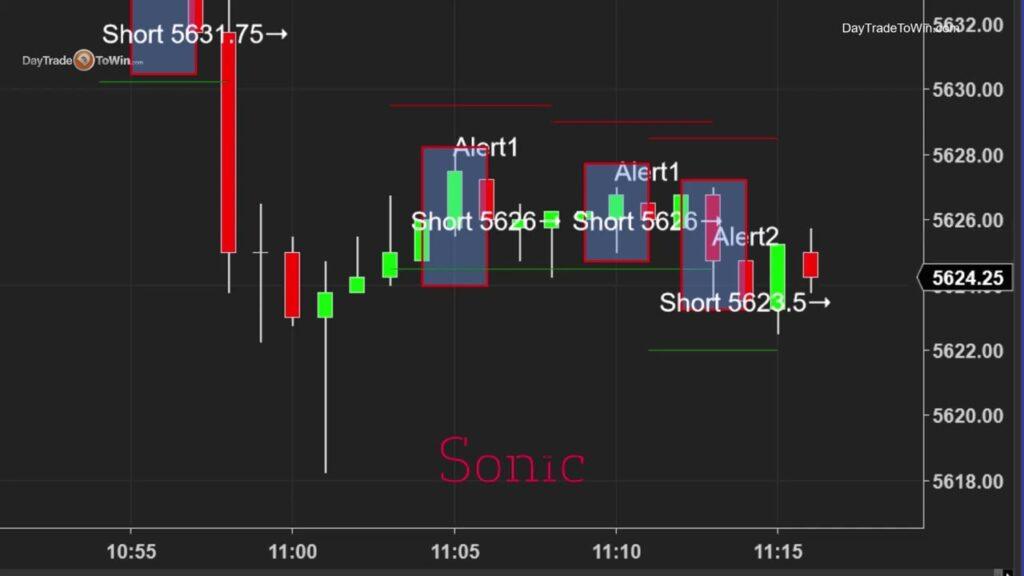
Hello Traders! Today, we’re taking an in-depth look at the Sonic Trading System by reviewing an hour of live trades that took place between 11:00 AM and 12:00 PM on Friday, August 30th. Whether you’re a seasoned trader or just starting out, this review will give you insight into how this system operates in real-time. If you have any questions, feel free to reach out to us at [email protected]. Before diving into the details, it’s important to remember that trading carries significant risk. Always trade responsibly and only with funds you can afford to lose. Now, let’s get into the trades! How the Sonic Trading System Works The Sonic Trading System is designed to provide traders with clear signals for entering and exiting trades, as well as setting targets and stops. On the charts, you’ll see signals indicating when to go long (buy) or short (sell), with green lines marking targets and red lines marking stops. Here’s a breakdown of the trades from the hour we analyzed: These examples showcase the Sonic system’s ability to deliver consistent results, even when trading both long and short positions. Efficient Trading: Less is More One of the key takeaways from this session is the importance of focusing on specific trading windows. As a day trader, it’s more efficient to select a few hours to trade rather than sitting at your desk all day. Ideally, within the first two to three hours of trading, you should aim for around 8 to 10 trades. If you’re not up for the day, remember that there’s always another opportunity tomorrow. This hour-long session highlights how the Sonic Trading System can be effective in a short period. If you haven’t already, consider signing up for a free member account at daytrade.com, where you’ll have access to valuable resources like training videos, the ABC indicator, and more. The Inner Workings of the Sonic System The Sonic Trading System operates with two primary alerts: Alert 1 and Alert 2. These alerts appear on your chart at specific prices, guiding you on when to enter a long or short position. Typically, these signals occur at the close of a candle, accompanied by corresponding target and stop lines that you can adjust based on the Average True Range (ATR). Most traders set the ATR between 75% and 100%, but it can be adjusted higher if you prefer larger targets. Smaller targets are often hit more quickly, sometimes within just 5 to 10 minutes, making them ideal for fast-paced trading sessions. For instance, a short signal at 10:55 AM was successfully executed at the specified price, with the target quickly reached. This demonstrates the precision and reliability that make the Sonic system a favorite among traders. Flexibility Across Platforms The Sonic Trading System isn’t limited to one-minute charts. It’s versatile enough to be used on tick charts, range charts, and even longer timeframes like 30-second or 5-minute charts. Traders have successfully applied the Sonic system across various platforms, including NinjaTrader and TradingView. Additionally, the system includes a valuable filter represented by a dotted line on the chart. This filter helps determine whether trades should be taken to the long or short side based on current price action. It’s particularly useful in strong trending markets, helping you align your trades with the prevailing trend. Conclusion During the one-hour period we reviewed, the Sonic Trading System generated about ten trades, most of which were winners. If you’re intrigued by what you’ve seen and want to learn more, visit daytradetowin.com. We also offer a mentorship class where you can learn to trade price action alongside experienced professionals. Until next time, happy trading! John PaulJohn Paul is the founder of DayTradeToWin, a trading education and software company established in 2008, supporting traders worldwide. His expertise focuses on price action-based futures trading strategies and structured market analysis. DayTradeToWin delivers trading education, indicators, and software tools designed to help traders apply disciplined, rule-based decision-making across global futures markets. He is the creator of multiple trading methodologies, including the Sonic System, Atlas Line, and Trade Scalper, which help traders identify structured opportunities in markets such as the E-mini S&P 500 (ES), Nasdaq (NQ), crude oil (CL), and gold (GC). Official website: https://daytradetowin.com daytradetowin.com
Uncategorized

Act Fast: Short the Dollar, Says Goldman Sachs

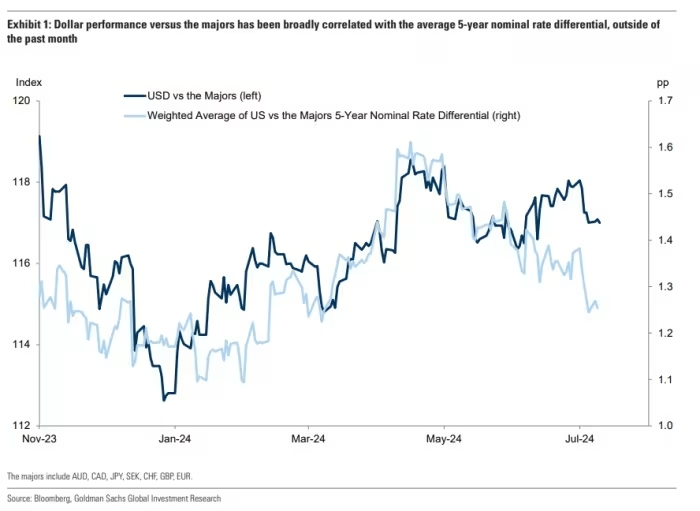
Happy CPI day to all who observe! Here’s a deeper look into today’s crucial report. If inflation aligns with economists’ expectations, there could be a brief opportunity to bet against the U.S. dollar, according to Karen Reichgott Fishman, senior currency strategist at Goldman Sachs. After reaching 2023 highs, the dollar has been declining and might weaken further. Fishman explains, “The tactical backdrop looks increasingly friendly for risk and negative for the dollar.” This year’s dollar fluctuations have primarily been driven by interest rate expectations, shown in a chart that plots the dollar against a weighted average of the rate differential in 5-year securities of major counterparts. Comparing the dollar’s performance against major rivals reveals this trend: it has risen sharply against the Japanese yen (USDJPY), where rate differentials have widened, and fallen against the British pound (GBPUSD), with minimal changes. Interest rates are not the only factor behind the dollar’s strength. Fishman notes that the second-largest contributor to the dollar’s gains has been the Mexican peso (USDMXN), influenced by a significant shift after Mexico’s landslide election. Fishman also points out that the correlation between stocks and bonds has been mostly positive this year, which often coincides with broad dollar swings. When stocks and bonds rise together, the dollar typically struggles. “This makes it all the more surprising to see the dollar simultaneously hit new highs and reinforces the scope for a tactical sell-off,” she adds. Currently, there appears to be a narrow window for further relief in U.S. yields and gains for U.S. equities, with few major obstacles expected until mega-cap tech earnings at the end of July. In such an environment, the dollar usually weakens against most currencies and becomes a good candidate for funding emerging-market carry trades. However, Fishman emphasizes that the dollar’s bullish trend is likely to resume in the second half. Ahead of the U.S. election, broader tariffs, especially against the Chinese yuan and other Asian currencies, pose an upside risk. This is in addition to the expected limited cross-border investment flows leading up to the election. John PaulJohn Paul is the founder of DayTradeToWin, a trading education and software company established in 2008, supporting traders worldwide. His expertise focuses on price action-based futures trading strategies and structured market analysis. DayTradeToWin delivers trading education, indicators, and software tools designed to help traders apply disciplined, rule-based decision-making across global futures markets. He is the creator of multiple trading methodologies, including the Sonic System, Atlas Line, and Trade Scalper, which help traders identify structured opportunities in markets such as the E-mini S&P 500 (ES), Nasdaq (NQ), crude oil (CL), and gold (GC). Official website: https://daytradetowin.com daytradetowin.com

Uncategorized

Mastering Friday Trades: A Deep Dive with Trade Scalper

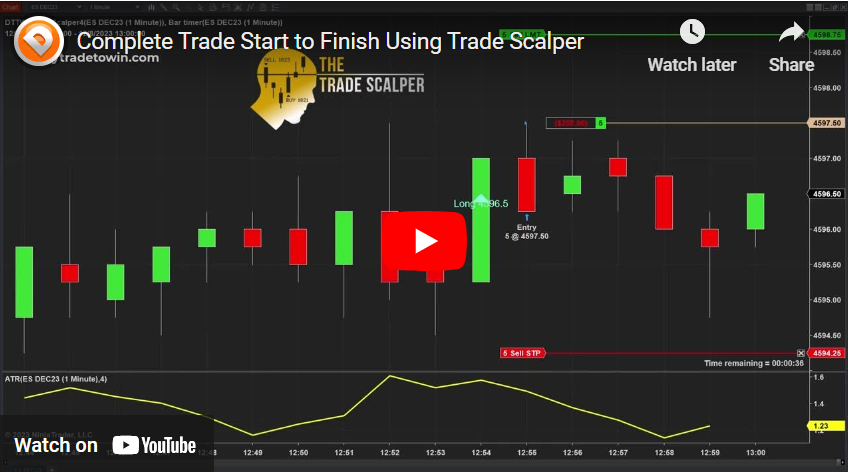
? Greetings Traders! Step into the pulse-quickening realm of Friday afternoon trading with us. In this live session, we embark on a journey through the intricacies of Friday trading, dissecting market trends, and immersing ourselves in a real-time trade utilizing the advanced features of the Trade Scalper software. Market Insight ? As the Friday afternoon unfolds, the market follows the expected pattern of deceleration. The Average True Range (ATR) hovers around 1.5 points or six ticks. While exercising due caution, our vigilant trader spots potential opportunities. Any dip below four ticks (equivalent to one point on the E-mini) would raise a red flag, signaling the need for heightened vigilance. ? Relying on the Trade Scalper signal, our trader pinpoints a lucrative long trade opportunity. A noteworthy lesson emerges from this experience – employing limit orders or market-if-touched orders is crucial for securing optimal entry points. ? Insider Tip: Don’t miss our exclusive Trade Scalper class every Friday – a private session teeming with invaluable insights and strategies. Trade Management Mastery ?️ As the trade unfolds, our trader underscores the significance of time management. At DayTradetoWin, we advocate a time-stop strategy alongside conventional hard stops. This entails assessing the trade’s progression within a predefined timeframe, ensuring swift decision-making to mitigate prolonged exposure to market fluctuations. Our trader emphasizes the need for a varied exit strategy toolkit, blending hard stops with responses to conflicting signals or stagnant market conditions. The ultimate goal is to exit trades efficiently, minimizing losses, and maximizing gains. ? The trade journey culminates with the attainment of the profit target! Success resonates through the trader’s commentary, validating the satisfaction derived from a well-executed trade. ? Eager to master the art of trading? Dive into the comprehensive mentorship programs at Day Trade to Win, encompassing enlightening courses and cutting-edge software. Elevate your trading acumen by immersing yourself in the intricacies of price action. Join us in the next video for more exciting insights! Conclusion ? Concluding today’s live trade walkthrough! Success in trading hinges on a blend of market awareness, strategic entry/exit points, and an unwavering commitment to continuous learning. Stay updated by subscribing to our YouTube channel for daily videos, live streams, and invaluable market reviews. Until next time, may your trades be prosperous! ?? John PaulJohn Paul is the founder of DayTradeToWin, a trading education and software company established in 2008, supporting traders worldwide. His expertise focuses on price action-based futures trading strategies and structured market analysis. DayTradeToWin delivers trading education, indicators, and software tools designed to help traders apply disciplined, rule-based decision-making across global futures markets. He is the creator of multiple trading methodologies, including the Sonic System, Atlas Line, and Trade Scalper, which help traders identify structured opportunities in markets such as the E-mini S&P 500 (ES), Nasdaq (NQ), crude oil (CL), and gold (GC). Official website: https://daytradetowin.com daytradetowin.com

Scroll to Top