trade scalper
DayTradeToWin Review

Mastering Trade Scalper: A Comprehensive Guide from Installation to Signal Interpretation

Welcome, Traders! Today, we’re diving deep into the world of day trading with a detailed look at the Trade Scalper software. Whether you’re an experienced trader or just getting started, understanding how this powerful tool operates can greatly enhance your trading strategy. In this post, we’ll cover the markets it supports, the signals it generates, the compatible charting platforms, and provide an inside look at its functionalities. What is Trade Scalper? Trade Scalper is a proprietary software designed to help traders capitalize on small, rapid price movements. Built on the principles of price action, it is versatile and can be used across various markets, including NASDAQ, currencies, gold, crypto, and more. Supported Charting Platforms Trade Scalper is compatible with two widely-used charting platforms: Understanding Trade Scalper Signals Trade Scalper generates signals based on real-time price action. Here’s what you need to know: Each signal is marked with an arrow and a specific entry price, ensuring clarity and precision for your trades. Installing and Configuring Trade Scalper On NinjaTrader: On TradingView: Advanced Features of Trade Scalper ATR Filter: This feature is essential for filtering out low-quality signals during slow market conditions. By setting a threshold for the Average True Range (ATR), you can avoid trades when the market isn’t moving significantly. For example, you can filter out signals when the ATR is less than 1 point to ensure you only trade in more volatile conditions. Real-Time Trading Examples Examining today’s chart on NinjaTrader, we observe several highlighted long signals. These signals, based on pure price action, are reliable across different markets. For instance, during the London session, the software generated multiple valid long trades, showcasing its effectiveness. Training and Support Purchasing Trade Scalper gives you access to live training and our trading room, which includes: Conclusion Trade Scalper is a powerful tool for day traders, offering precise signals based on price action and adaptable across various markets and platforms. Whether you’re using NinjaTrader or TradingView, Trade Scalper’s robust features and customizable settings can help you make informed trading decisions. For more information, visit DayTradeToWin. Join our live trading rooms, get your questions answered, and start mastering the markets with Trade Scalper today! Happy Trading!

price action
DayTradeToWin Review

Mastering Short Trades with Price Action: A Step-by-Step Guide

Trading in financial markets can be a daunting task, especially if you’re not equipped with the right tools and strategies. One powerful strategy is leveraging price action to go short and make consistent profits. In this blog post, I will walk you through how to effectively use price action to identify short trades that can net you at least $100 or $200 per trade. Understanding Price Action Price action trading involves making trading decisions based on the movements and patterns of prices, rather than relying on technical indicators or algorithms. This strategy provides a clear and direct understanding of market sentiment and dynamics, which is why it’s favored by many professional traders. Why Short Trades? Short trades, or short selling, involve selling a security with the intention of buying it back at a lower price. This can be profitable in a declining market, but it requires precise timing and a good understanding of market movements. Step-by-Step Guide to Short Trades with Price Action 1. Recognize Market Open Movements When the market opens, there is usually a significant move as traders react to overnight news and other factors. This often results in a large initial candle. For example, in the E-mini S&P, you’ll notice a large candle right at the market open. This is normal and expected. 2. Identify Key Price Levels After the initial surge, the market typically settles into a range. Identify these key price levels by observing where the market pauses or reverses. For instance, if you notice that the market hits a price like 5321 multiple times without breaking lower, this is a key support level. 3. Measure the Range Using tools like the ruler, measure the high-to-low range of the candles. This gives you an idea of the market’s volatility. In our example, if each candle has a range of 2 to 3 points, you can set your targets and stops accordingly. 4. Use Signals and Indicators While price action is your main tool, combining it with signals from trading software like the Trade Scalper can enhance your accuracy. For example, if you get a short signal from the Trade Scalper around a key level like 5321, this reinforces your decision to go short. 5. Monitor Candlestick Patterns Pay attention to the candlestick patterns around your key levels. If you see multiple candles failing to break above or below a certain price, it indicates strong support or resistance. In our example, four candles couldn’t break below 5321, signaling a strong support level. 6. Execute the Trade Once you have confirmation from your price action analysis and any trading signals, execute your short trade. For the E-mini S&P, selling at 5321 with a target of 2 points would mean a profit of $100 per contract. Adjust your position size based on your risk tolerance and desired profit. 7. Manage Your Risk Always use stop-loss orders to protect your capital. Based on our measured ranges, a stop-loss slightly larger than 2 points might be appropriate. This keeps you in the trade while minimizing potential losses. Example Trade Breakdown Conclusion Price action trading requires patience and a keen eye for market movements. By identifying key levels, measuring ranges, and using reliable signals, you can make profitable short trades consistently. Always remember to manage your risk and never trade with money you can’t afford to lose. For more detailed strategies and live trading sessions, visit DayTradetoWin and join our community. Happy trading!

market
Market News

Summer Market Turbulence: The 5 Biggest Risks to Watch

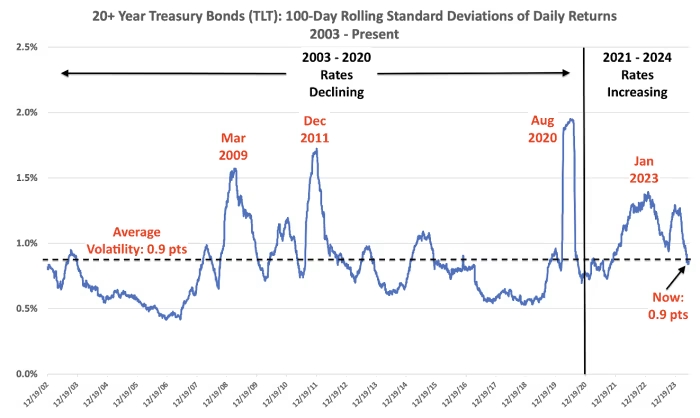
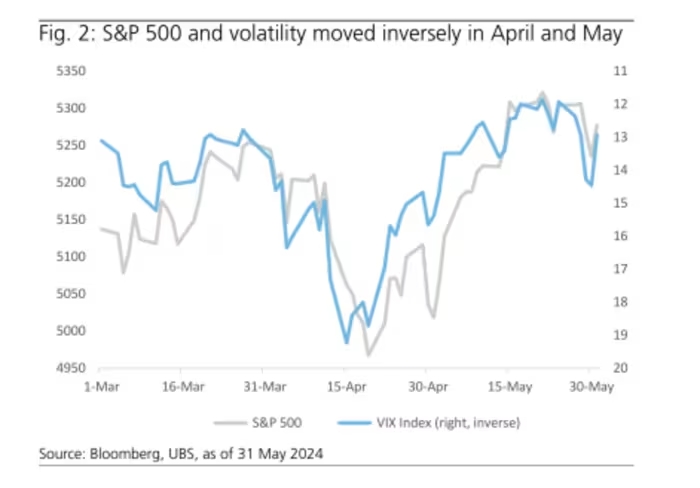
Friday’s Jobs Report: A Key Test for the Stock Market This spring’s steadier backdrop has pushed U.S. stocks to record highs, but Friday’s jobs report is one of three major risks that could disrupt the summer calm in markets. The S&P 500 index (SPX) has risen more than 10% in 2024, with Wall Street’s fear index (VIX) and the bond market’s MOVE gauge both hitting their lowest levels since March 2022, when the Federal Reserve started raising rates. Recent market stability is due to a “convergence” among investors who believe the Federal Reserve will cut rates no more than twice this year while achieving a soft landing for the U.S. economy, according to Jason Draho, head of asset allocation at UBS Financial Services. Draho highlighted a “clear consensus view”: “Growth is slowing but not collapsing, inflation is stubborn but trending lower, and the bar for Fed rate cuts is low while hikes are effectively off the table,” he wrote in a Monday client note. This view suggests investors expect minimal changes to benchmark rates this year, which Draho said could maintain market calm into late summer. However, three near-term risks are on the horizon, starting with May’s jobs report due Friday. Any “significant surprises relative to expectations” could be disruptive, as could May’s consumer-price index and the conclusion of the Fed’s next policy meeting, both set for June 12. Stocks struggled for direction on Tuesday, following a turbulent session with trading glitches on the New York Stock Exchange. The Dow Jones Industrial Average (DJIA) was virtually unchanged, while the S&P 500 (SPX) and the Nasdaq Composite Index (COMP) both fell 0.2%, according to FactSet.

Berkshire Hathaway
Market News

Thinking of Buying the Dip Post-Berkshire Hathaway Glitch? Proceed with Caution

Why Trades Following Monday’s NYSE Glitch Are Likely to Be Reversed Monday’s NYSE glitch prompted many investors to seize the opportunity to acquire Berkshire Hathaway’s Class A shares at a staggering discount exceeding 99%, according to FactSet data. However, even if some managed to execute orders before trading halted, it’s probable they won’t retain ownership of those shares, according to officials from two Wall Street trading firms. The New York Stock Exchange intends to review any trades potentially affected by the glitch, as stated by a spokesperson to MarketWatch. Moreover, Joe Saluzzi, co-founder of Themis Trading, emphasized that trades precipitating Monday’s drastic decline are expected to be voided under the exchange’s policy on “clearly erroneous transactions,” empowering market makers to challenge trades stemming from glitches. Jonathan Corpina, senior managing partner at Meridian Equity Partners, shares this sentiment, foreseeing a reversal of trades executed at incorrect prices. Berkshire BRK.A, +0.59%, Bank of Montreal BMO, -0.22%, Barrick Gold ABX, +2.19%, and 37 other stocks were subject to halts for volatility by New York Stock Exchange group exchanges on Monday, following significant declines, according to a statement from a New York Stock Exchange spokesperson. Berkshire shares plunged to 99.97% to $185.10, compared to $627,400 on Friday, before being halted at 9:50 a.m. Eastern time. In theory, this would have nearly halved Berkshire’s market capitalization to $536.3 billion by around 11 a.m. Eastern time on Monday, compared to $897.1 billion on Friday, according to Dow Jones Market Data. Trading in Berkshire’s Class B shares BRK.B remained unaffected. Trading in all affected stocks resumed shortly before noon. The glitch stemmed from a technical issue with industry-wide price bands published by the Consolidated Trade Association’s Securities Information Processor, triggering “limit-up/limit-down” trading halts soon after Monday’s market opening, according to the NYSE spokesperson. Monday’s incident echoed a trading glitch in January 2023, where NYSE’s opening auction issues led to trades in over 250 securities being filled at incorrect prices. At that time, the exchange stated that those trades wouldn’t be honored.

roadmap
DayTradeToWin Review

Profit as a Trader: Unmasking Market Manipulation Techniques

Hello everyone! Today is June 3rd, the first trading day of June. In this post, I’ll show you how to make $200 to $300 on each trade using roadmap zones. This method relies on price action, and I’ll guide you through it step-by-step. Let’s get started! Before we begin, remember that trading is risky. Only trade with funds you can afford to lose. Now, let’s explore how to profit using the roadmap software from DayTradetoWin. Short Trade Strategy We’re using roadmap software from DayTradeToWin with an entry price of 5311. The zones are crucial; the market either reverses at these zones (signaling a short) or breaks through (signaling a long opportunity). This strategy typically nets four to five points, or about $250, depending on market volatility. We use the Average True Range (ATR) to gauge market strength. Trade Execution When the market hits a zone, wait for two consecutive candles that don’t break through before considering a reverse trade. This gave us a short signal around 9:26 AM. If the market retraces and reverses at the zone, it’s another short opportunity, potentially yielding another three to four points. Managing Stops and Targets Place stops just outside the zones or use a pivotal stop. These strategies are covered in our live training sessions included with the roadmap or trade scalper packages. Following the Market Down As the market declines, we received a trade scalper signal at 5307.5, indicating another short opportunity. The market either continues through the zone for more shorts or reverses for a long position. Continuation and Validation When the market broke through the zone at 5302, it confirmed a continuation downward. Traders in our live trading room, using the same software, can capitalize on these signals together. Additional Trade Example At around 10:16 AM, the market entered another zone, got stuck, and began to reverse, signaling another short opportunity. Stops should be placed just outside the zone to protect against reversals. Understanding Market Manipulation These roadmap zones are based on market manipulation. Institutional traders often accumulate positions and then dump them to take profits, causing predictable market reactions. Knowing where and when this happens allows us to take advantage. Final Thoughts Trading with roadmap zones simplifies the process. There’s no need for complex indicators. We focus on how candles react around these zones with clear rules and structured stops and targets. Time-based stops and market volatility further guide our trading decisions. Patience is key—one of the four pillars of trading. Wait for clear signals, follow the rules, and manage your trades diligently. Conclusion To learn more, join our live trading room or consider our mentorship program, which includes the roadmap, trade scalper, and other tools. Visit DayTradeToWin for more information, subscribe to our YouTube channel for hundreds of educational videos, and start your journey to successful trading with a free member account. Happy trading!

S&P 500
Market News

How Two Crucial Factors Could Propel the S&P 500 to 6,500 in 2024

The new month of equity trading kicks off on a positive note, led by gains in Nvidia (NVDA) shares after the AI chipmaker announced its next-generation Rubin platform, set for release in 2026. However, benchmark Treasury yields are less than 20 basis points from their highest levels since early November, reflecting concerns over persistent inflation and prolonged high Fed funds rates, which are tempering stock market optimism. James Reilly, market economist at Capital Economics, observes that U.S. stocks have been navigating these alternating headwinds and tailwinds for some time. For instance, last week saw Treasury yields drop as PCE inflation data held no negative surprises, allowing nine of the eleven main S&P 500 sectors to gain ground on Thursday. Yet, the S&P 500’s progress was hindered by struggles in the information technology sector, following disappointing earnings reports from Salesforce (CRM) and Dell (DELL). Reilly highlights that “AI hype” has ultimately driven the S&P 500 to recent record highs. “What matters for IT matters for the market. And over the past year or so, that hasn’t been bond yields,” he explains. “Since late 2022, when ChatGPT was launched, AI enthusiasm has been the key driver.” Reilly expects AI to continue supporting the stock market, suggesting that narrow equity bull runs, like the current focus on Nvidia, can persist for years. He also believes the rally will broaden, noting that the early stages of the AI revolution still hold significant potential for broader gains as AI applications and leading providers become clearer. Importantly for stock market bulls, Reilly sees Treasurys providing a long-term tailwind. Recent softening economic data has led Capital Economics to lower its Q2 U.S. GDP growth forecast from an annualized 2.7% to just 1.2%. Reilly forecasts the 10-year Treasury yield to fall from around 4.5% now to 4.0% by the end of 2024, as investors may be underestimating the extent of future Fed rate cuts. “This expectation that AI hype will increase and that Treasury yields will fall underpins our forecast for the S&P 500 to hit 6,500 by the end of 2025,” concludes Reilly.

Scroll to Top