tax
Market News

The Domino Effect: How Extending Trump-era Tax Reforms May Pinch These 6 Groups

Challenges in Financing Tax Cuts: Who Bears the Burden? The traditional approach of funding tax cuts through debt may no longer be feasible. Over the past few decades, Congress has often opted for reducing tax rates, interrupted only by occasional tax hikes during periods of fiscal restraint. However, the landscape is changing as the United States grapples with escalating healthcare costs and the prospect of increased spending on Social Security due to an aging population. The emergence of rising interest rates and recent inflation presents a new hurdle not encountered in generations. The impending expiration of much of the 2017 tax-rate reduction, particularly lower income-tax rates, looms large. Previously, tax cuts were commonly financed through borrowing, but there’s now apprehension that further tax reductions could exacerbate inflationary pressures. Both President Joe Biden and his predecessor, Donald Trump, advocate for making most of these tax cuts permanent. Nevertheless, there is mounting pressure to identify means to offset their costs, potentially through tax hikes or budgetary adjustments. Here’s an examination of who might shoulder the load: Achieving a balance between financing tax cuts and addressing fiscal obligations will be pivotal in the years ahead.

Market News

Deciphering the Puzzle: Shedding Light on the Curiously Low Fear Gauge of Wall Street

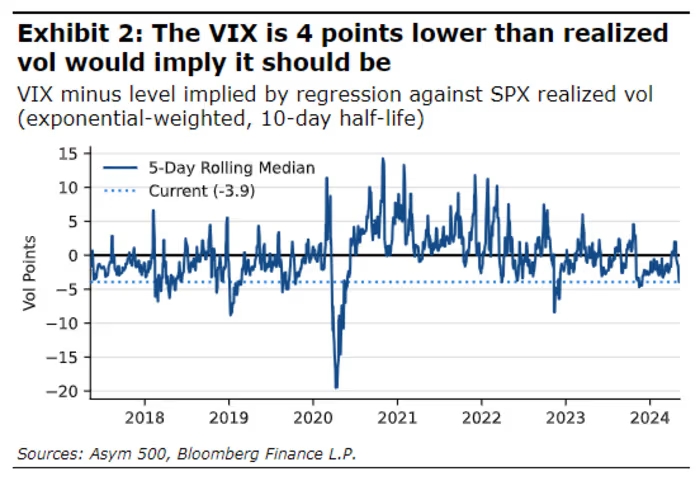
Challenging Misconceptions: Unraveling the Truth Behind the VIX’s Low Levels After a recent bout of stock-market turbulence, the subsequent dip in the Wall Street’s “fear gauge,” the Cboe Volatility Index (VIX), has prompted debates about its validity. Some attribute its decline to factors such as the rise of zero-days-to-expiry (ODTE) options or the increasing prevalence of ETFs. However, Nicholas Colas from DataTrek offers a simpler explanation: the VIX is merely reflecting the current tranquility in the stock market. Colas emphasizes that the VIX is aligning with the subdued volatility observed over the past 100 trading sessions. Given the lower-than-average daily returns of the S&P 500, it’s no surprise that the VIX is on the decline. Contrary to popular belief, the VIX doesn’t predict future market risks but rather mirrors recent market behavior. It primarily considers trading activity in one-month S&P 500 index options. Despite concerns about various potential risks looming over stocks, the VIX’s level remains grounded in recent market trends. Despite hitting its lowest level since late March, another key indicator, the Cboe VVIX, reflecting demand for options tied to the VIX, has also experienced a significant drop. This suggests a broader market sentiment of diminished fear and reduced risk aversion. While U.S. stocks displayed mixed performance on Wednesday, with the S&P 500 and Nasdaq slightly down while the Dow Jones slightly up, the underlying message remains clear: the VIX reflects the recent calmness in the market, despite lingering uncertainties.

scalp trading
DayTradeToWin Review

Mastering Scalp Trading: A Strategic Approach

Today, let’s explore scalp trading—a strategy highly favored by traders seeking swift gains. However, it’s vital to acknowledge that many approach it incorrectly. In this guide, we’ll uncover the misconceptions surrounding scalp trading and how to excel in it consistently. Understanding Market Selection Selecting the right market is paramount in scalp trading. While fast-paced markets like crude oil or the NASDAQ may seem enticing, starting with markets that match your comfort level is essential. Opt for markets like the E-mini S&P, offering ample volatility without overwhelming speed, especially for beginners. Conversely, steer clear of slow-moving markets like the Mexican peso or lumber, which lack the necessary volatility for effective scalp trading. The Significance of Filters Scalp trading demands precision, with filters playing a pivotal role in identifying promising trade setups. Tools such as the Average True Range (ATR) help assess current market conditions—be it slow or fast-paced—enabling you to adapt your strategy accordingly. Additionally, integrating filters like the “roadmap” from Day Trade to Win can enhance your decision-making, pinpointing potential reversals or counter-trend movements to ensure alignment with the overall market direction. Setting Realistic Expectations Maintaining realistic expectations is crucial in scalp trading. Unlike swing or position trading, which may yield significant gains over days or weeks, scalp trading focuses on capturing small price movements within minutes. Recognize that not every trade will yield substantial profits; instead, aim for consistent, smaller gains, which form the foundation of long-term success. Streamlining Your Approach Simplicity is key in scalp trading. Avoid cluttering your charts with numerous indicators or oscillators. Instead, focus on price action and rely on clear signals to guide your trades. Tools like the Trade Scalper offer concise entry and exit signals, while the road map confirms trade setups, keeping your approach straightforward and effective. Looking Ahead Mastering scalp trading is a journey of continuous refinement. Stay disciplined, prioritize risk management, and refine your strategy over time. Explore the resources in the description for free educational content, and consider joining our live members’ area for deeper insights and real-time trading sessions. Until next time, happy trading!

Goldman Sachs
Market News

Market Alert: Goldman Sachs Highlights Potential Shock Scenarios for Inflation Data

Key Information for Today’s U.S. Trading: Despite April’s 4.1% drop, May has seen a surprising 3% rise in the S&P 500. Investors are now focusing on the upcoming consumer prices data, particularly the CPI, which Goldman Sachs’ Vickie Chang highlights as crucial for market movements. Chang emphasizes the importance of the inflation trajectory for the macro outlook, especially after the recent Fed meeting. Next week’s CPI release will be instrumental in shaping market sentiment. Chang outlines several potential scenarios: The fourth scenario could see upside for bonds, gold, and the yen, although the yen has already experienced a notable uptrend.

autopilot
DayTradeToWin Review

A Closer Look at Autopilot Trading System Failures

Greetings, fellow traders! Today, on this Tuesday, May 7th, let’s delve into the fascinating world of autopilot trading systems. Whether you’re intrigued by the mechanics of automated trading or contemplating its integration into your strategy, you’ve come to the right place. Join me as we navigate the complexities of autopilot trading systems and uncover what you need to know before diving in. Before we plunge into the technical details, let’s address the crucial aspect of risk. Trading inherently carries risks, and automated trading is no exception. It’s imperative to only invest funds that you can afford to lose. With that important disclaimer out of the way, let’s unravel the mechanisms behind successful autopilot trading. Autopilot Trading System Explained: At its core, an autopilot trading system is designed to execute trades automatically based on predefined parameters. But what features should you prioritize when selecting an automated trading system? Here’s a breakdown: Setting Realistic Profit Targets and Loss limits: Establishing achievable daily profit targets and loss limits is essential for prudent risk management. While the allure of hefty profits is enticing, it’s crucial to remain grounded in practicality. Set targets that align with your trading goals and risk tolerance to maintain a balanced approach. Now, let’s discuss implementation. The autopilot trading system highlighted here boasts a comprehensive array of features. From customizable trade parameters to built-in risk management tools like trailing stops and break-even points, it’s engineered to elevate your trading experience. Conclusion: As we conclude our exploration of autopilot trading systems, remember the adage: knowledge is power. Arm yourself with information, delineate your objectives, and approach automated trading with caution and wisdom. If you’re ready to embrace the future of trading, consider integrating an autopilot trading system into your repertoire. Until next time, happy trading! To learn more about the autopilot trading system, visit daytradetwin.com. Don’t forget to subscribe for access to insightful content and free member benefits.

cash
Market News

The Year of Cash: Outperforming Bonds in 2024 Amid Speculation of a Fed Pivot

UBS forecasts that securing consistent returns through carry and income compounding will be the primary driver of fixed income performance in the upcoming months. Cash has notably outperformed many segments of the bond market in 2024, a trend celebrated by enthusiasts of a more relaxed investment strategy, colloquially known as “T-bill and chill.” The Federal Reserve’s cautious stance on rate cuts this year, due to persistent inflationary pressures, has contributed to cash’s dominance over bonds. By the end of April, cash had yielded a total return of 1.8%, surpassing the roughly 0.9% return from high-yield bonds. However, municipal bonds, investment-grade bonds, and agency mortgage-backed securities have faced negative returns. Leslie Falconio, leading a team at UBS global wealth management, highlighted the adverse impact of the rapid rise in interest rates on fixed income sectors in April. Notably, preferred securities experienced a significant setback with a -3.85% performance dip during the month. Despite these challenges, Falconio’s team underscores the importance of capitalizing on carry and compounded income to optimize fixed income performance going forward. They note the recent opportunity to secure higher yields, anticipating a potential decline in rates as summer approaches. While bond yields have stabilized in May following remarks from Fed Chair Jerome Powell, uncertainties remain. Powell indicated a reluctance to pursue further rate hikes unless prompted by cooling inflation or unexpected labor market weaknesses. In contrast, the equities market has seen gains year-to-date, with the S&P 500, Dow Jones Industrial Average, and Nasdaq Composite Index all posting positive performances.

Scroll to Top