stock
Market News

April CPI Data Could Unleash Stock Market Turbulence—Here’s the Critical Level

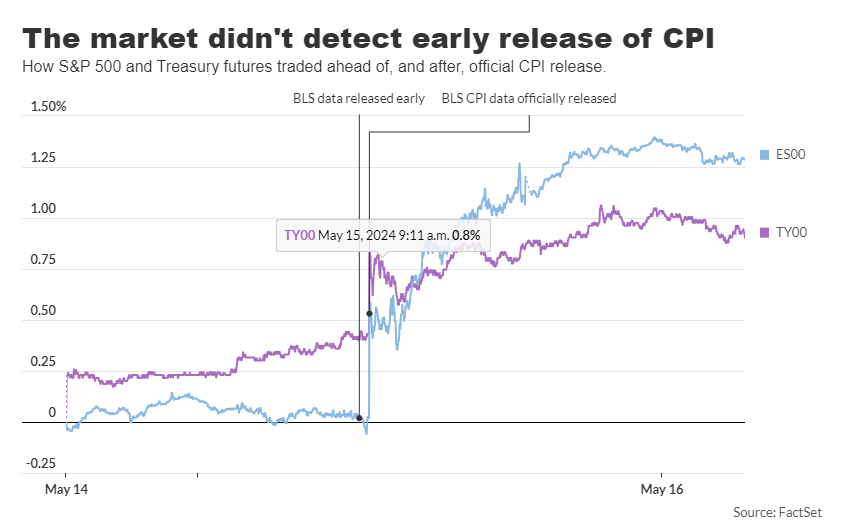
The stock market has rebounded in May, nearing record territory after April’s pullback. The upcoming April inflation data, due Wednesday, is seen as a potential catalyst for either new highs or another decline. Tom Essaye, founder of Sevens Report Research, analyzed the potential “good, bad, and ugly” outcomes for the April consumer-price index (CPI) reading. Rates traders started 2024 expecting the Federal Reserve to cut rates six or more times by year-end. However, hotter-than-expected CPI reports have reduced these expectations to about two cuts this year. Despite April’s dip, stocks recovered after Fed Chair Jerome Powell suggested on May 1 that a rate hike wasn’t imminent. The S&P 500 is up over 9% year-to-date, close to its record high. The Dow Jones is less than 600 points from the 40,000 mark, and the Nasdaq has risen over 9% in 2024. The April CPI reading is crucial. Economists forecast a 0.4% monthly rise, slowing the year-over-year rate to 3.4% from 3.5% in March. Core CPI, excluding food and energy, is expected to rise by 0.3% monthly and slow to 3.6% annually from 3.8%. Essaye identifies three scenarios: Ugly: A core reading of 3.9% or higher would likely trigger a “solid selloff,” reinforcing the idea that inflation is persistent and rates will stay high. This could erase recent gains, with the S&P 500 potentially dropping 1% or more, all sectors declining, and the 10-year Treasury yield rising by 10-15 basis points. The U.S. Dollar Index might exceed 106. Not So Great: A core reading of 3.7%-3.8% would probably cause stocks to fall and Treasury yields to rise. This would indicate persistent price pressures, leading to a “mild selloff,” with tech and cyclical stocks outperforming defensive plays. Good: A core reading at or below 3.6% would likely bring relief, suggesting a decline in core inflation. This could push stocks to new highs, led by sectors outside the “supercap” tech names. Treasury yields might fall sharply, and the dollar index could weaken as investors anticipate more rate cuts in 2024.

autopilot
DayTradeToWin Review

Autopilot Trading Session: Tuesday Morning Recap

Hello Traders! It’s Tuesday morning, just before 10:00 AM. I’m gearing up to activate the autopilot trading system for a short half-hour session to observe its performance. I’ll be using the standard settings on an 8-range chart for the E-mini S&P, trading a single contract. This session is recorded live, so you’ll see exactly how the system operates in real-time. A Quick Reminder: Trading carries risks. Only trade with funds you can afford to lose, as the market can be unpredictable. Profiting from Selling the Market A question I often get is whether you can make money selling the market (going short) just as you do when buying (going long). The answer is yes. Here’s a brief explanation: The Importance of Volatility in Trading Volatility is essential because it drives market movement, impacting your trading success. Here’s why: Features of the Autopilot Trading System The autopilot trading system is equipped with: Live Trading Session Update During today’s session, I’ll let the system run autonomously. Here’s a quick summary of the trades so far: We’re about 10 minutes in. I’ll let the session continue for the remaining 20 minutes to see the outcome. Key Takeaways Session Conclusion After 30 minutes, the autopilot system reached the daily profit target of $500 and automatically closed the position. If we had set a higher target, the system would have continued to trade, trailing the stop as needed. For those interested in the autopilot trading system, visit daytradetowin.com to watch more videos and see if it fits your trading style. The autopilot system is also part of the Accelerated Mentorship Plus program, which includes all our software with lifetime licenses. Until next time, happy trading!

gamestop
Market News

GameStop Stock on Fire: Surges for a Second Straight Day

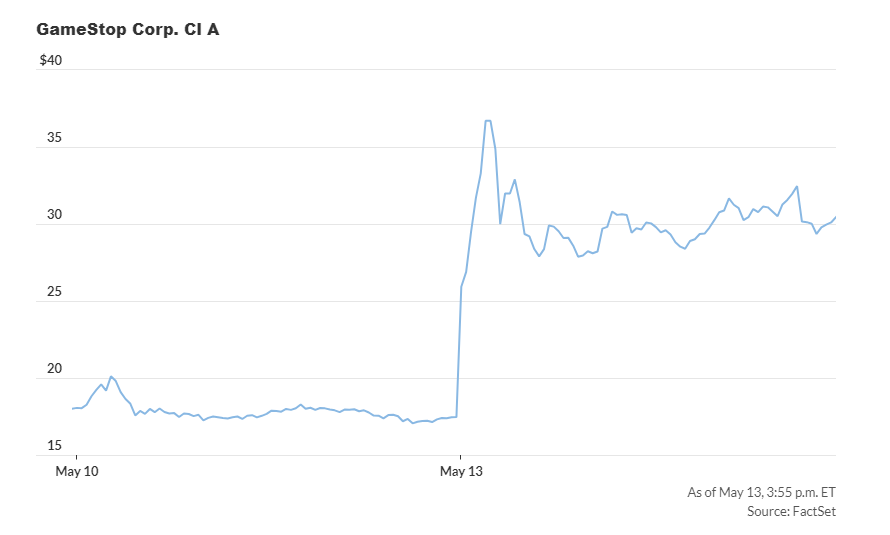
GameStop shares soared 74% on Monday after a social media post by Roaring Kitty. GameStop shares continued their rally in premarket trading on Tuesday, extending gains after the investor famously associated with the company’s 2021 surge posted on social media for the first time in three years. GameStop shares (GME) surged 40% in early premarket trading on Tuesday, building on Monday’s 74% rise, following Roaring Kitty’s return to the social media platform X for the first time since 2021. Tuesday’s premarket gains suggest that GameStop shares might exceed Monday’s peak of $38.20. GameStop’s 74% rise on Monday was its fourth-best single-day performance since 2021, according to FactSet data. On January 27, 2021, GameStop shares jumped 135%. However, GameStop has also experienced significant drops, including a 60% plunge on February 2, 2021. Meanwhile, fellow meme stock AMC Entertainment (AMC) outperformed GameStop on Monday, surging 78%. AMC shares continued to rise in premarket trading on Tuesday, gaining 39%.

options
Market News

With Stocks Nearing Peaks, Options Market Sees Return of Complacency

As stocks resume their upward climb towards record highs following a brief April downturn, a sense of complacency is returning to options markets. This shift is evident in the decreasing prices of hedges designed to protect investors’ portfolios against potential market pullbacks or crashes. Rocky Fishman, founder of Asym 500, a firm specializing in options market data and analytics, notes a substantial decrease in the cost of these contracts since the beginning of May. The rebound in stock prices has led to a significant narrowing of the spread between the Cboe Volatility Index (VIX) and actual stock volatility, reaching one of its lowest levels in years. The VIX, often referred to as the “fear gauge,” has fallen to its lowest level since January, signaling reduced expectations for market volatility. This decline in volatility has made crash insurance, in the form of VIX calls, extremely affordable. For example, VIX call options with a strike price of 25 expiring in around 40 days are currently trading at just 30 cents per contract, a considerable decrease from their cost a year ago. Furthermore, protection against even a modest market downturn has become cheaper, as indicated by the reversal of the S&P 500 index skew. This shift suggests that traders are once again preferring bullish calls over bearish puts. The accessibility of VIX calls and index puts presents an opportunity for investors seeking to take positions, such as anticipating higher-than-expected consumer price index reports. However, any signs that the slowdown in inflation could be more enduring might prompt a reevaluation of the timing of Federal Reserve interest rate cuts. Despite a brief setback in April, both the S&P 500 and the Dow Jones Industrial Average have largely recovered, with the S&P 500 securing its third consecutive weekly gain and the Dow Jones rising for an eighth straight session. However, the Nasdaq Composite experienced a slight decline amidst these movements.

trading
DayTradeToWin Review

Charting Success: 20 Short Trading Videos to Elevate Your Skills!

Welcome to the dawn of 2024’s first trading day! As traders brace themselves for another year of market fluctuations and possibilities, it’s crucial to set a strong foundation. Today, we delve into the realm of AutoPilot trading systems, exploring their adeptness at maneuvering through the complexities of the market landscape. AutoPilot Trading System Overview AutoPilot trading systems have garnered traction among traders for their capacity to automate trading decisions based on preset criteria. These systems operate sans continual manual intervention, enabling traders to capitalize on market movements while minimizing emotional biases. Typically, AutoPilot systems scrutinize market data like price action, volume, and technical indicators to pinpoint trading opportunities. Subsequently, they execute trades based on predetermined rules and parameters set by the trader. Implementing Strategy on the First Trading Day As the clock strikes midnight on the inaugural trading day of the year, many traders are eager to kickstart their strategies. A common approach is to initiate AutoPilot trading once initial market activity settles, often around 10:00 AM. On this specific day, we find ourselves ensconced in a long trade, with the market displaying signs of ranging behavior. Traders employing the AutoPilot system might seize this chance to close their positions, securing profits and mitigating risks linked with sideways markets. The Trade Scalper Challenge: Day 3 Meanwhile, seasoned traders embark on the third day of the Trade Scalper Challenge, a trial of skill and consistency in executing short-term trades. Leveraging the Trade Scalper program, participants aim to attain profitability over three consecutive trading days, relying on the software’s signals to guide their decisions. With each signal pointing towards a potential long trade, participants meticulously assess entry points and manage positions based on underlying market conditions. Patience and precision are paramount as they await favorable opportunities to capitalize on intraday price movements. Key Takeaways for Traders in 2024 As we navigate the intricacies of the trading landscape in 2024, here are some essential tips to consider: Incorporating these strategies and insights into your trading approach can empower you to navigate the challenges and seize the opportunities of the market with confidence and precision. Here’s to a prosperous year of trading in 2024!

S&P 500
Market News

Decoding S&P 500: Anticipating 1% Annual Returns Ahead

The Threat Posed by Surging Profit Margins to Stocks The upward trajectory of corporate profit margins, while currently advantageous, cannot be sustained indefinitely, potentially signaling trouble for the stock market. Recent data from S&P Dow Jones Indices reveals that the S&P 500’s operating profit margin for the first quarter of 2024 hit 11.76%, with the trailing four-quarter margin reaching 11.44%, surpassing figures from 2023 and 2022. These figures mark a return of profit margins to their long-term trendline after fluctuations associated with the Covid-19 economic downturn and subsequent fiscal stimuli. Analysts project further margin growth, with estimates indicating margins above 12% for 2024. This expansion is crucial for the current valuation of the stock market; if margins were at 1990s levels, the S&P 500 would be valued significantly lower. Economists are skeptical about the sustainability of margin growth, particularly given the decline in labor’s share of income over the past three decades. While some anticipate ongoing margin expansion, others, such as Rob Arnott of Research Affiliates, predict a return to historical norms. Such a shift could dampen future market returns. Even if margins stabilize, prospects for robust market performance are limited. With high P/E ratios and sluggish sales growth, investors may face below-average returns over the next decade, especially if economic growth continues to decelerate.

Scroll to Top