Market News

Navigating Geopolitical Turbulence: An Investor’s Step-by-Step Handbook

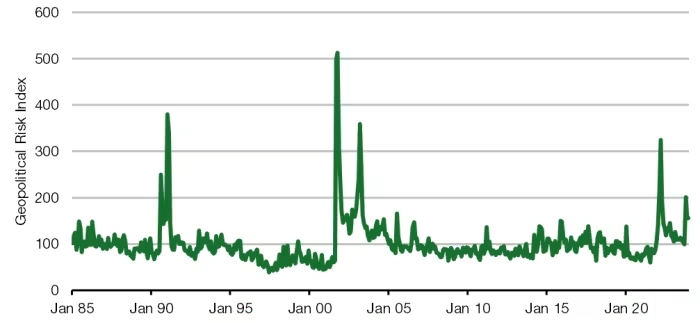
Here’s a refined approach for navigating armed conflicts: In today’s world, where conflicts and geopolitical tensions can sway markets, it’s common to encounter a barrage of advice from experts. However, much of this advice tends to sensationalize rather than inform, often leading to detrimental effects on investment portfolios. In my book on geopolitics for investors, available for free on the CFA Institute website, I offer a practical guide for managing such crises. This guide, grounded in extensive empirical research, focuses specifically on how stock markets respond to geopolitical events. It serves as a reliable tool for evidence-based investors seeking to discern meaningful insights amid the chaos. First and foremost: Stay calm. Over periods of one month or longer, the impact of most geopolitical events on equity markets is minimal. Therefore, it’s crucial to resist the temptation to hastily sell stocks. Instead, history has shown that during crises, it’s often prudent to buy risky assets as they dip in value. Investors frequently succumb to exaggerated fears, envisioning doomsday scenarios like World War III. Yet, historical evidence suggests that such escalations are rare occurrences. While conflicts arise frequently, they typically do not spiral out of control due to the prevailing preference for peace. Escalating a conflict to catastrophic proportions requires significant miscalculations from multiple parties. Let’s break it down into actionable steps: Step 1: Assess the extent of infrastructure damage in the country where you have investments. If infrastructure remains intact, proceed to the next step. If not, anticipate economic slowdown and favor defensive sectors like healthcare and consumer staples. Step 2: Evaluate whether there’s a sustained impact on inflation and inflation expectations. If so, consider investing in sectors that benefit from higher inflation, such as oil & gas or defense contractors, while avoiding inflation-sensitive sectors with low profit margins. Step 3: Determine whether there’s a lasting effect on real interest rates. A permanent increase in borrowing costs could trigger a bear market. In such cases, adopt a defensive stance and steer clear of companies with high financial leverage. Step 4: If the answers to the previous questions are negative, seize the opportunity to buy risky assets! Geopolitical shocks often lead to temporary spikes in risk aversion, creating favorable buying opportunities. Keep in mind that the initial market reaction post-crisis may be transitory. Only if there’s a sustained impact on inflation, earnings, or real rates should you consider selling stocks. Remember, patience is key, as markets ultimately weigh the evidence over the long term. In the words of Ben Graham, “In the short run, the market is a voting machine, but in the long run, it is a weighing machine.” So, when faced with panic, carefully weigh the evidence and act judiciously.

Market News

Investor Panic: Iran-Israel Threats Trigger Rush to Safe-Haven Assets

On Friday, Treasury bonds, gold, and the American currency all saw their worth rise, as investors sought out assets that could shelter them from potential losses in the stock market. The announcement of Israel’s readiness for a potential strike from Iran prompted investors to opt for safer investment options on Friday. As a result, they opted to sell stocks and instead put their money into Treasury bonds, gold, and the U.S. dollar. The start of the sell-off was triggered by a report in the Wall Street Journal that claimed Israel was getting ready for a potential attack from Iran, expected to happen by the end of the week. This reminded investors of a previous market drop on April 4, when stocks fell sharply following a similar warning from Israel. James St. Aubin suggests that the current state of affairs in Iran introduces a new dimension to the ongoing narrative. He posits that this is driving the market activity observed today. By noon in New York, the S&P 500 was on track for its biggest weekly drop since January, while the Nasdaq Composite had erased its earlier gains from the week when it hit a record high on Thursday. Simultaneously, the DJIA dropped nearly 500 points, leading to the blue-chip index experiencing its lengthiest string of losses since June and its biggest two-week percentage decrease since March 2023, according to Dow Jones Market Data. Market experts believed that the release of the report exacerbated the ongoing decrease in stock prices. They explained that investors were cautious about holding onto stocks over the weekend because they were worried about the possible consequences of Iran following through on its threats. Undoubtedly, the decline in the stock market this week can be linked to several reasons, such as an inflation report that exceeded expectations and investors’ tepid response to the earnings of prominent banks. The drop in stock prices led to a surge in demand for options to hedge against market volatility. This resulted in the Vix, also known as the fear gauge on Wall Street, spiking to its highest level since October 30, according to Dow Jones Market data. The index saw a more than 25% increase in recent trading sessions, marking its largest daily gain since November 2021. According to Tyler Richey, co-editor of Sevens Report Research, the increase in Vix resulted in a temporary situation where the price of Vix futures contracts expiring this month exceeded those expiring in May. This caused an inversion of the Vix futures curve for the first time since February. Richey pointed out that a Vix futures curve that slopes upward suggests that traders are getting ready for a continued decline in stock prices in the upcoming weeks. According to data from FactSet, investors also sought safety in bonds, leading to a drop in Treasury yields. The yield on the 10-year Treasury note decreased by 6 basis points to 4.51%. Even though Treasury yields have gone down, the U.S. dollar’s value has continued to rise, as shown by the ICE U.S. Dollar Index DXY increasing by 0.6% to 105.95. This marks its most successful week in 17 months. Analysts believe that the reason for this discrepancy between the dollar and yields is due to a safe investment strategy. The impact was also observed in the commodity markets, where gold futures reached historic highs. The main gold contract rose by $35.30, or 1.5%, hitting $2,407 per ounce. Furthermore, U.S.-traded West Texas Intermediate Crude futures increased by 1.5% to $86.23 per barrel, regaining much of the losses from earlier in the week. Rarely do geopolitical occurrences have such a profound impact on the stock exchange. Even declines stemming from major historical events, such as the September 11 attacks, typically bounce back within a short span of time. Market experts are of the opinion that the conflict in the Middle East will not significantly impact corporate earnings. Nevertheless, analysts at BofA Global Research have identified several potential negative implications for US multinational companies as a result of the conflict. A recent report discussed concerns regarding the potential effects on global trade and the European economy following the attack by Hamas on Israel on October 7th. The report highlighted worries about possible increases in energy prices, similar to those experienced after Russia’s invasion of Ukraine. Nevertheless, some investors warned that the decrease in stock prices on Friday might be temporary, just like the situation on April 4. Michael Lebowitz, a portfolio manager at RIA Advisors, proposed that the news of a possible attack from Iran was probably a strategic move in negotiations. He indicated that the drop in stock prices on Friday was more likely a result of the market being overpriced following a substantial five-month rise in value. In a recent interview with MarketWatch, Steve Sosnick, who is the chief market strategist at Interactive Brokers, mentioned that traders tend to get too excited when there is a rise in geopolitical tensions. Iran has reportedly issued a threat of retaliation against Israel after an Israeli airstrike on an Iranian embassy in Damascus, Syria led to the deaths of several important Iranian officials.


Market News

The S&P 500’s Rally: Standing at the Precipice of Change

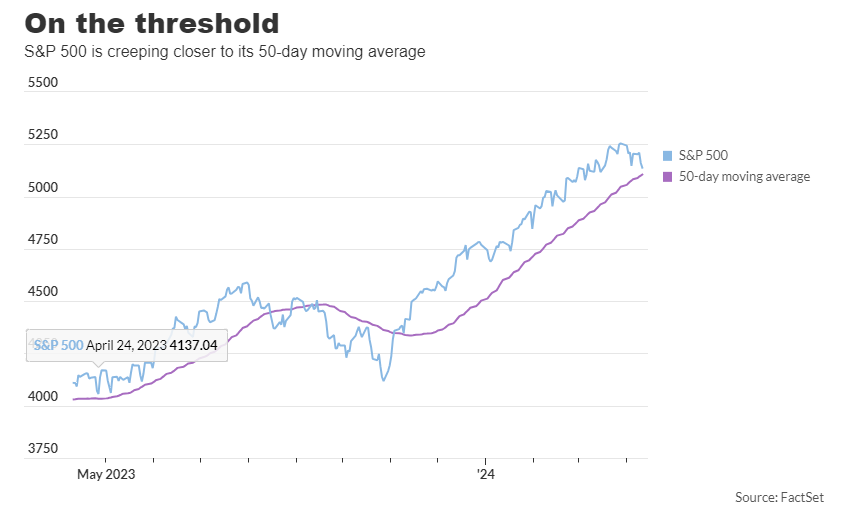
Thursday saw the S&P 500 coming within 33 points of its 50-day moving average, marking its closest approach since November 13th. This suggests a crucial juncture for the stock market rally, with recent volatility bringing the index within reach of a significant technical milestone not seen in five months. A breach of this threshold could indicate further downside for stocks, potentially prompting a reversal of the rapid gains seen since late October. While some may view a minor pullback as healthy, the absence of any substantial correction for five months raises concerns. Initially fueled by expectations of aggressive Federal Reserve interest rate cuts in 2024, the rally now faces skepticism due to hotter-than-expected inflation data. The narrowing gap between the S&P 500 and its 50-day moving average reflects the intensity of the rally, with the index trading well above this average for an extended period—the longest streak since 1998. Despite a partial recovery on Thursday, with major indexes like the S&P 500 and Nasdaq Composite rebounding, the Dow Jones Industrial Average remains on track for a fourth week of losses in the past five. Various technical indicators, including the 14-day relative strength index, suggest a loss of momentum for the S&P 500, although it still hovers around 1% below its recent record high. Looking ahead, market technicians are closely monitoring the S&P 500’s movement relative to its 50-day moving average, currently standing at 5,105.73. A break below this level could signal further downside, with 4,990 identified as the next support level—a retracement of approximately 23% from the index’s recent rally peak. Katie Stockton of Fairlead Strategies notes that such moving averages often align with significant support or resistance levels in the market.

DayTradeToWin Review

Experience TradingView Mastery: How Trade Scalper Empowers Traders to Secure Wins!

Are you captivated by the high-speed realm of scalp trading? Today, we embark on an exploration of scalp trading using the Trade Scalper system on TradingView. From deciphering signals to adeptly managing trades, this blog post aims to furnish you with indispensable insights into this dynamic trading strategy. Before we plunge into the specifics, it’s imperative to underscore the risks inherent in trading. Always bear in mind that trading entails inherent risks, and it’s imperative to only trade with funds you can afford to lose. Understanding Entry Points Let’s commence by dissecting entry points. When presented with a signal, such as 5244, the objective is to enter the market at that precise price or better, ideally within a tick. While market conditions may necessitate a slight deviation, the primary aim remains to capture the entry point as accurately as possible. Setting Targets and Stops Once engaged in a trade, the subsequent step is to delineate your targets and stops. A pivotal tool in this endeavor is the Average True Range (ATR). The ATR furnishes insights into market volatility, aiding in gauging potential price movements. Drawing upon the current ATR, you can ascertain suitable profit targets and stop-loss levels. Implementing Time-Based Stops In addition to price-based stops, it’s judicious to integrate time-based stops into your trading strategy. By stipulating a maximum duration for each trade, irrespective of whether it achieves its target, you mitigate the risk of protracted exposure to market fluctuations. This disciplined approach safeguards your capital and ensures timely decision-making. Navigating Market Open Trading during the market open presents distinctive challenges and opportunities. While volatility may be alluring, exercising caution during this period is paramount. Opting to wait for a few minutes post-market open enables you to gauge the initial market sentiment and make informed trading decisions. Pre-Market Trading Considerations For those delving into pre-market trading, assessing volatility levels is imperative. The ATR serves as a dependable metric for evaluating pre-market conditions, guiding your decision to participate in trading activities before regular market hours. Adapting to Different Markets While our focus primarily centers on the E-mini S&P, it’s noteworthy that the Trade Scalper system is adaptable to various markets, encompassing currencies and commodities. The fundamental principles of price action remain consistent across diverse assets, affording traders flexibility. Verifying Signal Integrity Addressing a prevalent query, it’s crucial to clarify that the Trade Scalper system does not repaint or recalculate signals once generated. This transparency ensures that traders can place trust in the integrity of the signals, fostering confident decision-making. Conclusion Scalp trading utilizing the Trade Scalper system necessitates precision, discipline, and adaptability. By mastering entry points, establishing effective targets and stops, and integrating time-based stops, traders can adeptly navigate the intricacies of short-term trading with assurance. Remember, successful trading entails perpetual learning and adjustment. Whether you’re a seasoned trader or a novice, refining your skills and staying abreast of developments are pivotal to long-term success. For further inquiries or to explore the Trade Scalper system, visit daytradetowin.com. Happy trading!

DayTradeToWin Review

The 3 Key Principles Every Trader Should Know

Welcome to DayTradetoWin, your gateway to the intricate world of trade management. Before we delve into the specifics, let’s address the inherent risks tied to trading futures, Forex, options, and stocks. Trading with funds beyond one’s means underscores the importance of educating oneself on risk disclosure. It’s imperative that all participants understand the risks associated with trading. Market Analysis Gain valuable insights into markets like the e-mini S&P, stocks, options, and Forex. Regardless of your preferred market, it’s crucial to grasp the associated risks, profit potential, and regulations. We advocate for simplicity in trading strategies to avoid unnecessary complexity. Practical Tools and Resources Refine your trading skills affordably by using simulators for practice. Our DayTradetoWin blog offers tutorials, webinars, and free downloads of indicators for popular trading platforms such as NinjaTrader and TradeStation. Trade Management Strategies At the heart of our webinar is a comprehensive examination of trade management strategies. We stress the importance of establishing clear rules before entering a trade, including defining targets, stops, and risk tolerance. Adaptability is key, and we provide practical advice on effectively using various order types. Conclusion Mastering trade management is vital for navigating the dynamic trading landscape successfully. With practical insights and real-world examples, traders gain the knowledge and tools needed to thrive in volatile markets. Whether you’re a novice or seasoned trader, implementing sound trade management strategies can enhance your performance and minimize risks. Remember, trading isn’t just about making profits; it’s about intelligently managing risks for long-term success. Join us at DayTradetoWin as we embark on the journey to master trade management and elevate your trading endeavors to new heights.

Market News

Traders Brace for September: Stocks, Bonds Take a Hit Amidst Fed Rate-Cut Shift

As markets reacted to a robust inflation report on Wednesday, the question arose: Will we truly witness the anticipated rate cuts in 2024? George Catrambone, head of fixed income for the Americas at DWS Group, voiced doubts during a phone interview. He expressed concern that the latest data might dissuade the Federal Reserve from implementing any interest rate reductions throughout the year. The March inflation figures, as revealed by the consumer-price index, surpassed expectations, sparking worries that inflation might not steadily decline towards the Fed’s 2% target. Consequently, traders swiftly discounted the possibility of rate cuts during the Fed’s June and July meetings, as indicated by the CME FedWatch Tool. Catrambone noted that the inflation report has made it harder for investors to predict when the Fed might initiate reductions in its benchmark rate. September, previously viewed optimistically for a potential quarter-point cut, now appears uncertain, with the market’s hopes for looser monetary policies being pushed further out. To curb inflation, which has moderated since its peak in 2022 but remains persistent, the Federal Reserve has maintained its policy rate at an elevated level. The consumer-price index showed a 0.4% increase in inflation in March, translating to an annual rate of 3.5%, with core inflation, excluding food and energy prices, rising by 0.4% last month, resulting in an annual pace of 3.8%. Following the CPI report, Treasury yields surged, with the 10-year Treasury note yield rising approximately 18 basis points to around 4.54%, and the two-year Treasury rate increasing about 21 basis points to around 4.95%, according to FactSet data. Catrambone anticipates continued market volatility as investors closely monitor economic data and Fed statements until rate cuts become a reality. There’s a risk that rate cuts might not materialize at all this year. Current market sentiment, reflected in fed-funds futures, suggests expectations that the Fed will maintain its benchmark rate at the current target range of 5.25% to 5.5% during its June meeting, with a 59% probability of the same in July. However, the likelihood of a quarter-point rate cut in September stands at 45.5%. In the interim, Catrambone foresees investors favoring cash allocations in their portfolios, potentially leading to continued accumulation of money-market fund assets. While some investors might view the bond market selloff as an opportunity, Catrambone advises caution, particularly regarding long-term Treasurys, which have faced pressure this year due to shifting rate-cut expectations. He suggests exploring buying opportunities in areas such as the safest portions of collateralized loan obligations (CLOs), with AAA-rated slices offering yields of nearly 6%. Despite the stock market‘s sharp decline on Wednesday, John Higgins, chief markets economist at Capital Economics, believes it may not signal a long-term trend, given the continued uncertainty surrounding inflation and monetary policy.

Scroll to Top