Market News

U.S. Economy Enters Stagflation Era: What Lies Ahead?

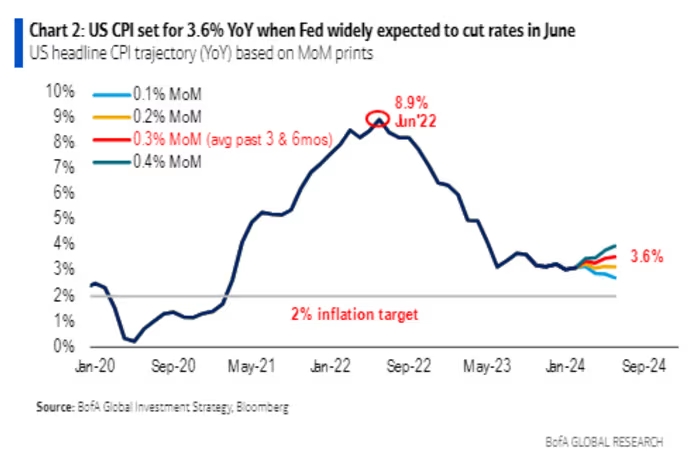
A Bank of America strategist is sounding the alarm that the U.S. economy is moving away from a ‘Goldilocks’ scenario to one resembling the stagflation of the 1970s, where inflation persists alongside slowing economic growth. Michael Hartnett emphasizes the importance for investors to take this shift seriously to avoid potential risks. Stagflation, marked by high inflation alongside stagnant economic growth, plagued the U.S. economy in the 1970s and early 1980s. Recent indicators suggest a similar pattern emerging, with inflationary pressures mounting while economic momentum slows. Recent data reveals concerning trends: inflation rates surpassing expectations, with consumer prices rising by 3.2% over the past year and projected to hit 3.6% by June. This has led traders to anticipate the possibility of the Federal Reserve cutting interest rates for the first time since 2022. The inflationary trend extends globally, prompting some emerging-market central banks to halt interest rate cuts. Meanwhile, signs of weakness in the labor market are emerging, threatening the previously strong economic growth in the U.S. Despite government data showing strong job creation, there has been a decline in full-time employment over the past three months. Additionally, fewer workers are quitting their jobs, and small businesses are scaling back hiring plans, indicating labor market challenges. Compounding these issues, rising government spending has led to increased budget deficits, potentially pushing Treasury yields above 4.5% for the first time since late last year. This could exacerbate pressure on U.S. stocks, which have been faltering in recent weeks. In such an environment, commodities, gold, cryptocurrencies, and cash are likely to become more attractive investments, while the equity market landscape may undergo significant changes. Hartnett suggests that a portfolio emphasizing resources and defensive assets could outperform traditional stock investments. Indeed, there are early signs of this shift, with crude oil prices outpacing tech-heavy indices like the Nasdaq-100 since the beginning of 2024. However, despite these warnings, investors continue to pour funds into U.S. equity markets, indicating a reluctance to abandon stocks entirely. Hartnett’s concerns echo those of other Wall Street analysts, including Marko Kolanovic of JPMorgan Chase, who recently highlighted the potential transition from a ‘Goldilocks’ economy to stagflation reminiscent of the 1970s.

Market News

Dow Futures Show Modest Gain Amid Inflation Uncertainty

Stock futures in the United States were suggesting a steady start on Friday, but worries about lasting inflation were putting a damper on the momentum that had been building since the beginning of the year. What’s happening On Thursday, the Dow Jones Industrial Average, S&P 500, and Nasdaq Composite all saw decreases. The DJIA decreased by 138 points to 38,906, the SPX fell by 0.3% or 15 points to 5,150, and the COMP dropped 49 points to 16,128. The S&P 500 has gained 8% this year. What’s happening On Thursday, traders were presented with a recent report showing that inflation was declining at a slower pace than previously believed. This was due to producer prices rising more quickly than anticipated. Benjamin Melman, the global chief investment officer of asset management at Edmond de Rothschild, a private banking firm, has reduced investments in U.S. Treasurys due to a perception of higher inflation risks in the U.S. compared to Europe. Melman claimed that there is no bubble in U.S. stocks at the moment. He explained that unlike previous instances like the AI and internet bubbles, there is some actual earnings momentum backing up the current optimism. Melman highlighted that Nvidia’s PE ratio for 2024 is 36, which is considered high but reasonable for a stock with strong growth potential. The company has a neutral stance on stocks in general, as well as in the United States specifically, because they expect a decrease in funds. Melman was primarily focused on the declining reserve balances at the Federal Reserve, however, Japan is also being closely monitored by analysts. The country’s major union has declared a substantial 5.3% salary hike for its biggest corporations, the highest in more than thirty years. This could potentially lead the Bank of Japan to discontinue its negative interest-rate policy soon, possibly as early as next week or within the next month. This Friday, the Empire State manufacturing survey will be published, along with reports on import prices, industrial production, and University of Michigan consumer sentiment. On Friday, there are options tied to more than $5 trillion in stocks, exchange-traded funds, and equity indexes set to expire as part of the quarterly triple witching. Adobe is being closely examined because its sales forecast for the current quarter did not meet the expectations of analysts on Wall Street.

DayTradeToWin Review

Minute Madness: My Rapid Trading Secrets Unveiled! ?

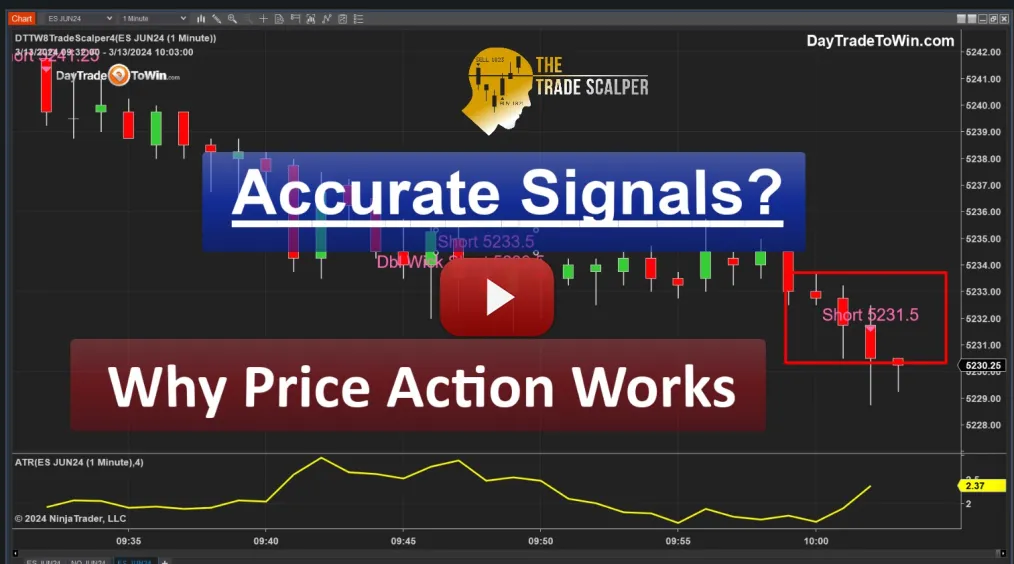
Today, we’re diving deep into the nuances of the trade scalper strategy, a potentially game-changing tool for your trading endeavors. The trade scalper boasts a unique feature: it directly plots signals on your chart, offering clear guidance on whether to take a long or short position. And guess what? I’m seizing an opportunity to sell the market today, all thanks to the trade scalper’s insights. Come along as we journey through this exploration of price action trading. Let’s start by discussing timeframes. While the trade scalper provides various chart options like tick charts and range charts, I prefer simplicity with a one-minute chart. This ensures we catch signals as they unfold smoothly and without delay. Today’s focus is on a short position. Without hesitation, I execute a short trade and entrust the ATM (Automatic Target and Stop) strategy to manage it. Remember, trading carries risks, so proceed with caution and only invest what you can afford to lose. In no time, we witness a seamless entry and exit, courtesy of the trade scalper‘s precise signals. Here’s a vital tip: avoid overtrading. Stick to three to five trades a day for manual trading. However, if you’re utilizing automation like the autopilot feature, let the system handle the frequency. Now, onto the long trade scalping technique. A distinctive doorbell sound marks our entry point. With the trade scalper’s guidance, we swiftly execute a long trade using a limit order for accuracy. Remember, it’s not just about entering; having a well-defined exit strategy is equally crucial. Utilize stops and targets wisely to manage risks and maximize profits. Throughout the trade, stay vigilant of external factors such as news events or conflicting indicators. And if a trade stalls for too long, consider implementing a time-based stop to minimize losses or secure modest gains. Additionally, our accelerated mentorship program integrates the trade scalper with comprehensive courses, offering a holistic trading education. For those hesitant to dive in fully, we offer a free member account where you can explore our software and resources at your own pace. And for those ready to take the leap, our live trading room awaits, where seasoned traders impart invaluable insights into the market. Until next time, happy trading!

Market News

Robinhood’s Stock Climbs as Retail Trading Storms Back

In February, Robinhood Markets Inc. witnessed a substantial 36% surge in equity trading volumes compared to the previous month. This surge fueled a remarkable rise in the company’s stock during Wednesday’s after-hours trading session. Throughout February, the online trading platform experienced an impressive $80.9 billion in trading volumes, marking a significant increase from January’s figures. Notably, trading volumes for options contracts rose by 12% to $119.1 million, while cryptocurrency trading volumes grew by 10% to $6.5 billion. The total assets under custody for the month reached $118.7 billion, demonstrating a robust 16% increase from Robinhood’s January levels. Additionally, the company recorded net deposits of $3.6 billion. Following this strong performance, Robinhood’s shares surged by 10% in after-hours trading on Wednesday, contributing to a notable 91% increase over the past 12 months. Robinhood has been capitalizing on the resurgence of interest in retail trading, as evidenced by its recent quarterly earnings report, which highlighted an increase in monthly active users and transaction-based revenue. During a JMP Securities conference earlier this month, Chief Financial Officer Jason Warnick expressed optimism about Robinhood’s market potential. He emphasized the significant opportunities presented by the growing strength of retail traders, increased earnings power, and wealth transfer over the next decade, affirming Robinhood’s strong positioning to cater to this evolving customer base.

Market News

S&P 500 Futures Hold Steady Following 17th Record High

Wednesday’s early trading saw U.S. stock futures hinting at another potential record high for the S&P 500, despite investors brushing off a slightly higher-than-anticipated inflation report. Here’s the latest on how stock-index futures are performing: On Tuesday, the Dow Jones Industrial Average climbed 235.83 points, or 0.61%, closing at 39,005.49. The S&P 500 added 57.33 points, or 1.12%, ending at 5,175.27, while the Nasdaq Composite rose 246.36 points, or 1.54%, to 16,265.64. The S&P 500 is now eyeing its 18th potential record close of the year, with investors seemingly unfazed by the slightly stickier consumer price index report, maintaining optimism for at least a 25 basis point interest rate cut in June. Despite February’s U.S. core CPI figures suggesting caution for the Federal Reserve, Stephen Innes, managing partner at SPI Asset Management, believes there’s still time for data to sway the central bank’s decision before its June meeting. Market expectations for rate cuts remain stable, with only a slight uptick in 10-year yields. Analysts note a shift in focus away from inflation data’s impact on stock markets, as growth in the tech sector and confidence in economic stability continue to drive sentiment. Susannah Streeter, head of money and markets at Hargreaves Lansdown, highlights the prevailing positive outlook driven by the resilience of the U.S. economy. Tuesday’s market gains, including a notable surge in Nvidia shares, are attributed in part to the fear of missing out (FOMO) on AI-related stocks, according to Ipek Ozkardeskaya, senior analyst at Swissquote Bank. Corporate updates for Wednesday include earnings reports from Dollar Tree, Petco Health & Wellness, and Williams-Sonoma before the opening bell, followed by UiPath, SentinelOne, and Lennar after the market close. No major U.S. economic reports are scheduled for release on Wednesday, and with the Federal Reserve observing a quiet period ahead of its policy decision next week, no Fed speakers are expected.

Market News

Charting the Fed’s Course: Facilitating Hot Economic Expansion

Important Insights for the U.S. Trading Day Today’s focus centers on the release of the consumer price index by the Labor Department at 8:30 a.m. Eastern, amidst ongoing discussions about potential Fed rate adjustments. A thought-provoking perspective is emerging suggesting that illegal immigration could be playing a significant role in sustaining economic robustness while curbing inflation. Wendy Edelberg and Tara Watson, associated with The Brookings Institution, are set to publish a paper supporting this argument. They analyze recent Congressional Budget Office data, highlighting a notable shift in population demographics, particularly among “other nonimmigrants.” This category encompasses individuals not classified as lawful permanent residents or temporary visa holders, including asylum seekers and those granted humanitarian parole. Edelberg and Watson identify these individuals as “likely stayers” who contribute to the economy. Before the pandemic, sustainable job growth without inflating prices ranged between 60,000 and 140,000 jobs per month, projected to decrease due to demographic changes. However, the authors suggest that the economy could have absorbed significantly more jobs last year without triggering inflation, and continues to have room for additional job growth. The anticipated impact on the economy includes a modest increase in GDP and significant boosts to consumer spending and personal income, adjusted for inflation. Gerard MacDonell of Front Harbor Macro Research views the forthcoming paper as having a mildly optimistic stance. He suggests that if potential GDP growth is higher and the limit on employment growth is raised, recent economic strength becomes less concerning. However, market implications may not be dramatic, as investors remain cautious about the extent of employment growth exceeding its limits.

Scroll to Top