Market News

Steadfast S&P 500 Futures Brace for New Earnings Surge and Federal Reserve Insights

U.S. stock index futures signaled a mixed start just below recent highs on Wednesday, with bond markets stabilizing and investors awaiting more corporate earnings reports. Here’s a breakdown of how the stock-index futures are performing: On Tuesday, major indices saw modest gains: the Dow Jones Industrial Average rose 141 points (0.37%) to 38521, the S&P 500 increased 11 points (0.23%) to 4954, and the Nasdaq Composite gained 11 points (0.07%) to 15609. Market drivers: Market drivers include the stabilization of 10-year Treasury yields around 4.1%, prompting traders to reevaluate the timing of potential Federal Reserve interest rate adjustments. Attention is refocusing on corporate performance with the market hovering near record levels. However, sentiment was somewhat dampened by Snap Inc. (SNAP, +4.18%) shares plunging 30% following a revenue miss and weak outlook. In contrast, Ford Motor (F, +4.14%) and Chipotle Mexican Grill (CMG, +0.68%) experienced stock boosts of 6% and 3%, respectively, after positive earnings and forecasts. Upcoming earnings reports include Uber Technologies (UBER, +2.15%) and CVS Health (CVS, +1.82%) before the market opens, followed by PayPal (PYPL, +3.53%), Walt Disney (DIS, +2.73%), and Arm (ARM, -0.40%) after the close. Analysts highlight the resilience of the U.S. economy amid rising interest rates, supporting corporate earnings growth and investor sentiment. S&P 500 operating earnings growth of approximately 5% year-on-year fosters bullish sentiment, while higher rates seem manageable for consumers and corporations, allowing the Fed flexibility in managing inflation without disrupting market momentum. Key economic updates scheduled for release include the December trade deficit at 8:30 a.m. Eastern and January consumer credit at 3 p.m. Additionally, several Federal Reserve officials will deliver speeches throughout the day, discussing policy, economic outlook, and support for small businesses.

DayTradeToWin Review

Exploring Autopilot Trading: $500/Day Wins and Losses Revealed

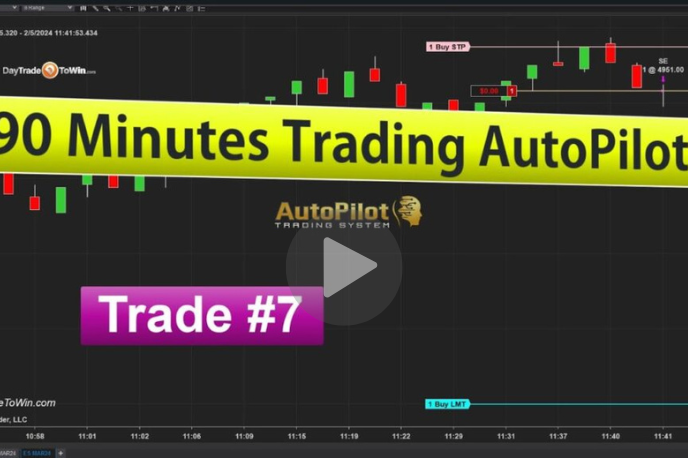
Greetings, fellow traders! Today, we’re embarking on an exhilarating voyage into the realm of automated trading, delving deep into the nuances of the Autopilot Trading System. In this live session recorded on February 5th, we’ll be treated to a firsthand glimpse of the signals, transactions, and strategies executed by the system. Hold tight as we set our sights on achieving a $500 profit within a single day. Central to our analysis is the EM mini S&P, specifically focusing on the 8-range chart. While other options like the NASDAQ exist, our trust lies firmly with the EM mini S&P for its steadfast performance. With customizable parameters such as trailing stops, break-even points, and directional biases, the system furnishes traders with a dynamic toolkit. But before we plunge into the action, let’s take a moment to dissect the crucial variables and settings that sculpt our trading methodology. From tailoring trailing stops to aligning with specific trade directions, the Autopilot Trading System caters to diverse trading styles and risk tolerances. Now, without further ado, let’s immerse ourselves in the live demonstration of the Autopilot Trading System. Through a sped-up video presentation, we’ll witness the system’s prowess in real-time, unveiling both triumphs and setbacks. Sit back, relax, and behold the mesmerizing capabilities of automated trading unfold before your very eyes. As we traverse through the demonstration, indulge in the enchanting melodies of our original composition, “Tomorrow,” evoking the anticipation and fervor of the trading journey. In conclusion, as our demonstration nears its end, we extend an invitation for you to delve deeper into the Autopilot Trading System. Whether enticed by profit potential or seeking to hone your trading acumen, our mentorship classes and daily training room stand ready to assist. Visit daytradetowin.com to embark on your quest towards trading mastery. Thank you for accompanying us on this enlightening exploration of the Autopilot Trading System. Remember, while trading offers opportunities for rewards, it also carries inherent risks. Trade responsibly, and may your endeavors be prosperous. Until we meet again, happy trading!

Market News

Recession Outlook Revisited: First Wall Street Bank Foresees Narrow Landing

Tuesday indicates a potential calming in the bond market, as more analysts lean towards expecting the first U.S. rate cut to happen in the summer. However, the stock market shows volatility as investors grapple with this shifting perspective. Recent strong job and growth data, along with a more cautious stance from Fed Chairman Jerome Powell over the weekend, have tempered earlier optimistic forecasts for rate cuts. Deutsche Bank, once among the first to predict a slowdown in April 2022 and a subsequent recession within two years, now offers a different view. They no longer anticipate a mild recession in the first half of the year. Adjusting their stance, Deutsche Bank now projects a solid 1.9% growth rate for 2024, with the first Fed rate cut expected in June, albeit with a total decrease of just 100 basis points. They attribute this change to the economy performing better than expected in 2023, with a resilient job market and inflation below 2% in the latter part of the year. The bank’s economists highlight positive trends such as easing financial conditions and strong consumer spending, which has defied expectations by remaining robust. However, potential risks to their revised forecast include the impact of previous Fed tightening measures and geopolitical uncertainties. Conversely, they acknowledge the possibility of continued upside surprises in growth, especially given the easing financial conditions and potential for enhanced productivity. Despite their earlier prediction of a short recession and a year-end S&P 500 forecast of 5,100, among the highest on Wall Street, Deutsche Bank now faces the question of whether to adjust their outlook in light of these developments.

DayTradeToWin Review

Unlocking Profit Potential: How Market Manipulation Can Supercharge Your Trades!

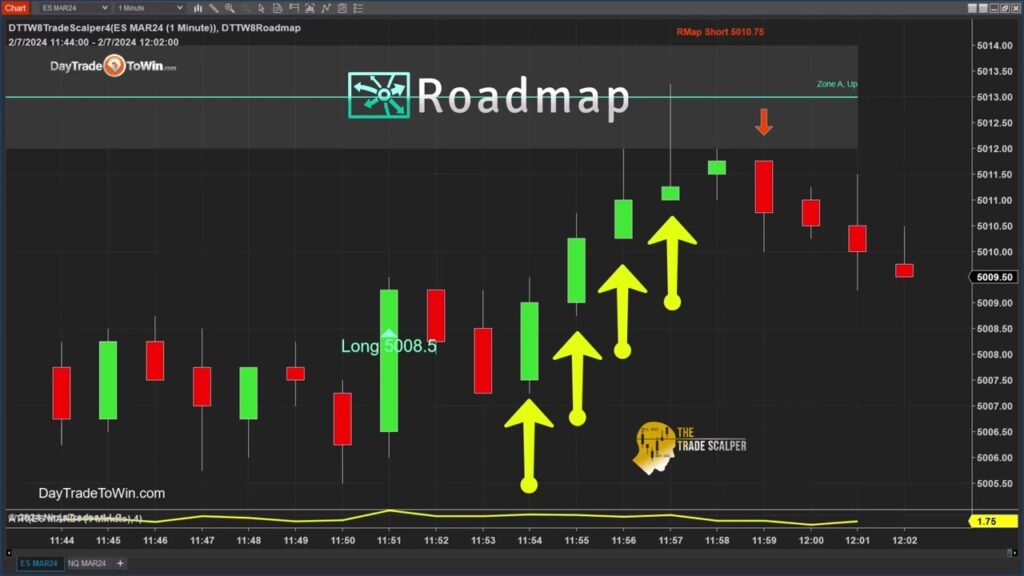
Greetings fellow traders! Welcome back to another thrilling Monday in the world of trading. Today, we’re delving deep into the intricacies of manipulation, unlocking the secrets behind the trade scalper and roadmap strategies. Get ready for an exhilarating ride as we uncover exclusive insights utilizing Day Trade to Win’s proprietary price action. Before we embark on this journey, a gentle reminder: trading carries inherent risks. Only trade with funds you can afford to lose. Now, let’s dive into the tantalizing details. Have you ever pondered those intriguing double Wick long signals on the chart? Those are the prized gems of trade scalping. The concept is straightforward – when a signal appears, consider entering a long position at or near the indicated prices. With thousands already leveraging the trade scalper to secure funding, you could be next in line. Now, let’s shine a spotlight on the dynamic duo – the roadmap and trade scalper. By intertwining these strategies, you can gauge whether it’s opportune to go long or short. The roadmap zones serve as beacons, directing your trades towards potential profitability. It’s all about grasping the symbiotic relationship between these formidable tools. Remain vigilant of market dynamics. If signals manifest before reaching the roadmap zone, it’s a signal to proceed with a long position. However, if the market breaches the zone, it signifies a robust movement, prompting a reassessment of your strategy. As our trading expert demonstrates in real-time, patience is paramount. Observe how the market responds at the roadmap zones. Is it under manipulation, or is it breaking free? The answers lie within the candlesticks, guiding your strategic adaptations. For those craving further enlightenment, the accelerated mentorship awaits. Access all courses and software in a bundled package, encompassing the trade scalper and roadmap strategies. Join us as we witness a live trade unfolding with the market’s breakthrough of the roadmap zone. The trader enters a long position with a clear rationale, leveraging price action as their compass. Remember, knowing when to exit is just as pivotal as knowing when to enter. In conclusion, trading is an art form, requiring a fusion of skill, strategy, and patience. Whether you’re a seasoned trader or a novice, the insights from Day Trade to Win could revolutionize your approach. Stay tuned for more enriching content, and, as always, may your trades be prosperous!

Market News

Goldman Sachs Stresses Importance of Rapid Revenue Growth for Mag 7 in 2024

Futures trading early indicators suggest a cautious start for Wall Street in the upcoming week, with the S&P 500 expected to consolidate after achieving another record in the previous session, driven primarily by major tech players. The future trajectory rests heavily on the performance of the “Magnificent 7” – Alphabet, Amazon.com, Apple, Meta Platforms, Microsoft, Nvidia, and Tesla – in achieving robust revenue growth in 2024, as highlighted by David Kostin, chief U.S. equity strategist at Goldman Sachs. While factors such as hedge fund positioning, antitrust lawsuits, and macroeconomic shifts may impact these stocks, Kostin underscores that the pivotal factor will be the sales growth of these seven companies. Analysts anticipate a collective sales growth of 12% CAGR through 2026 for the Magnificent 7, surpassing the 3% CAGR for the rest of the S&P 500. The expected margin expansion, notably a 256 basis points increase over the next three years, sets the stage for higher profits, outpacing the rest of the market. However, it’s important to note that the Magnificent 7 exhibit differences in their trajectories. Variances exist, such as Nvidia’s projected 31% annual sales growth compared to Apple’s 6%, and recent downward adjustments in Tesla’s sales forecasts. Concerns about the seemingly elevated valuations of big tech are addressed by Kostin, who argues that the current 63% P/E premium is significantly lower than the peak premium of 103% in 2021. Additionally, these stocks demonstrate lower valuations compared to the Tech Bubble in 2000. Goldman emphasizes that the surge in big tech is not solely driven by valuation multiples but is substantiated by improved earnings. Over the past few years, the Magnificent 7 delivered a 28% annualized return, with 27 percentage points attributed to earnings growth, highlighting the fundamental strength of the group. Big tech’s appeal also lies in its newfound resistance to interest rate fluctuations. Despite historically benefiting from falling yields, the sector outperformed even in a high bond yield environment due to robust balance sheets and elevated margins. However, Goldman’s optimistic outlook concludes with a cautionary note, drawing parallels to past periods of tech exuberance. Investors are warned against placing blind faith in consensus estimates, as historical instances show significant deviations between forecasted and actual performance, leading to underperformance compared to the broader market.

Market News

Back to the Future: Applying 1987’s Stock Market Lessons to Today’s Fed Rate Speculations

The Fed is wary of a déjà vu from 1985-86 as investors anticipate aggressive interest rate cuts without the looming threat of a recession. Nicholas Colas from DataTrek Research suggests that revisiting history may prompt investors to adjust their expectations. Market optimism is reflected in fed-funds futures traders pricing in five to six quarter-point rate cuts this year, in contrast to the Fed’s projection of only three cuts in 2024. This optimistic outlook is tied to expectations that the Fed will maintain real interest rates if inflation continues to decline. While stock markets reach new highs, DataTrek’s analysis of past easing cycles points to a rare event in 1985-86 when the Fed cut rates by 1.25 percentage points during a non-recessionary period. Colas highlights that this led to a substantial stock market rally, ultimately culminating in the infamous Black Monday in 1987. Colas underscores the Fed’s awareness of this cautionary tale and suggests that, given the current lower policy rates, the central bank has added reason to proceed cautiously in 2024. Without an imminent recession, substantial rate cuts this year lack historical precedent. Acknowledging the possibility that fed-funds futures may signal a potential recession, Colas remains skeptical, attributing the market’s stance to a bet on the Fed becoming less restrictive as inflation declines. Despite the mathematical validity of this view, Colas contends that it diverges from historical data and the Fed’s institutional memory.

Scroll to Top